
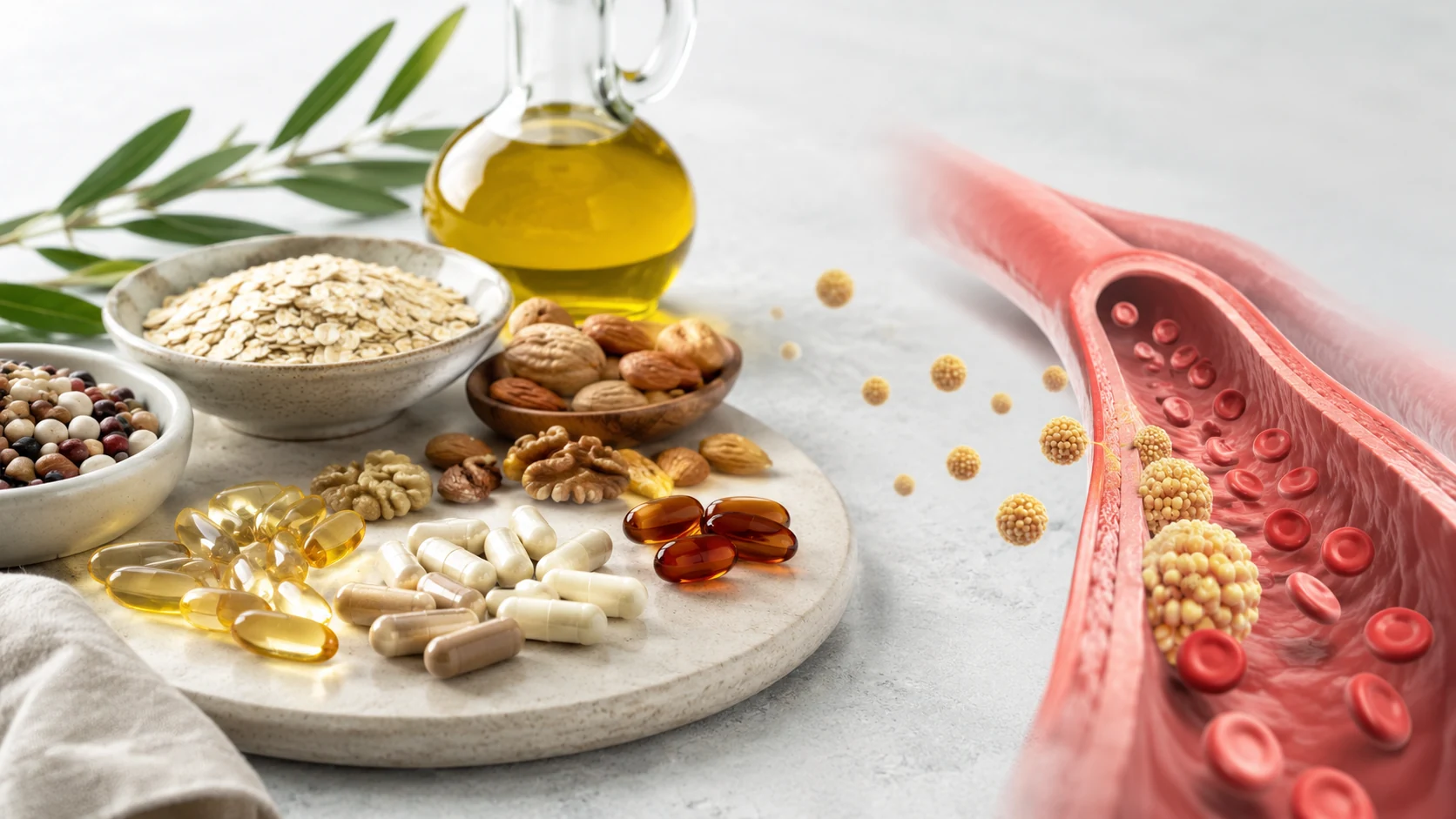
What Are the Best Supplements for Lowering Apob?
TL;DR: The supplements with the strongest evidence for lowering ApoB include omega-3 fatty acids, plant sterols and stanols, berberine, and niacin. None are as potent as statins, but several can produce meaningful reductions when combined with dietary and lifestyle changes.
What Is ApoB and Why Does It Matter?
ApoB (apolipoprotein B) is a protein found on the surface of LDL, VLDL, and other atherogenic lipoprotein particles. Each of these particles carries exactly one ApoB molecule, which means ApoB concentration is a direct measure of the total number of potentially harmful particles circulating in the blood. Research consistently shows that ApoB is a stronger predictor of cardiovascular risk than LDL cholesterol alone — particularly in people with metabolic syndrome, insulin resistance, or elevated triglycerides.
Lowering ApoB reduces the number of particles available to penetrate arterial walls and contribute to plaque formation. For people seeking to reduce cardiometabolic risk through non-prescription approaches, targeted supplements can play a supporting role alongside dietary change. You can explore the broader context in our guide to the best ApoB optimization plan.
The Best Supplements for Lowering ApoB
Several supplements have credible evidence supporting their ability to reduce ApoB or LDL particle number. The most relevant are outlined below.
Omega-3 Fatty Acids (EPA and DHA)
Omega-3 fatty acids, particularly EPA and DHA from fish oil, are among the most studied supplements for cardiometabolic health. Their primary effect on lipids is a significant reduction in triglycerides — with high-dose formulations (2–4 g of EPA/DHA daily) producing reductions of 20–30% in some studies.
The relationship between omega-3s and ApoB is more nuanced. Standard fish oil does not reliably lower ApoB and may modestly raise LDL in some individuals. However, high-dose EPA alone (as used in the REDUCE-IT trial) has shown cardiovascular benefit independent of LDL, likely through effects on inflammation and plaque stability. Omega-3s are most relevant for ApoB reduction in people with hypertriglyceridaemia, where lowering VLDL particle output also reduces total ApoB. For a deeper look at this, see our article on whether omega-3 lowers triglycerides.
Plant Sterols and Stanols
Plant sterols and stanols are naturally occurring compounds found in small amounts in vegetables, nuts, and seeds. At supplemental doses of around 2 g per day, they compete with dietary cholesterol for intestinal absorption, reducing the amount of cholesterol entering the bloodstream.
Evidence from multiple randomised trials supports reductions in LDL cholesterol of approximately 8–10% with consistent use. Because fewer cholesterol molecules are absorbed, the liver upregulates LDL receptor activity, which also reduces circulating ApoB-containing particles. Plant sterols and stanols are well-tolerated and considered one of the safer non-prescription options for lipid management.
Berberine
Berberine is a plant-derived alkaloid with a well-established mechanism for lowering LDL. It activates PCSK9 degradation and upregulates LDL receptors through pathways that partially overlap with statins, though it is considerably less potent. Human trials suggest LDL reductions of 15–25% with doses of 500–1500 mg per day. Evidence for direct ApoB reduction is more limited but consistent with its LDL-lowering effect. For more detail, see our article on whether berberine lowers LDL.
Niacin (Vitamin B3)
Niacin has a long history in lipid management. At therapeutic doses (1–3 g per day), it reduces hepatic VLDL production, which lowers both triglycerides and ApoB-containing particle output. It also raises HDL. However, niacin’s place in clinical practice has been substantially revised — large trials including AIM-HIGH and HPS2-THRIVE found that adding niacin to statin therapy did not reduce cardiovascular events, despite improving lipid markers.
For non-statin users, niacin may still provide meaningful ApoB reduction, but side effects including flushing, impaired glucose tolerance, and liver stress limit its use. High-dose niacin should only be used under medical supervision.
Red Yeast Rice
Red yeast rice contains monacolin K, which is chemically identical to lovastatin — a prescription statin. It can lower LDL and ApoB meaningfully, but product quality varies widely, effective doses are inconsistent across brands, and it carries the same risk profile as low-dose statins (muscle pain, liver enzyme elevation). It is best viewed as a low-dose statin equivalent rather than a distinct supplement.
How Each Supplement Works
Understanding the mechanism behind each supplement helps clarify who may benefit most.
Omega-3 Fatty Acids
EPA and DHA reduce hepatic triglyceride synthesis and increase triglyceride clearance, lowering VLDL output from the liver. Since each VLDL particle carries one ApoB molecule, reducing VLDL production directly reduces ApoB. High-dose EPA also reduces inflammation and may improve endothelial function, contributing to cardiovascular benefit beyond lipid lowering.
Plant Sterols and Stanols
These compounds are structurally similar to cholesterol and displace it in intestinal micelles, reducing cholesterol absorption by around 30–50%. The resulting drop in cholesterol delivery to the liver stimulates upregulation of LDL receptors, which clears more ApoB-containing particles from circulation. The mechanism is complementary to statins, which is why combining them can produce additive effects.
Berberine
Berberine inhibits PCSK9, a protein that degrades LDL receptors. With fewer functional PCSK9 molecules, more LDL receptors remain active on liver cells, increasing LDL clearance from the blood. Berberine also activates AMPK, which plays a broader role in metabolic regulation including glucose and fat metabolism.
Niacin
Niacin inhibits a key enzyme in hepatic fat metabolism (diacylglycerol acyltransferase 2), reducing the liver’s production of VLDL particles. Fewer VLDL particles means fewer downstream LDL and ApoB particles in circulation. It also slows ApoB particle release directly.
Lifestyle Factors That Support ApoB Reduction
Supplements work best as part of a broader strategy. Evidence indicates that the following lifestyle factors independently lower ApoB and compound the effect of supplementation:
- Dietary fibre: Soluble fibre binds bile acids in the gut, forcing the liver to use cholesterol to synthesise more — reducing circulating LDL and ApoB. A diet high in oats, legumes, and vegetables is consistently associated with lower ApoB.
- Reducing saturated fat: Saturated fat increases hepatic ApoB production. Replacing it with unsaturated fats improves the lipid profile and reduces ApoB particle output.
- Weight loss: Excess visceral fat drives insulin resistance, which increases VLDL production and raises ApoB. Even modest weight loss (5–10%) can produce meaningful reductions.
- Exercise: Regular aerobic and resistance training improves insulin sensitivity and reduces ApoB, particularly in people with elevated triglycerides or metabolic syndrome.
Learn more in our complete guide to longevity.
References and Resources
Authoritative Sources
-
American Heart Association – Cholesterol and Heart Disease
heart.orgGuidance on cholesterol management including the clinical relevance of ApoB and evidence-based lifestyle and supplement strategies.
-
Mayo Clinic – How to Lower LDL Cholesterol
mayoclinic.orgEvidence-based overview of dietary, supplement, and medication approaches to managing LDL and ApoB levels.
-
NIH – Omega-3 Fatty Acids and Cardiovascular Risk
nih.govResearch on the mechanisms by which omega-3 fatty acids influence lipid particles including triglycerides and ApoB.
Frequently Asked Questions
What are the most effective supplements for lowering ApoB?
The supplements with the strongest evidence for lowering ApoB or LDL particle number are plant sterols and stanols, berberine, high-dose omega-3s (particularly in people with elevated triglycerides), and niacin. Red yeast rice can also be effective but is essentially a low-dose statin. None match the potency of prescription statins or PCSK9 inhibitors, but meaningful reductions are achievable — particularly when combined with dietary changes.
Are these supplements safe for long-term use?
Plant sterols, stanols, and omega-3s have well-established safety profiles at recommended doses and are generally suitable for long-term use. Berberine is considered safe in most people but long-term human data is more limited. Niacin at therapeutic doses carries meaningful side effect risks — including flushing, raised blood glucose, and liver stress — and should be used under medical supervision. Anyone on existing medication should consult a clinician before starting any lipid-lowering supplement.
Can diet alone lower ApoB without supplements?
Yes, in many cases diet alone can produce clinically meaningful ApoB reductions. A diet high in soluble fibre, low in saturated fat, and rich in plant-based foods directly reduces LDL and ApoB particle output. Supplements can accelerate or extend these reductions, but they are not a substitute for dietary quality. The greatest benefit typically comes from combining both approaches.
What lifestyle changes complement these supplements?
Regular aerobic exercise, weight loss if overweight, reducing saturated fat intake, increasing dietary fibre, and managing insulin resistance all independently lower ApoB. These changes work through overlapping but distinct mechanisms to the supplements described above, making their combined effect greater than either alone.
Conclusion
The supplements with the most credible evidence for lowering ApoB are plant sterols and stanols, berberine, high-dose omega-3 fatty acids (particularly for those with elevated triglycerides), and niacin. Each works through a different mechanism — reducing cholesterol absorption, upregulating LDL receptors, lowering VLDL output, or decreasing hepatic particle production. Used alongside a fibre-rich, lower-saturated-fat diet and regular physical activity, these supplements can contribute meaningfully to a lower ApoB and reduced cardiometabolic risk.
None are a replacement for prescription therapy where that is clinically indicated, and results vary between individuals. Tracking ApoB through blood testing remains the most reliable way to assess whether any intervention is working.
Find out more information about the best supplements for lowering ApoB
Search for more resources and information: