
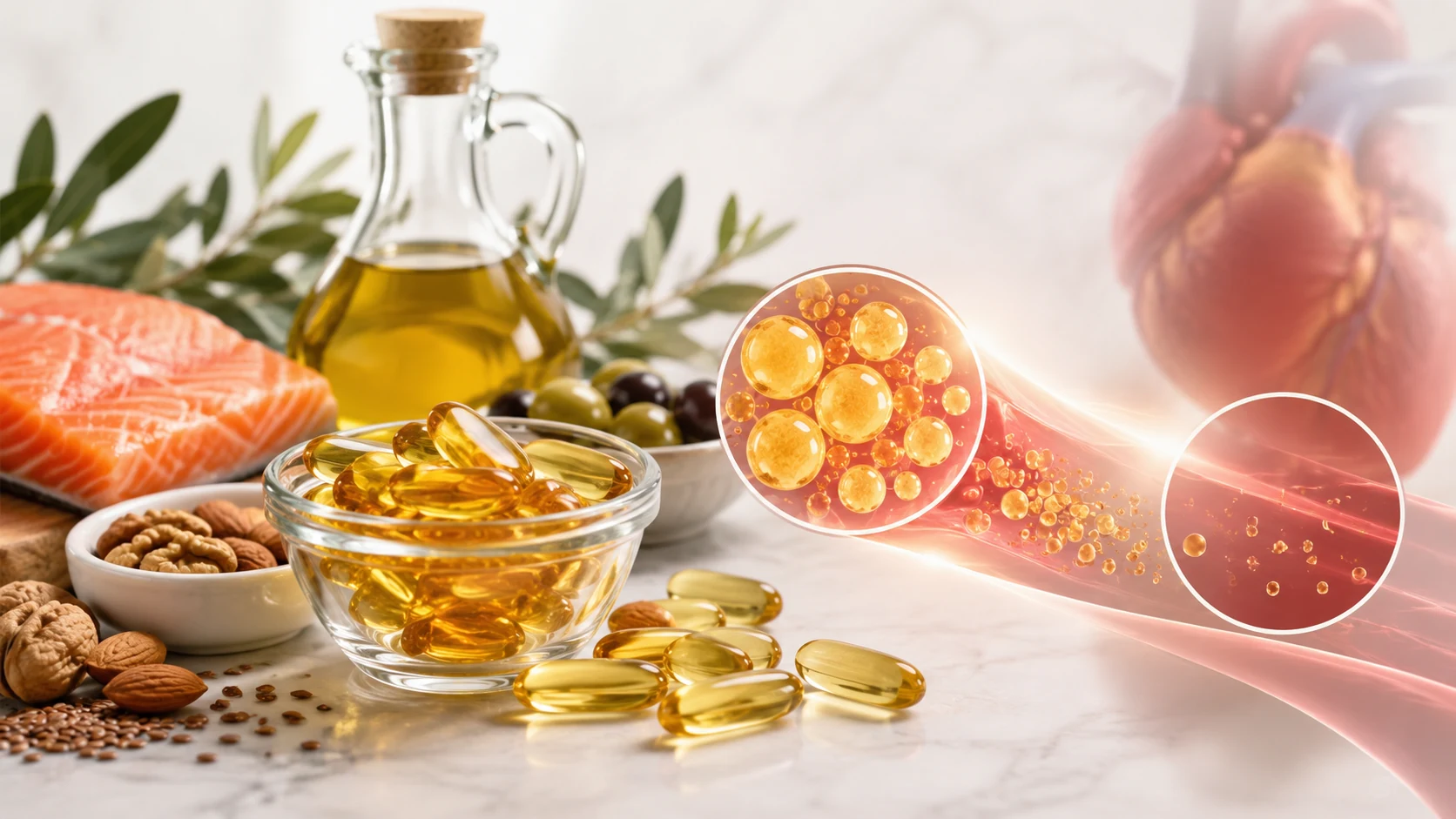
What Are the Best Supplements for Lowering Triglycerides?
TL;DR: Omega-3 fatty acids (EPA and DHA) are the most evidence-backed supplements for lowering triglycerides, with research supporting reductions of 20–50% at higher doses. Niacin, berberine, and fiber supplements offer additional support, but work best alongside dietary and lifestyle changes.
What Are Triglycerides and Why Do They Matter?
Triglycerides are a type of fat circulating in the bloodstream. Elevated levels — particularly above 150 mg/dL (1.7 mmol/L) — are associated with increased cardiovascular risk, insulin resistance, and metabolic dysfunction. High triglycerides often occur alongside low HDL cholesterol and elevated ApoB-containing particles, making them a meaningful marker of cardiometabolic health.
Diet is the primary driver of triglyceride levels. Excess refined carbohydrates, sugar, and alcohol are converted into triglycerides in the liver and released into circulation. Certain supplements can meaningfully reduce triglyceride levels, though they work best as part of a broader dietary strategy.
For a deeper understanding of how triglycerides relate to atherogenic risk, see our article on the best supplements for lowering ApoB.
The Best Supplements for Lowering Triglycerides
Omega-3 Fatty Acids (EPA and DHA): The Most Evidence-Backed Option
Omega-3 fatty acids — specifically EPA (eicosapentaenoic acid) and DHA (docosahexaenoic acid) — have the strongest evidence base of any supplement for lowering triglycerides. Research consistently shows that doses of 2–4g of combined EPA and DHA per day can reduce triglyceride levels by 20–50%, depending on baseline levels and dose.
The mechanism is well understood: EPA and DHA reduce hepatic (liver) triglyceride synthesis and increase clearance from the bloodstream. They also have modest anti-inflammatory effects, which may benefit endothelial function and overall cardiovascular health.
Prescription-grade omega-3 formulations (such as icosapentaenoic acid preparations) have demonstrated cardiovascular outcome benefits in large randomised trials, particularly in people with elevated triglycerides already on statin therapy. Over-the-counter fish oil supplements at standard doses (1g/day) have more modest effects, but remain a practical starting point.
When choosing a supplement, look for products that clearly state EPA and DHA content, are third-party tested for purity, and minimise oxidised oil. Algae-based omega-3s are a suitable plant-based alternative.
For a detailed look at the evidence, see our article on whether omega-3 lowers triglycerides.
Niacin (Vitamin B3): Effective but With Important Caveats
Niacin at pharmacological doses (1,000–2,000mg/day) can lower triglycerides by 20–50% and raise HDL cholesterol. It works primarily by reducing hepatic VLDL production, which lowers the output of triglyceride-rich particles into the bloodstream.
However, niacin has significant limitations. Common side effects include flushing, gastrointestinal discomfort, and, at high doses, potential hepatotoxicity. Landmark cardiovascular outcome trials did not show a mortality benefit when niacin was added to statin therapy, which has reduced enthusiasm for its routine use.
Niacin may still be relevant for people with markedly elevated triglycerides who cannot tolerate other options, but it should be used under medical supervision. Extended-release formulations reduce flushing but carry a higher risk of liver-related side effects.
Berberine: A Useful Metabolic Supplement
Berberine is a plant-derived compound with meaningful effects on metabolic health. Evidence suggests it can lower triglycerides, reduce LDL cholesterol, and improve insulin sensitivity — likely through AMPK activation, which improves how cells process glucose and lipids.
Human trials support its lipid-lowering effects, though studies are generally smaller and shorter than those conducted on statins or omega-3s. Typical doses used in research are 500mg taken two to three times daily with meals. It is generally well tolerated, though gastrointestinal side effects can occur.
Berberine may be particularly relevant for people with elevated triglycerides driven by insulin resistance. Learn more in our complete guide to longevity.
Soluble Fiber Supplements
Soluble fiber — from sources such as psyllium husk, beta-glucan, and inulin — supports triglyceride reduction indirectly by improving glucose handling, reducing post-meal insulin spikes, and feeding beneficial gut bacteria. The effect on triglycerides is modest compared to omega-3s, but fiber supplements have an excellent safety profile and offer broader metabolic benefits.
Psyllium husk is the most studied option. Evidence suggests it can reduce triglycerides modestly while also lowering LDL cholesterol. It works best when dietary carbohydrate intake is also being managed. For more on this, see our article on whether fiber lowers ApoB.
Garlic and Plant Sterols: Supportive, Not Primary
Garlic supplements have modest cardiovascular benefits, including a small reduction in triglycerides and blood pressure, though the evidence is less consistent than for omega-3s. Aged garlic extract has the strongest evidence base within this category.
Plant sterols and stanols are better established for lowering LDL cholesterol than triglycerides, but they may contribute to an improved overall lipid profile when taken as part of a broader approach. They are primarily useful as dietary additions rather than standalone triglyceride-lowering agents.
How to Use These Supplements Effectively
Dose and Consistency Matter
For omega-3s, standard over-the-counter doses (around 1g/day) have limited triglyceride-lowering effect. Research supporting significant reductions typically uses 2–4g of combined EPA and DHA daily. This level is difficult to achieve with standard fish oil capsules and may require a higher-concentrate product or prescription formulation.
Consistency is essential. Triglyceride-lowering effects build over weeks to months of regular supplementation. Sporadic use is unlikely to produce meaningful results.
Monitoring Progress
Fasting triglyceride levels should be tested before starting a supplement regimen and reassessed after 8–12 weeks of consistent use. This allows for objective tracking of progress and helps identify whether dose adjustments are warranted. Regular blood testing also provides insight into how diet and lifestyle changes are contributing alongside supplementation.
Working with a healthcare provider is advisable, particularly if triglycerides are significantly elevated or if medications are already being taken that could interact with supplements.
Lifestyle Factors That Amplify Results
Supplements work best when paired with dietary changes. The most impactful dietary modifications for lowering triglycerides include:
- Reducing refined carbohydrates and added sugar — these are the primary dietary drivers of elevated triglycerides
- Limiting alcohol — alcohol significantly raises triglyceride production in the liver
- Increasing fatty fish intake — providing dietary EPA and DHA alongside supplementation
- Maintaining a healthy body weight — weight loss consistently reduces triglyceride levels, often substantially
Regular aerobic exercise also lowers triglycerides by improving insulin sensitivity and increasing clearance of triglyceride-rich lipoproteins from the bloodstream. Even modest increases in physical activity can produce measurable effects over time.
References and Resources
Authoritative Sources
-
American Heart Association: Omega-3 Fatty Acids and Heart Health
heart.orgOverview of omega-3’s role in reducing triglycerides and supporting cardiovascular health.
-
National Institutes of Health: Omega-3 Fatty Acids and Lipid Profiles
nih.govScientific review of how omega-3 supplementation affects triglyceride levels and cardiovascular markers.
-
Medical News Today: Best Supplements for Heart Health
medicalnewstoday.comPractical guide to cardiovascular supplements including omega-3s, niacin, and garlic.
-
WebMD: Omega-3 Fatty Acids and Fish Oil
webmd.comOverview of how omega-3 supplements can help lower triglycerides and support heart health.
-
American Heart Journal: Niacin in Lipid Management
ahajournals.orgResearch on niacin’s effects on triglycerides and cholesterol, including cardiovascular outcome data and side effect profile.
-
PubMed: Garlic and Cardiovascular Risk
ncbi.nlm.nih.govEvidence on garlic’s cardiovascular benefits, including modest effects on triglyceride levels.
-
PubMed: Plant Sterols and Lipid Profiles
ncbi.nlm.nih.govResearch on how plant sterols contribute to improved lipid profiles, including effects on triglycerides.

Frequently Asked Questions
Are omega-3 supplements the most effective option for lowering triglycerides?
Yes, omega-3 fatty acids (EPA and DHA) have the strongest and most consistent evidence base for triglyceride reduction among available supplements. At doses of 2–4g of combined EPA and DHA per day, research supports reductions of 20–50%. High-quality omega-3 supplements are a well-supported first-line option.
Can supplements alone lower triglycerides sufficiently?
For most people, supplements alone are unlikely to be sufficient if the underlying dietary drivers — excess sugar, refined carbohydrates, and alcohol — remain in place. Supplements are most effective when combined with meaningful dietary changes. They support, rather than replace, a sound nutritional approach.
What is the safest way to use supplements for lowering triglycerides?
Start with omega-3 fatty acids at a clinically relevant dose, as they have an excellent safety profile. Consult a healthcare provider before using niacin at high doses or combining multiple supplements, particularly if you take medications. Monitor fasting triglyceride levels before and after to assess response.
Are there natural foods that act similarly to supplements for lowering triglycerides?
Yes. Fatty fish (salmon, mackerel, sardines) provide EPA and DHA directly. Flaxseeds and walnuts provide ALA, a plant-based omega-3 that converts to EPA and DHA at low efficiency. Soluble fibre-rich foods such as oats, legumes, and vegetables support better glucose and lipid handling, which indirectly reduces triglycerides.
What are the main risks of supplements for triglyceride reduction?
Omega-3s are generally well tolerated, though very high doses may affect bleeding time and LDL particle size in some individuals. Niacin at high doses carries risks of flushing, liver stress, and worsened blood glucose control. Berberine can cause gastrointestinal side effects and may interact with certain medications. Starting at lower doses and increasing gradually helps minimise side effects.
Conclusion
Omega-3 fatty acids are the most evidence-backed supplement for lowering triglycerides, with consistent support from both mechanistic research and human clinical trials. Niacin, berberine, and soluble fibre offer meaningful supplementary benefits, particularly for people with metabolic or insulin-related drivers of elevated triglycerides.
No supplement works in isolation. The most effective approach combines targeted supplementation with reductions in dietary sugar and refined carbohydrates, regular aerobic exercise, and weight management where relevant. Tracking triglyceride levels before and after any intervention provides clarity on what is actually working.
For a broader view of how triglyceride management fits into cardiometabolic risk reduction, visit our complete guide to ApoB optimisation.
Find out more information about the best supplements for lowering triglycerides
Search for more resources and information: