Does Strength Training Improve Respiratory Function?
Does Strength Training Improve Respiratory Function?
TL;DR: Strength training can improve respiratory function by strengthening the muscles involved in breathing — particularly the diaphragm and intercostals. However, its effect on overall lung capacity is modest compared to cardiovascular exercise, and it works best as a complement to aerobic training rather than a replacement.
Does Strength Training Improve Respiratory Function?
Yes — strength training does appear to improve certain aspects of respiratory function, though the effect is more specific than the broad lung benefits associated with cardiovascular exercise. The primary mechanism is the strengthening of respiratory muscles, which makes breathing more efficient and less effortful during physical exertion. Evidence also suggests benefits for people with existing respiratory limitations, including those with COPD and age-related respiratory decline.
That said, strength training alone is unlikely to significantly increase lung capacity in healthy adults. Its value for respiratory health lies in improving the muscular mechanics of breathing rather than expanding the lungs themselves. For a complete picture of how exercise supports lung longevity, see our guide to lung and respiratory longevity.
How Strength Training Affects the Respiratory System
Respiratory Muscles and Why They Matter
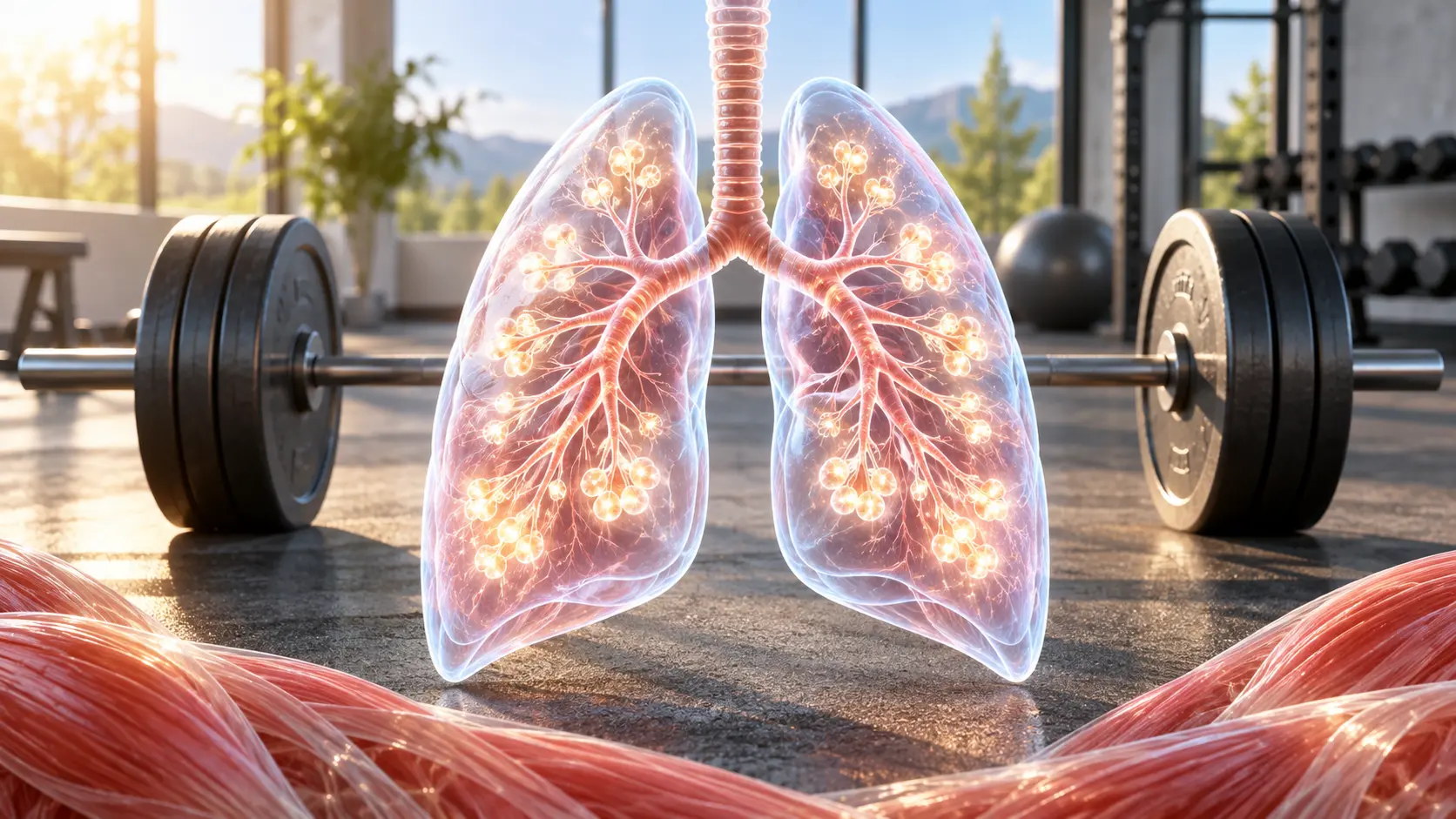
Breathing is a muscular act. The diaphragm is the primary driver of inhalation, while the intercostal muscles between the ribs support expansion of the chest wall. Accessory muscles — including those in the neck, upper back, and abdomen — assist during higher-intensity breathing demands.
As with any skeletal muscle, these respiratory muscles respond to training stimulus. Resistance training, particularly compound lifts that require significant core engagement and controlled breathing, places a repeated demand on the diaphragm and supporting musculature. Over time, this can improve their strength and endurance.
Research suggests that stronger respiratory muscles reduce the work of breathing — meaning less oxygen is consumed by the breathing process itself during exercise, leaving more available for working muscles. This improvement in respiratory efficiency is one reason trained individuals often feel less breathless at a given exercise intensity than untrained individuals.
Indirect Effects on Lung Function
Strength training also improves posture and thoracic mobility, which can indirectly support breathing mechanics. Rounded shoulders or a compressed thorax — common in sedentary individuals — can restrict chest expansion. In practice, resistance training that targets the upper back, shoulders, and core may help maintain the structural conditions needed for full, unobstructed breathing.
Additionally, improved cardiovascular efficiency from consistent training reduces the overall ventilatory demand during submaximal exercise. As a result, breathing tends to feel easier at everyday exertion levels.
Respiratory Muscle Training: The Most Direct Mechanism
The most studied and well-supported pathway through which resistance-based training improves respiratory function is direct respiratory muscle training (RMT). This involves exercises specifically targeting inspiratory or expiratory muscles — either through specialised devices or through the demands placed on breathing muscles during heavy resistance exercise.
Studies, including research published via PubMed, indicate that RMT can improve inspiratory muscle strength, reduce breathlessness during exertion, and enhance exercise tolerance — particularly in older adults and those with reduced lung function. Importantly, these benefits appear in populations where respiratory muscles have become deconditioned, suggesting the greatest gains are available to those who need them most.
For healthy younger adults, the respiratory muscles are rarely a limiting factor during normal exercise. However, as lung function naturally declines with age — a process covered in more detail in our article on whether lung capacity declines with age — maintaining respiratory muscle strength becomes increasingly relevant to functional longevity.
Practical Ways to Support Respiratory Function Through Strength Training
Compound Lifts and Core Engagement
Compound movements — squats, deadlifts, overhead presses, rows, and pull-ups — engage the core and require sustained, controlled breathing throughout each repetition. This places a meaningful demand on the diaphragm and intercostal muscles, especially at higher intensities or loads.
Focusing on controlled breathing mechanics during these lifts — exhaling through the concentric phase, inhaling through the eccentric — reinforces proper diaphragmatic engagement and builds breathing muscle endurance over time.
Breathing Technique During Training
Intentional breathing practice during strength training can amplify respiratory benefits. Diaphragmatic breathing — expanding the belly rather than the chest during inhalation — activates the diaphragm more fully and is more oxygen-efficient than shallow chest breathing.
In practice, incorporating a few minutes of focused diaphragmatic breathing before or after sessions can complement the respiratory demands of the workout itself. This is not a dramatic intervention, but over time it reinforces better breathing mechanics both during exercise and at rest.
Who Benefits Most
Evidence consistently shows the largest respiratory benefits from strength training in:
- Older adults with age-related respiratory muscle weakness
- Individuals with COPD or other conditions limiting respiratory muscle endurance
- People who have been sedentary for extended periods
For these groups, even moderate resistance training programmes can produce meaningful improvements in breathing comfort and exercise capacity. For already-fit individuals, the gains are real but smaller, and cardiovascular training remains the more potent lever for lung health. Learn more in our complete guide to longevity.
Limitations and What the Evidence Actually Shows
It is important to be clear about what strength training does and does not do for respiratory function.
What the evidence supports:
- Improved respiratory muscle strength and endurance
- Reduced breathlessness during physical activity
- Better breathing efficiency during exertion
- Meaningful benefits in populations with respiratory muscle weakness
What the evidence does not support:
- Significant increases in total lung capacity in healthy adults
- Strength training as a superior alternative to cardio for lung health
- Large improvements in FEV1 or FVC (standard lung function measures) through resistance training alone
In contrast to strength training, cardiovascular exercise — particularly sustained aerobic activity — has stronger evidence for supporting lung longevity and VO2 max across the lifespan. For a direct comparison, see our article on whether cardio improves lung longevity.
Overall, strength training is a genuinely useful addition to a lung health strategy, but it is most effective when combined with regular cardiovascular exercise rather than used in isolation. Avoiding smoking, limiting pollution exposure, and maintaining aerobic fitness remain the most evidence-backed levers for long-term respiratory health.
References and Resources
Sources
-
Respiratory Muscle Training and Its Impact on Lung Function
ncbi.nlm.nih.govExamines how targeted respiratory muscle training integrated into resistance programmes can improve lung capacity and respiratory health outcomes.
-
Effects of Resistance Training on Pulmonary Function
pubmed.ncbi.nlm.nih.govResearch indicating how resistance training can improve pulmonary metrics, particularly in populations with existing respiratory limitations.
-
WHO Guidelines on Physical Activity and Respiratory Health
who.intWorld Health Organization guidance on exercise modalities — including strength training — and their role in respiratory health across different populations.
-
Can Resistance Training Help Improve Your Respiratory Function?
acefitness.orgPractical overview of how resistance training contributes to better breathing mechanics and lung health for general populations.
-
Respiratory Muscle Strength and Exercise: A Review
plos.orgComprehensive review of how strengthening respiratory muscles through exercise — including resistance training — can improve lung function markers.
-
The Benefits of Strength Training
medicalnewstoday.comBroad overview of strength training benefits, including its relevance to respiratory and overall physiological health.

-
How Resistance Training Can Benefit Your Lungs
acefitness.orgExplains the physiological mechanisms through which strength training supports respiratory health, with reference to the scientific evidence base.
Frequently Asked Questions
Does strength training improve respiratory function?
Yes, to a meaningful degree. Strength training strengthens the muscles involved in breathing — particularly the diaphragm and intercostal muscles — which improves respiratory efficiency and reduces breathlessness during exertion. However, its effect on total lung capacity is modest. It is most effective when combined with regular cardiovascular exercise.
Can strength training help with lung capacity?
Strength training has limited direct effect on lung capacity in healthy adults. It primarily improves respiratory muscle strength and endurance rather than expanding the lungs themselves. Aerobic exercise has stronger evidence for maintaining and supporting lung capacity over time. That said, combining both forms of training offers more comprehensive respiratory benefits than either alone.
Are there specific strength exercises that benefit respiratory health?
Compound lifts — squats, deadlifts, overhead presses, pull-ups, and rows — place the greatest demand on the diaphragm and core musculature, making them the most useful for respiratory muscle conditioning. Focusing on controlled breathing technique during these movements, particularly exhaling through the effort phase, reinforces diaphragmatic engagement and builds respiratory endurance over time.
Is strength training recommended for people with respiratory issues?
Evidence supports strength training as a beneficial adjunct for people with conditions such as COPD, where respiratory muscle weakness is a key problem. However, it should be introduced gradually and ideally under clinical or professional supervision. Starting with light resistance and prioritising breathing technique — rather than load — reduces the risk of overexertion while still delivering functional respiratory benefits.
Conclusion
Strength training does improve respiratory function — primarily by strengthening the muscles responsible for breathing and making ventilation more efficient during physical effort. However, its effect on lung capacity is modest, and it is not a substitute for cardiovascular exercise when it comes to long-term lung health.
The most evidence-backed approach combines regular aerobic training with resistance exercise, uses good breathing technique during lifts, and prioritises avoiding the most damaging factors — smoking and sustained air pollution exposure — which cause far greater respiratory harm than any exercise programme can offset.
For those at most risk of respiratory decline — older adults, the sedentary, or those with early lung function impairment — even a modest strength training routine can make a meaningful difference to breathing comfort and functional independence. In that context, it is a practical and worthwhile component of a broader lung longevity strategy.
Find out more about strength training and respiratory function
Search for more resources and information: