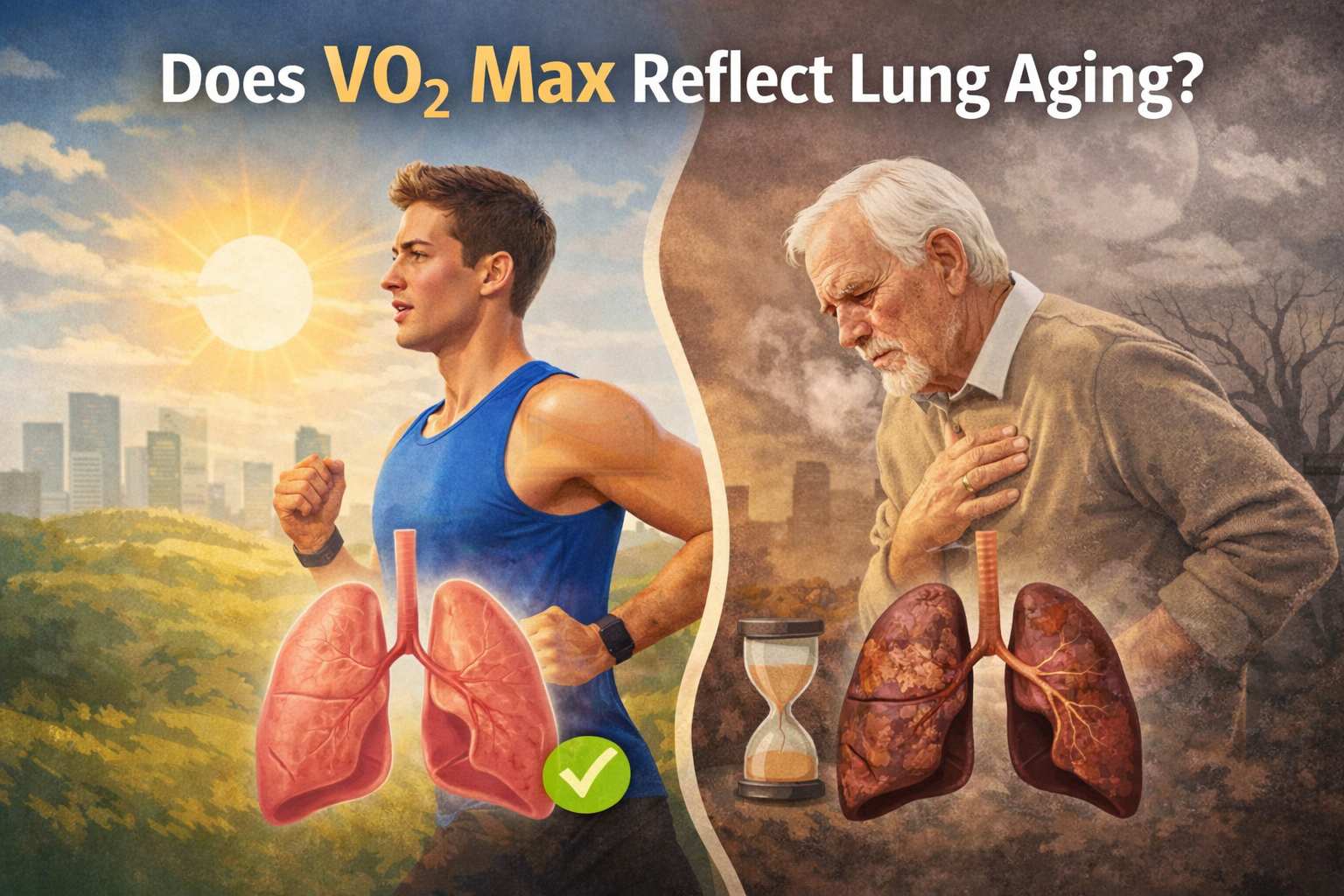
Does Vo₂ Max Reflect Lung Aging?
Understanding VO₂ Max and Lung Aging
VO₂ max reflects overall aerobic fitness more than lung aging alone. It can decline with age, and some of that decline may relate to changes in lung function, but VO₂ max is also strongly influenced by the heart, blood flow, muscle mass, mitochondrial function, and exercise habits.
TL;DR: VO₂ max can give some clues about lung aging, but it is not a direct measure of lung health. It is best viewed as a whole-body marker of cardiorespiratory fitness rather than a standalone biomarker of aging lungs.
That distinction matters because many people assume a lower VO₂ max automatically means worsening lung function. In reality, research suggests VO₂ max depends on how well the lungs, heart, circulation, and muscles work together to deliver and use oxygen during exercise. Learn more in our complete guide to longevity.
So the better question is not whether VO₂ max equals lung aging, but whether changes in VO₂ max can help identify broader age-related declines in aerobic capacity. In that context, VO₂ max is useful, but it needs to be interpreted carefully.
Does VO₂ Max Reflect Lung Aging?
Does VO₂ Max Directly Indicate Lung Function?
Not directly. VO₂ max is a measure of the maximum amount of oxygen the body can use during intense exercise. That makes it a strong indicator of aerobic fitness, but not a pure measure of lung health.
Lung function plays a role, especially when respiratory disease is present, but in many healthy people the lungs are not the main limiting factor. Research suggests that VO₂ max is often limited more by cardiac output, blood oxygen delivery, muscle oxygen extraction, and training status than by lung capacity alone.
This means a lower VO₂ max does not automatically prove lung aging. It may reflect deconditioning, reduced endurance, cardiovascular changes, lower muscle oxidative capacity, or a combination of these factors.
Can VO₂ Max Reflect Lung Aging as a Biomarker?
It can reflect lung aging indirectly, but it is not specific enough to be used alone. A declining VO₂ max may overlap with age-related changes in lung elasticity, respiratory muscle strength, and gas exchange efficiency, but those are only part of the picture.
For example, some older adults maintain good lung function yet still experience lower VO₂ max because of reduced stroke volume, lower muscle mass, or less physical activity. Others may have declining pulmonary function that contributes more heavily to the drop.
In practice, VO₂ max is better viewed as a broad biomarker of cardiorespiratory fitness and biological aging rather than a direct readout of lung aging by itself.
Physiological Factors Behind VO₂ Max and Lung Function
How Do Lungs Change with Age?
As people age, the lungs and chest wall usually become less elastic, respiratory muscles may weaken, and the surface area available for gas exchange may decline. These changes can reduce breathing efficiency and contribute to lower exercise tolerance over time.
However, age-related changes in the lungs do not occur in isolation. Aerobic performance also depends on how effectively the cardiovascular system delivers oxygen and how well the muscles use it. That is why VO₂ max does not map neatly onto lung aging alone.
What Role Do Cardiovascular Factors Play?
Cardiovascular function is one of the biggest drivers of VO₂ max. Heart rate response, stroke volume, blood flow, and oxygen transport capacity all influence how much oxygen reaches working muscles. With aging, these factors often decline alongside physical activity levels.
This is one reason VO₂ max is often considered a strong marker of overall fitness and mortality risk. It captures more than the lungs. It reflects the combined performance of multiple systems involved in endurance and metabolism.
Muscle factors matter too. Mitochondrial density, capillary supply, and oxidative capacity influence how much oxygen muscles can actually use. Exercise training, especially aerobic exercise, may help support these systems through pathways linked with mitochondrial biogenesis, AMPK, and PGC-1α.
How to Track VO₂ Max and Lung Health More Accurately
What VO₂ Max Tracking Can Tell You
Tracking VO₂ max over time can be useful because trends matter. A gradual decline may reflect normal aging, reduced training, or broader cardiorespiratory changes. A sharper drop may justify a closer look at health, fitness, or respiratory symptoms.
VO₂ max is especially useful when combined with other indicators such as endurance performance, resting heart rate, exercise tolerance, and recovery. It becomes more meaningful when interpreted as part of a pattern rather than as a single number.
What to Use Alongside VO₂ Max
If the goal is to understand lung aging specifically, direct lung measures are usually better. Spirometry, lung volumes, diffusion capacity, oxygen saturation, and clinical assessment can provide a clearer picture of respiratory health than VO₂ max alone.
A more complete assessment may include VO₂ max, spirometry, exercise capacity, symptoms during exertion, and medical history. That approach is far more useful than assuming VO₂ max by itself explains whether the lungs are aging well.
For people focused on longevity, it also makes sense to monitor exercise habits, body composition, endurance, and broader biomarkers tied to healthy aging. VO₂ max is valuable, but it works best as one part of a larger framework.
Conclusion
VO₂ max can reflect some aspects of lung aging, but it is not a direct or exclusive measure of it. The decline in VO₂ max with age usually reflects a combination of pulmonary, cardiovascular, muscular, and metabolic changes rather than lung aging alone.
That makes VO₂ max a useful marker of aerobic fitness and overall physiological resilience, but not a standalone lung test. For a clearer picture of lung aging, it should be interpreted alongside direct pulmonary assessments and broader indicators of healthspan, endurance, and exercise capacity.
References and Resources
These sources provide useful background on VO₂ max, aerobic capacity, lung function, and aging.
Authoritative Sources on VO₂ Max and Lung Aging
-
VO₂ Max and Respiratory Function in Aging
ncbi.nlm.nih.govExplores how VO₂ max changes with age and how respiratory function interacts with broader cardiorespiratory fitness.
-
Cardiopulmonary Interactions and Aging
physiology.orgReviews how pulmonary and cardiovascular systems interact during aging and how that affects aerobic capacity.
-
Heart and Lung Aging: Impacts on Aerobic Capacity
ahajournals.orgDiscusses how aging affects the integrated systems that determine aerobic fitness and endurance.
-
Lung Function Tests in Aging
atsjournals.orgProvides detail on pulmonary assessments and why they are more specific than fitness measures for evaluating lung function.
-
Aging and Aerobic Capacity
nejm.orgA classic discussion of how aging influences aerobic capacity and the multiple systems that shape VO₂ max.
-
VO₂ Max and Aging: What You Need to Know
medicalnewstoday.comA plain-language summary of how VO₂ max changes with age and what it may indicate about overall health.

-
Heart Rate and Cardiorespiratory Fitness
heart.orgProvides practical background on fitness, cardiovascular health, and exercise intensity, which all affect VO₂ max.
Frequently Asked Questions
Frequently Asked Questions
Does VO₂ max reflect lung aging?
Only partly. VO₂ max can be influenced by age-related lung changes, but it is not specific to the lungs. It reflects whole-body aerobic fitness, including cardiovascular and muscular factors.
Can I improve my VO₂ max to offset lung aging?
Regular aerobic training can improve VO₂ max and help preserve cardiorespiratory fitness as you age. That may reduce some functional effects of aging, although it does not prevent every structural change in the lungs.
Is a high VO₂ max a sign of healthy lungs?
It can be consistent with healthy lungs, but it is not proof on its own. A high VO₂ max usually reflects strong overall cardiorespiratory fitness, while direct lung tests are better for assessing pulmonary health specifically.
What role does lung capacity play in VO₂ max decline with age?
Lung capacity can contribute to the decline, but it is usually not the only driver. Changes in heart function, circulation, muscle mass, endurance, and mitochondrial function often play a large role as well.
Does Lung Capacity Affect Longevity
Find out more information about “Does VO₂ max reflect lung aging?”
Search for more resources and information:
Similar Posts
What Biomarkers Should You Test in Your 40s?
Table of Contents Introduction Understanding the Importance of Biomarkers in Your 40s Key Biomarkers to Test in Your 40s How to Approach Biomarker Testing Frequently Asked Questions References and Resources Introduction Your 40s are an important time to test key biomarkers because many cardiometabolic and age-related risks begin to rise during this decade, often before…
How Does Liver Function Change With Age? (2026)
Table of Contents How Does Liver Function Change With Age? What Changes in the Aging Liver How Aging Affects Liver Enzymes and Drug Metabolism Normal Decline vs. Pathological Change Practical Implications for Liver Health With Age References and Resources Frequently Asked Questions Conclusion How Does Liver Function Change With Age? TL;DR: Liver function declines gradually…
How Does Mtor Influence Aging?
Updated August 2026: I’ve been monitoring the latest breakthroughs in 2024-2025, and recent studies have solidified the role of mTOR as a key regulator of aging processes. Notably, new clinical trials are exploring targeted mTOR inhibitors to delay age-related decline, with early results showing promising improvements in cellular health and longevity markers. In my recent…
Nad+ Supplementation for Longevity: What Does the Evidence Show?
Table of Contents NAD+ Supplementation for Longevity: What Does the Evidence Show? What NAD+ Does in the Body What the Evidence Shows About NMN, NR, and NAD+ Support How NAD+ Fits Into a Longevity Strategy Practical Considerations, Safety, and Future Research References and Resources NAD+ Supplementation for Longevity: What Does the Evidence Show? TL;DR: NAD+…
Does High Lipoprotein(a) Increase Mortality Risk?
Table of Contents What Is Lipoprotein(a) and Why Does It Matter? Does High Lipoprotein(a) Increase Mortality Risk? How Lp(a) Drives Cardiovascular Risk Managing Risk When Lp(a) Is Elevated References and Resources Frequently Asked Questions Conclusion Does High Lipoprotein(a) Increase Mortality Risk? TL;DR: Yes — elevated Lipoprotein(a) is associated with significantly higher risk of cardiovascular events…
What Is Epigenetic Aging?
Updated July 2026: In my recent research, I’ve been monitoring the rapid advances in epigenetic aging markers, and 2025 has brought some exciting breakthroughs. Notably, scientists have developed more precise epigenetic clocks that can now predict biological age with unprecedented accuracy, even capturing the effects of lifestyle interventions like diet and exercise. Additionally, new studies…