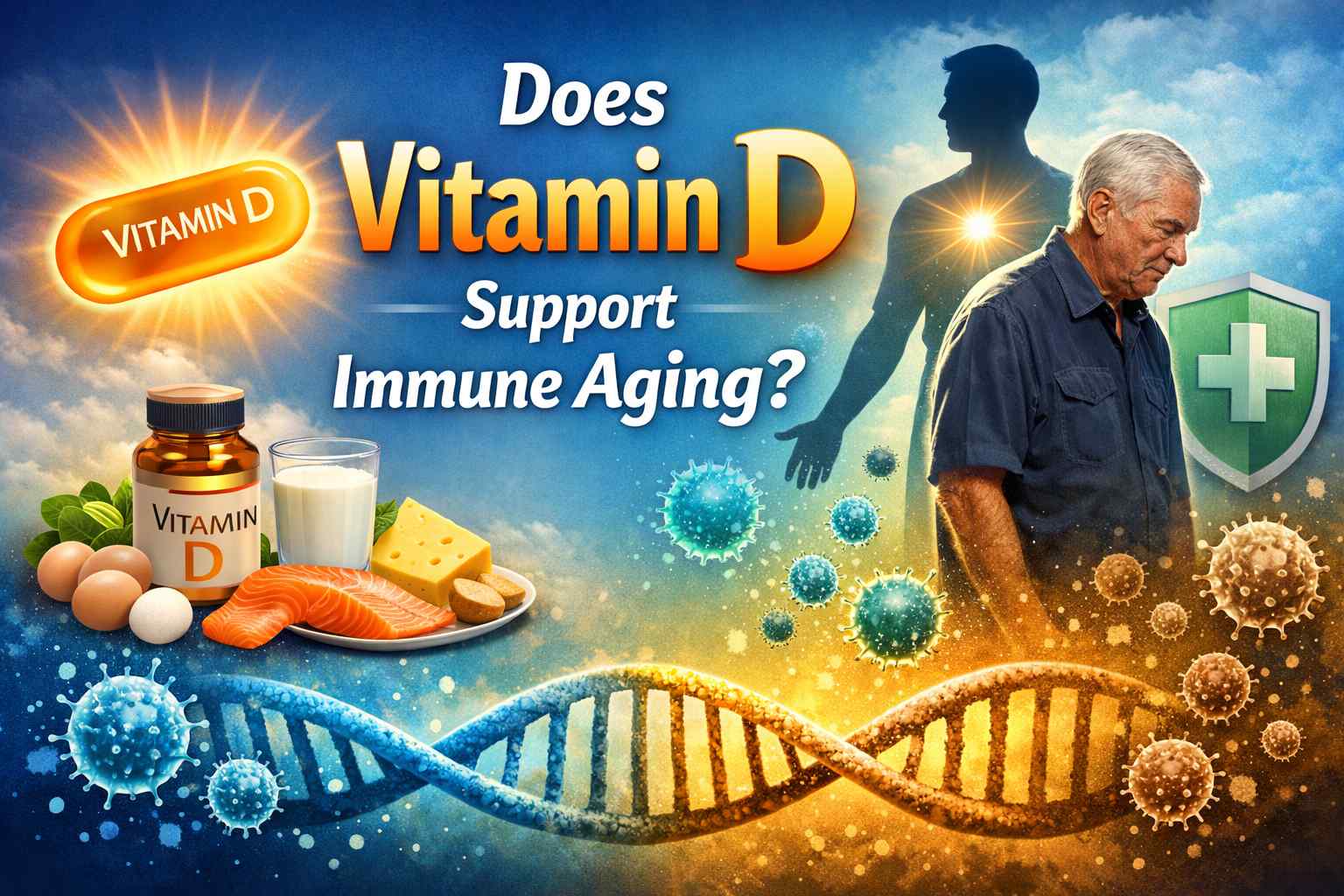
Does Vitamin D Support Immune Aging?
Introduction
TL;DR: Vitamin D may help support immune aging, especially in people with low vitamin D status. It appears to help regulate immune responses and inflammation, but it is not a standalone solution and works best as part of a broader healthy aging strategy.
Yes, vitamin D may support immune aging, particularly when deficiency is corrected. Evidence indicates that vitamin D helps regulate immune cell activity, supports a balanced inflammatory response, and may help preserve aspects of immune function as people age.
This matters because immune aging, also called immunosenescence, is linked to greater infection risk, weaker vaccine responses, chronic inflammation, and reduced resilience. Vitamin D is not a cure-all, but adequate levels appear to support healthier immune regulation over time. Learn more in our complete guide to longevity.
The main point is simple: vitamin D is most useful when it helps correct low status or maintain an adequate range. More is not always better, and long-term immune health also depends on sleep, exercise, metabolic health, diet, and overall lifestyle.
Understanding Immune Aging and Vitamin D
What Is Immune Aging and Why Does It Matter?
Immune aging refers to the gradual decline and dysregulation of immune function that occurs with age. This process can reduce the body’s ability to respond effectively to infections, lower vaccine responsiveness, and increase chronic low-grade inflammation, often called inflammaging.
Immune aging matters because it affects more than infection risk. It is also tied to broader aging processes, including recovery, healthspan, inflammation, and age-related disease risk. Supporting immune function over time is therefore an important part of healthy aging.
The Role of Vitamin D in Immune Function
Vitamin D is involved in far more than bone health. Immune cells such as T cells, B cells, macrophages, and dendritic cells have vitamin D receptors, which means vitamin D can influence how the immune system detects threats and regulates responses.
Research suggests vitamin D helps support innate immunity, which is the body’s first-line defense, while also helping regulate adaptive immunity, which is more targeted and specialized. It may also help moderate excessive inflammation, which becomes more relevant with aging.
This is why vitamin D is often discussed in the context of immune aging. A more balanced immune response may be just as important as a stronger one.
How Vitamin D May Support Immune Aging
Can Vitamin D Help Slow Down Immune Decline?
Vitamin D may help slow some aspects of immune decline, although the effect is likely modest and depends heavily on baseline vitamin D status. Research suggests vitamin D supports antimicrobial peptides, helps regulate inflammatory signaling, and may improve how immune cells respond to pathogens.
These effects may be especially relevant in older adults, who are more likely to have lower vitamin D levels due to reduced skin synthesis, less sun exposure, and other age-related factors. In that context, correcting deficiency may support more resilient immune function.
How Might Vitamin D Influence Inflammaging?
One reason vitamin D is studied in aging is its potential role in regulating inflammation. Chronic low-grade inflammation is a hallmark of aging and is linked to poorer immune function, reduced recovery, and worse long-term health outcomes.
Evidence indicates that vitamin D may help modulate inflammatory pathways rather than simply “boost” immunity. That distinction matters. Immune longevity depends on balance, not constant activation. A well-regulated immune system can respond when needed without staying chronically inflamed.
This broader regulatory role also connects vitamin D to metabolism, biomarkers of inflammation, and overall healthspan.
The Evidence Behind vitamin D and immune aging
What Does Scientific Research Say About Vitamin D and Immune Aging?
Scientific evidence suggests vitamin D status is associated with immune health, especially in older adults and in people with deficiency. Low vitamin D levels have been linked with higher susceptibility to certain infections and poorer immune regulation, although this does not prove vitamin D alone causes these outcomes.
Intervention studies on supplementation show mixed results, which is common in nutrition research. The clearest benefits tend to appear in people who start with low vitamin D status rather than in those who already have adequate levels. That is an important nuance when discussing whether vitamin D supports immune aging.
Overall, the evidence supports maintaining adequate vitamin D levels, but it does not support the idea that high-dose supplementation is universally beneficial for immune longevity.
Are There Risks or Limitations to Relying on Vitamin D?
Yes. Vitamin D can be helpful, but it is not enough on its own. Immune aging is influenced by many factors, including sleep, exercise, obesity, chronic disease, diet quality, and stress. Vitamin D should be viewed as one part of a wider healthy aging strategy.
There are also safety limits. Excessive vitamin D intake can lead to toxicity, including elevated calcium levels and related complications. For that reason, supplementation is best matched to individual needs rather than taken in very high doses without a clear reason.
A practical approach is to aim for adequacy, not excess, and to use testing when appropriate.
Practical Tips for Optimizing Vitamin D to Support Immune Aging
How Can I Naturally Boost My Vitamin D Levels?
Sun exposure is one of the main ways the body produces vitamin D, although this varies by season, latitude, skin tone, age, and time spent outdoors. Dietary sources such as oily fish, fortified foods, and egg yolks can also contribute, but diet alone is often not enough for everyone.
For many people, especially in winter or in regions with limited sunlight, supplementation may be the most practical way to maintain adequate levels. This is particularly relevant in older adults, who often produce less vitamin D from sunlight.
What Dosage of Vitamin D Is Recommended for Immune Support?
The right dose depends on the individual. Factors such as current vitamin D status, age, body size, diet, sunlight exposure, and medical history all influence how much is appropriate. That is why a one-size-fits-all approach is not ideal.
In general, maintaining adequacy is the goal. People considering regular supplementation, especially at higher doses, should base it on appropriate guidance and, when relevant, blood testing. Supporting immune aging works best when vitamin D is personalized rather than treated as a universal high-dose intervention.
What Else Should Be Combined With Vitamin D?
Vitamin D works best within a broader longevity framework. Sleep, exercise, protein intake, metabolic health, and body composition all influence immune aging. Regular exercise supports circulation, mitochondria, and inflammatory balance, while good sleep helps regulate immune signaling and recovery.
That broader context is important because immune resilience depends on the whole system, not one nutrient in isolation.
FAQs about vitamin D and immune aging
Frequently Asked Questions
Does vitamin D support immune aging?
Yes, vitamin D may support immune aging, especially when low vitamin D levels are corrected. It appears to help regulate immune responses and inflammation, which are both important in healthy aging.
Can vitamin D prevent age-related immune decline?
It may help support some aspects of immune function, but it does not fully prevent immune aging. Its role is supportive rather than curative, and the greatest benefit is likely in people with deficiency or insufficiency.
What are the best ways to support vitamin D for immune aging?
Safe sun exposure, vitamin D-rich foods, and supplementation when needed are the main strategies. For many people, the most effective approach is maintaining adequate levels consistently rather than relying on occasional high doses.
Are there risks associated with taking too much vitamin D?
Yes. Excess vitamin D can cause toxicity, including high calcium levels. That is why supplementation should aim for adequacy and, where appropriate, be guided by testing and individual needs.
References and Resources
The following resources provide useful background on vitamin D, immune function, and aging:
Authoritative Sources on vitamin D and immune aging
-
Vitamin D Fact Sheet — NIH Office of Dietary Supplements
ods.od.nih.govA practical overview of vitamin D, including intake, sources, safety, and its relevance to overall health.
-
Vitamin D and Immune Function in Older Adults — NCBI
ncbi.nlm.nih.govA review discussing how vitamin D may influence immune health in older adults and why deficiency matters.

-
WHO Guidelines on Vitamin D — World Health Organization
who.intGuidance on vitamin D and public health considerations across different populations.
-
Vitamin D and Immune Function — Healthline
healthline.comA readable summary of how vitamin D affects immune regulation, with practical context for supplementation.
-
Vitamin D Uses and Risks — WebMD
webmd.comAn accessible overview of vitamin D uses, dosing considerations, and the risks of excessive intake.
-
Vitamin D and COVID-19 — JAMA
jamanetwork.comA discussion of vitamin D in immune-related respiratory contexts, useful for understanding the broader debate around supplementation and immune outcomes.
Conclusion
Vitamin D may support immune aging, especially when low levels are corrected and adequacy is maintained over time. Its main value appears to be in helping regulate immune responses and inflammation rather than acting as a simple immune “booster.”
The best approach is practical and balanced: maintain adequate vitamin D status, avoid unnecessary excess, and combine it with other habits that support healthy aging, including exercise, sleep, diet quality, and metabolic health.
Find out more information about “vitamin D and immune aging”
Search for more resources and information: