
Does Calorie Restriction Without Malnutrition Extend Lifespan?
Does Calorie Restriction Without Malnutrition Extend Lifespan?
TL;DR: Calorie restriction without malnutrition — eating less while meeting all nutritional needs — consistently extends lifespan in animal models and improves several aging-related biomarkers in humans. However, whether it meaningfully extends human lifespan remains unproven, and it carries real risks if not carefully managed.
Calorie restriction without malnutrition is one of the most consistently studied interventions in longevity science. In animal models, reducing caloric intake while maintaining adequate nutrition reliably extends lifespan and delays the onset of age-related disease. In humans, the evidence is more limited — but controlled trials do show improvements in metabolic health, inflammation, and several biomarkers associated with aging. Whether these benefits translate into a meaningfully longer life in humans is not yet established.
What Calorie Restriction Without Malnutrition Actually Means
The Core Concept
Calorie restriction without malnutrition — sometimes called CRON (Calorie Restriction with Optimal Nutrition) — means reducing total caloric intake while ensuring that all essential nutrients are adequately supplied. This includes vitamins, minerals, essential amino acids, and fatty acids. In other words, fewer calories, but no nutritional gaps.
This is an important distinction. Simply eating less, particularly through restriction of varied food groups or through low-quality diets, risks deficiency. The longevity-relevant version of calorie restriction requires deliberate attention to food quality, not just quantity. As a result, nutrient-dense foods — vegetables, lean proteins, legumes, healthy fats — become central to the approach.
How It Is Thought to Affect Aging
Calorie restriction is believed to influence aging through several overlapping biological mechanisms. Key among these are:
- Autophagy activation — the process by which cells clear damaged components, reducing cellular dysfunction associated with aging.
- AMPK activation and mTOR suppression — pathways that regulate cellular energy sensing and growth. Calorie restriction tends to activate AMPK and suppress mTOR, a combination associated with slower biological aging in model organisms.
- Reduced oxidative stress and inflammation — lower caloric intake is associated with reduced production of reactive oxygen species and lower levels of systemic inflammation, both of which contribute to age-related disease.
- Improved insulin sensitivity and metabolic efficiency — research consistently shows that moderate calorie restriction improves markers of metabolic health, including fasting insulin and blood glucose.
For broader context on how diet intersects with these pathways, see our guide on Advanced Diet and Longevity.
The Science: What the Evidence Shows
Animal Studies: Consistent and Compelling
The animal evidence for calorie restriction is among the most robust in longevity research. In species ranging from yeast and nematodes to mice and rhesus monkeys, reducing caloric intake — typically while maintaining full micronutrient supply — consistently extends both mean and maximum lifespan.
In rhesus monkey studies, calorie restriction reduced the incidence of age-related conditions including cardiovascular disease, diabetes, and certain cancers, and improved several aging biomarkers. That said, results across different monkey studies were not entirely uniform, suggesting that species background, diet composition, and the age at which restriction begins all matter.
Importantly, the magnitude of lifespan extension in animal models is often substantial — sometimes 20–40% in rodents. However, translating this directly to humans is not straightforward, and researchers caution against assuming the same effect size would apply.
Human Studies: Promising Biomarkers, Unproven Lifespan Effects
Human evidence comes primarily from controlled trials rather than long-term lifespan observation. The CALERIE trial — the most rigorous human calorie restriction study to date — showed that moderate calorie restriction over two years produced meaningful improvements in several health-relevant markers: lower inflammation, improved insulin sensitivity, reduced blood pressure, and lower LDL cholesterol.
These are biomarkers associated with reduced risk of age-related disease, but they do not confirm that human lifespan is extended. No long-term human trial has tracked participants long enough to measure actual longevity outcomes. Observational data from populations that naturally eat fewer calories (such as some traditional Okinawan communities) suggest associations with longer healthy life, but these populations differ in many lifestyle and dietary factors simultaneously, making causal conclusions difficult.
In short, current evidence supports the idea that calorie restriction without malnutrition improves several aging-relevant health markers in humans. Whether it extends lifespan in the way demonstrated in animal models remains an open and active research question. Learn more in our complete guide to longevity.
Practical Implications
What a Sensible Approach Looks Like
For those interested in calorie restriction as a longevity strategy, the practical priority is food quality first. A moderate reduction in overall caloric intake built around nutrient-dense whole foods — vegetables, legumes, fish, lean proteins, whole grains, and healthy fats such as olive oil — is more sustainable and safer than aggressive restriction.
This approach aligns closely with Mediterranean-style dietary patterns, which have their own consistent evidence base for reduced mortality and improved healthspan. For context on how this connects to broader dietary evidence, our article on whether the Mediterranean diet reduces mortality covers the relevant research.
There is no established calorie target that is universally appropriate. Individual needs vary significantly based on age, body composition, activity level, and health status. The evidence supports the general principle of avoiding chronic overconsumption rather than prescribing a specific reduction percentage.
Relationship to Other Eating Patterns
Calorie restriction overlaps conceptually with intermittent fasting and time-restricted eating, which may achieve some similar metabolic effects through different mechanisms. However, these are distinct approaches with their own evidence profiles. Calorie restriction without malnutrition refers specifically to overall intake reduction across the day, not to timing patterns. For those exploring both, it is worth understanding where the evidence for each is stronger or weaker rather than treating them as equivalent. See our article on whether intermittent fasting increases lifespan for a focused review of that evidence.
Risks, Limitations, and Important Caveats
The Risk of Inadequate Nutrition
The most significant practical risk of calorie restriction is nutritional inadequacy. If restriction is too aggressive, or if food choices are poor, deficiencies in protein, micronutrients, and essential fats can develop. This is particularly relevant for older adults, who already face increased risk of muscle loss (sarcopenia), bone density reduction, and micronutrient deficiency.
In practice, this means that calorie restriction without adequate protein intake could accelerate muscle mass loss rather than promote healthy aging. Ensuring sufficient protein — particularly for older individuals — is an essential consideration that sits alongside any calorie reduction strategy.
Limitations of the Current Evidence
Despite decades of research, several important limitations remain:
- Long-term human randomised controlled trials are extremely difficult to conduct and largely absent from the literature.
- Individual responses to calorie restriction vary substantially, likely due to genetics, baseline metabolic health, and dietary context.
- Most human trials are short to medium term, limiting conclusions about lifespan effects.
- The degree of restriction that is beneficial — versus harmful — is not precisely defined for humans.
Overall, the evidence justifies cautious optimism about calorie restriction as a component of a longevity-oriented diet. It does not justify aggressive restriction, particularly without professional guidance, and particularly for those who are older, underweight, or have existing health conditions.
Frequently Asked Questions
Does calorie restriction without malnutrition extend lifespan?
In animal models, yes — consistently and significantly. In humans, calorie restriction improves several biomarkers associated with healthy aging, but direct evidence of lifespan extension is not yet established. The available data supports its potential, while stopping short of confirming it.
What are the key factors for successfully implementing calorie restriction without malnutrition?
The most important factors are food quality, gradual implementation, and adequate intake of protein and micronutrients. A diet built around whole, nutrient-dense foods makes it far easier to reduce calories without creating nutritional gaps. Professional guidance is advisable, particularly for older adults or those with health conditions.
Are there risks associated with calorie restriction without malnutrition?
Yes. If not carefully managed, calorie restriction can lead to protein insufficiency, micronutrient deficiencies, muscle loss, and reduced immune function. These risks increase with age and with more aggressive restriction. Moderate reduction with attention to nutritional completeness substantially reduces — but does not eliminate — these risks.
Can calorie restriction improve overall health even if it doesn’t extend lifespan?
Evidence suggests yes. Controlled human trials show improvements in insulin sensitivity, blood pressure, inflammation markers, and cholesterol profiles. These changes are associated with reduced risk of cardiovascular disease, type 2 diabetes, and other age-related conditions — meaningful health benefits regardless of any direct lifespan effect.
Is calorie restriction the only dietary approach with longevity evidence?
No. Other dietary patterns — particularly Mediterranean-style diets emphasising whole foods, olive oil, fish, legumes, and vegetables — have consistent evidence linking them to reduced mortality and improved healthspan. Calorie restriction is one well-studied mechanism within a broader picture of diet and healthy aging.
References and Resources
The following sources provide authoritative evidence on calorie restriction, nutrition, and longevity:
Authoritative Sources on Calorie Restriction and Lifespan
-
National Institute on Aging: Calorie Restriction and Longevity
nia.nih.govAn overview of how calorie restriction influences aging and longevity, with emphasis on the importance of maintaining nutritional adequacy.
-
Calorie Restriction and Aging: Current Evidence and Future Directions
ncbi.nlm.nih.govAn academic review of the biological mechanisms underlying calorie restriction and its potential relevance to human aging and lifespan.
-
Nutritional Strategies for Longevity
sciencedirect.comExamines how dietary quality and caloric intake interact to influence aging, with a focus on nutrient-dense dietary patterns.

-
FDA Nutrition Basics
fda.govFoundational information on balanced diets, essential nutrients, and how to avoid malnutrition while managing caloric intake.
-
WHO: Healthy Ageing Strategies
who.intDiscusses nutrition, physical activity, and lifestyle factors contributing to healthy ageing at a population level.
-
Mayo Clinic: Nutrition and Aging
mayoclinic.orgPractical guidance on balancing caloric intake with nutritional requirements as part of a healthy ageing strategy.
-
The American Society for Nutrition
nutrition.orgAccess to peer-reviewed nutrition science research, including studies on calorie restriction and its relationship to healthy ageing.
-
Scientific American: Aging and Nutrition
scientificamerican.comAccessible coverage of the latest scientific findings on how diet influences lifespan and the biology of aging.
Conclusion
Calorie restriction without malnutrition is one of the most extensively studied interventions in longevity science, and the evidence — particularly from animal models — is genuinely compelling. In humans, controlled trials consistently show improvements in metabolic health, inflammation, and aging-relevant biomarkers. However, direct proof that it extends human lifespan remains absent, and this is an important distinction to hold.
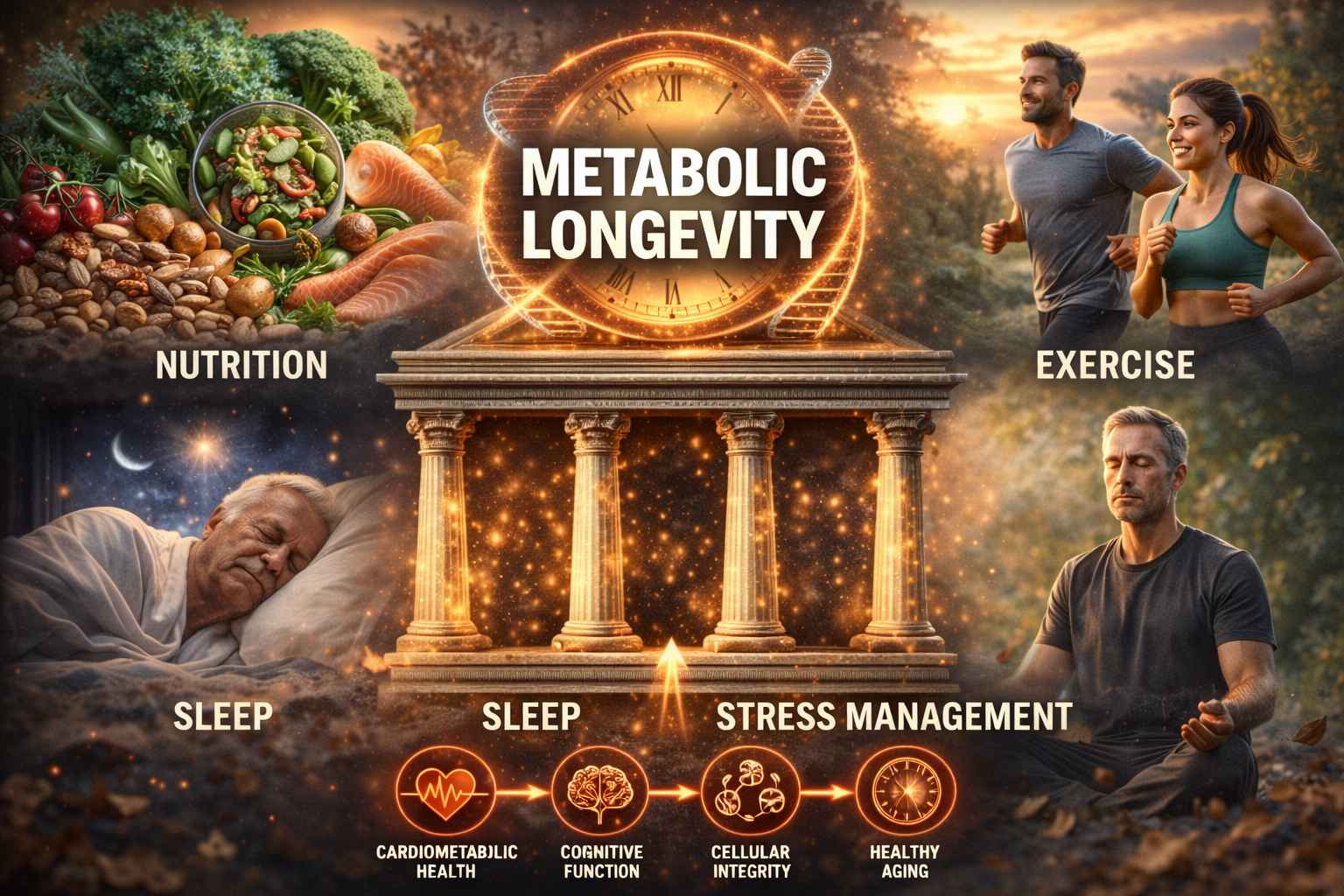
In practice, the most evidence-supported approach is not aggressive restriction but rather a moderate reduction in caloric intake built around nutritionally complete, whole-food dietary patterns. For most people, this means prioritising food quality and avoiding chronic overconsumption, rather than pursuing a specific calorie target. As with most longevity-relevant interventions, the effects are likely to be more meaningful when embedded in a broader set of healthy behaviours — including adequate physical activity, quality sleep, and stress management — rather than treated as a standalone strategy.
Find out more information about calorie restriction and lifespan
Search for more resources and information: