How Does Skin Aging Reflect Biological Age?
How Does Skin Aging Reflect Biological Age?
TL;DR: Skin aging reflects some aspects of biological age — particularly through collagen loss, oxidative stress, and cellular senescence — but it is not a precise or standalone measure. External factors like UV exposure and smoking can accelerate visible skin aging independently of internal health, so skin changes are best interpreted alongside other biomarkers.
Skin Aging as a Biological Signal
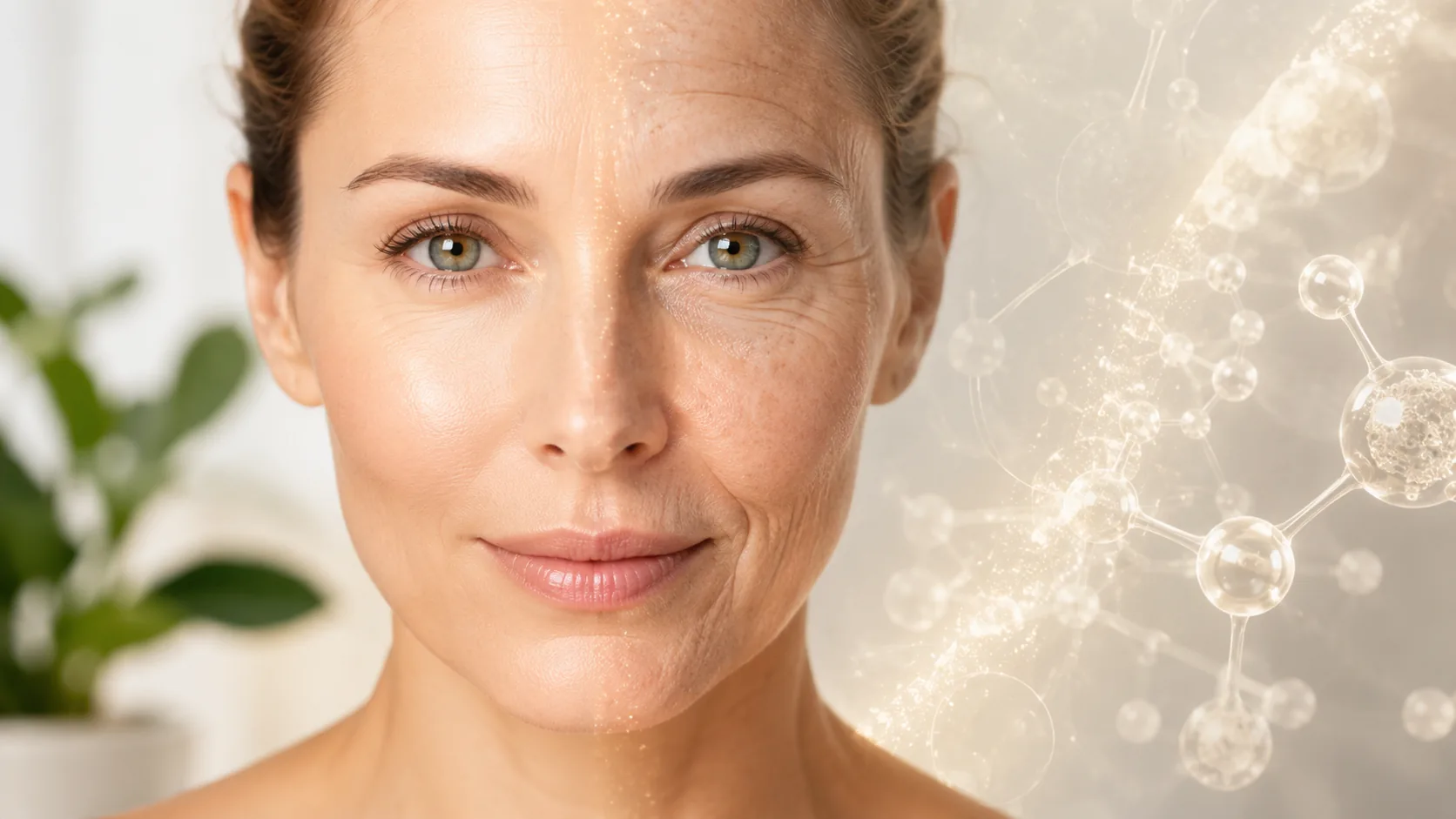
Skin aging does reflect biological processes, but the relationship is partial rather than direct. Visible changes — including wrinkles, reduced elasticity, thinning, and pigmentation — correspond to real molecular events: collagen degradation, declining fibroblast activity, oxidative stress accumulation, and cellular senescence. These are the same mechanisms involved in systemic aging. However, because skin is also heavily exposed to environmental insults, its appearance can diverge from internal biological age in either direction.
For this reason, skin is better understood as a partial indicator of biological aging rather than a reliable standalone measure. It provides meaningful signal, particularly when changes are severe or premature, but it should not be conflated with the kind of clinical biomarkers — such as eGFR, bone density, or VO₂ max — that are validated for assessing organ-specific decline. Learn more in our complete guide to longevity.
What Skin Changes Actually Reveal
Visible Signs and Their Biological Basis
The most observable features of skin aging — fine lines, sagging, loss of volume, and age spots — are not superficial. Each reflects an underlying biological event. Wrinkle formation is closely tied to reduced collagen type I and III production, driven partly by declining fibroblast activity and partly by cumulative oxidative damage. Skin sagging reflects loss of both collagen and elastin fibres. Pigmentation changes — often called age spots or solar lentigines — result from irregular melanocyte activity, frequently accelerated by UV exposure.
Importantly, these changes begin earlier than most people recognise. Research suggests that measurable collagen loss starts in the mid-twenties, though visible signs typically emerge later, depending on genetics and environmental exposure.
Skin Thickness, Texture, and Cellular Decline
Skin thinning is a well-documented feature of aging. The dermis — the structural layer beneath the surface — loses thickness progressively, reflecting reduced fibroblast density and extracellular matrix turnover. This thinning correlates with broader connective tissue aging and reduced regenerative capacity at the cellular level.
Texture changes, including increased roughness and reduced moisture retention, reflect declining sebaceous gland activity and impaired barrier function. These changes are biologically meaningful: they indicate reduced epidermal renewal rates and, in some cases, low-grade chronic inflammation — a process sometimes referred to as inflammaging, which is increasingly recognised as a driver of systemic aging across multiple organ systems. For broader context, see our article on organ-specific aging.
Factors That Influence How Skin Ages
Genetics
Genetic variation substantially influences skin aging trajectories. Genes governing collagen synthesis, antioxidant defence, DNA repair capacity, and melanin production all affect how quickly visible aging appears. This explains why individuals with similar lifestyles and environments can show markedly different rates of skin aging. Genetic factors set a baseline, but they are not deterministic — lifestyle and environment modify outcomes significantly.
UV Exposure and Environmental Damage
UV radiation is the single largest environmental driver of accelerated skin aging, a process termed photoaging. UV exposure generates reactive oxygen species, damages dermal collagen, triggers inflammatory cascades, and promotes DNA mutations in skin cells. The result is earlier and more severe wrinkling, pigmentation, and loss of elasticity than would occur from intrinsic aging alone.
Other environmental factors — including air pollution, cigarette smoke, and repeated heat exposure — contribute through similar oxidative and inflammatory pathways. In practice, heavy environmental exposure can make skin appear biologically older than a person’s chronological or internal biological age would suggest.
Chronic Inflammation and Metabolic Health
Internal biological state does influence skin condition. Elevated systemic inflammation, insulin resistance, and poor glycaemic control have each been associated with accelerated skin aging. Advanced glycation end-products (AGEs), which accumulate with chronically elevated blood glucose, cross-link collagen fibres and reduce skin elasticity. This is one mechanism through which metabolic health has a genuinely visible effect on skin appearance — and a plausible link between skin condition and internal biological aging.
Can Lifestyle and Skincare Slow Skin Aging?
Lifestyle Factors With Meaningful Evidence
Several lifestyle factors influence skin aging through established biological pathways. Consistent sun protection — particularly broad-spectrum SPF — is the most evidence-supported intervention for slowing photoaging. Smoking cessation has documented benefits: smoking accelerates collagen degradation and impairs skin microcirculation, so stopping removes a significant accelerant.
Diet also plays a role. Adequate protein intake supports collagen synthesis. Diets rich in antioxidants — from vegetables, fruits, and polyphenol-containing foods — may partially offset oxidative damage. Regular physical activity improves skin microcirculation and has been associated in some studies with more youthful skin structure in older adults, though the effect size is modest. Sleep quality matters as well: growth hormone secretion during deep sleep supports tissue repair, and poor sleep is associated with increased inflammatory markers that affect skin integrity.
Skincare Interventions
Topical retinoids (vitamin A derivatives) have the strongest evidence base among skincare ingredients for reducing fine lines and improving skin thickness. They work by stimulating fibroblast activity and increasing collagen production. Antioxidant serums — particularly vitamin C — can reduce oxidative stress at the skin surface. Moisturisers support barrier function rather than reversing structural aging.
That said, skincare modifies the appearance and surface condition of aging skin; it does not reverse the underlying biological process. Improvements in texture and hydration are real, but they should not be interpreted as a reduction in biological age. The distinction between appearance management and genuine biological reversal matters — the latter is not an established outcome of any current skincare regimen.
For related context on whether lifestyle interventions can genuinely reverse organ aging, see our article on whether organ-specific aging is reversible.
Limitations of Skin as a Biological Age Marker
Skin aging is a visible, accessible signal — but it has significant limitations as a biological age measure. Because external factors (UV, smoking, pollution) can dramatically accelerate visible skin aging without necessarily accelerating internal organ aging, a heavily sun-damaged person may look significantly older than their biological age across other organ systems. The reverse is also possible: someone who has protected their skin carefully may look younger than their internal biological age suggests.
Additionally, cosmetic procedures — including injectables, laser treatments, and topical actives — can substantially alter the appearance of skin aging without changing any underlying biological process. This means that appearance alone is unreliable as an objective measure.
For these reasons, skin aging is not used as a primary clinical biomarker in the way that eGFR (kidney function), bone density (DEXA), or VO₂ max (cardiorespiratory fitness) are. It is, however, a useful qualitative signal — particularly when changes are premature, rapid, or accompanied by other signs of systemic poor health.
In the context of aging research, some investigators are exploring skin-based epigenetic clocks — measurements of DNA methylation patterns in skin cells — as a more objective biological age marker. However, this work remains at the research stage and is not yet a validated clinical tool.
Conclusion
Skin aging reflects genuine biological processes — collagen loss, oxidative stress, cellular senescence, and chronic inflammation — that are relevant to systemic aging. In that sense, skin condition carries real biological signal. However, it is not a precise or validated measure of biological age because environmental exposures, genetics, and cosmetic interventions can all distort the relationship between visible skin appearance and internal health.
The most accurate interpretation is that severe or premature skin aging warrants attention as a potential indicator of broader biological stress, while normal age-related changes should not be over-medicalised. Lifestyle factors — particularly sun protection, a balanced diet, regular exercise, and not smoking — have meaningful, evidence-supported effects on skin aging and are worth prioritising both for skin health and for healthspan more broadly.

References and Resources
The following sources provide further reading on how skin aging relates to biological aging processes:
Authoritative Sources on Skin Aging and Biological Age
-
The Science Behind Skin Aging and Biological Age
ncbi.nlm.nih.govA peer-reviewed overview of how skin aging markers correlate with internal biological aging processes, including collagen decline, oxidative stress, and cellular senescence.
-
World Health Organization on Aging
who.intWHO context on aging, biological markers, and the public health significance of healthy aging research.
-
American Academy of Dermatology on Skin Aging
aad.orgClinical explanation of skin aging signs, mechanisms, and their relationship to overall health from the leading US dermatology body.
-
Oxidative Stress and Skin Aging
ncbi.nlm.nih.govExamines how reactive oxygen species damage skin cells and contribute to accelerated biological aging, alongside potential protective strategies.
-
Lifestyle Factors and Skin Aging
sciencedaily.comSummarises research on how diet, physical activity, and lifestyle habits influence skin health and biological aging markers.
-
WebMD on Aging Skin
webmd.comAccessible overview of skin aging signs, contributing factors, and practical guidance for slowing visible aging.
-
Genetics and Skin Aging
ncbi.nlm.nih.govDiscusses genetic factors influencing skin and biological aging trajectories, with implications for personalised approaches to skin health.
FAQ
Does skin aging accurately reflect biological age?
Partially. Skin aging tracks real biological processes — including collagen loss, oxidative stress, and cellular senescence — that are relevant to systemic aging. However, heavy UV exposure, smoking, and cosmetic interventions can all distort the relationship between skin appearance and internal biological age. Skin is a useful qualitative signal, not a precise standalone measure.
How does skin aging relate to internal biological processes?
Skin aging shares mechanisms with internal aging: declining collagen production, accumulating oxidative damage, chronic low-grade inflammation, and cellular senescence all occur in both skin and other organ systems. Metabolic factors — such as elevated blood glucose leading to AGE accumulation — can also accelerate skin aging alongside internal organ aging, creating a genuine biological link.
Can lifestyle changes slow skin aging?
Yes, to a meaningful degree. Consistent sun protection, not smoking, regular exercise, adequate protein intake, and good sleep quality all have evidence-supported effects on skin aging rate. These habits work through established biological pathways — reducing oxidative stress, supporting collagen synthesis, and limiting inflammation. However, they slow rather than reverse the underlying aging process.
What are the limitations of using skin to assess biological age?
Skin appearance is heavily influenced by external factors — particularly UV exposure — that are independent of internal biological age. Cosmetic procedures can further obscure any relationship. As a result, skin aging is not used as a primary clinical biomarker in the way that validated measures such as eGFR, bone density, or VO₂ max are. It provides signal, but requires context.
Does caring for skin health benefit overall biological aging?
The lifestyle habits that benefit skin — managing inflammation, eating a balanced diet, exercising, and avoiding smoking — are also broadly protective for systemic health and longevity. In that sense, taking skin health seriously as part of a wider approach to healthy aging is well-supported. However, skincare products alone have no established effect on internal biological age.
Find out more information about “Does Skin Aging Reflect Biological Age”
Search for more resources and information: