How Do Senescent Cells Accumulate?
TL;DR: Senescent cells accumulate with age because damage-triggered senescence outpaces the body’s ability to clear these cells. Immune decline, chronic inflammation, and ongoing cellular stress all tip the balance toward build-up — and rising levels of senescent cells are linked to tissue dysfunction, inflammaging, and reduced healthspan.
Why Senescent Cells Accumulate With Age
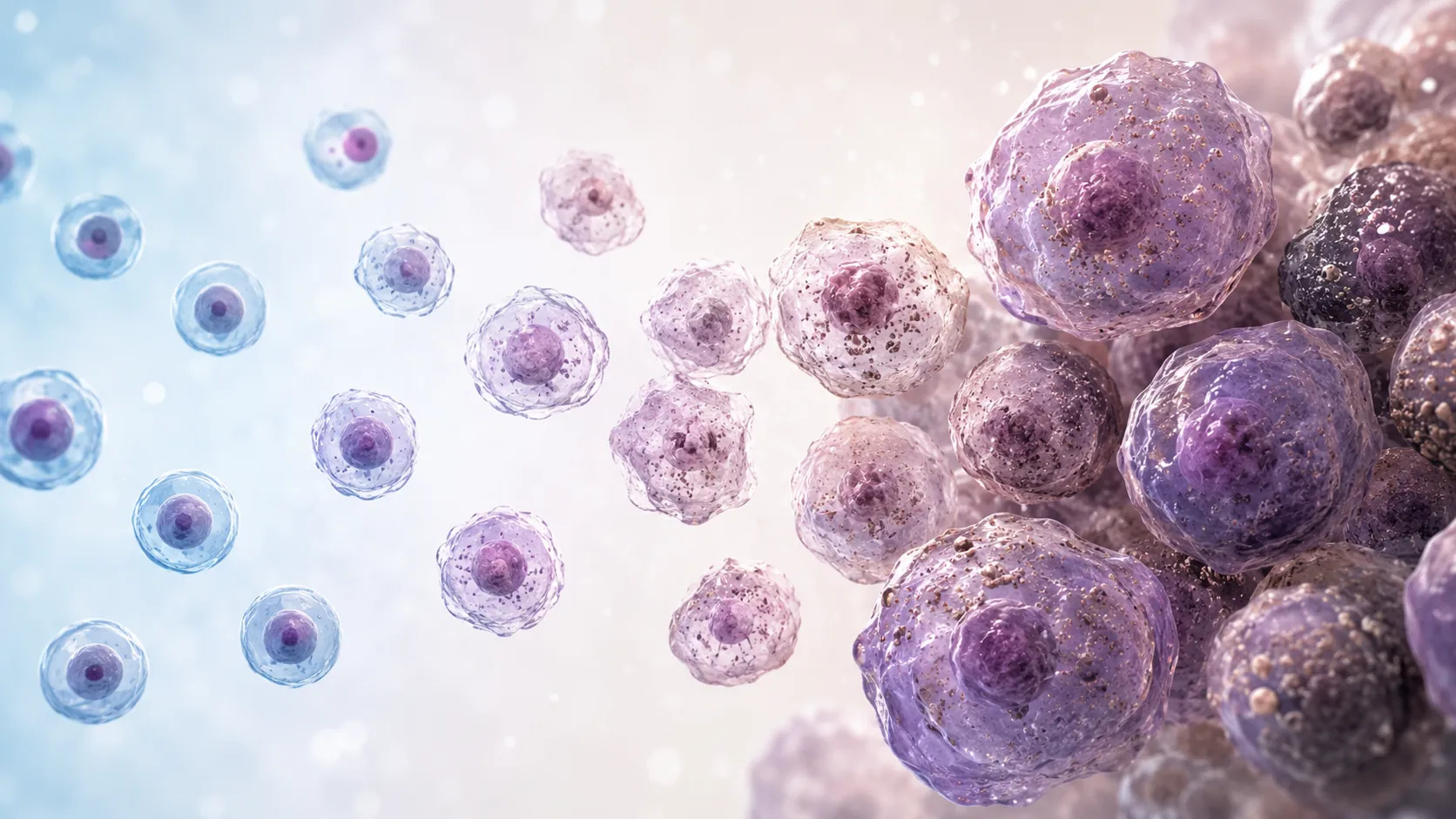
Senescent cells accumulate because two processes fall out of balance: cells enter senescence faster than the body can remove them. In younger, healthier tissue, immune cells — particularly natural killer cells and macrophages — identify and clear senescent cells relatively efficiently. With age, that clearance capacity declines, and senescent cells begin to build up in tissues throughout the body.
This accumulation is not simply a passive consequence of getting older. It reflects a progressive failure in cellular quality control — a process shaped by DNA damage, telomere shortening, oxidative stress, immune decline, and chronic low-grade inflammation. Understanding how this balance shifts is central to understanding why senescence is considered a hallmark of ageing.
For broader context on how senescence fits into ageing biology, see our article on what cellular senescence is and why it matters. You can also learn more in our complete guide to longevity.
What Triggers Cellular Senescence?
DNA Damage and Telomere Shortening
The most well-established trigger is DNA damage. When a cell sustains damage that repair mechanisms cannot fully resolve — whether from oxidative stress, radiation, toxins, or replication errors — it activates a damage response pathway that can halt cell division permanently. This is cellular senescence: a stable growth arrest that prevents a damaged cell from dividing and potentially becoming cancerous.
Telomere shortening is a closely related driver. Each time a cell divides, telomeres — the protective caps at the ends of chromosomes — become slightly shorter. Once telomeres reach a critically short length, the cell treats this as irreparable DNA damage and enters senescence. This process is particularly relevant in tissues with high cell turnover, such as the gut lining, skin, and immune system. Over decades, repeated cell divisions mean that more and more cells in these tissues reach their replicative limit.
Oncogenic and Oxidative Stress
Senescence can also be triggered by oncogenic stress — when a mutation activates a growth-promoting gene abnormally. In this context, senescence acts as a protective brake, preventing the cell from becoming malignant. This is one reason senescence is not purely harmful: in the short term, it suppresses cancer.
Oxidative stress is another important trigger. Reactive oxygen species generated by mitochondrial activity, inflammation, or environmental exposures cause cumulative DNA and protein damage. As a result, cells under sustained oxidative burden are more likely to enter senescence prematurely — a process sometimes called stress-induced premature senescence (SIPS).
Why Clearance Fails Over Time
The immune system is the primary mechanism for clearing senescent cells. Natural killer cells, cytotoxic T cells, and macrophages can recognise surface markers on senescent cells and eliminate them. In younger tissue, this surveillance is reasonably effective. However, the immune system itself deteriorates with age — a process known as immunosenescence.
As immune function declines, senescent cells that would previously have been cleared begin to persist. This is a critical shift. Even if the rate of new senescent cells forming remained constant, reduced clearance alone would cause accumulation. In practice, both processes worsen simultaneously: more cells enter senescence and fewer are removed.
Importantly, senescent cells are not passive once they accumulate. They secrete a range of inflammatory cytokines, proteases, and growth factors collectively known as the senescence-associated secretory phenotype, or SASP. This inflammatory signalling can push neighbouring healthy cells into senescence — a phenomenon called paracrine senescence — which further accelerates accumulation. In this way, a relatively small initial burden of senescent cells can expand into a broader tissue-level problem over time.
For a detailed explanation of this signalling environment, see our article on what the SASP is and how it drives inflammaging.
Factors That Accelerate Accumulation
Chronic Inflammation
Chronic low-grade inflammation — sometimes called inflammaging — both results from and drives senescent cell accumulation. Inflammatory signals damage cells and lower the threshold for entering senescence, while accumulated senescent cells release SASP factors that sustain inflammation. This creates a self-reinforcing cycle that is difficult to interrupt once established.
Metabolic Dysfunction
Poor metabolic health accelerates accumulation through several overlapping mechanisms. Elevated blood glucose promotes advanced glycation end-products and oxidative stress. Excess visceral fat generates pro-inflammatory cytokines. Insulin resistance impairs cellular repair pathways. As a result, people with obesity, type 2 diabetes, or metabolic syndrome tend to show higher senescent cell burden than metabolically healthy individuals of comparable age.
Environmental and Lifestyle Stressors
UV radiation, cigarette smoke, air pollution, and alcohol all increase DNA damage and oxidative stress, pushing cells toward senescence prematurely. Chronic psychological stress raises cortisol and inflammatory markers, which also contribute. These exposures do not cause senescence in isolation, but over years they meaningfully raise the rate at which cells accumulate damage beyond repair.
Genetic Predisposition
Genetics influence how efficiently cells repair DNA damage, how quickly telomeres shorten, and how robustly the immune system clears senescent cells. Some individuals are predisposed to faster cellular decline. That said, evidence suggests lifestyle and environmental factors play a substantial role — meaning genetic predisposition is not entirely deterministic.
Practical Implications: Can You Slow the Build-Up?
Current evidence suggests that lifestyle factors influencing senescent cell accumulation are largely the same foundations that support broader metabolic and cardiovascular health. This is not a coincidence — many of the mechanisms overlap.
Exercise reduces oxidative stress, improves immune function, lowers systemic inflammation, and supports mitochondrial health. Research suggests that regular physical activity is associated with lower markers of cellular senescence in several tissue types, though direct evidence in humans remains incomplete.
Diet quality influences oxidative burden and inflammatory signalling. Diets high in ultra-processed foods and refined carbohydrates promote the conditions that accelerate senescence. In contrast, diets rich in vegetables, polyphenols, and whole foods are associated with lower inflammatory markers — though the effect on senescent cell burden specifically has not been fully quantified in humans.
Sleep is when much cellular repair, immune regulation, and metabolic restoration occurs. Chronic sleep disruption impairs immune surveillance, elevates cortisol, and increases inflammatory tone — all of which may accelerate accumulation over time.
Avoiding unnecessary cellular stressors — smoking, excess alcohol, sustained UV exposure — reduces the rate at which cells accumulate irreparable damage in the first place.
Emerging senolytic interventions — compounds designed to selectively clear senescent cells — are a separate and still-developing area. Compounds such as fisetin, quercetin, and dasatinib have shown promising results in preclinical models, but robust human evidence is limited. These are not yet established as first-line strategies, and the lifestyle foundations above carry greater confidence across current evidence. For more on that topic, see our overview of what senolytics are and how they work.
References and Resources
Authoritative Sources
-
Cellular Senescence and Aging
ncbi.nlm.nih.govA comprehensive review of the mechanisms behind senescent cell accumulation and their relationship to age-related decline.
-
Senolytics and Aging
nature.comExplores therapeutic approaches targeting senescent cells, with a focus on the current state of evidence and remaining limitations.
-
Aging and Cellular Damage
aging-us.comProvides detailed insights into how cumulative cellular damage drives senescence and contributes to tissue ageing.
-
The American Federation for Aging Research
agingresearch.orgA useful resource for ongoing research into cellular senescence and potential interventions in ageing biology.
-
National Institute on Aging — Immune System and Aging
nia.nih.govExplains how age-related immune decline reduces the body’s capacity to clear senescent cells, contributing to accumulation.
-
Frontiers in Cell and Developmental Biology
frontiersin.orgCovers cellular damage pathways and therapeutic strategies relevant to understanding and potentially limiting senescent cell burden.
-
Nature Medicine — Clearing Senescent Cells
nature.comReviews the latest clinical and preclinical evidence on interventions targeting senescent cell accumulation.

Frequently Asked Questions
Why do senescent cells contribute to ageing?
Senescent cells secrete inflammatory cytokines, proteases, and other signalling molecules — collectively the SASP — that damage surrounding tissue and impair normal cellular function. As they accumulate, this sustained inflammatory signalling disrupts tissue repair, promotes chronic inflammation, and may accelerate further senescence in neighbouring cells.
Do senescent cells accumulate mainly due to increased damage or poor clearance?
Both processes contribute. With age, cells accumulate more irreparable DNA damage, and telomere shortening accelerates the rate at which cells reach their replicative limit. At the same time, age-related immune decline reduces the body’s capacity to clear senescent cells. In practice, these two mechanisms reinforce each other.
Can lifestyle changes affect the accumulation of senescent cells?
Evidence suggests yes, though the direct human data is still developing. Regular exercise, a diet low in ultra-processed foods, adequate sleep, and avoiding environmental stressors such as smoking all reduce the cellular damage and chronic inflammation that drive accumulation. These are the highest-confidence interventions currently available.
Are there therapies designed to reduce senescent cell accumulation?
Senolytics are a class of compounds — including dasatinib, quercetin, and fisetin — being studied for their ability to selectively eliminate senescent cells. Preclinical results in animals have been promising. However, robust human evidence is limited, and these interventions are not yet established as safe or effective for healthy individuals. Research is ongoing.
How does telomere shortening drive the accumulation of senescent cells?
Each cell division shortens telomeres slightly. When telomeres become critically short, the cell interprets this as irreparable DNA damage and enters senescence. This process is particularly significant in tissues with high cell turnover. Over decades, it becomes a meaningful driver of accumulation — especially when combined with declining immune clearance.
Conclusion
Senescent cells accumulate with age because the balance between cellular damage and immune clearance shifts progressively in the wrong direction. More cells enter senescence — driven by DNA damage, telomere shortening, oxidative stress, and metabolic dysfunction — while the immune system becomes less capable of removing them. The result is a rising burden of cells that are no longer functional but remain metabolically active, secreting inflammatory signals that degrade tissue health over time.
This accumulation is not inevitable at any fixed rate — lifestyle factors that reduce cellular stress and support metabolic and immune health can influence how quickly the balance tips. In contrast, senolytic interventions remain a promising but still-developing area, with meaningful human evidence yet to emerge. For now, the foundations of healthy ageing — exercise, sleep, diet quality, and metabolic health — remain the most evidence-backed way to limit senescence-related burden over a lifetime.
Find out more about how senescent cells accumulate
Search for more resources and information: