Is Rapamycin the Most Powerful Longevity Drug?
Is Rapamycin the Most Powerful Longevity Drug?
TL;DR: Rapamycin has the strongest animal evidence of any drug for extending lifespan, primarily through inhibition of the mTOR pathway. However, human evidence remains limited, its risks are real, and it is not approved for anti-ageing use — meaning its status as the “most powerful” longevity drug is scientifically plausible but not yet proven in humans.
Rapamycin is widely considered the leading candidate for a pharmaceutical longevity intervention, based on reproducible animal data and a well-understood biological mechanism. In mouse studies, it has extended lifespan more consistently than almost any other compound tested. That said, the jump from animal models to proven human benefit has not yet been made, and significant safety questions remain. Calling it the “most powerful longevity drug” reflects real scientific interest — but it should be understood as a claim based on preclinical evidence, not established human medicine.
This article focuses on what rapamycin is, how it works, what the evidence supports, and what the risks look like in practice. For a broader view of pharmaceutical and supplement approaches to extending healthspan, learn more in our complete guide to longevity.
How Rapamycin Works: The mTOR Pathway
Targeting a Core Ageing Mechanism
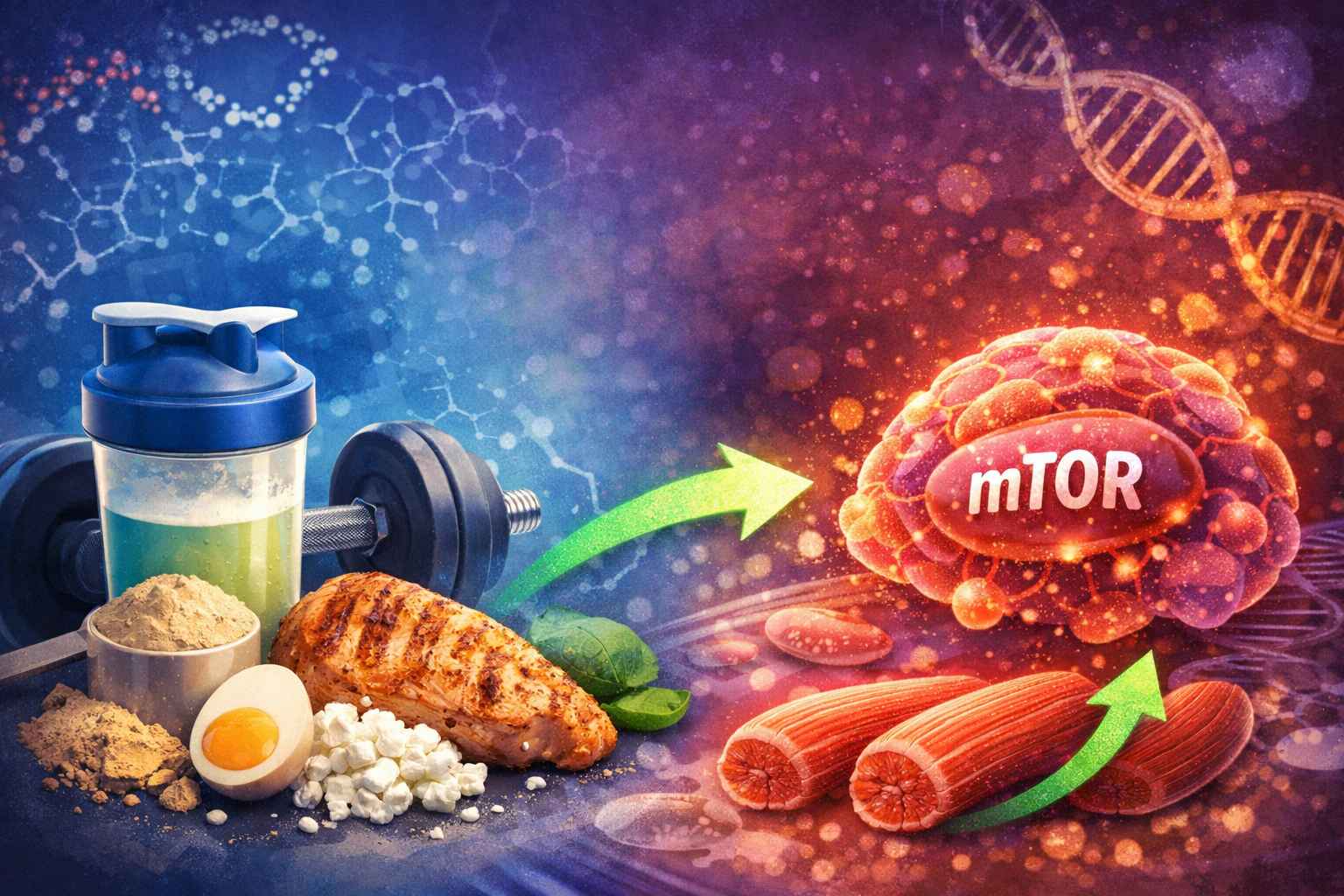
Rapamycin works by inhibiting a protein complex called mTOR (mechanistic target of rapamycin). mTOR acts as a central regulator of cell growth, protein synthesis, metabolism, and autophagy — the process by which cells clear damaged components. As a result, when mTOR is overactive, cells tend to grow and replicate without adequate quality control, which is associated with accelerated ageing, metabolic dysfunction, and increased cancer risk.
By inhibiting mTOR, rapamycin partially mimics the effects of caloric restriction, one of the most reliably life-extending interventions observed across species. This means it pushes cells toward maintenance and repair rather than unchecked growth — a shift that appears to slow several hallmarks of biological ageing.
Importantly, rapamycin also reduces cellular senescence, the accumulation of damaged cells that can no longer divide but remain metabolically active and drive chronic inflammation. This pro-inflammatory state — sometimes called “inflammageing” — is a key driver of age-related disease. By moderating both mTOR activity and senescent cell burden, rapamycin acts on two of the most significant mechanisms linking biology to ageing.
What the Evidence Actually Shows
Animal Studies: Strong and Reproducible
The animal data for rapamycin is genuinely impressive. In multiple independent mouse studies, including those conducted through the National Institute on Aging’s Interventions Testing Program, rapamycin extended median and maximum lifespan by roughly 10–25%, even when treatment began in mid-to-late life. This is notable because most longevity interventions in mice fail to replicate across independent labs. Rapamycin has done so repeatedly.
Beyond lifespan, animal studies also show improvements in healthspan markers — including reduced tumour incidence, better cardiac function, and improved immune resilience. These findings suggest rapamycin may influence ageing biology broadly, not just slow a single pathway.
Human Evidence: Limited and Preliminary
In contrast, direct evidence in humans is far more limited. Rapamycin is an approved immunosuppressant used in organ transplant recipients, and some data from that context offers insight into its effects — but transplant patients are not a representative population for longevity research.
A small number of trials have explored low-dose or intermittent rapamycin in healthy older adults. Some have shown improvements in immune function markers, and observational data from self-experimenters in the longevity community suggests subjective benefits. However, these are not controlled trials with hard endpoints, and the data should be treated with caution. Human evidence is currently insufficient to confirm that rapamycin extends lifespan or healthspan in healthy people.
For more context on how pharmaceutical and peptide-based longevity interventions compare, see our overview of bioregulator peptides for longevity.
Potential Risks and Safety Considerations
Real Side Effects at Clinical Doses
Rapamycin carries meaningful risks, particularly at the doses used in transplant medicine. The most significant concern is immunosuppression — the same mechanism that makes it useful for preventing organ rejection also reduces the body’s ability to fight infection. At lower, intermittent doses proposed for longevity use, this risk may be reduced, but it is not eliminated.
Other documented side effects include mouth ulcers, impaired wound healing, elevated blood lipids, and potential disruption to glucose metabolism. In some studies, mTOR inhibition has been associated with insulin resistance — an ironic finding given that metabolic health is central to healthy ageing. This highlights a broader principle: a mechanism that is beneficial in one context or dose range may be harmful in another.
Dosing Uncertainty in a Longevity Context
The appropriate dose and frequency of rapamycin for longevity purposes in healthy humans is genuinely unknown. The doses used in transplant patients are far higher than those being explored for anti-ageing. However, even at lower doses, individual variation in pharmacokinetics means effects — and risks — may differ substantially between people.
Regular blood work to monitor immune markers, lipids, and metabolic function is considered essential by most clinicians who work with rapamycin in a longevity context. Self-administration without medical oversight carries meaningful risk.
Who Should Avoid Rapamycin?
Several groups face elevated risk with rapamycin use. People with active or recurrent infections, immune deficiencies, or a history of serious immune-related conditions should avoid it or consult a specialist before considering it. Those taking medications that interact with the cytochrome P450 enzyme system — which includes many common drugs — face potential pharmacokinetic interactions that can raise rapamycin blood levels unpredictably.
Anyone considering rapamycin for longevity purposes should do so only under the supervision of a clinician who understands both its pharmacology and the specific context of off-label longevity use. It is not a supplement, and it should not be approached as one.
References and Resources
Authoritative Sources on Rapamycin and Longevity
-
Rapamycin and Aging: A Review
nature.comAn in-depth review of experimental evidence supporting rapamycin’s role in extending lifespan and healthspan across multiple animal models.
-
mTOR Pathway and Aging
nih.govA comprehensive overview of mTOR’s role in cellular ageing and the rationale for pharmacological inhibition in a longevity context.
-
Rapamycin and Human Longevity
aging-us.comA review of emerging human data and clinical trials exploring rapamycin’s anti-ageing potential, with discussion of current evidence limitations.
-
mTOR Inhibition and Aging: Perspectives
cell.comA review of the therapeutic potential of mTOR inhibitors and their implications for age-related disease prevention.
-
FDA: Rapamycin Overview
fda.govOfficial information on rapamycin’s approved uses, regulatory status, and ongoing research directions.
-
Latest Research on Rapamycin
researchgate.netAccess to scientific discussions and studies on rapamycin’s potential as a longevity intervention.

-
Medical News Today: Anti-Aging Drugs
medicalnewstoday.comAn accessible overview of anti-ageing pharmacology, including rapamycin, for general audiences interested in longevity strategies.
Frequently Asked Questions
Is rapamycin really the most powerful longevity drug?
It has the most consistent and reproducible lifespan-extension data of any drug tested in animal models. However, that evidence has not yet translated into proven human benefit. It is a leading candidate, not a confirmed intervention.
What makes rapamycin effective for longevity in animal studies?
Rapamycin inhibits mTOR, a pathway that regulates cell growth and metabolism. By reducing mTOR activity, it promotes autophagy, reduces cellular senescence, and mimics some effects of caloric restriction — all of which are associated with slower biological ageing in animal models.
What are the main risks of using rapamycin for anti-ageing?
The primary risks include immunosuppression, mouth ulcers, impaired wound healing, elevated blood lipids, and potential effects on insulin sensitivity. These risks are dose-dependent and may be reduced with low, intermittent protocols — but they are not eliminated. Medical supervision and regular monitoring are essential.
Is rapamycin suitable for everyone interested in longevity?
No. People with immune conditions, active infections, or certain medication regimens face elevated risk. It is also not appropriate as an unsupervised self-experiment. Anyone considering it should consult a clinician with specific knowledge of its pharmacology and off-label longevity use.
What is the current outlook for rapamycin in human longevity research?
Several small trials are underway or recently completed, examining low-dose and intermittent rapamycin in healthy older adults. Results so far are cautiously encouraging in some immune function markers, but large, long-term controlled trials have not yet been completed. It remains an area of active investigation rather than established practice.
Conclusion
Rapamycin holds a genuinely distinctive position in longevity science. Its animal evidence is stronger and more reproducible than almost any other compound in this space, and its mechanism — mTOR inhibition — is biologically plausible and well-studied. In that sense, it earns serious scientific attention.
That said, the gap between compelling animal data and proven human benefit is significant. Human trials are small, short, and preliminary. The risks, while potentially manageable at low doses under medical supervision, are real — particularly around immune function. And rapamycin is not approved for anti-ageing use in any jurisdiction, meaning access involves navigating off-label prescription or unregulated sources.
For most people, the foundational pillars of healthy ageing — consistent exercise, quality sleep, metabolic health, and sound nutrition — remain better-evidenced and far safer starting points. Rapamycin may eventually prove to be a meaningful addition to that picture, but the current evidence places it firmly in the experimental category. Anyone exploring it should do so with realistic expectations, proper medical oversight, and a clear-eyed view of what is currently known and what is not.
To understand how pharmaceutical interventions like rapamycin compare to other longevity strategies, including bioregulator peptides, see our article on whether bioregulator peptides are evidence-based.
Find out more information about rapamycin and longevity
Search for more resources and information: