Does Glp-1 Medication Improve Longevity?
Does GLP-1 Medication Improve Longevity?
TL;DR: GLP-1 receptor agonists are not proven longevity drugs, but they do reduce several major disease risks — particularly cardiovascular disease, obesity-related conditions, and metabolic dysfunction — that directly shorten healthy lifespan. Their longevity relevance lies in disease prevention, not yet in directly slowing the ageing process.
What Are GLP-1 Medications and Why Do They Matter for Longevity?
GLP-1 receptor agonists — drugs such as semaglutide and liraglutide — were developed to treat type 2 diabetes and obesity. Their relevance to longevity is indirect but meaningful: by addressing metabolic dysfunction, cardiovascular risk, and chronic low-grade inflammation, they target several of the most common drivers of premature death and age-related disease.
That said, no GLP-1 drug has been shown to extend lifespan in healthy humans, and none are currently approved or recommended as anti-ageing interventions. The longevity interest in these drugs comes from what they do to cardiometabolic risk — not from evidence that they slow biological ageing directly.
Understanding this distinction matters. A drug can substantially reduce disease risk and improve healthspan without being a “longevity drug” in the mechanistic sense. GLP-1 medications currently sit closer to the former category. Learn more in our complete guide to longevity.
How GLP-1 Medications May Influence Ageing
The Mechanisms Behind the Interest
GLP-1 is a hormone naturally produced in the gut in response to eating. It stimulates insulin release, suppresses glucagon, slows gastric emptying, and reduces appetite. GLP-1 receptors, however, are also found in the brain, heart, kidneys, and vasculature — which is why the drugs have effects well beyond blood sugar control.
Several mechanisms have been proposed to connect GLP-1 receptor activation with processes relevant to healthy ageing:
- Reduction in chronic inflammation: Chronic low-grade inflammation is a well-established driver of age-related disease. Research suggests GLP-1 receptor activation may reduce inflammatory signalling, including in vascular tissue.
- Improved insulin sensitivity: Insulin resistance is closely linked to metabolic ageing. By improving glucose regulation, GLP-1 drugs may reduce one of the more modifiable contributors to cardiometabolic decline.
- Cardiovascular protection: Large clinical trials have demonstrated reductions in major cardiovascular events in people with existing disease or high risk. The mechanisms likely include reduced arterial inflammation, improved endothelial function, and weight loss.
- Weight reduction: Excess adiposity, particularly visceral fat, drives inflammation, insulin resistance, and cardiovascular risk. The weight loss produced by GLP-1 drugs is therefore directly relevant to healthspan.
In animal models, GLP-1 receptor activation has also been associated with improved mitochondrial function and reduced oxidative stress. However, translating these findings to meaningful lifespan extension in humans remains speculative at this stage.
Do GLP-1 Drugs Directly Slow Biological Ageing?
This is where the evidence becomes much thinner. Some researchers have suggested that GLP-1 pathways could influence cellular ageing mechanisms — including inflammation-related senescence and metabolic stress pathways. However, as of now, there are no robust human trials demonstrating that GLP-1 medications slow biological ageing as measured by validated ageing biomarkers or epigenetic clocks.
The honest answer is that GLP-1 drugs reduce several risk factors for age-related disease. Whether they influence the underlying ageing process itself remains an open question, and current evidence does not support treating them as direct anti-ageing interventions.
What the Evidence Actually Shows
Animal Studies
Some animal research has shown lifespan extension and reduced age-related pathology in rodents treated with GLP-1 receptor agonists. These findings are biologically interesting and have helped drive further research. However, animal models of ageing frequently fail to translate to humans, and results from these studies should be interpreted cautiously.
Human Clinical Trial Data
The strongest human evidence relates to cardiovascular outcomes. Trials such as LEADER (liraglutide) and SUSTAIN-6 and SELECT (semaglutide) have demonstrated significant reductions in major adverse cardiovascular events — including heart attack and stroke — in people with diabetes or obesity and elevated cardiovascular risk.
The SELECT trial, published in 2023, was particularly notable: semaglutide reduced cardiovascular events in people with obesity but without diabetes, suggesting the cardiovascular benefit extends beyond glucose control and may be partly mediated by weight loss and inflammation reduction.
Evidence also supports meaningful reductions in blood pressure, LDL cholesterol, and markers of systemic inflammation in people taking these drugs. In the context of longevity, these are relevant biomarkers — however, improved biomarkers do not automatically translate into extended lifespan.
Human evidence specifically addressing longevity endpoints — such as all-cause mortality in healthy people or slowing of biological ageing — is currently limited. Ongoing research may clarify this, but definitive data does not yet exist.
Cardiometabolic Risk Reduction: The Most Relevant Longevity Benefit
The most credible longevity-relevant benefit of GLP-1 medications, based on current evidence, is their ability to reduce cardiometabolic disease risk. Cardiovascular disease remains one of the leading causes of premature death globally, and metabolic dysfunction — including obesity, insulin resistance, and dyslipidaemia — significantly accelerates age-related decline.
In this context, GLP-1 drugs occupy a useful position: for people with obesity, type 2 diabetes, or elevated cardiovascular risk, these medications can meaningfully reduce disease burden and may extend healthy lifespan by reducing the probability of a major cardiovascular event.
For people who are metabolically healthy, the risk-benefit calculation looks quite different. In that group, the evidence for longevity benefit is far weaker, and the drugs carry side effects — most commonly nausea, vomiting, and gastrointestinal discomfort — that need to be weighed against uncertain benefit.
This mirrors a broader principle in longevity pharmacology: drugs that treat disease or meaningfully reduce serious risk factors can produce genuine healthspan gains. That is different from a drug that slows ageing in healthy people. GLP-1 medications, at present, fall more clearly into the first category.
For context on how this compares to other drugs in this space, see our article on longevity drugs: what is promising and what is premature.
Limitations and What Remains Unknown
Several important uncertainties remain around GLP-1 medications and longevity:
- Most evidence comes from high-risk populations. The cardiovascular benefits demonstrated in trials involved people with existing disease or elevated risk. Whether the same benefits apply to otherwise healthy people using these drugs for longevity purposes is not established.
- Long-term safety data is still accumulating. GLP-1 drugs are relatively new, particularly at the doses used for weight loss. Long-term effects beyond five to seven years are not yet fully characterised.
- No direct anti-ageing mechanism has been confirmed in humans. The biological plausibility is real, but plausibility is not the same as evidence.
- Muscle mass loss is a concern. Significant weight loss from GLP-1 drugs can include loss of lean muscle mass, which is itself an important predictor of healthy ageing and longevity. This risk requires careful management, particularly through resistance training and adequate protein intake.
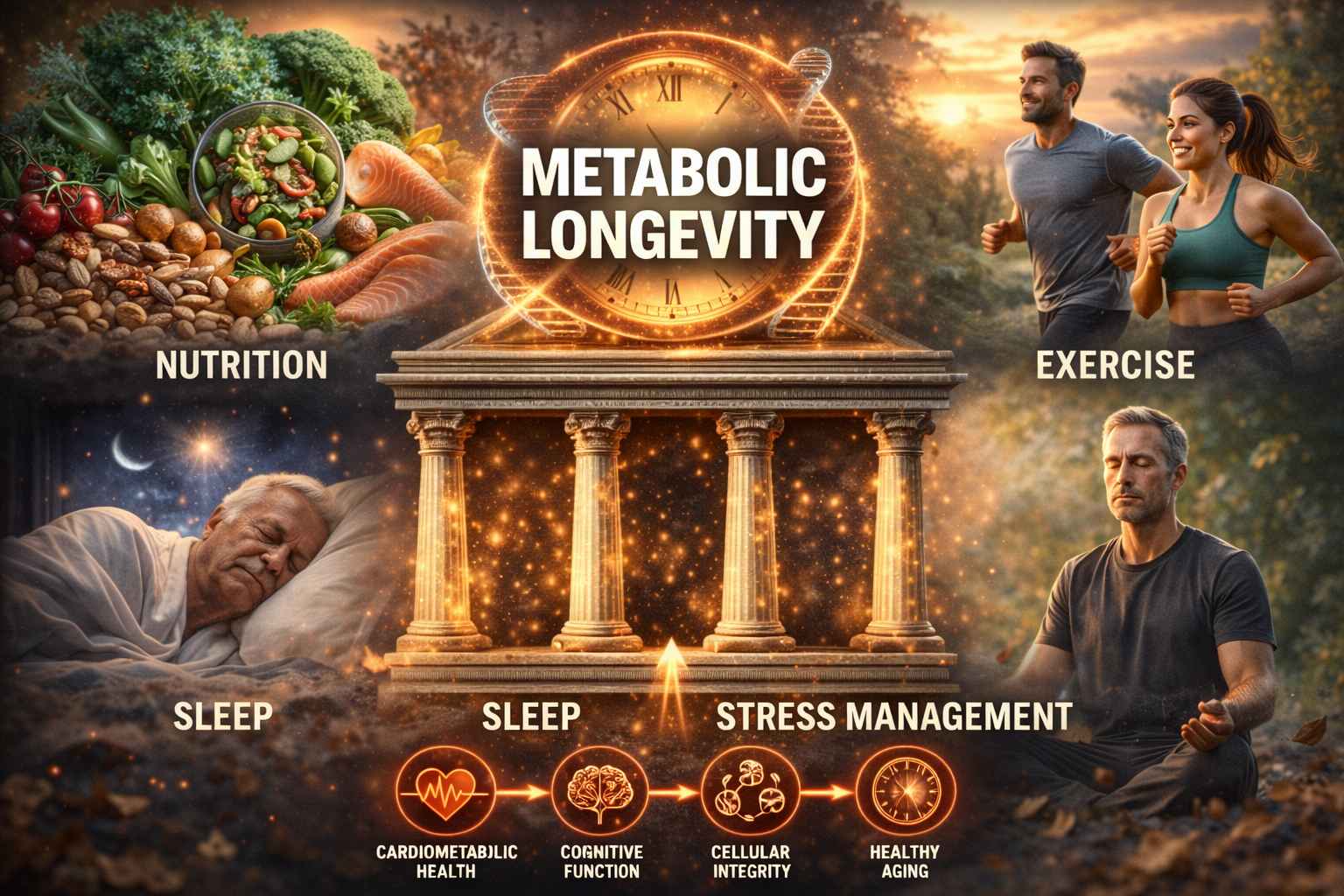
- Lifestyle foundations remain more established. Exercise, sleep, a balanced diet, and smoking avoidance have a far stronger and more consistent evidence base for extending healthy lifespan than any drug currently available. GLP-1 medications can support these goals — for example, by reducing weight that limits physical activity — but they are not a substitute for them.
It is also worth noting that GLP-1 drugs work differently from more mechanistically targeted longevity candidates such as rapamycin. Rapamycin inhibits mTOR, a pathway directly implicated in the biology of ageing. GLP-1 drugs act primarily on metabolic and appetite pathways. The longevity mechanisms, if confirmed, are likely to be indirect rather than targeting the ageing process at its root. For a comparison, see our article on whether rapamycin extends lifespan.
References and Resources
Authoritative Sources on GLP-1 Medications and Longevity
-
National Institutes of Health (NIH)
nih.govProvides comprehensive updates on ongoing research related to GLP-1 receptor agonists and cardiometabolic health, including clinical trial summaries and scientific reviews.
-
Research on GLP-1 and Ageing Pathways
ncbi.nlm.nih.govA detailed review of how GLP-1 receptor activation influences cellular pathways associated with metabolic health and ageing.
-
Aging (journal)
aging-us.comPublishes peer-reviewed research on ageing interventions, including studies examining GLP-1 pathways in model organisms.
-
FDA Approvals and Guidelines
fda.govOfficial information on approved GLP-1 receptor agonists, their safety profiles, and approved indications.
-
The Lancet
thelancet.comPeer-reviewed articles on metabolic health and cardiovascular outcomes, including landmark GLP-1 cardiovascular outcomes trials.
-
Nature Aging
nature.comResearch on ageing mechanisms and potential pharmacological interventions, including metabolic and inflammatory pathways.
-
American Medical Association
ama-assn.orgClinical guidance on GLP-1 receptor agonists, including their approved uses, emerging evidence, and patient management considerations.

-
Medscape
medscape.comExpert clinical commentary on GLP-1 drugs, including discussion of emerging research on cardiovascular and metabolic outcomes.
FAQ Section
Frequently Asked Questions
Do GLP-1 medications improve longevity?
Not directly, based on current evidence. GLP-1 receptor agonists reduce major risk factors for cardiovascular disease, obesity-related conditions, and metabolic dysfunction — all of which shorten healthy lifespan. However, no clinical evidence yet demonstrates that they extend lifespan or slow biological ageing in healthy humans. Their longevity relevance is real but indirect.
Can GLP-1 drugs help prevent age-related diseases?
Yes, with important caveats. Clinical trials demonstrate meaningful reductions in cardiovascular events, and these drugs substantially improve several cardiometabolic risk markers. For people with obesity, type 2 diabetes, or elevated cardiovascular risk, this disease prevention benefit is clinically significant. For those who are already metabolically healthy, the benefit is less well established.
What is the future outlook for GLP-1 medications in longevity research?
Research is ongoing. Scientists are actively investigating whether GLP-1 receptor activation influences biological ageing pathways beyond cardiometabolic risk. Some animal data is encouraging, and larger human trials with longevity-relevant endpoints may clarify the picture over the next decade. At present, definitive evidence is lacking.
Are there risks associated with using GLP-1 medications?
Yes. The most common side effects are gastrointestinal — nausea, vomiting, and diarrhoea — particularly when starting treatment. A more significant concern for ageing is the potential for lean muscle mass loss alongside fat loss. Long-term safety data beyond several years is still accumulating. These drugs should be used under medical supervision and are not appropriate for self-prescribing as a longevity intervention.
How do GLP-1 medications compare to lifestyle changes for longevity?
Lifestyle factors — particularly regular exercise, adequate sleep, a balanced diet, and not smoking — have a stronger and more consistent evidence base for extending healthy lifespan than any drug currently available. GLP-1 medications can complement lifestyle changes, particularly by enabling weight loss that makes physical activity easier. However, they are not a replacement for foundational health behaviours.
Conclusion
GLP-1 receptor agonists are not longevity drugs in the strict sense, but they are not irrelevant to healthy ageing either. By reducing cardiovascular risk, improving metabolic function, and addressing obesity — all major contributors to premature death and age-related disease — they can meaningfully support healthspan in people who need them most.
That said, the evidence does not yet support using GLP-1 medications as anti-ageing interventions in otherwise healthy people. The longevity case for these drugs rests on disease prevention rather than on direct modification of the ageing process. As research advances, that picture may change — but current evidence requires careful interpretation rather than optimism beyond what the data supports.
Anyone considering GLP-1 medications should do so under medical supervision, with a clear understanding of what these drugs can and cannot do. They work best as part of a broader approach to metabolic health — not as a standalone solution to ageing.
Find out more information about GLP-1 medications and longevity
Search for more resources and information: