
Can Balance Training Reduce Dementia Risk?
Introduction
Balance training may help reduce dementia risk, but it is best viewed as one part of a broader brain-health strategy rather than a guaranteed preventive measure. Evidence indicates that balance exercises can support cognitive health by challenging coordination, attention, reaction time, and spatial awareness, while also reducing falls and improving mobility in older adults.
TL;DR: Balance training may help lower dementia risk by engaging brain systems involved in movement, memory, coordination, and attention. It works best when combined with aerobic exercise, strength training, good sleep, social engagement, and overall healthy aging habits.
The strongest case for balance training is practical: it challenges the brain and body at the same time. That combination may support brain plasticity, preserve mobility, and improve confidence in daily movement. For older adults, it can also reduce fall risk, which matters because falls, inactivity, and loss of independence are all linked with worse long-term health outcomes.
Balance training alone is unlikely to outweigh major dementia risk factors such as vascular disease, poor sleep, inactivity, and metabolic dysfunction. Still, it is a useful, low-cost habit that may support brain resilience. Learn more in our complete guide to longevity.
The Connection Between Balance and Brain Health
Understanding How Balance Relates to Cognitive Function
Balance is not just a physical skill. It depends on continuous communication between the brain, inner ear, eyes, muscles, joints, and nervous system. To stay upright and move safely, the brain must process sensory information, predict movement, adjust posture, and react quickly to change.
That helps explain why balance has such a close relationship with cognition. Areas involved in coordination, motor planning, attention, and spatial awareness are all active during balance tasks. Research suggests these same systems are relevant to memory, executive function, and healthy aging.
Why Balance Declines with Age and Its Impact on Dementia Risk
Balance often declines with age because of muscle loss, slower reflexes, reduced sensory input, joint stiffness, and less physical activity. In some cases, balance problems may also reflect changes in the brain itself. Slower gait, poor stability, and repeated stumbles are sometimes seen before more obvious signs of cognitive decline appear.
This does not mean poor balance causes dementia on its own. It does mean that declining balance may act as an early warning sign of broader neurological or physical changes. That is one reason balance training is worth taking seriously as part of a healthy aging plan.
How Balance Training Reduce Dementia Risk: What the Science Says
Scientific Evidence Linking Balance and Dementia Prevention
Research suggests that physically active adults tend to have a lower risk of cognitive decline and dementia, and balance training may contribute to that effect when it is part of a wider exercise routine. Programmes that include balance, gait, coordination, and dual-task training often show benefits for executive function, mobility, and fall prevention in older adults.
The mechanism is likely indirect as much as direct. Balance training challenges attention, reaction time, body awareness, and movement control. It may also increase physical activity overall, improve confidence, and support healthier aging patterns that are themselves associated with lower dementia risk.
How Specific Balance Exercises Impact Brain Health
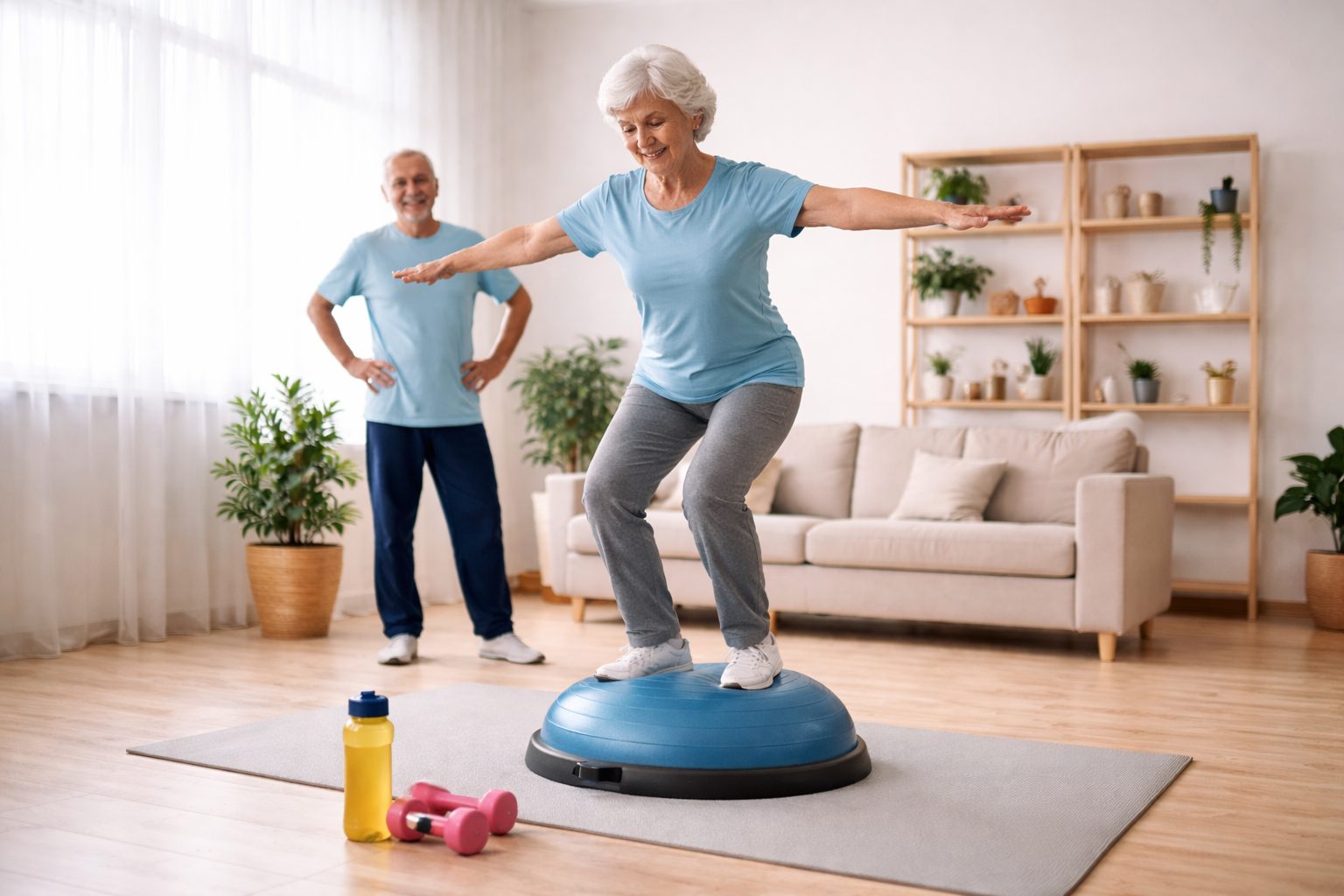
Some types of balance training appear especially useful because they combine physical control with mental engagement. Tai chi, yoga, dance-based movement, tandem walking, and exercises performed on unstable surfaces all require concentration and real-time adjustment. That makes them more cognitively demanding than simple repetitive movement.
These activities may stimulate brain plasticity by asking the brain to solve movement problems repeatedly. Research suggests this kind of training can support coordination, attention, and sensory integration, all of which matter for maintaining function with age.
Why Balance Training Is Plausible but Not a Standalone Solution
It is important to keep the science in proportion. Balance training is promising, but it should not be oversold as a single intervention that prevents dementia. Dementia risk is shaped by many factors, including age, genetics, sleep, cardiovascular health, blood sugar control, hearing loss, social isolation, and physical inactivity.
That is why the most evidence-based message is this: balance training is a useful tool within a broader prevention strategy. It may support brain health, but it works best alongside strength training, aerobic exercise, nutrition, vascular risk management, and social and cognitive engagement.
Practical Balance Exercises to Potentially Lower Dementia Risk
Simple Balance Exercises You Can Do at Home
Simple balance drills can be effective, especially when performed regularly and progressed gradually. Standing on one leg while holding a chair, heel-to-toe walking, side stepping, and controlled weight shifts are accessible starting points for most people.
These exercises challenge posture, coordination, and body awareness without requiring special equipment. Start with support nearby and increase difficulty slowly as confidence improves.
How to Incorporate Balance Training Reduce Dementia Risk into Your Routine
The easiest way to stay consistent is to attach balance work to habits that already exist. It can be added to a morning routine, placed after a walk, or paired with stretching and strength work. Short sessions done several times per week are often more realistic than occasional long workouts.
A practical routine might include 10 to 15 minutes of balance work, three to five times weekly, alongside regular walking and strength exercises. This creates a more complete exercise pattern that supports mobility, endurance, and brain health.
Examples of More Challenging Balance Activities
Once basic exercises feel manageable, more complex options can add extra cognitive value. Tai chi, beginner yoga flows, dance-based exercise, and dual-task drills such as walking while counting backward all increase the demand on attention and coordination.
These activities are useful because they combine physical balance with memory, sequencing, and focus. That combination may be especially relevant for healthy aging and cognitive resilience.
Safety Matters
Balance training should always be adapted to the person. Anyone with dizziness, recent falls, severe neuropathy, joint instability, or major mobility limitations should consider professional guidance before starting. A chair, wall, or countertop can provide support during early practice.
Progress should feel steady, not rushed. The goal is to improve control and confidence, not to make balance exercises risky.
Personal Experiences and Tips on Balance Training Reduce Dementia Risk
Balance training tends to work best when it feels practical rather than intimidating. Short daily sessions are often easier to maintain than ambitious programmes that fade after a week. Consistency matters more than complexity at the beginning.
A useful approach is to start with stable, supported movements and gradually increase the challenge. Over time, that might mean reducing hand support, narrowing foot position, adding head turns, or combining balance tasks with light cognitive work.
It also helps to treat balance training as part of a complete longevity plan. Walking, strength training, sleep, good nutrition, hearing and vision care, and social engagement all influence long-term brain health. Balance work fits best when it supports these other habits rather than competing with them.
For many older adults, one major benefit is confidence. Feeling more stable can increase daily movement, reduce fear of falling, and make it easier to stay active. That matters because physical inactivity itself is a known risk factor for cognitive decline.
References and Resources
Throughout research on Balance Training Reduce Dementia Risk, these resources are useful for understanding physical activity, balance, and cognitive health:
Authoritative Sources on Balance Training Reduce Dementia Risk
-
Alzheimer’s Association
alz.orgProvides information on lifestyle factors, exercise, and dementia risk reduction.
-
CDC Physical Activity Guidelines
cdc.govOffers evidence-based recommendations on physical activity, balance, and healthy aging.
-
World Health Organization
who.intHighlights the role of physical activity in healthy aging and cognitive health.
-
National Institutes of Health (NIH)
nih.govFeatures studies on exercise, mobility, brain health, and aging.
-
American Medical Association
ama-assn.orgDiscusses healthy aging, mobility, and preventive health approaches.
-
Tai Chi for Health Institute
tai-chi.comProvides information on tai chi as a balance-focused activity with broader health benefits.
-
American Heart Association
heart.orgCovers physical activity, vascular health, and healthy aging habits relevant to brain health.

-
Research on Balance and Dementia
ncbi.nlm.nih.govPeer-reviewed research exploring exercise, movement, and cognitive health.
Frequently Asked Questions
Does balance training really help prevent dementia?
Balance training may help support brain health, but it should not be described as a guaranteed way to prevent dementia. It is most useful as part of a wider routine that includes aerobic exercise, strength training, good sleep, vascular health management, and social and cognitive activity.
Can I start balance exercises if I have mobility issues?
Yes, but exercises should be adapted to your ability level. Supported standing drills, chair-assisted balance work, and tai chi variations can often be used safely. If you have major mobility limits, dizziness, or a history of falls, professional guidance is sensible.
How often should I practice balance training to see benefits?
Three to five sessions per week is a practical target for many adults. Even short sessions can help when performed consistently over time.
Is balance training more effective than other forms of exercise for dementia risk reduction?
Not on its own. Balance training is valuable, but the strongest evidence supports a combined approach that includes aerobic exercise, strength work, and activities that keep the brain socially and mentally engaged.
Conclusion
Balance training may help reduce dementia risk by challenging coordination, attention, posture, and movement control, all of which rely on active brain function. It is also highly practical because it can improve stability, confidence, and fall prevention at the same time.
The most evidence-based conclusion is not that balance exercises prevent dementia on their own, but that they are a useful part of a broader healthy aging strategy. Regular balance work, combined with strength training, aerobic exercise, sleep, good nutrition, social engagement, and preventive healthcare, offers a sensible path for supporting long-term brain health.
Find out more information about “Balance Training Reduce Dementia Risk”
Search for more resources and information: