Can Reaction Time Predict Biological Age?
Introduction
Reaction time can provide useful clues about biological age, but it is not a standalone measure. Faster reaction times often reflect better nervous system function, processing speed, and overall resilience, while slower reaction times may suggest age-related decline. However, reaction time is influenced by sleep, stress, fitness, medications, and health conditions, so it works best alongside other biomarkers.
TL;DR: Reaction time can help estimate biological age because it reflects brain and nervous system performance, but it should not be used on its own. It is most useful when combined with other measures such as walking speed, grip strength, cognitive tests, and metabolic or cardiovascular biomarkers.
Interest in reaction time has grown because it is simple to measure and closely tied to brain health, movement control, and cognitive aging. In practical terms, slower responses may indicate reduced neural efficiency, while quicker responses often reflect a younger functional profile. That makes reaction time a useful part of a broader healthy aging assessment rather than a definitive biological age test by itself.
Reaction time is especially relevant because it sits at the intersection of cognition, coordination, and overall nervous system health. It may offer insight into how well the brain and body are communicating in real time. Learn more in our complete guide to longevity.
Understanding Reaction Time and Biological Age
What Is Reaction Time and Why Does It Matter?
Reaction time is the interval between detecting a stimulus and responding to it. It may sound simple, but it depends on several processes working well together: sensory detection, attention, decision-making, nerve conduction, and motor output. Because all of these can change with aging, reaction time is often studied as a marker of neurological and cognitive performance.
Reaction time matters because it reflects more than reflexes. It can reveal how efficiently the brain processes information, how quickly the nervous system responds, and how well the body executes movement. For that reason, slower reaction times are often associated with lower physical performance, weaker executive function, and a greater risk of functional decline.
Biological Age vs. Chronological Age
Chronological age is simply the number of years lived. Biological age refers to how old the body appears to be based on function, resilience, and physiological wear and tear. Two people of the same chronological age can have very different biological ages depending on their exercise habits, sleep, diet, stress, cardiovascular health, and metabolic function.
That is where reaction time becomes interesting. A person with a relatively quick reaction time for their age may have a more youthful nervous system, while someone with unusually slow responses may show signs of faster biological aging. This does not prove exact biological age, but it can add useful context.
Does Reaction Time Predict Biological Age? Insights and Evidence
Scientific Evidence Supporting Reaction Time as a Biomarker
Evidence suggests that reaction time tends to worsen with age and often tracks with broader changes in brain and nervous system function. Researchers have linked slower reaction times with cognitive decline, lower physical capability, and poorer long-term health outcomes. This makes reaction time a reasonable candidate biomarker for aspects of biological aging.
That said, reaction time is better viewed as an indirect signal than a definitive diagnosis. It may reflect neural aging, but it does not capture everything that matters for biological age, such as inflammation, metabolic health, cardiovascular fitness, mitochondrial function, or cellular damage. In other words, reaction time can contribute to the picture, but it is not the whole picture.
Why Reaction Time Can Be Useful
One reason reaction time is so useful is that it is easy to test repeatedly. Unlike more invasive biomarkers, it can be measured with simple digital tools, tracked over time, and compared against age-matched norms. This makes it practical for self-monitoring and for spotting meaningful changes in nervous system performance.
Reaction time is also sensitive to lifestyle changes. Better sleep, regular exercise, improved endurance, lower stress, and stronger cardiovascular fitness may all help support faster responses. That makes it a practical feedback tool when trying to improve healthspan and preserve brain function with age.
What the Evidence Does Not Mean
A slow reaction time does not automatically mean someone is biologically old, and a fast reaction time does not guarantee exceptional health. Temporary factors such as fatigue, distraction, illness, anxiety, alcohol, or medication use can affect test results substantially. A single test is not enough to draw firm conclusions.
The better approach is to treat reaction time as one useful measure among many. When combined with mobility, strength, cognition, and metabolic biomarkers, it becomes much more informative.
Factors Influencing Reaction Time and Their Impact on Biological Age
How Lifestyle Affects Reaction Time and Aging
Lifestyle has a major impact on reaction time. Regular exercise, especially training that combines strength, endurance, coordination, and balance, tends to support faster and more consistent responses. Good sleep, better stress management, and nutrient-dense eating patterns may also improve neural performance and attention.
By contrast, sedentary behavior, chronic stress, poor sleep, excessive alcohol, and a low-quality diet can all impair reaction speed. Because those same factors also influence biological aging more broadly, reaction time can sometimes reflect the cumulative effect of everyday habits.
Health Conditions and Their Effect on Reaction Time
Health conditions can also alter reaction time significantly. Neurological disorders, chronic pain, diabetes, cardiovascular disease, depression, vision problems, and medication side effects may all slow responses. In these cases, reaction time may reflect underlying health burden rather than age alone.
This is why interpretation matters. Reaction time is most useful when viewed in context. A slower score may signal accelerated aging, but it may also point to a specific health issue that deserves attention.
Why Fitness and Nervous System Health Matter
Reaction time depends heavily on brain function, nerve conduction, and movement efficiency. That means it is influenced by cognitive health, muscle function, and coordination all at once. A person with better endurance, stronger muscles, healthier cardiovascular function, and more daily movement often maintains better performance as they age.
This connection makes reaction time relevant to discussions of aging, metabolism, exercise, and healthspan. It is not just a brain metric. It reflects whole-body function.
Practical Ways to Use Reaction Time for Aging Insights
Implementing Reaction Time Tests in Daily Life
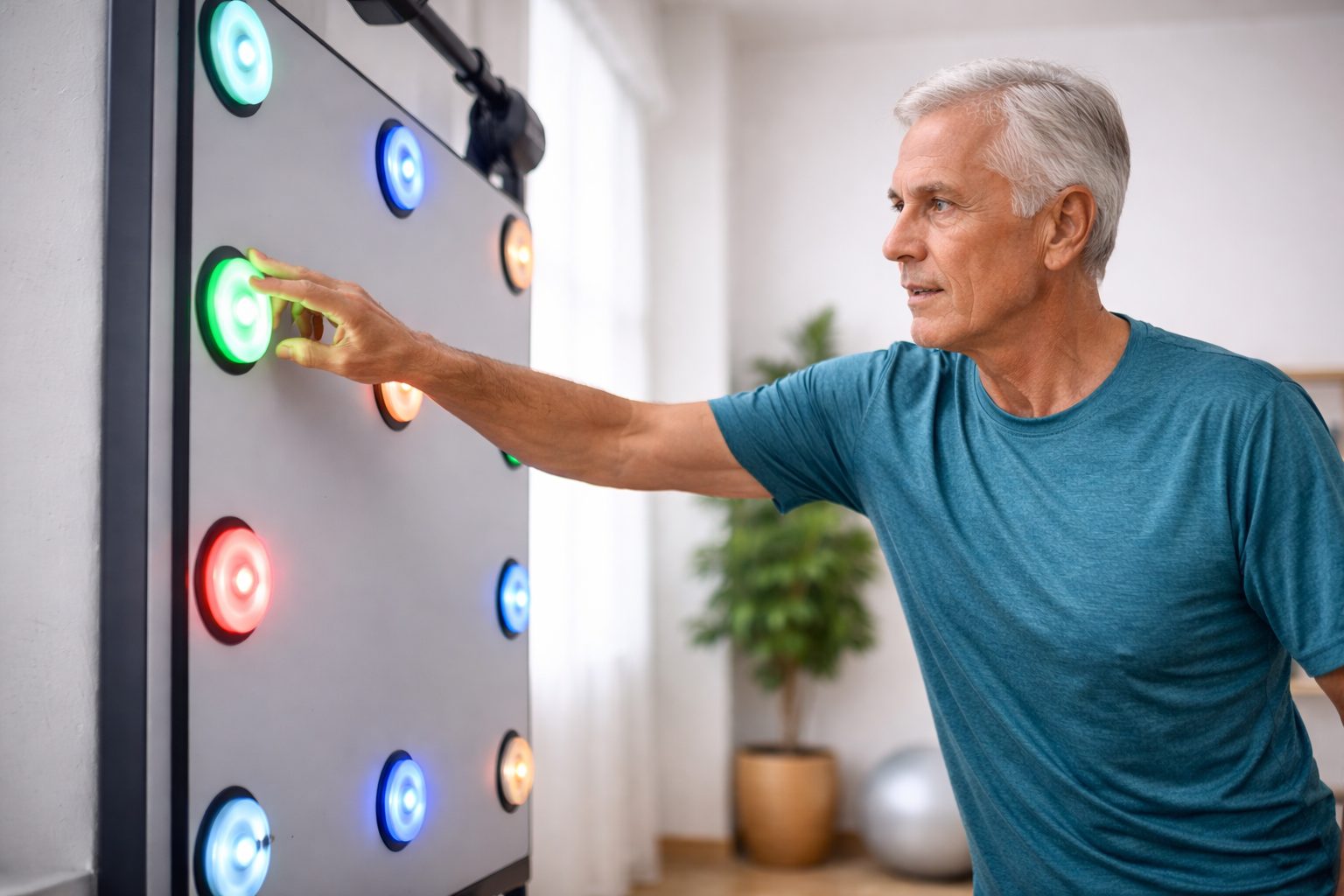
Reaction time can be tracked with smartphone apps, computer-based tests, or simple online tools. The most useful strategy is to test under similar conditions each time, such as at the same time of day, after similar sleep, and with the same device. This reduces noise and makes trends easier to interpret.
Rather than focusing on one result, it is better to establish a baseline and track changes over weeks or months. A gradual slowing may be more informative than one unusually slow or fast session.
Interpreting Reaction Time Data for Aging Insights
The best way to interpret reaction time is comparatively. Compare your current results with your own previous scores and, where possible, with age-matched reference data. If reaction time worsens while other measures such as walking speed, balance, strength, or cognition also decline, that pattern may suggest advancing biological age or reduced nervous system resilience.
If reaction time improves after better sleep, more exercise, or less stress, that is also useful information. It suggests the measure is sensitive to the quality of your current health behaviors.
What to Combine It With
Reaction time is strongest when paired with other practical markers such as grip strength, walking speed, resting heart rate, blood pressure, glucose control, sleep quality, and basic cognitive tests. Together, these markers provide a more realistic picture of biological aging than any one measure alone.
That combination is especially useful for people interested in healthy aging, exercise performance, brain health, and long-term disease prevention.
Frequently Asked Questions
Frequently Asked Questions
Can reaction time reliably predict biological age?
Reaction time can offer useful clues, but it is not reliable enough to serve as a standalone predictor. It is best treated as one marker of nervous system function within a broader biological age assessment.
What factors influence reaction time and how do they relate to aging?
Reaction time is influenced by age, sleep, stress, exercise, medications, neurological health, cardiovascular fitness, and metabolic health. Because many of these also affect biological aging, reaction time can reflect broader aging processes.
Can improving reaction time help slow down biological aging?
Improving reaction time does not directly prove slower aging, but it may reflect better nervous system function, exercise capacity, and cognitive health. Training that improves reaction time often supports broader healthy aging habits as well.
Is reaction time a good standalone measure for biological age?
No. Reaction time is informative, but it does not capture the full complexity of biological aging. It works much better when combined with strength, mobility, cognitive, metabolic, and cardiovascular measures.
How can I incorporate reaction time testing into my aging assessment?
Use a simple digital test to establish a baseline, then retest periodically under similar conditions. Track trends over time and compare reaction time with other markers such as walking speed, grip strength, sleep, and exercise performance.
References and Resources
Throughout research on Reaction Time Predict Biological Age, these resources are often useful for understanding how neural speed, cognition, and aging interact:
Authoritative Sources on Reaction Time Predict Biological Age
-
Neural Processing Speed and Aging
ncbi.nlm.nih.govExplores how neural conduction speed and processing efficiency change with age and influence reaction time.
-
Reaction Time and Cognitive Decline
pubmed.ncbi.nlm.nih.govDiscusses the relationship between reaction speed and cognitive aging, supporting its use as a practical signal of neural health.

-
World Health Organization: Aging and Health
who.intProvides general information on healthy aging, functional decline, and risk factors relevant to biological age.
-
Aging Research Centers
agingresearch.orgShares research and commentary on aging biomarkers, cognition, and long-term health trajectories.
-
Healthline: Reaction Time and Aging
healthline.comA readable overview of how reaction time changes with age and what can influence it.
-
Cognitive Function and Aging
ncbi.nlm.nih.govReviews how cognitive performance, processing speed, and related functions change across the aging process.
-
National Institute on Aging: Reaction Time and Aging
nia.nih.govOffers perspective on reaction time, neural aging, and how simple measures can contribute to health assessment.
Conclusion
Reaction time can help predict aspects of biological age because it reflects how well the brain and nervous system process information and generate movement. Slower responses often align with aging-related decline, while faster responses may reflect better neural and physical health.
Still, reaction time is most useful as part of a broader framework. Used alongside other biomarkers, it can offer practical insight into healthy aging, cognitive function, mobility, and resilience. That makes it a valuable tool, but not a complete answer on its own.
Find out more information about “Reaction Time Predict Biological Age”
Search for more resources and information: