
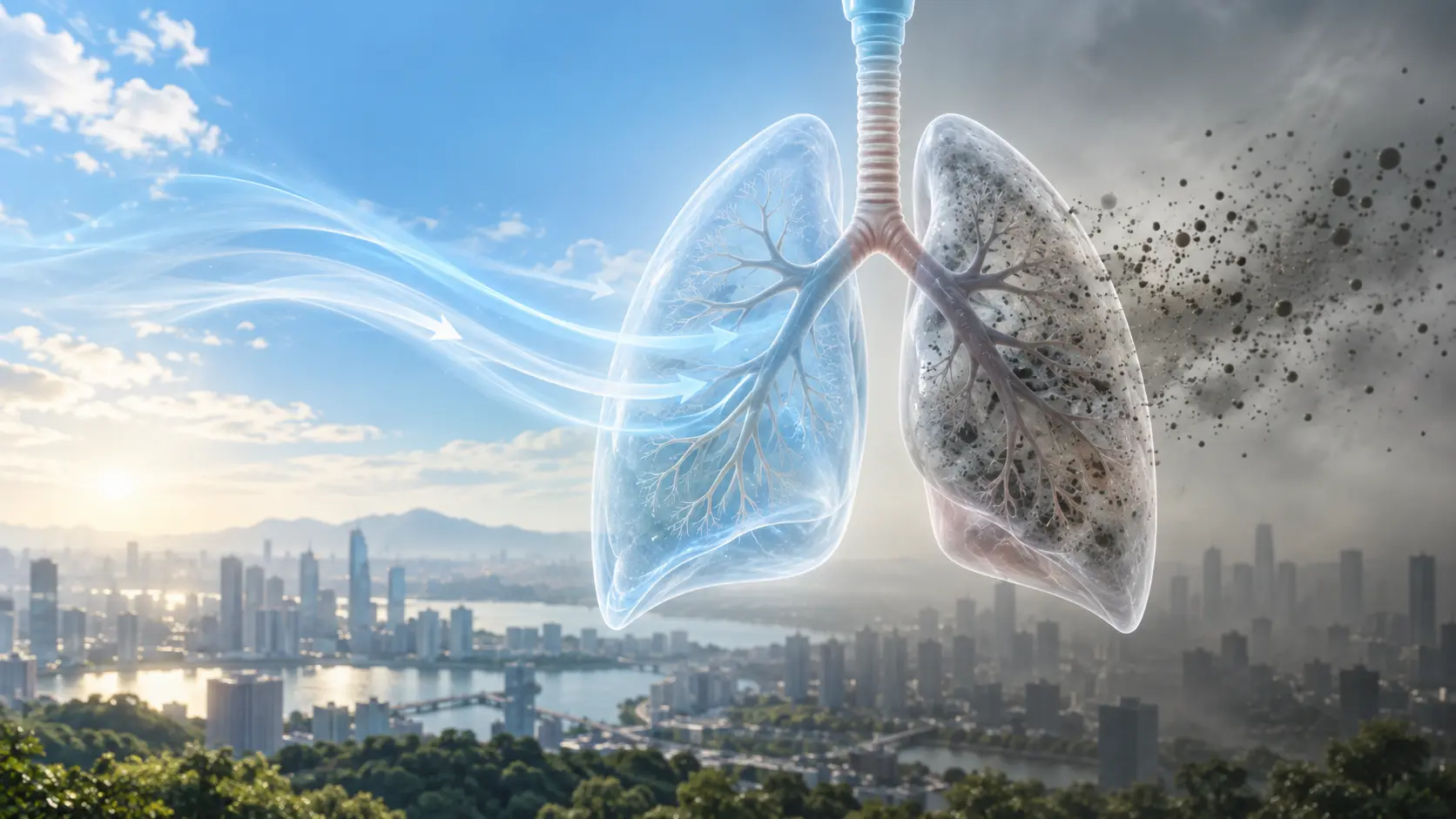
Does Air Pollution Reduce Lung Longevity?
TL;DR: Yes, air pollution — particularly fine particulate matter (PM2.5) — accelerates lung aging by driving chronic inflammation and oxidative stress. Reducing exposure through cleaner environments, air purifiers, and avoiding peak pollution periods is one of the most meaningful things you can do to protect long-term lung function.
Air pollution is one of the most well-established environmental accelerants of lung aging. Chronic exposure to pollutants — especially fine particulate matter (PM2.5) — speeds up the natural decline in lung function, increases the risk of chronic respiratory disease, and is associated with higher mortality from respiratory and cardiovascular causes. The evidence here is strong and consistent across large population studies.
How Air Pollution Damages the Lungs
The Main Pollutants and What They Do
Air pollution is not a single substance. It includes fine particulate matter (PM2.5 and PM10), nitrogen oxides, ozone, and volatile organic compounds, originating from vehicle emissions, industrial processes, fossil fuel combustion, and sources such as wildfires. Of these, PM2.5 is the most studied and consistently harmful — fine particles small enough to penetrate deep into the lower airways and, in some cases, cross into the bloodstream.
Once inhaled, these particles trigger oxidative stress and an inflammatory response in the lung tissue. Over time, this chronic low-level inflammation impairs the ability of lung cells to repair themselves, damages the alveoli responsible for oxygen exchange, and reduces both lung capacity and elasticity. In effect, pollution accelerates the same degenerative processes that drive normal lung aging — just faster.
The Biological Mechanism
At the cellular level, pollutants generate reactive oxygen species that damage DNA and cell membranes. This activates inflammatory pathways and, with repeated exposure, leads to structural changes in the airways and lung parenchyma. Research suggests that these changes closely mirror — and can compound — the effects of biological aging on the lung. As a result, someone with decades of high pollution exposure may show lung function more typical of a person considerably older.
Does Long-Term Exposure Accelerate Lung Aging?
What the Evidence Shows
The answer, based on current evidence, is yes. Large epidemiological studies have consistently found that chronic exposure to elevated PM2.5 levels is associated with a faster decline in FEV1 (forced expiratory volume) — a standard measure of lung function — and with higher rates of COPD, emphysema, and lung cancer. Cities with persistently poor air quality tend to report significantly higher rates of chronic respiratory disease and related mortality.
Importantly, the damage is cumulative. A single high-pollution day is unlikely to cause lasting harm, but years of exposure in polluted environments compounds the risk substantially. This is why air pollution is classified as a major modifiable risk factor for reduced lung longevity, sitting alongside smoking as one of the two most impactful environmental causes of accelerated lung aging. For a broader look at how lung function changes with age overall, see our article on whether lung capacity declines with age.
Pollution vs. Normal Aging
Lung function naturally declines from around age 25 onwards — a gradual reduction in FEV1 and vital capacity that occurs even in healthy, non-smoking adults living in clean-air environments. Air pollution does not cause an entirely different type of damage; instead, it accelerates and amplifies this normal trajectory. In practice, this distinction matters because it means the damage is dose-dependent and, to a meaningful degree, modifiable by reducing exposure.
That said, chronic pollution exposure can tip individuals from normal age-related decline into clinically significant impairment, particularly in those with pre-existing respiratory conditions or genetic susceptibilities. Learn more in our complete guide to longevity at longevityinsights.co.uk/what-is-longevity/.
Who Is Most at Risk?
While chronic exposure is harmful across the population, certain groups face disproportionately higher risk. Children are particularly vulnerable because their lungs are still developing — early-life pollution exposure is associated with reduced peak lung function in adulthood. Older adults face greater risk because their lungs have less reserve capacity and reduced ability to recover from inflammatory insults. Similarly, individuals with pre-existing conditions such as asthma or COPD experience faster deterioration under sustained pollution exposure.
Geographic factors also matter. People living near major roads, industrial zones, or in regions prone to wildfire smoke accumulate significantly higher lifetime exposure than those in rural or low-traffic environments — independent of lifestyle choices. For those concerned about how smoking compounds these risks, our article on whether smoking permanently accelerates lung aging covers that evidence in detail.
How to Reduce Your Exposure and Protect Lung Function
Reducing Exposure
The most direct strategy is minimising cumulative exposure. In practice, this means checking daily air quality indices and limiting strenuous outdoor activity when pollution levels are high — particularly for vulnerable individuals. Avoiding running or cycling on busy roads significantly reduces particulate inhalation, since pollution concentrations drop sharply even a short distance from traffic. Indoors, a HEPA air purifier meaningfully reduces PM2.5 exposure, particularly in urban homes with limited ventilation.
N95 respirators offer genuine protection when worn correctly in high-pollution conditions. Standard surgical or cloth masks offer far less filtration against fine particles and should not be relied upon for pollution protection.
Supporting Lung Resilience
Beyond reducing exposure, maintaining cardiovascular fitness is the most evidence-backed way to support lung function over time. Regular aerobic exercise improves respiratory muscle efficiency, preserves lung capacity, and supports the broader cardiorespiratory health that buffers against pollution-related decline. For more detail on this, the hub article on Lung and Respiratory Longevity covers how lifestyle interventions interact with lung aging as a whole.
Avoiding smoking — or quitting if currently smoking — remains the single most impactful individual action for lung longevity. The combination of smoking and high pollution exposure is particularly damaging, with the effects compounding rather than simply adding together. A diet rich in antioxidants (vitamins C and E, polyphenols) may offer some degree of protection against oxidative stress from pollutants, though evidence for meaningful clinical benefit from diet alone remains limited.
References and Resources
Authoritative Sources on Air Pollution and Lung Longevity
-
World Health Organization — Air Pollution
who.intGlobal air quality standards, health impact data, and public health strategies for reducing pollution-related lung disease.
-
EPA — Air Quality and Lung Health
epa.govAir quality regulatory frameworks and practical guidance on reducing personal exposure to airborne pollutants.
-
CDC — Air Pollution and Respiratory Disease
cdc.govOverview of how air pollution contributes to respiratory illness, with population-level risk data and prevention strategies.
-
National Institute of Environmental Health Sciences — Air Pollution
niehs.nih.govOngoing scientific research into the mechanisms by which environmental pollutants affect lung aging and function.
-
PLOS ONE — Pollution and Lung Function Decline
journals.plos.orgPeer-reviewed research on the relationship between air pollution exposure and accelerated lung function deterioration.
-
Healthline — Effects of Air Pollution on Lung Health
healthline.comAccessible summary of how air pollution affects respiratory health, with practical risk-reduction advice.
-
Environmental Health Perspectives — Lung Aging and Pollution
environmentalhealthperspectives.orgAcademic research on how environmental pollutants influence the biological processes of lung aging.

-
Nature Scientific Reports — Pollution and Respiratory Decline
nature.comResearch on how chronic air pollution exposure correlates with accelerated respiratory aging and reduced lung function over time.
Frequently Asked Questions
Does air pollution really reduce lung longevity?
Yes. Chronic exposure to air pollution — particularly fine particulate matter (PM2.5) — is consistently associated with faster decline in lung function, higher rates of COPD and lung cancer, and increased respiratory mortality. The evidence is well-established across large population studies and is strongest for long-term, cumulative exposure.
Can anything protect my lungs from air pollution damage?
Reducing exposure is the most direct strategy: check air quality indices, limit outdoor exertion during high-pollution periods, use a HEPA air purifier indoors, and consider an N95 respirator in high-pollution conditions. Staying cardiovascularly fit also supports lung resilience, and avoiding smoking is particularly important, as the two exposures compound each other.
What are the long-term health effects of air pollution on the lungs?
Long-term exposure accelerates the normal age-related decline in lung function and significantly increases the risk of chronic respiratory diseases including COPD, asthma, and lung cancer. It also contributes to systemic inflammation and cardiovascular strain, both of which are relevant to broader healthspan and longevity.
Does reducing air pollution improve lung longevity?
Evidence from natural experiments — such as cities that have substantially reduced pollution levels — shows measurable improvements in population-level lung function and respiratory mortality. At an individual level, reducing cumulative exposure slows the rate of lung function decline, though existing damage from years of exposure cannot be fully reversed.
Is there a safe level of air pollution for lung health?
Current evidence suggests there is no clearly defined safe threshold for PM2.5. Even concentrations below WHO guideline limits are associated with measurable effects on lung function over long periods. Minimising exposure — particularly for children, older adults, and those with pre-existing respiratory conditions — remains the most prudent approach.
Conclusion
Air pollution is one of the two most significant modifiable environmental drivers of accelerated lung aging — alongside smoking. The evidence linking chronic PM2.5 exposure to faster lung function decline, chronic respiratory disease, and increased mortality is strong, consistent, and dose-dependent. Unlike some areas of longevity research where evidence is preliminary, this is well-established science.
In practice, the most meaningful actions are reducing cumulative exposure — particularly in high-traffic or industrial environments — maintaining cardiovascular fitness, and avoiding smoking. These same levers that protect against pollution-related lung aging are also the most evidence-backed strategies for supporting lung longevity overall. For a full picture of how these factors fit together, the Lung and Respiratory Longevity hub provides the broader context.
Find out more about air pollution and lung longevity
Search for more resources and information: