Does Whole Grain Intake Increase Lifespan?
TL;DR: Higher whole grain intake is consistently associated with lower mortality risk, particularly from cardiovascular disease, in large observational studies. Replacing refined grains with whole grains is one of the most well-supported dietary changes for reducing chronic disease risk and supporting healthy aging.
Do Whole Grains Increase Lifespan?
The evidence suggests yes — at least in the sense that higher whole grain consumption is consistently linked to lower risk of dying from major chronic diseases. Large cohort studies have found that people who regularly eat whole grains have meaningfully reduced mortality rates, particularly from cardiovascular disease. This does not mean whole grains alone extend lifespan, but the association is robust enough that most major health institutions recommend them as a core part of a health-promoting diet.
This article focuses specifically on what the evidence shows about whole grains and longevity, what mechanisms are plausible, and what practical conclusions are reasonable to draw.
What Whole Grains Are and Why They Matter for Longevity
What Qualifies as a Whole Grain?
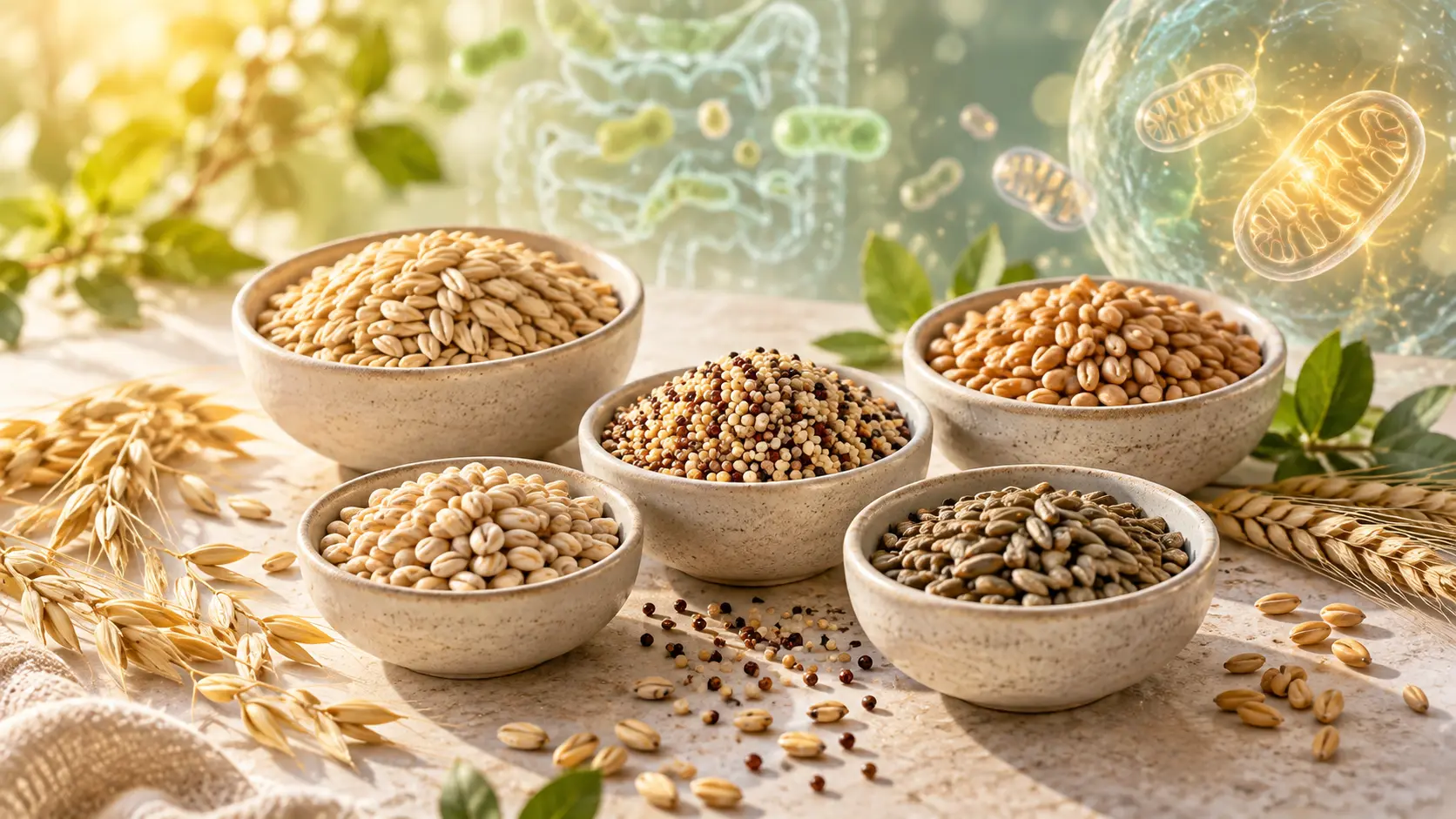
Whole grains retain all three parts of the grain kernel: the bran, germ, and endosperm. This structural integrity preserves fiber, B vitamins, magnesium, iron, and a range of phytochemicals that are largely stripped away during refining. Common examples include oats, brown rice, barley, rye, quinoa, and whole wheat.
In contrast, refined grains — white flour, white rice, most commercial bread — retain primarily the starchy endosperm. As a result, they digest more rapidly, cause faster blood sugar elevation, and provide fewer protective nutrients. This distinction matters significantly when evaluating diet and mortality risk.
Why Whole Grains Are Relevant to Longevity Research
The key reason whole grains appear in longevity research is their consistent association with reduced risk of the diseases that kill most people prematurely. Cardiovascular disease, type 2 diabetes, and certain cancers are all linked to dietary patterns, and whole grain intake sits among the dietary factors most reliably associated with lower risk across these conditions.
For broader context on how food quality fits into diet and aging, see our hub on Advanced Diet and Longevity.
How Whole Grains May Support Healthy Aging
Several biological mechanisms help explain the observed associations between whole grain intake and reduced mortality risk.
Blood sugar regulation. The fiber in whole grains slows glucose absorption, reducing post-meal blood sugar spikes and improving insulin sensitivity over time. Chronically elevated blood glucose and insulin resistance are both associated with accelerated aging and increased disease risk.
Inflammation. Research suggests that higher whole grain intake is associated with lower levels of inflammatory markers such as C-reactive protein. Chronic low-grade inflammation is a well-established driver of cardiovascular disease, metabolic dysfunction, and biological aging.
Cardiovascular protection. Soluble fiber — found in particular abundance in oats and barley — reduces LDL cholesterol by interfering with cholesterol reabsorption in the gut. Lower LDL and better lipid profiles are directly linked to reduced cardiovascular mortality.
Gut microbiome support. Whole grains provide prebiotic fiber that feeds beneficial gut bacteria. A healthier microbiome is increasingly associated with better metabolic health, immune function, and reduced systemic inflammation — all of which are relevant to aging.
Weight management. Higher fiber intake promotes satiety, which helps support a healthy body weight. Importantly, excess body weight — particularly visceral fat — is independently associated with increased mortality risk.
These mechanisms do not operate in isolation. In practice, they interact and compound over years of dietary behavior, which is partly why observational studies see such consistent associations.
What the Evidence Shows
Large Observational Studies
The most consistent evidence comes from large prospective cohort studies. A widely cited analysis of data from the Nurses’ Health Study and the Health Professionals Follow-up Study found that each additional serving of whole grains per day was associated with a statistically significant reduction in total mortality risk. Cardiovascular mortality showed particularly strong associations.
A 2016 meta-analysis published in Circulation, pooling data from 14 prospective studies and over 786,000 participants, found that higher whole grain intake was associated with reduced risk of total mortality, cardiovascular disease mortality, and cancer mortality. The dose-response pattern — where greater intake was associated with greater risk reduction — strengthened the credibility of these findings.
What the Evidence Does and Does Not Prove
It is important to be accurate about the limits of this evidence. These are observational studies, meaning they identify associations rather than proving causation. People who eat more whole grains also tend to have other health-promoting behaviors — more exercise, less smoking, better overall diet quality. Researchers attempt to control for these confounders, but residual confounding cannot be fully eliminated.
That said, the consistency of findings across different populations, the plausibility of the underlying mechanisms, and the alignment with intervention studies on specific biomarkers (cholesterol, blood glucose, inflammatory markers) all support the conclusion that whole grain intake genuinely contributes to reduced disease risk. This does not make whole grains a longevity treatment, but it does make them one of the better-supported food choices in the diet-and-aging literature.
This evidence compares favorably with some other food-quality questions in this cluster. For instance, the link between refined carbohydrate intake and mortality risk is also well supported, and the two questions are essentially two sides of the same coin — replacing refined grains with whole grains is one of the most straightforward dietary shifts supported by the evidence.
What Leading Health Organisations Conclude
The American Heart Association, World Health Organization, and Harvard T.H. Chan School of Public Health all recommend whole grains as a central component of a health-promoting diet. Their guidance is based on the accumulated body of observational evidence combined with mechanistic plausibility and the absence of meaningful harm at typical intake levels.
Learn more in our complete guide to longevity at longevityinsights.co.uk/what-is-longevity/.
Common Myths and Misconceptions
Are All Products Labelled “Whole Grain” Equally Beneficial?
No. Many packaged foods carry whole grain claims but are heavily processed, high in added sugar, and low in actual fiber. The presence of the words “whole grain” on a label does not guarantee meaningful nutritional benefit. Checking the fiber content per serving and the ingredient list is more informative than relying on front-of-pack claims alone.
Minimally processed whole grains — rolled oats, whole rye bread with visible grain, brown rice, barley — are more reliably nutritious than heavily processed products that technically contain some whole grain flour. This distinction matters particularly when evaluating whether the dietary shift is likely to produce the outcomes seen in research studies.
Can You Eat Too Many Whole Grains?
For most people, eating whole grains in typical dietary quantities is safe and beneficial. However, very high fiber intake from any source can cause digestive discomfort — particularly bloating and gas — especially when intake increases rapidly. Individuals with specific gastrointestinal conditions, including irritable bowel syndrome, may need to moderate intake of certain grain types.
The relevant point for longevity is not about maximizing whole grain intake as high as possible. Rather, the evidence supports replacing refined grain products with whole grain equivalents as a meaningful dietary improvement. A varied diet that includes whole grains alongside adequate protein, healthy fats, vegetables, and legumes is more consistent with the evidence than any single-food focus.
Also worth noting: the benefits of whole grains are most clearly demonstrated within the context of an overall healthy dietary pattern. Eating oats alongside a diet otherwise high in ultra-processed food and added sugar is unlikely to produce the outcomes seen in populations where whole grain intake reflects a broader health-conscious dietary approach. For related context, see our article on whether high sugar intake shortens lifespan.
References and Resources
Authoritative Sources on Whole Grain Intake and Longevity
-
CDC Nutrition and Healthy Eating
cdc.govPublic health guidance on healthy eating patterns, including the role of whole grains in reducing chronic disease risk and supporting longevity.
-
Harvard T.H. Chan School of Public Health — The Nutrition Source
hsph.harvard.eduEvidence-based dietary guidance from leading nutrition researchers, with detailed coverage of whole grains and their association with reduced mortality.
-
WHO Dietary Guidelines
who.intInternational dietary guidance emphasising whole grains as part of a diet that supports healthy aging and reduces chronic disease burden.
-
Research on Whole Grains and Longevity — PubMed/NCBI
ncbi.nlm.nih.govA peer-reviewed scientific review analysing the relationship between whole grain consumption and mortality outcomes across multiple large studies.
-
Academy of Nutrition and Dietetics
eatright.orgPractical, dietitian-reviewed advice on incorporating whole grains into daily eating for long-term health benefit.
-
Well+Good: Whole Grains Health Benefits
wellandgood.comAn accessible overview of whole grain health benefits, drawing on recent research and expert commentary.
-
WebMD on Whole Grains
webmd.comA clear breakdown of different whole grain types and their specific health benefits, including their role in supporting healthy aging.

Frequently Asked Questions
Does increasing whole grain intake really reduce mortality risk?
The evidence consistently supports this. Large prospective cohort studies and meta-analyses have found that higher whole grain consumption is associated with reduced risk of dying from cardiovascular disease and, to a lesser extent, other major chronic conditions. The association is dose-dependent and holds across multiple populations. However, these are observational findings — whole grains are one meaningful part of an overall healthy dietary pattern, not a standalone life-extension intervention.
How much whole grain should I eat daily?
Most major health guidelines recommend at least three servings of whole grains daily, which corresponds to roughly 48 grams of whole grain content. In practice, this can be achieved by choosing whole grain bread, having oats for breakfast, or including brown rice, barley, or quinoa as a regular part of meals. Gradual substitution of refined grain products is a practical starting point for most people.
Are some whole grains better than others for longevity?
No single whole grain stands out as clearly superior. Different grains provide different nutrient profiles — oats are particularly rich in beta-glucan (a soluble fiber with well-evidenced cholesterol-lowering effects), while rye has a notably low glycaemic response. Eating a variety of whole grains is a more sensible approach than focusing on any single type, and variety also supports a more diverse gut microbiome.
Can whole grains be included in the diet without eating bread or cereal?
Yes. Whole grains are versatile. Cooked oats, quinoa, barley, brown rice, and whole rye can all be incorporated into meals without relying on packaged bread or breakfast cereals. This is also a useful strategy for avoiding heavily processed products that carry whole grain claims but contain significant added sugar or refined ingredients.
Is it possible to eat too many whole grains?
For most healthy adults, eating whole grains in typical dietary quantities carries no meaningful risk. Very high fiber intakes can cause digestive discomfort — particularly in those unaccustomed to high-fiber eating, or those with certain gastrointestinal conditions. The practical goal is replacing refined grains with whole grain equivalents, rather than maximising total grain consumption. Balance and variety across food groups remain more important than any single dietary target.
Conclusion
The evidence linking whole grain intake to reduced mortality risk is among the more consistent and well-replicated findings in nutritional epidemiology. Large observational studies show meaningful associations with lower cardiovascular mortality, and the underlying biological mechanisms — improved blood sugar regulation, reduced inflammation, better lipid profiles, and gut microbiome support — are biologically plausible and supported by intervention data on specific biomarkers.
That said, it is worth maintaining appropriate precision. Whole grains are not a longevity treatment in isolation. Their benefits are most clearly demonstrated when they replace refined grain products within an overall health-promoting dietary pattern. They are one well-supported component of the broader dietary picture — alongside adequate fiber, healthy fats, lean protein, and minimal ultra-processed food — that current evidence associates with healthier aging and reduced premature mortality.
For people looking to make meaningful, evidence-backed dietary changes, replacing refined grains with whole grain equivalents is one of the more straightforward and well-supported steps available.
Find out more information about whole grain intake and lifespan
Search for more resources and information: