Does Senescence Cause Frailty?
Does Senescence Cause Frailty?
TL;DR: Research suggests that the accumulation of senescent cells in aging tissues contributes meaningfully to frailty by promoting chronic inflammation, impairing tissue repair, and reducing muscle and organ function. However, senescence is one factor among several, and its relationship with frailty involves complex biological interactions rather than a single direct cause.
Does Senescence Cause Frailty?
Evidence indicates that cellular senescence plays a significant role in driving frailty, though it is not the sole cause. As senescent cells accumulate in aging tissues, they release a cocktail of inflammatory signals — collectively known as the senescence-associated secretory phenotype, or SASP — that progressively impairs tissue function, weakens muscle, and disrupts the body’s ability to repair itself. These biological changes closely mirror the hallmarks of physical frailty: reduced strength, slower recovery, and declining physiological reserves.
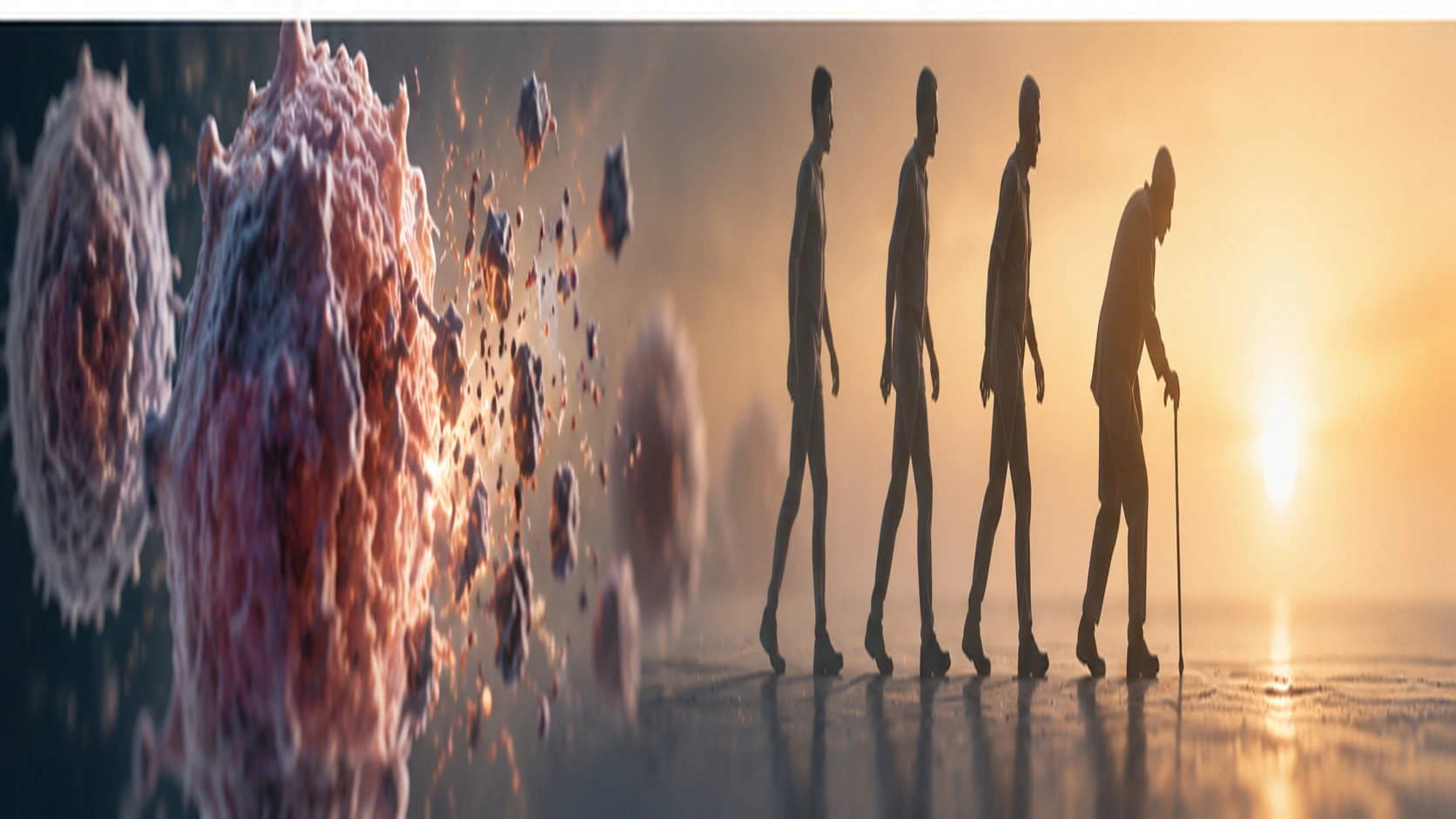
Frailty is broadly defined as a state of reduced resilience to physical and physiological stress. In practice, it manifests as muscle weakness, fatigue, slower gait speed, and increased vulnerability to illness or injury. Importantly, these features overlap substantially with the downstream consequences of senescent cell accumulation — suggesting that the relationship is more than coincidental.
That said, senescence is not the only driver of frailty. Metabolic dysfunction, hormonal changes, poor nutrition, inactivity, and chronic disease all contribute independently. Senescence is best understood as one important biological mechanism within a broader picture.
How Senescent Cells Accumulate and Why It Matters
Cellular senescence is a state in which a cell permanently stops dividing but remains metabolically active. This process serves an important protective purpose — it prevents damaged or potentially cancerous cells from replicating. In younger tissues, the immune system efficiently clears these cells before they accumulate. However, as we age, that clearance becomes less effective.
As a result, senescent cells build up across multiple tissue types, including skeletal muscle, connective tissue, bone, and the immune system itself. This accumulation is a recognised hallmark of biological ageing. The longer these cells persist, the more disruptive their signalling becomes to surrounding healthy tissue.
For a deeper explanation of what drives this process, see our article on what causes cellular senescence. Learn more in our complete guide to longevity.
The Mechanisms Linking Senescence to Frailty
Several well-characterised mechanisms connect senescent cell accumulation with the physical decline seen in frailty.
Chronic inflammation via the SASP
Senescent cells secrete pro-inflammatory cytokines, proteases, and growth factors as part of the SASP. In small amounts, these signals can support wound healing and tissue remodelling. However, when senescent cells accumulate in excess, this inflammatory signalling becomes chronic and damaging. Persistent low-grade inflammation — sometimes called “inflammageing” — is strongly associated with muscle wasting, reduced regenerative capacity, and impaired immune function, all of which contribute directly to frailty.
Impaired muscle regeneration
Skeletal muscle relies on satellite cells (muscle stem cells) to repair and rebuild after damage or stress. Research suggests that SASP-driven inflammation impairs satellite cell function, reducing the muscle’s ability to recover and maintain mass. Over time, this contributes to sarcopenia — age-related muscle loss — which is a central component of physical frailty.
Tissue stiffness and structural deterioration
Senescent cells also secrete matrix metalloproteinases, enzymes that degrade the structural proteins supporting tissues. This leads to increased tissue stiffness, cartilage deterioration, and reduced joint function — all features that compound physical frailty. In bone, elevated SASP activity is associated with reduced bone density and increased fracture risk.
Immune and systemic effects
The immune system itself becomes senescent with age — a process known as immunosenescence. This further impairs the clearance of new senescent cells, creating a reinforcing cycle. Systemic inflammation also affects cardiovascular function, metabolic regulation, and neurological health, all of which influence physical resilience and frailty risk.
For more on how the SASP drives these effects, see our article on what the SASP is and how it works.
What the Evidence Currently Shows
Animal studies have provided some of the most compelling evidence for a causal link between senescence and frailty. In mouse models, selectively clearing senescent cells has been shown to delay the onset of frailty-related physical decline, improve muscle function, and extend healthspan. These findings have generated considerable interest in senolytics — compounds designed to eliminate senescent cells — as potential therapeutic tools.
However, translating these results to humans is not straightforward. Human trials remain limited in number and scale. Some early clinical data suggest that senolytic interventions may reduce markers of senescence and inflammation in specific contexts, such as in patients with idiopathic pulmonary fibrosis or diabetic kidney disease. Broader frailty outcomes in healthy older adults are less well established.
Importantly, senescence is not purely harmful. In acute injury, wound healing, and embryonic development, senescence plays a protective and functional role. Indiscriminately eliminating senescent cells could therefore carry unintended consequences. This is a key reason why current evidence does not yet support senolytic use as a routine frailty prevention strategy.
Overall, the picture that emerges from available research is that senescence is a meaningful contributor to frailty — particularly through inflammatory and regenerative mechanisms — but it is one factor within a complex network. It would be an oversimplification to describe senescence as the singular cause of frailty.
Practical Implications: Can Senescence-Related Frailty Be Reduced?
While targeted senolytic therapies remain in development, there are well-supported lifestyle strategies that appear to reduce the biological burden associated with senescence and frailty.
Exercise is the most evidence-backed intervention. Resistance training preserves muscle mass and satellite cell function, directly countering sarcopenia. Aerobic exercise improves metabolic health, reduces systemic inflammation, and supports immune clearance of senescent cells. Both are relevant to frailty prevention.
Nutrition also matters. Diets high in processed foods and refined carbohydrates promote metabolic inflammation and oxidative stress — conditions that accelerate senescence. In contrast, diets rich in vegetables, lean protein, and healthy fats support tissue resilience and may help slow the rate of senescent cell accumulation.
Sleep quality affects inflammatory regulation and tissue repair. Poor sleep is associated with elevated inflammatory markers and faster biological ageing, both of which are relevant to frailty risk.
In practice, these foundations — exercise, nutrition, sleep, and cardiometabolic risk management — remain the highest-confidence strategies for reducing frailty risk. Senolytic compounds such as fisetin, quercetin, and rapamycin are being actively studied, but human evidence is currently limited. They should not be viewed as a substitute for lifestyle foundations, and self-experimentation carries meaningful uncertainty.
For those interested in the broader landscape of senolytic research, our article on what senolytics are and how they work covers this in more detail.
References and Resources
Sources on Cellular Senescence and Frailty
-
National Institute on Aging — Targeting Senescent Cells
nia.nih.govAn accessible overview of how senescent cells contribute to ageing-related disorders and the current state of research into clearing them.
-
Trends in Cell Biology — Cellular Senescence and Aging
cell.comA review of recent advances in understanding how senescent cells influence tissue ageing and systemic function.
-
Science Daily — Senolytics and Aging
sciencedaily.comAn accessible summary of senolytic research and what early findings suggest about their potential in ageing and frailty.
-
Nature Medicine — Senescence and Healthy Aging
nature.comA comprehensive review of the dual roles of senescence in healthy ageing and age-related disease, including its relationship with physical decline.
-
Aging — Senescence and Aging Interventions
aging-us.comDiscusses intervention strategies targeting senescence and what current evidence suggests about their potential to reduce age-related decline.
-
NCBI — Cellular Senescence and Aging
nih.govA detailed scientific review covering the biological basis of cellular senescence and its downstream effects on tissue function and ageing.
-
New England Journal of Medicine — Aging, Senescence, and Frailty
nejm.orgAn authoritative clinical review linking ageing biology with frailty, including the role of cellular senescence in physical and functional decline.

Frequently Asked Questions
Does senescence directly cause frailty?
Research suggests that senescence is a significant contributor to frailty, but not its sole cause. Senescent cells promote chronic inflammation and impair tissue repair, both of which drive physical decline. However, frailty also involves metabolic changes, hormonal shifts, inactivity, and other factors. The relationship is causal in part, but senescence operates within a broader network of ageing processes.
Can reducing senescence prevent or reverse frailty?
Animal studies show that clearing senescent cells can delay physical decline and improve tissue function. Human evidence is more limited, with early trials showing some benefit in specific disease contexts. Whether senolytic interventions can meaningfully prevent or reverse frailty in otherwise healthy older adults remains an active area of research. Lifestyle measures — particularly resistance exercise — currently have stronger evidence for frailty prevention.
What role does inflammation play in the link between senescence and frailty?
Inflammation is a central mediator. Senescent cells continuously secrete pro-inflammatory signals through the SASP, contributing to chronic low-grade inflammation — a state associated with muscle wasting, impaired repair, and reduced physical resilience. Reducing this inflammatory burden, whether through senolytic approaches or lifestyle strategies, is thought to be one mechanism by which senescence-related frailty might be slowed.
Are there lifestyle changes that can reduce senescence-related frailty risk?
Yes. Regular exercise — particularly resistance training — preserves muscle mass and supports immune clearance of senescent cells. A diet that limits processed foods and supports metabolic health reduces oxidative stress and inflammation, both of which accelerate senescence. Adequate sleep also supports tissue repair and inflammatory regulation. These foundations remain the most reliable strategies for reducing frailty risk, with or without specific anti-senescence interventions.
Conclusion
Cellular senescence contributes meaningfully to frailty through well-established mechanisms: chronic SASP-driven inflammation, impaired muscle regeneration, and progressive tissue deterioration. Evidence from animal models is compelling, and early human data is encouraging, though not yet conclusive for frailty outcomes specifically. Importantly, senescence is not purely harmful — it serves protective roles in certain contexts — and its contribution to frailty sits within a broader set of ageing processes. For now, lifestyle foundations such as exercise, nutrition, and sleep remain the most evidence-backed ways to reduce frailty risk. Senolytic research is promising, but it is a developing field rather than an established clinical strategy.
Find out more about cellular senescence and frailty
Search for more resources and information: