How Does Thymus Involution Affect Immunity?
TL;DR: Yes, thymus involution meaningfully affects immunity with age. As the thymus shrinks from early adulthood onward, it produces fewer new T cells, reducing the immune system’s ability to respond to novel infections and vaccines — though memory T cells and other immune mechanisms continue to provide partial protection throughout life.
What Is the Thymus and Why Does It Matter?
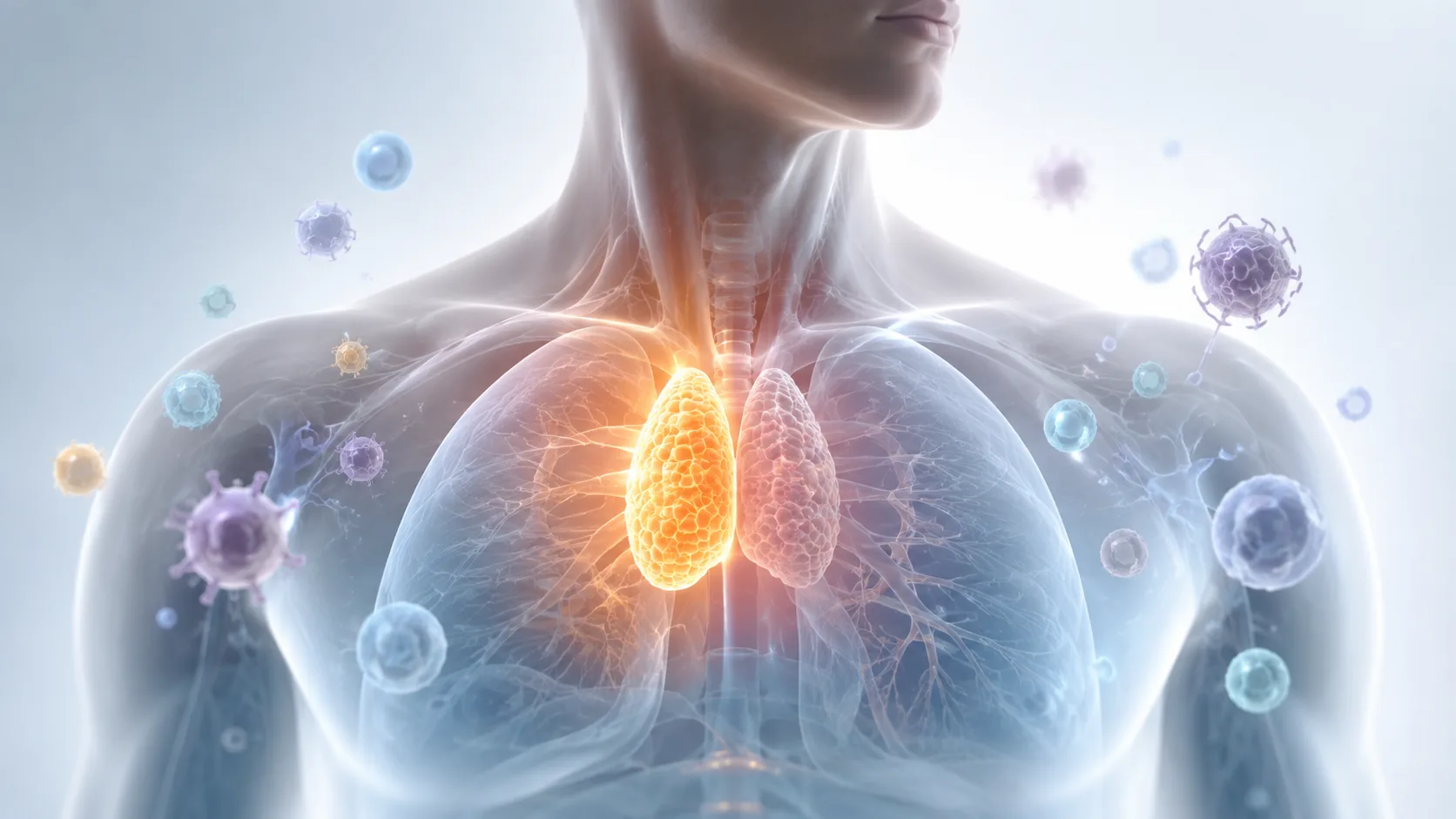
The thymus is a small gland located just behind the sternum, above the heart. Its primary function is to produce and mature T lymphocytes — the white blood cells responsible for recognising and responding to pathogens, cancer cells, and other threats. Without a functional thymus during development, the immune system cannot build an adequate repertoire of T cells, leaving the body poorly equipped to defend itself.
The thymus is most active during childhood and early adolescence. However, it continues to play a role in immune maintenance throughout adulthood by supplying naive T cells — cells that have not yet encountered a specific antigen and are therefore available to respond to new infections. As the thymus ages, this supply gradually diminishes, with measurable consequences for immune competence.
What Is Thymus Involution?
Thymus involution refers to the progressive shrinkage and functional decline of the thymus gland that begins around puberty and continues throughout adult life. The process involves the replacement of active thymic tissue with fat and fibrous connective tissue, which substantially reduces the organ’s capacity to generate mature T cells.
This is a normal, predictable feature of aging — not a disease process. By middle age, the thymus has lost a large proportion of its functional tissue. By later decades, thymic output of new T cells has declined dramatically compared to peak childhood levels. Importantly, however, the immune system does not collapse entirely as a result. Other mechanisms, including memory T cell populations established earlier in life, continue to operate independently of thymic activity.
How Involution Reduces T Cell Output
The most direct consequence of thymus involution is a reduction in naive T cell production. Naive T cells are essential for mounting responses to pathogens the immune system has not encountered before. As thymic output falls, the pool of available naive T cells contracts, and the immune system becomes progressively less able to generate targeted responses to new threats.
This explains two well-documented clinical observations in older adults. First, susceptibility to novel infections — including emerging viral strains — tends to increase with age. Second, vaccine responses become weaker and less durable, because generating a strong immune memory requires a robust naive T cell response to the vaccine antigen. As a result, older adults often require higher-dose formulations, adjuvanted vaccines, or booster doses to achieve adequate protection.
This age-related shift is part of a broader phenomenon called immunosenescence — the gradual deterioration of immune function with age. Thymus involution is considered one of the primary drivers of immunosenescence, though it is not the only factor involved.
The Broader Effects on Immune Function
Immunosenescence and Inflammaging
Beyond reduced T cell output, thymus involution contributes to a broader restructuring of the immune landscape with age. The T cell repertoire — the diversity of T cell types capable of recognising different threats — narrows over time as fewer naive cells are produced to replace those lost. In contrast, memory T cells accumulated over a lifetime persist and come to dominate the immune system in older adults.
This shift has trade-offs. Memory T cells provide established protection against previously encountered pathogens, but the reduced diversity of the overall T cell pool leaves gaps in coverage. Additionally, aging is associated with a low-grade, chronic state of systemic inflammation — often referred to as inflammaging — which is partly linked to immune dysregulation as the system ages. Elevated inflammatory markers in older adults are associated with increased risk of cardiovascular disease, metabolic dysfunction, and accelerated biological aging more broadly.
For a fuller picture of how individual organ systems decline with age, see our article on organ-specific aging.
What Thymus Involution Does Not Do
It is worth clarifying a common misconception: thymus involution does not render the immune system non-functional. Older adults retain substantial immune capability, particularly for pathogens they have encountered before. Memory T cells, B cells, natural killer cells, and innate immune mechanisms all continue to operate. The limitation is primarily in the immune system’s capacity to respond effectively to new or rapidly evolving threats — not in its ability to function at all.
Can the Effects of Thymus Involution Be Mitigated?
Lifestyle Factors
No lifestyle intervention can stop thymus involution or fully restore thymic output. However, research suggests that certain lifestyle factors may help preserve broader immune function and slow some aspects of immunosenescence. Regular moderate-intensity exercise, for example, is associated with better-maintained immune markers in older adults and reduced levels of systemic inflammation. Nutritional adequacy — particularly adequate protein, zinc, and vitamin D — supports immune cell function, though supplementation beyond sufficiency has not been shown to meaningfully reverse age-related immune decline.
Chronic stress accelerates immune aging through sustained elevation of cortisol, which suppresses T cell activity. In practice, stress reduction, adequate sleep, and avoidance of smoking and excessive alcohol may help limit the pace of immunosenescence, even if they cannot stop thymic involution itself. Learn more in our complete guide to longevity.
Emerging Therapies
Research into thymic regeneration is an active area of study. Experimental approaches have included hormonal interventions (such as growth hormone), interleukin signalling, and stem cell-based strategies aimed at restoring thymic tissue and function. Some early-stage trials have reported modest increases in thymic output, but these findings remain preliminary. Human evidence is limited, and no regenerative thymic therapy is currently approved or available in clinical practice.
It is important to distinguish this experimental research from commercially marketed “immune rejuvenation” or biological age testing products. Thymic function is not currently a standard clinical biomarker in routine medicine, and claims that specific supplements or protocols can restore thymic activity are not supported by robust evidence.
For related reading on how immune decline connects to broader aging biology, see our article on whether organ-specific aging is reversible.
Conclusion
Thymus involution is a well-established, normal feature of aging that meaningfully affects immunity — particularly the immune system’s capacity to respond to new infections and generate strong vaccine responses. The decline in naive T cell output is gradual rather than sudden, and existing memory T cells continue to provide important protection throughout life.
While lifestyle factors such as exercise, nutrition, and sleep cannot reverse thymic involution, they support overall immune resilience and may slow some aspects of immunosenescence. Experimental therapies aimed at thymic regeneration are under investigation but remain outside standard clinical practice. For now, the most evidence-supported approach to managing immune aging is maintaining a healthy lifestyle, staying up to date with vaccinations, and being aware that older adults may need adapted vaccine strategies to achieve adequate protection.
References and Resources
Authoritative Sources on Thymus Involution and Immunity
-
Thymic Aging and Its Impact on Immunity
ncbi.nlm.nih.govA peer-reviewed overview of thymic involution and its effects on immune function, covering the mechanisms behind declining T cell production with age.
-
The Immune System and Aging
who.intWorld Health Organization resource covering how aging influences immune health, including the role of thymic decline in immunosenescence.
-
American Association of Immunologists
aai.orgProvides updates on current immunology research, including experimental approaches to thymic regeneration and immune aging.
-
Thymus Regeneration and Aging
ncbi.nlm.nih.govExamines experimental therapies aimed at reversing thymic involution, with discussion of early findings and current limitations in the evidence base.
-
National Institute of Allergy and Infectious Diseases — Immunity and Age
niaid.nih.govCovers how immune functions change with age, including the contribution of thymic involution to reduced vaccine responsiveness and infection susceptibility in older adults.
-
Frontiers in Immunology — Thymic Aging
frontiersin.orgDiscusses potential strategies to address thymic aging, with a focus on the scientific rationale and current state of the evidence.
-
The Thymus Ages: Implications for Immunity
hematology.orgA detailed discussion of how thymic involution shapes immune aging and what this means for clinical practice and vaccine strategy in older populations.

Frequently Asked Questions
Does thymus involution completely disable immune response?
No. Thymus involution reduces the production of new T cells, which limits the immune system’s ability to respond to novel threats. However, memory T cells, B cells, and innate immune mechanisms continue to function independently of the thymus. Immune capability is diminished with age — particularly for new pathogens — but it is not eliminated.
How does thymus involution affect vaccine effectiveness in older adults?
Vaccine responses depend partly on naive T cells, which are in shorter supply as the thymus involutes. As a result, older adults tend to mount weaker and less durable immune responses to vaccines. This is why higher-dose formulations, adjuvanted vaccines, and booster doses are often recommended for older populations.
Can lifestyle changes support thymic health?
Lifestyle changes cannot stop thymus involution, but regular exercise, adequate nutrition, good sleep, and stress management are associated with better-preserved immune function in older adults. These factors support the broader immune system rather than directly restoring thymic tissue or output.
Are there emerging therapies to reverse thymic involution?
Research into thymic regeneration is ongoing. Approaches under investigation include hormonal interventions, interleukin-based signalling, and stem cell strategies. Some early trials have shown modest effects, but human evidence remains limited and no approved clinical therapy currently exists. These approaches should not be conflated with commercially marketed immune-support products.
Find out more information about thymus involution and immunity
Search for more resources and information: