
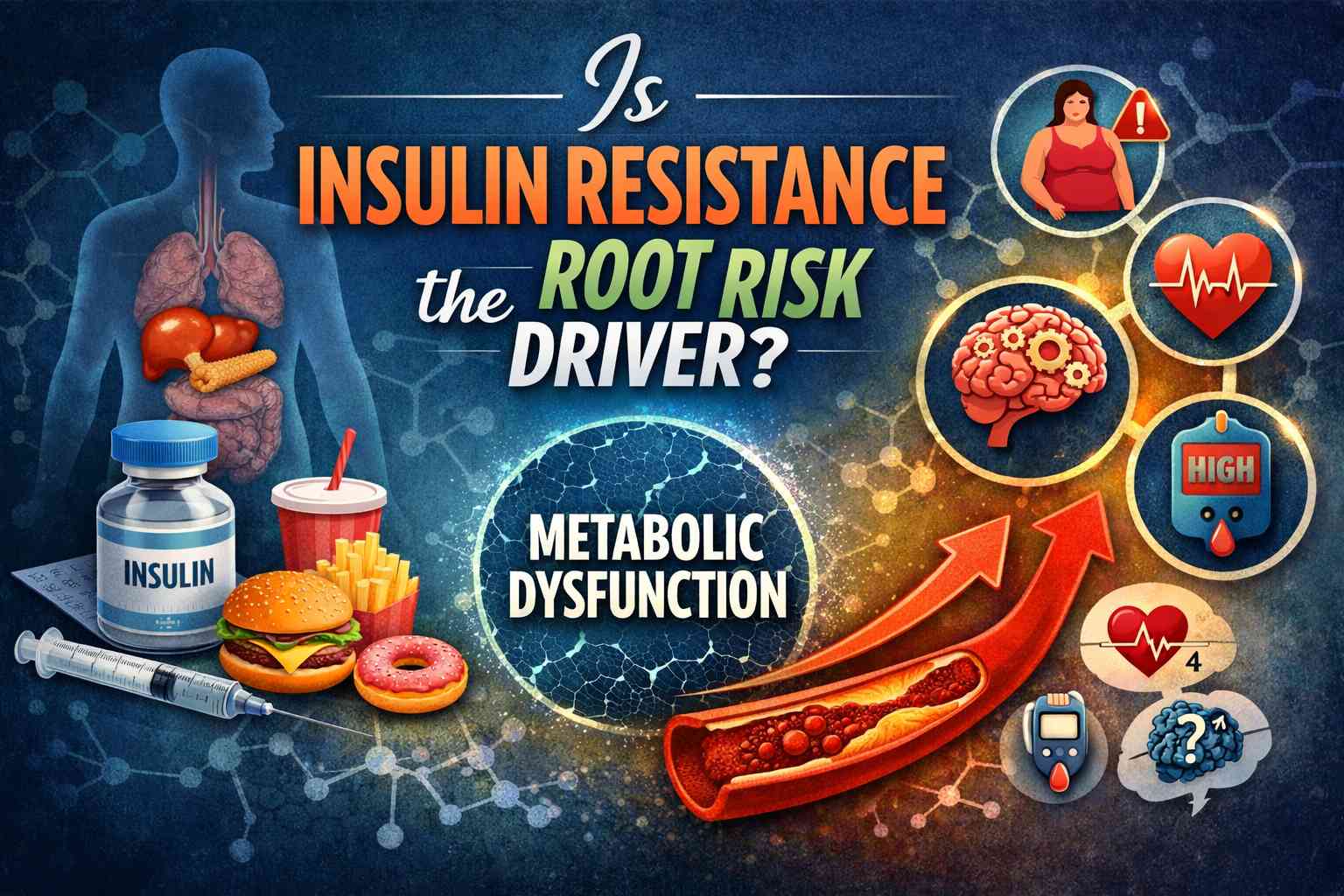
Is Insulin Resistance the Root Risk Driver?
Understanding Insulin Resistance and Its Significance
Insulin resistance is one of the most important drivers of chronic metabolic disease, but it is not the only one. It plays a central role in type 2 diabetes, fatty liver disease, metabolic syndrome, and cardiovascular risk, which is why many researchers consider it a major root risk factor rather than just a side issue.
TL;DR: Insulin resistance is a major root risk driver behind many chronic diseases, especially those linked to metabolism and cardiovascular health. Improving insulin sensitivity through diet, exercise, sleep, and weight management can meaningfully reduce long-term health risk.
Insulin resistance happens when the body’s cells become less responsive to insulin, the hormone that helps move glucose out of the blood and into tissues. Over time, the pancreas may produce more insulin to compensate, which can keep blood sugar normal for a while, but the underlying dysfunction often continues to worsen.
This matters because insulin resistance is linked not just to blood sugar problems, but also to inflammation, excess visceral fat, abnormal blood lipids, hypertension, and poor metabolic flexibility. Learn more in our complete guide to longevity.
Is Insulin Resistance the Root Risk Driver?
In many cases, yes. Insulin resistance is often upstream of several common chronic conditions, especially those involving poor metabolism. It can contribute to type 2 diabetes, non-alcoholic fatty liver disease, polycystic ovary syndrome, atherosclerosis, and broader cardiometabolic decline.
That said, it is more accurate to describe insulin resistance as a major root risk driver rather than the only one. Genetics, inactivity, poor sleep, chronic stress, environmental factors, diet quality, and excess calorie intake can all contribute to disease directly or by worsening insulin resistance.
Why Insulin Resistance Matters So Much
Research suggests insulin resistance often develops gradually and silently. Many people do not realize they have it until blood sugar, weight, blood pressure, or triglycerides begin to shift in the wrong direction. By that stage, metabolic dysfunction may already be affecting multiple organs.
This is one reason insulin resistance is so important in preventive health. It often appears before obvious disease and can help explain why so many chronic conditions cluster together.
Is It Always the Main Cause?
Not always. Some diseases have different primary drivers. Autoimmune disease, some cancers, neurodegenerative conditions, infections, and genetic disorders are not caused mainly by insulin resistance. However, insulin resistance can still worsen outcomes by increasing inflammation, impairing vascular health, and worsening metabolic resilience.
In practice, insulin resistance is one of the most useful concepts in modern health because it connects diet, body composition, exercise, metabolic biomarkers, and long-term disease risk into one framework.
How Insulin Resistance Affects Health
Impact on Metabolic and Cardiovascular Health
Insulin resistance affects much more than blood sugar. It tends to increase circulating insulin levels, promote fat storage, especially around the abdomen and organs, and worsen triglycerides and HDL cholesterol. Over time, this can raise the risk of cardiovascular disease, metabolic syndrome, and type 2 diabetes.
It also creates a feedback loop. More visceral fat often worsens insulin resistance, which can then promote further fat gain, liver fat accumulation, and worsening glucose control. This is one reason metabolic dysfunction can become progressively harder to reverse if it is ignored.
Insulin resistance is also linked with poor energy regulation, increased hunger, fatigue after meals, and reduced metabolic flexibility. These effects make healthy aging harder by undermining exercise capacity, body composition, and long-term resilience.
Why It May Underlie Many Different Conditions
Evidence indicates insulin resistance plays a role in conditions that may seem unrelated at first. These include fatty liver disease, PCOS, hypertension, and some aspects of cognitive decline and vascular aging. The common thread is that poor insulin signaling often disrupts multiple systems at once.
Because of this, addressing insulin resistance can sometimes improve several problems simultaneously. Better insulin sensitivity may lead to better blood sugar control, improved liver enzymes, lower triglycerides, better energy levels, and reduced cardiometabolic risk.
Can We Reverse or Prevent Insulin Resistance?
Practical Strategies That Help Combat Insulin Resistance
In many people, insulin resistance can be improved substantially. The most effective first-line strategies usually include weight loss when needed, regular exercise, better sleep, stress management, and a diet built around minimally processed foods.
Dietary changes that lower excess calorie intake, reduce refined carbohydrates, and increase fibre, protein, and nutrient density can help improve insulin sensitivity. There is no single perfect diet for everyone, but research suggests that improving diet quality and reducing excess body fat are two of the most important steps.
Exercise is especially powerful because it helps muscles use glucose more effectively. Resistance training and aerobic exercise both improve insulin sensitivity, and together they support better metabolism, endurance, and body composition. Exercise may also support healthier mitochondrial function through pathways related to AMPK and mitochondrial biogenesis.
Supplements and Medical Interventions
Some supplements, such as magnesium or berberine, may support metabolic health in certain people, but they should not replace the basics. Their effects are usually modest compared with the impact of weight management, exercise, and diet quality.
In some cases, medications such as metformin may be appropriate, especially when blood sugar or diabetes risk is already elevated. Medical treatment can be useful, but it works best alongside lifestyle intervention rather than instead of it.
Early intervention matters. The sooner insulin resistance is identified, the more likely it is that meaningful improvement can occur before major complications develop.
Expert Insights and Scientific Evidence
What Leading Research Suggests
Major medical organizations and a large body of research support the idea that insulin resistance is central to type 2 diabetes and strongly linked to cardiovascular disease and metabolic syndrome. Research suggests improving insulin sensitivity can reduce risk markers across several major diseases at once.
This is one reason metabolic health has become such a focus in longevity and preventive medicine. Insulin resistance often sits at the intersection of aging, inflammation, obesity, poor exercise tolerance, and chronic disease risk.
Nuance and Differing Perspectives
Not every expert would describe insulin resistance as the single root cause of modern disease. Some emphasize excess energy intake, ultra-processed diets, inactivity, poor sleep, environmental toxins, or genetics as equally important. That nuance matters.
A balanced interpretation is that insulin resistance is one of the most important root risk drivers in chronic metabolic disease, but it is part of a broader system. The best prevention strategy is therefore not just “lower insulin” in isolation, but improve whole-body metabolic health.
References and Resources
These resources provide useful background on insulin resistance, metabolic disease, and why improving insulin sensitivity matters for long-term health.
Authoritative Sources on Insulin Resistance as a Root Risk Driver
- The Role of Insulin Resistance in Cardiovascular Disease
ncbi.nlm.nih.gov
Explains how insulin resistance contributes to cardiovascular risk and wider metabolic dysfunction.
- Understanding Insulin Resistance
diabetes.org
Provides a practical overview of insulin resistance and its central role in type 2 diabetes.
- Harvard’s Nutrition Source on Insulin Resistance
hsph.harvard.edu
Reviews how lifestyle, especially diet and exercise, affects insulin sensitivity and metabolic risk.
- WHO Fact Sheet on Diabetes and Insulin Resistance
who.int
Provides a public health perspective on diabetes, metabolic disease, and prevention.
- Mechanisms of Insulin Resistance
pubmed.ncbi.nlm.nih.gov
Explains the biological mechanisms behind insulin resistance and why it affects multiple systems.
- Journal of Diabetes Research
journalofdiabetes.org
Contains research on insulin resistance, disease progression, and prevention strategies.
- What Is Insulin Resistance?
medicalnewstoday.com
A plain-language summary of insulin resistance and why lifestyle changes matter.

- WebMD on Insulin Resistance
webmd.com
Offers a practical overview of symptoms, causes, and management approaches.
FAQ: Frequently Asked Questions
Frequently Asked Questions
Is insulin resistance the main cause of type 2 diabetes?
In most cases, yes. Insulin resistance is a major early driver of type 2 diabetes, especially when the pancreas can no longer keep up with the body’s demand for more insulin.
Can lifestyle changes improve insulin resistance?
Yes. Weight loss when needed, better diet quality, regular exercise, better sleep, and lower stress can all improve insulin sensitivity, often significantly.
How does insulin resistance affect heart disease risk?
It can worsen blood lipids, blood pressure, inflammation, and visceral fat accumulation, all of which increase cardiovascular risk over time.
Could addressing insulin resistance help prevent other chronic illnesses?
Potentially, yes. Improving insulin sensitivity may lower risk or improve outcomes in conditions such as fatty liver disease, metabolic syndrome, PCOS, and type 2 diabetes.
How can insulin resistance be detected early?
Useful tests may include fasting glucose, HbA1c, fasting insulin, triglycerides, waist circumference, and other metabolic markers. A healthcare professional can help interpret these in context.
Conclusion
Insulin resistance is one of the most important root risk drivers in chronic metabolic disease. It may not explain every illness, but it often sits near the center of the network linking obesity, type 2 diabetes, cardiovascular disease, fatty liver, and poor metabolic health.
The most effective response is to focus on the fundamentals: improve diet quality, move more, build muscle, manage sleep and stress, and monitor relevant biomarkers early. Addressing insulin resistance does not just help blood sugar. It can improve the wider metabolic environment that shapes long-term health and aging.
Find out more information about “Insulin Resistance the Root Risk Driver”
Search for more resources and information: