Does Gut Dysbiosis Impair Immunity?
TL;DR: Gut dysbiosis — an imbalance in the gut microbiome — can impair immune regulation by disrupting key signalling pathways, reducing beneficial microbial metabolites, and promoting chronic low-grade inflammation. Restoring microbiome balance through diet, lifestyle, and targeted interventions supports more effective immune function, particularly with age.
What Is Gut Dysbiosis and Why Does It Matter for Immunity?
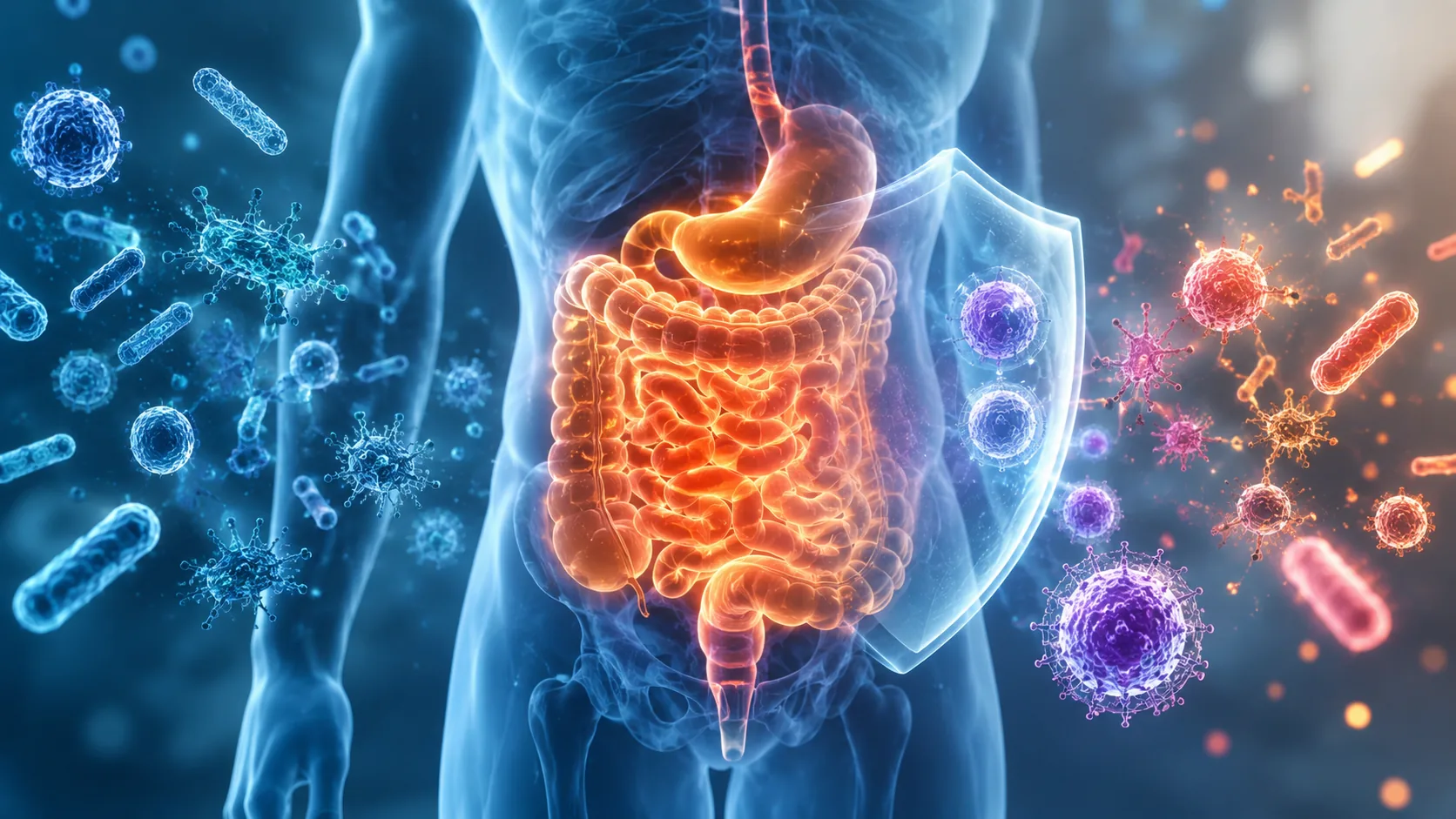
Gut dysbiosis refers to an unfavourable shift in the composition and diversity of the gut microbiome — the trillions of bacteria, fungi, and other microorganisms living in the digestive tract. Research consistently links dysbiosis to impaired immune function, and the mechanism is well-grounded in immunology: the gut is home to roughly 70% of the body’s immune tissue, making the microbiome a central regulator of immune activity.
When the microbial community is diverse and balanced, it actively trains and calibrates immune responses. In contrast, when harmful bacteria overgrow and beneficial strains decline, the immune system loses important regulatory signals. As a result, it can become either underactive — increasing susceptibility to infection — or overactive — contributing to chronic inflammation and immune dysregulation.
This matters not just for day-to-day immune health, but increasingly for long-term healthspan. Evidence suggests that gut dysbiosis is one of several factors that accelerates immune aging, a process explored in more detail in our article on whether immunosenescence increases mortality risk.
How Gut Dysbiosis Impairs Immune Function
The Gut-Immune Axis: Core Mechanisms
The gut microbiome influences immunity through several interconnected pathways. Understanding these mechanisms helps clarify why dysbiosis has such wide-ranging immune effects.
Short-chain fatty acids (SCFAs). Beneficial bacteria — particularly Firmicutes like Lactobacillus and Bifidobacterium species — ferment dietary fibre to produce SCFAs such as butyrate, propionate, and acetate. These compounds directly regulate immune cell differentiation, promote anti-inflammatory regulatory T cells (Tregs), and maintain the integrity of the gut epithelial barrier. When dysbiosis reduces SCFA-producing bacteria, this regulatory signal weakens.
Gut barrier integrity. A healthy gut lining forms a selective barrier that allows nutrients through while keeping pathogens and microbial toxins out. Dysbiosis can compromise this barrier — sometimes called “leaky gut” or increased intestinal permeability — allowing bacterial components such as lipopolysaccharide (LPS) to enter systemic circulation. This triggers immune activation and low-grade inflammation, even in the absence of active infection.
Immune cell education. The microbiome plays a critical role in training immune cells. Research indicates that gut bacteria influence the development and balance of T helper cell populations (Th1, Th2, Th17) and regulatory T cells. An imbalanced microbiome can skew these populations in ways that increase susceptibility to infection, allergy, or autoimmune activity.
Pattern recognition and innate immunity. Immune cells lining the gut use toll-like receptors (TLRs) to detect microbial patterns. In a balanced microbiome, this interaction is calibrated and controlled. In dysbiosis, aberrant microbial signals can overstimulate innate immune responses, contributing to persistent low-grade inflammation.
Signs That Gut Dysbiosis May Be Affecting Immune Function
The symptoms of gut dysbiosis are not always obvious. Digestive complaints such as bloating, irregular bowel movements, and abdominal discomfort are common. However, immune-related signs can include recurring infections, prolonged recovery from illness, increased sensitivity to foods, and worsening inflammatory conditions.
Importantly, not every person with dysbiosis will experience clear immune symptoms. The degree of impairment depends on factors such as age, underlying health, diet quality, stress levels, and the specific bacterial species involved. That said, persistent dysbiosis without intervention tends to worsen over time, particularly as the microbiome naturally shifts with age.
What the Evidence Actually Shows
Strength of the Evidence
The link between gut dysbiosis and immune dysfunction is supported by a substantial body of research across animal models, observational studies, and clinical trials. However, the evidence is not uniform in quality or certainty.
Animal studies have clearly demonstrated that germ-free mice — those raised without any gut microbiome — have severely underdeveloped immune systems. Introducing specific bacteria restores immune function in predictable ways, confirming the mechanistic relationship. That said, translating these findings directly to humans requires caution.
In humans, observational studies consistently show associations between low microbiome diversity, elevated inflammatory markers such as CRP and IL-6, and increased risk of immune-related conditions including infections, inflammatory bowel disease, and metabolic dysfunction. Research also indicates that older adults tend to have less diverse microbiomes and higher rates of dysbiosis — a pattern that correlates with the immune changes characteristic of immunosenescence.
Intervention trials using probiotics, dietary fibre, and fermented foods show modest but meaningful improvements in immune markers in some populations. However, the effect sizes are often small, results vary between individuals, and the optimal strains, doses, and durations remain an active area of investigation. Human evidence is promising but still developing in several areas.
What Cannot Yet Be Claimed
It is important not to overstate the certainty of the evidence. Dysbiosis is associated with impaired immunity, but causation in humans is difficult to establish definitively. Most intervention studies are short-term and rely on surrogate markers rather than hard clinical outcomes. Furthermore, the microbiome is highly individual — what constitutes “healthy” composition varies considerably between people.
No probiotic supplement or dietary intervention has been shown to reverse immunosenescence or prevent immune aging in a clinically proven way. These interventions support normal immune function; they do not cure or override the broader aging process.
Gut Dysbiosis, Inflammaging, and Immune Aging
One of the more significant connections between gut dysbiosis and longevity is its role in inflammaging — the chronic, low-grade systemic inflammation that accumulates with age and is associated with a range of age-related diseases. For a broader overview of this topic, see our hub on immune aging and chronic inflammation.
The gut microbiome is one of the major modulators of systemic inflammatory tone. As microbiome diversity declines with age — a process sometimes called “microbiome aging” — the balance shifts toward more pro-inflammatory bacterial species. This contributes to elevated LPS in circulation, reduced SCFA production, and weakened epithelial barrier function. Each of these changes pushes the immune system toward a more inflamed baseline.
This matters because chronic low-grade inflammation is not just a side effect of aging — it actively accelerates immune dysfunction, increases susceptibility to infection, impairs vaccine responses, and is associated with elevated risk for cardiovascular disease, metabolic disease, and cognitive decline. Gut dysbiosis is one of several upstream contributors to this process, alongside persistent viral infections such as CMV, and other factors explored across this topic cluster.
Learn more in our complete guide to longevity.
Practical Strategies to Support Gut-Immune Balance
Diet: The Most Established Lever
Diet has the strongest evidence base for influencing microbiome composition. A diverse, plant-rich diet high in fibre consistently supports greater microbial diversity and higher SCFA production. In practice, this means prioritising vegetables, legumes, whole grains, nuts, and seeds across a wide variety of types rather than a narrow set of “superfoods.”
Fermented foods — such as yogurt, kefir, kimchi, sauerkraut, and miso — have been shown in recent research to increase microbiome diversity and reduce circulating inflammatory markers. These are practical additions worth including regularly. In contrast, diets high in ultra-processed foods, refined sugars, and saturated fats are consistently associated with reduced microbial diversity and increased intestinal permeability.
Probiotics and Prebiotics: Supportive, Not Transformative
Probiotic supplements can be useful in specific contexts — particularly following antibiotic use, during gastrointestinal illness, or in older adults with low microbiome diversity. However, the evidence for broad immune benefit from probiotic supplementation in healthy adults is modest and inconsistent. Strain specificity matters considerably, and most commercial formulas have limited clinical evidence behind their specific compositions.
Prebiotic fibres — found in foods such as garlic, onions, leeks, asparagus, oats, and chicory — feed beneficial bacteria and support SCFA production. These are generally more reliably effective than supplemental probiotics for maintaining a healthy microbial environment, because they address the substrate that beneficial bacteria depend on.
Lifestyle Factors That Affect the Microbiome
Several lifestyle factors have meaningful effects on microbiome health. Regular physical exercise is associated with greater microbial diversity and higher levels of SCFA-producing bacteria — an effect that appears partly independent of diet. Chronic psychological stress, in contrast, is associated with reduced microbial diversity and increased gut permeability, likely through neuroendocrine pathways connecting the brain and gut.
Sleep quality also matters. Disrupted circadian rhythms and poor sleep are linked to shifts in microbiome composition and increased intestinal permeability, suggesting that sleep supports gut-immune function as part of its broader restorative role. Additionally, unnecessary antibiotic use remains one of the most significant disruptors of microbiome diversity — often causing changes that persist for months or longer.
These lifestyle levers are discussed further in related articles, including our piece on whether sleep improves immune memory.
Long-Term Approach
Gut microbiome health is not something that responds to short-term fixes. The most effective approach is consistent: a varied, fibre-rich diet maintained over time, regular physical activity, good sleep, stress management, and careful use of medications that affect the gut. Periodic disruptions — from illness, stress, travel, or medication — are inevitable, but a healthy baseline helps the microbiome recover more readily.
References and Resources
The following sources provide evidence-based information on gut dysbiosis and immune function:
Key Sources on Gut Dysbiosis and Immunity
-
The Role of Gut Microbiota in Human Health and Disease
ncbi.nlm.nih.govAn in-depth review of how gut bacteria influence immune regulation and the implications for health and disease.
-
World Health Organization: Microbiome and Immunity
who.intProvides context on how microbiome health affects immune responses and antimicrobial resistance.
-
Gut Microbiota and Immune System Development
nature.comResearch on how the microbiome influences immune system maturation and long-term resilience.
-
Microbiota and Immune Homeostasis
frontiersin.orgExplores the mechanisms by which gut microbiota maintains immune balance and helps prevent chronic disease.
-
Gut Health and the Immune System
medicalnewstoday.comA practical overview of how gut health impacts immune function and evidence-based ways to improve it.
-
WebMD: Gut Health and Immunity
webmd.comAn accessible summary of the relationship between gut microbiota and immune health.
-
Microbiome and Immune System Interactions
ncbi.nlm.nih.govA comprehensive review of how microbiota influences immune responses at cellular and molecular levels.

-
ScienceDaily: Gut Microbiome and Immunity
sciencedaily.comRecent findings on how microbiome disturbances can impair immune defences and affect health outcomes.
Frequently Asked Questions
Does gut dysbiosis directly impair the immune system?
Yes. Research indicates that gut dysbiosis disrupts key immune regulatory processes, including SCFA production, gut barrier integrity, and immune cell calibration. As a result, dysbiosis is associated with increased susceptibility to infection, impaired recovery, and heightened inflammatory activity. The relationship is well-supported mechanistically, though the degree of impairment varies between individuals.
Can improving gut health support better immune function?
Evidence suggests it can. A fibre-rich diet, regular consumption of fermented foods, consistent exercise, and good sleep are all associated with greater microbiome diversity and improved immune markers. The effects are real but modest — restoring gut health supports normal immune regulation; it does not override aging or other systemic factors.
What are the signs that gut dysbiosis may be affecting immunity?
Common signs include recurring infections, prolonged recovery from illness, persistent fatigue, and digestive symptoms such as bloating or irregular bowel habits. These are not exclusive to dysbiosis, but when they occur together without clear cause, gut health is worth investigating. A clinician can help assess whether the microbiome is a relevant factor.
Does gut dysbiosis contribute to autoimmune conditions?
There is growing evidence of an association. Dysbiosis has been linked to altered immune tolerance and increased inflammatory signalling — both of which can contribute to autoimmune activity in susceptible individuals. However, the relationship is complex and likely bidirectional; autoimmune conditions themselves can also alter the microbiome. Causation in humans is not fully established.
Are probiotic supplements effective for immune support?
Probiotic supplements can be helpful in specific contexts — particularly after antibiotic use or for older adults with low microbial diversity — but the evidence for broad immune benefit in healthy individuals is inconsistent. Strain selection matters considerably, and dietary sources of beneficial bacteria and prebiotic fibre generally have stronger overall support.
Conclusion
Gut dysbiosis impairs immune function through well-characterised mechanisms — reduced SCFA production, compromised gut barrier integrity, and dysregulated immune cell signalling. The evidence connecting these processes to real immune consequences is substantial, particularly in older adults, where declining microbiome diversity intersects with the broader changes of immune aging.
That said, the microbiome is not the sole determinant of immune health, and no single intervention restores it completely. In practice, the most effective approach combines dietary diversity, regular physical activity, adequate sleep, stress management, and judicious use of medications that affect gut flora. These steps do not guarantee protection from immune aging, but they meaningfully support the conditions under which a more balanced, functional immune system can be maintained over time.
Find out more information about gut dysbiosis and immune function
Search for more resources and information: