
Does Exosome Therapy Work?
Does Exosome Therapy Work?
TL;DR: Exosome therapy shows genuine biological promise — particularly for tissue repair and reducing inflammation — but clinical evidence in humans remains limited. It is not a proven anti-ageing treatment, and many commercial offerings currently outpace the science.
What Is Exosome Therapy?
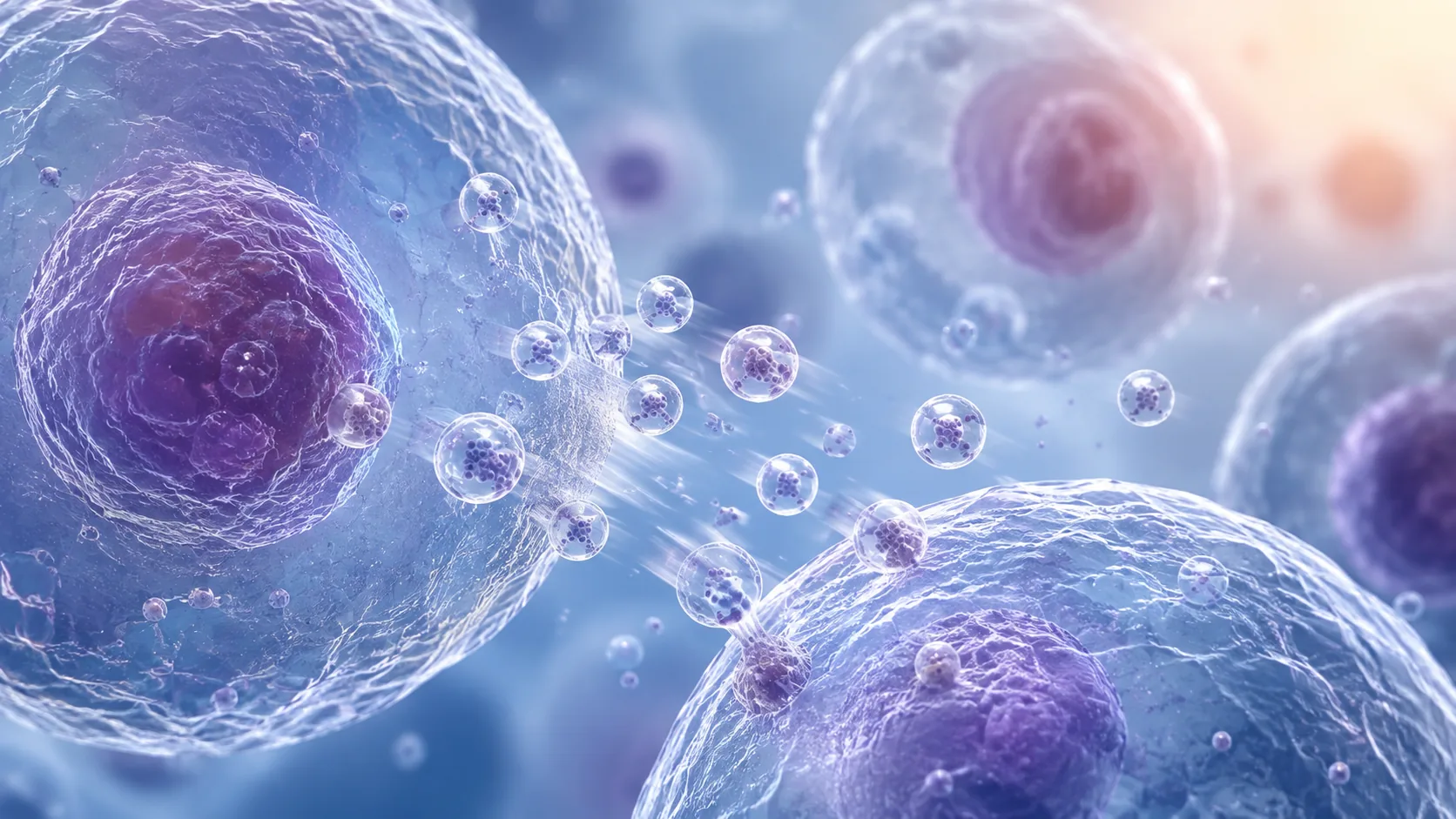
Exosome therapy involves administering tiny extracellular vesicles — known as exosomes — into the body to support tissue repair and cellular communication. These vesicles are naturally produced by cells, including stem cells, and carry proteins, lipids, and RNA signals that influence how neighbouring cells behave. In regenerative medicine, exosomes are being studied as a way to deliver biological instructions that may promote healing without using live cells directly.
As a treatment concept, exosome therapy sits within the broader field of regenerative medicine, which includes stem cell therapy, platelet-rich plasma (PRP), tissue engineering, and other repair-focused interventions. Exosomes have attracted significant research interest partly because they may offer some of the signalling benefits of stem cells with potentially fewer logistical and safety complications.
That said, the gap between laboratory findings and proven clinical treatments remains considerable. Understanding what exosome therapy is — and is not — matters before drawing conclusions about its usefulness for health or longevity.
How Does Exosome Therapy Work?
Cells communicate constantly through chemical signals. Exosomes are one mechanism for this communication: they are released by a cell, travel through tissue fluids or the bloodstream, and are taken up by target cells. Once inside, the cargo they carry — including messenger RNA, microRNA, and proteins — can influence gene expression, reduce inflammation, and stimulate repair processes.
In the context of ageing and tissue damage, the reasoning behind exosome therapy is straightforward. As stem cell activity declines with age, the regenerative signals these cells normally produce also diminish. In theory, supplying exosomes derived from healthy, active cells could partially restore those signals. This is why much of the early research has focused on stem cell-derived exosomes, particularly from mesenchymal stem cells.
In practice, however, delivering exosomes effectively and consistently is technically challenging. The source of the exosomes, how they are isolated and stored, and how they are administered all affect whether they remain biologically active. As a result, the mechanism is well understood at a cellular level, but translating that into reliable clinical outcomes is still a work in progress.
What Does the Evidence Say?
Preclinical research — primarily in cell cultures and animal models — has produced consistently encouraging results. Studies have shown that exosomes can reduce inflammatory signalling, promote wound healing, support cartilage repair, and influence neurological recovery in animal settings. This body of work provides a credible scientific foundation for the therapy.
Human evidence, however, is considerably more limited. Clinical trials involving exosomes are ongoing, and some early-phase studies have shown signals of benefit in specific conditions such as osteoarthritis, wound healing, and certain inflammatory disorders. That said, large-scale, well-controlled randomised trials in humans are still lacking for most applications.
Importantly, research suggests that exosomes are unlikely to function as a broad anti-ageing intervention. The signals they carry are context-dependent — what works in an injured joint or an acutely inflamed tissue may not translate into systemic rejuvenation. Evidence for whole-body anti-ageing effects in humans currently does not exist at a clinical level.
Learn more in our complete guide to longevity to understand where regenerative approaches fit within the broader landscape of healthy ageing.
Potential Applications and Realistic Expectations
The most credible potential applications for exosome therapy are condition-specific rather than general. Current research directions include musculoskeletal repair, inflammatory joint conditions, skin rejuvenation, wound healing, and certain neurological applications. These are areas where the biological rationale is strongest and where localised delivery is more feasible.
In the context of skin health, for example, exosomes applied topically or injected locally may support collagen production and reduce localised inflammation. Results reported in early studies are often modest and variable, but they are at least mechanistically plausible.
For joint conditions such as osteoarthritis, interest has grown around intra-articular (joint-injected) exosome preparations. Some patients in early trials have reported reductions in pain and improvements in function. However, these findings are preliminary, and it is not yet clear whether exosomes outperform existing treatments in a clinically meaningful way.
Where exosome therapy becomes considerably less credible is when marketed as a systemic anti-ageing solution. Claims that intravenous exosome infusions can reverse biological ageing, extend lifespan, or restore youthful function broadly are not supported by current clinical evidence. For a wider view of the evidence landscape, the hub article on stem cells and regenerative medicine for longevity covers this distinction in detail.
Risks, Limitations, and Regulatory Status
Exosome therapy is not without risk. Because exosomes carry biologically active molecules, there are theoretical concerns about unintended effects on immune function or cell behaviour. Contamination during manufacturing is also a genuine concern, particularly given that quality control standards vary widely across suppliers and clinics.
Regulatory oversight is a significant issue. In many countries, including the United States, exosome products are regulated as biological drugs and are not approved for general clinical use outside of authorised trials. Despite this, a large number of private clinics offer exosome treatments commercially, often without robust evidence for the specific conditions or protocols they are using.
This matters from a safety perspective. The provenance and characterisation of exosome products available through commercial clinics are frequently unclear. Without standardised manufacturing and independent verification of content, it is difficult to know whether a product contains what it claims, at the dose claimed, in a form that remains biologically active.
In addition, the long-term effects of repeated exosome administration are not yet well understood. Animal data suggests that, under some conditions, extracellular vesicles can influence tumour biology — a finding that warrants caution, even if the relevance to standard therapeutic doses in humans remains uncertain.
Overall, the limitations are not a reason to dismiss exosome research. Rather, they are a reason to distinguish carefully between credible, ongoing clinical investigation and commercial offerings that are premature. Anyone considering exosome therapy should seek treatment within a regulated clinical trial setting where possible, or at minimum through a provider who can clearly document the source, characterisation, and regulatory status of the product being used.
References and Resources
Authoritative Sources on Exosome Therapy
-
Exosomes in Regenerative Medicine
nih.govA comprehensive review discussing the regenerative potential of exosomes and the current state of scientific research.
-
FDA and Exosome Therapies
fda.govThe FDA’s regulatory perspective on exosome-based therapies, including safety considerations and current oversight frameworks.
-
Exosomes and Cell Communication
ncbi.nlm.nih.govAn explanation of how exosomes facilitate intercellular communication, which underpins their proposed role in tissue repair.
-
Exosomes in Regenerative Medicine — Industry Insights
elsevier.comAn industry-level review of advances and challenges in exosome therapies within the regenerative medicine field.
-
American Academy of Orthopaedic Surgeons
aaos.orgDiscusses regenerative options including exosomes within orthopaedic and musculoskeletal medicine.
-
Stem Cell and Exosome Therapy Overview
pubmed.ncbi.nlm.nih.govA detailed look at how exosomes can be harnessed for regenerative purposes, with reference to current evidence gaps.
-
The Future of Exosome-Based Therapy
forbes.comAn accessible overview of emerging trends and future directions in exosome-based medicine.

-
Exosomes in Regenerative Medicine Journal
omicsonline.orgA peer-reviewed source covering the latest research on exosome biology and its regenerative applications.
Frequently Asked Questions
Can exosome therapy improve skin appearance?
Early evidence suggests that exosomes applied locally may support collagen production and reduce skin inflammation, with some patients reporting improvements in texture and elasticity. However, results vary between individuals, and robust clinical trial data remains limited. It is not yet established as a standard or proven skin treatment.
Is exosome therapy scientifically proven?
The underlying biology is well-supported by preclinical research. However, large-scale human clinical trials are still lacking for most applications. Current evidence is promising but not yet sufficient to consider exosome therapy proven for most conditions. It remains an active and developing area of investigation.
Are there risks involved with exosome therapy?
Risks include immune reactions, potential contamination from poorly sourced products, and uncertainty about long-term effects. The safety profile appears generally favourable in early studies when products are well-characterised, but quality control varies significantly across commercial providers. Regulatory approval for general clinical use is absent in most jurisdictions.
How long do results from exosome therapy last?
Duration of effect has not been well established in clinical research. Where benefits have been reported, they appear to vary based on the condition treated, the product used, and the individual’s biology. Maintenance treatments are often suggested by providers, though evidence-based guidance on optimal frequency is not yet available.
Does exosome therapy work for chronic conditions?
Some early-phase trials in conditions such as osteoarthritis and inflammatory disorders have reported modest improvements. However, evidence is still emerging, and exosome therapy has not been established as a first-line treatment for any chronic condition. It is most appropriately considered an investigational option at this stage, ideally accessed through a clinical trial setting.
Conclusion
Exosome therapy is biologically plausible and backed by a growing body of preclinical research. The mechanisms are real — exosomes do carry signals that influence cell behaviour, inflammation, and tissue repair. In that sense, the scientific interest is well-founded.
That said, clinical evidence in humans remains limited, and the gap between laboratory findings and reliable therapeutic outcomes has not yet been bridged for most applications. For specific, localised conditions such as joint injury or wound healing, there is enough early evidence to warrant continued investigation. For broader claims around reversing ageing or extending lifespan, the evidence simply does not support them at this stage.
The commercial landscape around exosome therapy is considerably ahead of the science. Many clinics offering intravenous or systemic exosome treatments operate outside regulatory frameworks and make claims that current research does not justify. Approaching these offerings with scepticism is both reasonable and appropriate.
For now, exosome therapy is best understood as a promising area of regenerative medicine — one that may yield meaningful clinical tools in the coming years, but that requires better-quality human trials before it can be confidently recommended for most uses. Those interested in supporting their body’s regenerative capacity are currently better served by well-evidenced lifestyle approaches, including exercise, sleep, and metabolic health, while following the development of this field with informed interest.
Find out more information about exosome therapy
Search for more resources and information: