Does Platelet-rich Plasma Improve Aging Tissues?
TL;DR: Platelet-rich plasma (PRP) delivers concentrated growth factors from your own blood into targeted tissues, and research suggests it can support collagen production in aging skin and reduce pain in arthritic joints. However, evidence quality is inconsistent, individual results vary considerably, and PRP should not be treated as a proven general anti-aging treatment.
What Is Platelet-Rich Plasma?
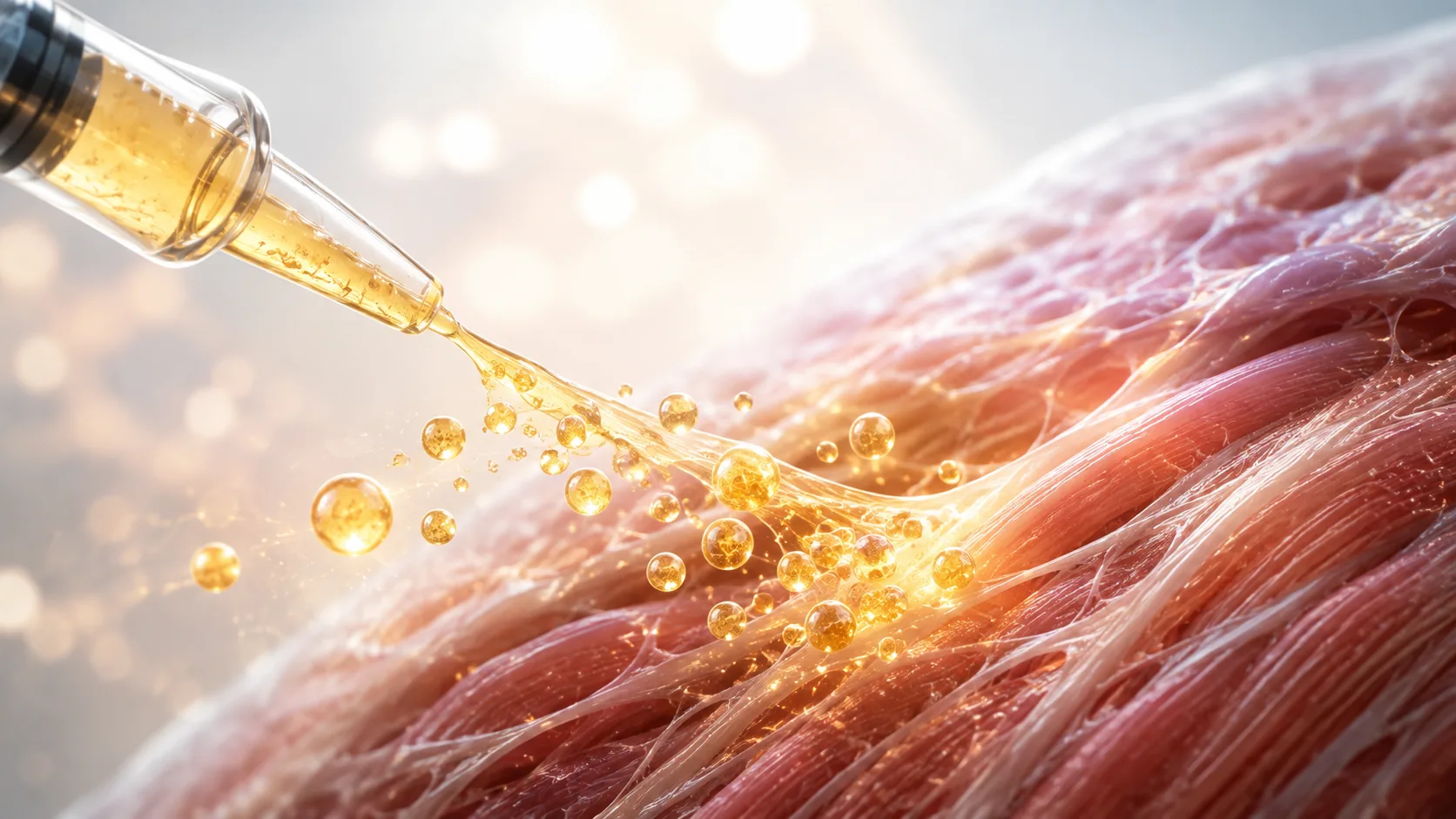
Platelet-rich plasma is a preparation made from a small sample of a person’s own blood. The blood is spun in a centrifuge to separate and concentrate the platelets, which are then re-injected into a target area — most commonly the skin, joints, or tendons. Because PRP is derived from the patient’s own blood, the risk of immune rejection or allergic reaction is low. That said, this does not automatically make it effective for every application.
Platelets are best known for their role in clotting, but they also carry a range of biologically active molecules, including growth factors such as PDGF (platelet-derived growth factor), TGF-β (transforming growth factor beta), and VEGF (vascular endothelial growth factor). These molecules play roles in tissue repair, cellular proliferation, and the formation of new blood vessels — all processes that tend to slow with age.
PRP sits within the broader field of regenerative medicine, which aims to harness or stimulate the body’s own repair mechanisms. For context on how regenerative approaches relate to aging and longevity more broadly, see our hub on stem cells and regenerative medicine for longevity.
How PRP Interacts With Aging Tissues
The Aging Tissue Environment
As the body ages, several tissue-level changes accumulate. Collagen production slows, skin becomes thinner and less elastic, cartilage degrades more readily, and the local environment within tissues becomes increasingly inflamed — a state sometimes called inflammaging. Growth factor signalling also weakens over time, meaning the body’s internal repair signals become less effective.
This is where the rationale for PRP becomes relevant. By introducing a concentrated dose of growth factors directly into an aging or damaged tissue, PRP aims to re-activate repair processes that have slowed. The logic is straightforward, even if the clinical results are more complicated.
Skin Applications
In the skin, PRP is most commonly used for rejuvenation — to improve texture, reduce fine lines, and restore firmness. Research suggests that PRP injections can stimulate fibroblasts, the cells responsible for producing collagen and elastin. As a result, some studies have reported improvements in skin elasticity and surface quality following a course of PRP treatments.
However, the magnitude of benefit varies between individuals, and study designs have often lacked robust controls. The evidence is broadly positive but not yet definitive. PRP for skin aging is better understood as a tissue-supportive intervention than a reversal of the underlying aging process.
Joint Applications
For aging joints — particularly those affected by osteoarthritis — PRP has been investigated as a way to reduce inflammation and support cartilage health. Evidence from clinical trials, particularly for knee osteoarthritis, is more substantial than in some other areas. Several systematic reviews suggest PRP can reduce pain and improve function compared to placebo, at least in the short to medium term.
That said, effects appear to diminish over time, and PRP does not appear to regenerate significantly lost cartilage. It is more accurate to describe it as a repair-supportive or symptom-modifying treatment rather than a tissue-rebuilding one.
The Mechanisms Behind PRP
PRP’s effects on aging tissues operate through several overlapping pathways.
Growth factor delivery. The concentrated growth factors in PRP — particularly PDGF, TGF-β, and VEGF — stimulate cellular proliferation and collagen synthesis. In aging tissues where these signals have weakened, introducing them externally may temporarily restore some regenerative activity.
Angiogenesis. VEGF in particular promotes the formation of new blood vessels, which improves local oxygen and nutrient delivery. This can benefit tissues where vascular supply has declined with age.
Anti-inflammatory signalling. Some growth factors carried in PRP have modulatory effects on local inflammation. In the context of aging joints or chronically inflamed tissues, this may help shift the local environment away from ongoing degradation.
Stem cell activation. There is early evidence that PRP may influence local tissue stem cells, potentially encouraging them to proliferate or differentiate. However, this interaction is not yet well characterised in human aging, and claims in this area should be treated cautiously. For more on how stem cell function changes with age, see our article on how stem cells decline with age.
What the Evidence Actually Shows
Skin Aging
Multiple small clinical studies and systematic reviews have examined PRP for facial rejuvenation and skin aging. The overall picture is cautiously positive: research suggests improvements in skin hydration, elasticity, and surface texture are achievable with PRP treatment. Collagen synthesis appears to be stimulated in treated areas.
However, most studies are small, short in duration, and lack placebo controls that account for the mechanical effect of needling itself. It remains unclear how much of the observed benefit comes from the PRP versus the needling procedure. Importantly, no evidence supports PRP as a reversal of fundamental aging biology — it is a local tissue intervention, not a systemic anti-aging strategy.
Joint Health and Osteoarthritis
Evidence for PRP in knee osteoarthritis is more developed. Several randomised controlled trials and meta-analyses have found that PRP can reduce pain and improve joint function over periods of six to twelve months, with some studies showing superiority over hyaluronic acid injections. However, results across studies are inconsistent, and long-term durability beyond twelve months is not well established.
PRP is not currently a standard-of-care treatment for osteoarthritis in most health systems, in part because evidence quality remains variable and preparation methods differ significantly between clinics.
Other Tissue Applications
PRP has also been investigated for hair loss (androgenic alopecia), tendon injuries, and wound healing. Evidence varies considerably across these applications. For certain musculoskeletal conditions, particularly tendinopathy, research suggests meaningful benefit. For broader anti-aging uses — such as systemic tissue regeneration or lifespan extension — no credible evidence currently exists.
Practical Considerations
What to Expect From Treatment
PRP is typically administered as a series of injections, not a single session. For skin applications, three to four sessions spaced several weeks apart is a common approach. For joints, one to three injections may be used depending on the clinical situation.
Results, where they occur, generally develop gradually over several weeks to months rather than immediately. Mild swelling, bruising, or discomfort at the injection site is normal and typically resolves within a few days.
Preparation and Clinic Selection
The quality of PRP depends significantly on the preparation method — specifically, how blood is processed and what platelet concentration is achieved. Protocols vary between providers, and there is currently no universally standardised approach. Choosing a clinic with transparent protocols and experienced practitioners is important, as inconsistent preparation likely contributes to the variability seen in clinical outcomes.
Staying well-hydrated before treatment and discussing any medications — particularly blood thinners or anti-inflammatory drugs — with the provider in advance is advisable.
Combining PRP With Lifestyle
PRP works within the body’s existing biological environment. In practice, the effectiveness of any tissue repair intervention is influenced by the overall health of that environment. Chronic inflammation, poor sleep, physical inactivity, and metabolic dysfunction all impair tissue repair capacity. Addressing these factors alongside any regenerative treatment is likely to improve outcomes, even if direct evidence for this combination is limited.
Learn more in our complete guide to longevity at longevityinsights.co.uk/what-is-longevity/.
Limitations and Uncertainties
Several important limitations apply to the current evidence on PRP for aging tissues.
Standardisation. There is no agreed standard for PRP preparation, platelet concentration, or injection technique. As a result, comparing results across studies or clinics is difficult.
Study quality. Many trials are small, unblinded, or lack appropriate control groups. This makes it hard to separate the specific effects of PRP from placebo response, patient expectation, or the mechanical stimulation of needling.
Individual variability. Responses to PRP appear to vary based on age, baseline tissue health, underlying conditions, and possibly genetic factors. Not everyone responds meaningfully to treatment.
Duration of effect. For most applications, any benefit from PRP appears to diminish over time. Ongoing or repeated treatments may be needed to sustain results, which increases cost and inconvenience.
No anti-aging evidence at the systemic level. There is no current evidence that PRP extends lifespan, meaningfully slows biological aging across the body, or addresses the root causes of aging. Claims suggesting otherwise are not supported by the available literature.

References and Resources
The following sources informed this article on platelet-rich plasma and aging tissues.
Authoritative Sources on PRP and Aging Tissues
-
PRP in Skin Rejuvenation and Aging
ncbi.nlm.nih.govPeer-reviewed study examining how PRP stimulates collagen synthesis in aging skin and the biological basis for its dermatological applications.
-
PRP for Joint Regeneration
aestheticmedicinejournal.orgReviews the regenerative effects of PRP on osteoarthritic joints, including discussion of outcomes relevant to age-related joint degeneration.
-
American Academy of Aesthetic Medicine
aaaasm.orgProvides professional guidelines and best practices for PRP treatments, including safety standards and clinical considerations.
-
The Role of PRP in Regenerative Medicine
ncbi.nlm.nih.govA broad review of PRP’s mechanisms of action, clinical applications, and current limitations in tissue regeneration.
-
PRP in Dermatology
plasticsurgery.orgOverview of PRP use in dermatology and aesthetic medicine, including practical context for skin rejuvenation applications.
-
PRP and Skin Aging: A Systematic Review
pubmed.ncbi.nlm.nih.govSystematic review summarising findings from multiple trials on PRP’s effectiveness for skin aging outcomes.
-
PRP Therapy Overview
medicalnewstoday.comAccessible overview of PRP therapy covering its applications, what the procedure involves, and what evidence currently supports.
-
Regenerative Potential of PRP
ncbi.nlm.nih.govExamines the cellular and molecular pathways activated by PRP, including growth factor signalling relevant to tissue repair in aging.
Frequently Asked Questions
Does platelet-rich plasma actually work for aging tissues?
Research suggests PRP can be effective for specific applications — particularly skin rejuvenation and osteoarthritic joints — but results are not universal. Evidence quality varies, individual responses differ, and PRP is not a proven systemic anti-aging treatment. A consultation with a qualified specialist is the appropriate starting point.
Can PRP prevent further tissue degeneration with age?
PRP may slow localised tissue deterioration by supporting repair signalling, particularly when used early in a degenerative process. However, it does not address the underlying biology of aging, and no evidence supports its use as a general preventive strategy for age-related degeneration.
What are the main limitations of PRP for aging tissues?
Key limitations include significant variability in individual response, lack of standardised preparation protocols, inconsistent study quality, and the need for repeated treatments to maintain any benefit. PRP is not a one-size-fits-all solution, and outcomes depend on treatment quality, tissue type, and the patient’s overall health status.
How long do the effects of PRP last?
Effects are generally reported to last several months, with some studies showing benefit up to twelve months in joint applications. Duration varies between individuals and applications. Periodic maintenance treatments are typically needed to sustain any improvement.
Is PRP safe?
Because PRP uses the patient’s own blood, the risk of immune reaction or rejection is low. Common side effects — localised swelling, bruising, and mild discomfort — are typically short-lived. As with any injectable procedure, risks increase with poor technique or non-sterile conditions, which is why provider selection matters.
Conclusion
PRP is a biologically plausible intervention for aging tissues, and current evidence supports its use for specific applications — particularly skin rejuvenation and knee osteoarthritis — where it appears to stimulate local repair processes and reduce some signs of age-related tissue change. The growth factors it delivers can activate collagen synthesis, reduce localised inflammation, and potentially support tissue stem cell activity.
That said, PRP is not a proven anti-aging treatment in any broad sense. It works locally, not systemically. Results are variable, evidence quality is inconsistent, and no research supports claims that PRP extends lifespan or reverses biological aging. For those with specific concerns — joint pain, skin quality, or localised tissue degeneration — it may be a reasonable option to explore with a qualified clinician, as part of a broader approach to healthy aging rather than as a standalone solution.
Find out more about platelet-rich plasma and aging tissues
Search for more resources and information: