Does Detoxification Improve Longevity?
TL;DR: The body already detoxifies itself continuously through the liver and kidneys — no commercial product, sauna session, or juice cleanse meaningfully replicates or accelerates this. The most evidence-backed way to reduce toxic load is to limit exposure in the first place: cut alcohol, avoid smoking, reduce processed food, and support liver and kidney health through proven lifestyle habits.
What Detoxification Actually Means
Detoxification is not something you need to buy. The liver and kidneys are the body’s primary detoxification organs, working continuously to filter, metabolise, and excrete waste products, environmental compounds, drugs, and metabolic byproducts. In practice, this process runs automatically — and in healthy people, it runs efficiently.
The term “detox” has been co-opted by the wellness industry to describe juice cleanses, herbal supplements, sauna protocols, and various other products marketed as ways to “flush toxins.” However, these products rarely define which toxins they remove, and none have been shown in robust clinical trials to meaningfully enhance liver or kidney detoxification beyond what the body already does.
That said, there are real and well-evidenced ways to protect these organs and reduce the burden placed on them. Understanding the difference between what the body does on its own, what lifestyle genuinely supports, and where commercial claims diverge from evidence is essential for making useful decisions about long-term health.
For a broader understanding of how these organs age and what supports them, see our guide to liver, kidney, and detox longevity.
Does the Body Need Help Detoxifying?
The liver’s role
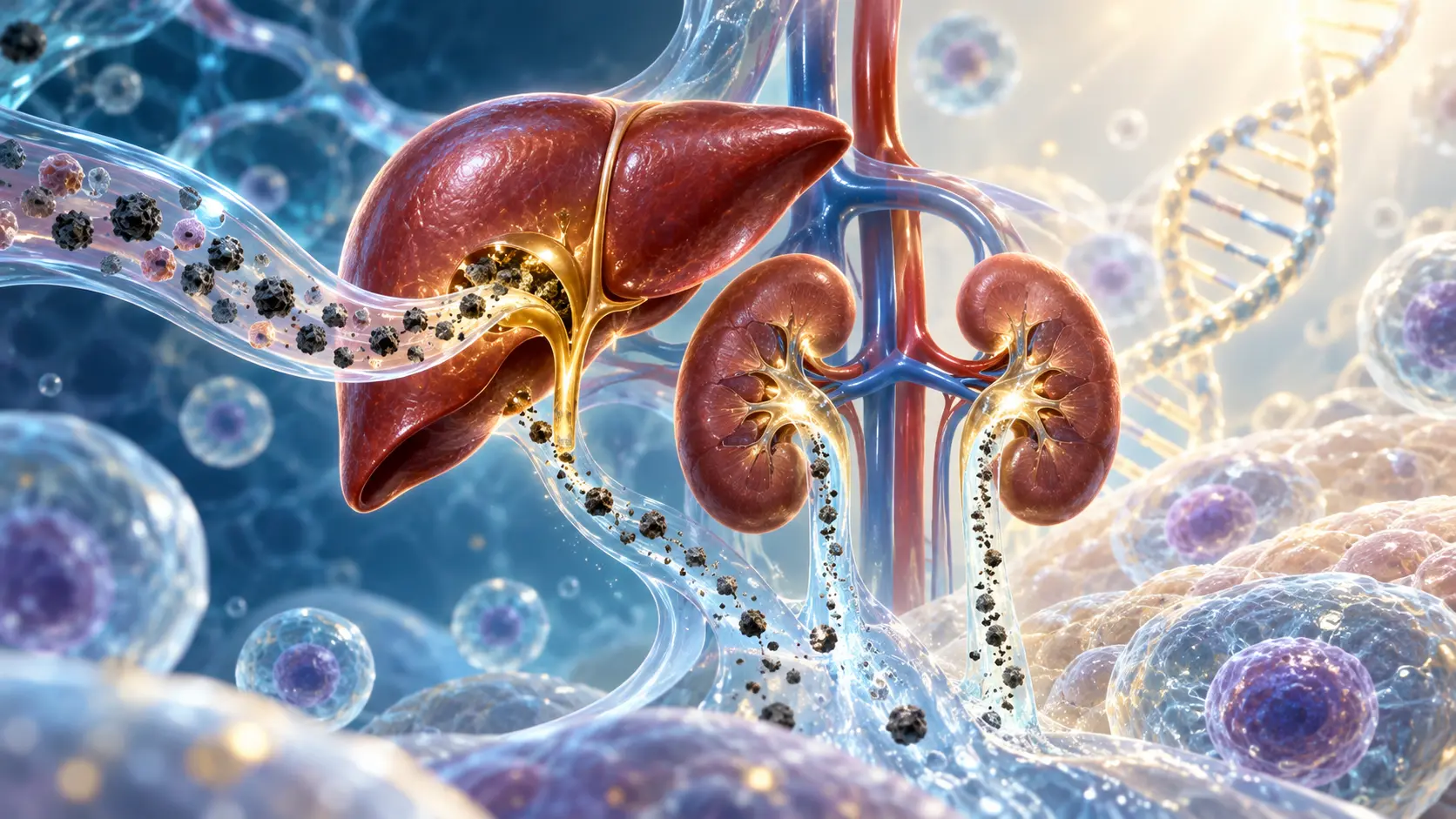
The liver performs hundreds of functions, but detoxification is among its most critical. It converts harmful compounds into water-soluble forms that can be excreted via bile or urine. This includes alcohol, medications, environmental pollutants, and metabolic waste products. The liver also filters blood arriving from the digestive system before it reaches general circulation.
With age, liver volume and blood flow decline modestly, and the activity of certain detoxification enzymes decreases. As a result, drug metabolism slows — which is why older adults often require lower medication doses. However, this age-related decline is generally gradual and does not impair detoxification in people without liver disease.
Conditions that do impair liver function meaningfully include non-alcoholic fatty liver disease (NAFLD), alcoholic liver disease, and chronic hepatitis. These are distinct from normal aging and are largely driven by modifiable lifestyle factors.
The kidneys’ role
The kidneys filter roughly 180 litres of blood per day, removing waste products and excess compounds through urine. Kidney function, measured by glomerular filtration rate (GFR), declines naturally with age — typically beginning around the fourth decade. This decline is not disease, but it does mean the kidneys become less resilient over time.
Importantly, conditions such as high blood pressure and type 2 diabetes accelerate kidney aging far beyond what lifestyle alone would cause. In contrast, staying well-hydrated, maintaining a healthy blood pressure, and avoiding nephrotoxic substances helps preserve kidney function. For more detail, see our article on how blood pressure affects kidney aging.
What the Evidence Actually Shows
Does sauna use or sweating remove toxins?
Sauna use and exercise both cause sweating, which does excrete trace amounts of some compounds. However, the quantities involved are negligible compared to what the liver and kidneys process daily. Sweat is primarily water and electrolytes — it is not a meaningful detoxification route. Claims that sauna use or sweating can “flush heavy metals” or “cleanse the body” are not supported by clinical evidence at any practically relevant scale.
Sauna use has other potential health benefits — cardiovascular and relaxation effects have some support in the literature — but these are unrelated to detoxification in any meaningful sense.
What about chelation therapy?
Chelation therapy — the use of agents that bind to heavy metals and allow their excretion — is a legitimate medical treatment for diagnosed heavy metal poisoning (such as lead or mercury toxicity). In that specific, supervised context, it can be effective and appropriate.
However, chelation is not a validated longevity or wellness treatment. Using it outside of confirmed heavy metal toxicity carries real risks, including kidney damage and mineral depletion. It should not be sought as a general “detox” strategy.
Do commercial detox products work?
No robust clinical evidence supports the use of detox teas, juice cleanses, colon cleanses, or detox supplement protocols for improving liver or kidney function in healthy people. These products often rely on vague claims about “toxin removal” without specifying which toxins, how removal is measured, or what benefit results.
In some cases, aggressive cleansing protocols can cause harm — including electrolyte imbalance, caloric restriction sufficient to cause muscle loss, and unintended interactions with medications.
What Genuinely Reduces Toxic Load
The most effective and evidence-backed approach to reducing toxic load is straightforward: reduce what goes in, not just what comes out.
Alcohol
Alcohol is a direct hepatotoxin. Even moderate alcohol consumption contributes to liver inflammation, and chronic heavy drinking is a leading cause of liver disease worldwide. Reducing or eliminating alcohol intake meaningfully lowers the burden on the liver and reduces the risk of fatty liver disease, fibrosis, and cirrhosis. This is one of the most evidence-backed interventions for liver health. For more detail, see our article on whether alcohol accelerates liver aging.
Fructose and added sugar
High fructose intake — primarily from ultra-processed foods and sugar-sweetened beverages — is metabolised almost exclusively in the liver. Excess fructose drives de novo lipogenesis (fat production in the liver), contributing to non-alcoholic fatty liver disease. Reducing added sugar intake, particularly from liquid sources, is a well-supported dietary strategy for liver health.
Smoking and environmental pollutants
Tobacco smoke contains hundreds of toxic compounds that place ongoing demand on the liver’s detoxification pathways and are associated with kidney disease risk. Reducing occupational and environmental exposure to known toxins — including certain pesticides, solvents, and heavy metals — is sensible where possible.
Nutrition and whole foods
A diet rich in vegetables, legumes, whole grains, and fibre supports both liver and kidney function indirectly — through effects on body weight, insulin sensitivity, blood pressure, and inflammation. None of these foods “detoxify” the body in a mechanistic sense, but they reduce the conditions that impair organ function over time.
Hydration
Adequate fluid intake supports kidney function by maintaining urine flow and reducing the concentration of waste products in the kidneys. However, hydration beyond normal adequate levels does not accelerate detoxification. The benefit is real but limited — staying well-hydrated matters, but excessive water consumption offers no additional detox effect and can in fact be harmful.
Physical activity
Regular exercise supports liver health primarily through its effects on metabolic health — improving insulin sensitivity, reducing visceral fat, and lowering systemic inflammation. It does not directly accelerate toxin clearance, but it meaningfully reduces the metabolic conditions that drive fatty liver disease and kidney strain.
Learn more in our complete guide to longevity.
Risks and Limitations of Commercial Detox Approaches
Commercial detox products and protocols are not simply ineffective — some carry genuine risks. Aggressive juice cleanses can cause hypoglycaemia, electrolyte disturbances, and loss of lean muscle mass. Herbal detox supplements may contain compounds that are themselves hepatotoxic; a number of cases of supplement-induced liver injury have been documented in the medical literature.
The broader limitation is one of evidence. Most detox claims are not tested in controlled trials, and the ones that have been examined have generally not shown meaningful effects on liver enzymes, kidney function markers, or longevity-relevant biomarkers.
This does not mean nothing works. It means the things that work — reducing alcohol, cutting added sugar, managing blood pressure, staying physically active, not smoking — are unglamorous but well-supported. These interventions address the upstream causes of liver and kidney strain, rather than attempting to accelerate the downstream output.
Conclusion
Detoxification is a genuine and continuous biological process carried out by the liver and kidneys. It does not require supplementation, sauna use, or commercial cleanse programmes to function — and none of these meaningfully enhance it in healthy people.
What does support long-term liver and kidney health is well-established: reducing alcohol, limiting added sugar and ultra-processed food, maintaining a healthy body weight, controlling blood pressure, staying adequately hydrated, and not smoking. These are not exciting claims, but they are backed by evidence and they matter cumulatively over decades.
For people looking to reduce their toxic load, the most effective strategy is reducing exposure — not attempting to accelerate excretion through unproven products. The body’s detoxification systems are robust. The goal is to protect them, not replace them.
References and Resources
Authoritative Sources on Detoxification and Longevity
-
National Institutes of Health (NIH) – Toxin and Detox Pathways
nih.govProvides detailed information on how the liver and kidneys naturally detoxify the body and the impact of toxin exposure on aging and health.
-
World Health Organization (WHO) – Environmental Toxins and Health
who.intCovers environmental pollutants and their role in disease risk, with guidance on reducing exposure.
-
PubMed Central – Liver Function, Kidney Function, and Aging Research
nih.govPeer-reviewed articles on organ function, age-related decline, and the effects of lifestyle interventions on liver and kidney health markers.
-
American Heart Association – Inflammation and Healthy Aging
heart.orgCovers the role of chronic inflammation in aging and cardiovascular disease, including the effects of diet and lifestyle on inflammatory markers.
-
Healthline – Detox Diets: Evidence and Safety
healthline.comBalanced review of popular detox approaches, their claimed mechanisms, and what the evidence actually supports.
-
Medical News Today – Liver and Kidney Health
medicalnewstoday.comAccessible summaries of current research on organ health, toxin exposure, and aging.
-
WebMD – Understanding Detox Claims
webmd.comConsumer-focused overview of detox products, safety considerations, and what medical evidence supports.
-
American Medical Association – Detoxification in Clinical Practice
ama-assn.orgMedical perspectives on the evidence base for detoxification interventions and their appropriate clinical use.
Frequently Asked Questions
Does detoxification improve longevity?
There is no direct evidence that commercial detox routines extend lifespan. The liver and kidneys already perform continuous detoxification. What does support longevity is protecting these organs through lifestyle — reducing alcohol, limiting processed food, managing blood pressure, and staying physically active. These habits reduce the burden on the body’s existing detox systems, which is where the real benefit lies.
Can sauna use or sweating help remove toxins?
Sweating does excrete trace amounts of some compounds, but the quantities are negligible compared to what the liver and kidneys process. Sauna use has cardiovascular and recovery benefits supported by some research, but it does not meaningfully substitute for or enhance liver or kidney detoxification. Claims that sweating “flushes toxins” are not supported by clinical evidence at any relevant scale.
Is chelation therapy a valid longevity strategy?
No. Chelation therapy is a legitimate medical treatment for confirmed heavy metal poisoning under close clinical supervision. It is not appropriate as a general wellness or longevity intervention, and using it outside of a diagnosed deficiency carries risks including kidney damage and depletion of essential minerals.
What is the safest way to reduce toxic load?
The most effective approach is reducing exposure rather than attempting to accelerate excretion. This means limiting alcohol, avoiding smoking, reducing ultra-processed food and added sugar, staying well-hydrated, and minimising unnecessary exposure to environmental pollutants and medications where possible. These measures are evidence-backed and address the root causes of liver and kidney strain.
Do detox supplements support liver health?
Most commercial detox supplements lack robust clinical evidence. Some compounds — such as berberine, NAC, and milk thistle — have preliminary or mixed evidence for specific liver-related effects, but none are established treatments and none should substitute for medical care. Some herbal products marketed for detox have themselves been associated with liver injury. Caution and professional guidance are warranted before using any supplement for liver health.
Conclusion
The body detoxifies itself continuously and effectively through the liver and kidneys. Commercial detox products, sauna protocols, and juice cleanses do not meaningfully enhance this process in healthy people. The evidence-backed path to protecting long-term organ function is straightforward: reduce alcohol, cut added sugar, control blood pressure, avoid smoking, stay hydrated, and stay active. These habits protect the organs that handle detoxification — which is a more reliable strategy than attempting to supplement or accelerate a process the body is already performing.
Find out more information about detoxification and longevity
Search for more resources and information: