Does Low Vo₂ Max Predict Early Death? (2026)
TL;DR: Low VO₂ max is one of the strongest predictors of early mortality currently available — people in the lowest fitness quartile face significantly higher all-cause death risk than those in the highest. The good news is that VO₂ max is highly modifiable through consistent aerobic exercise, making it one of the most actionable longevity metrics you can track.
What Is VO₂ Max and Why Does It Matter?
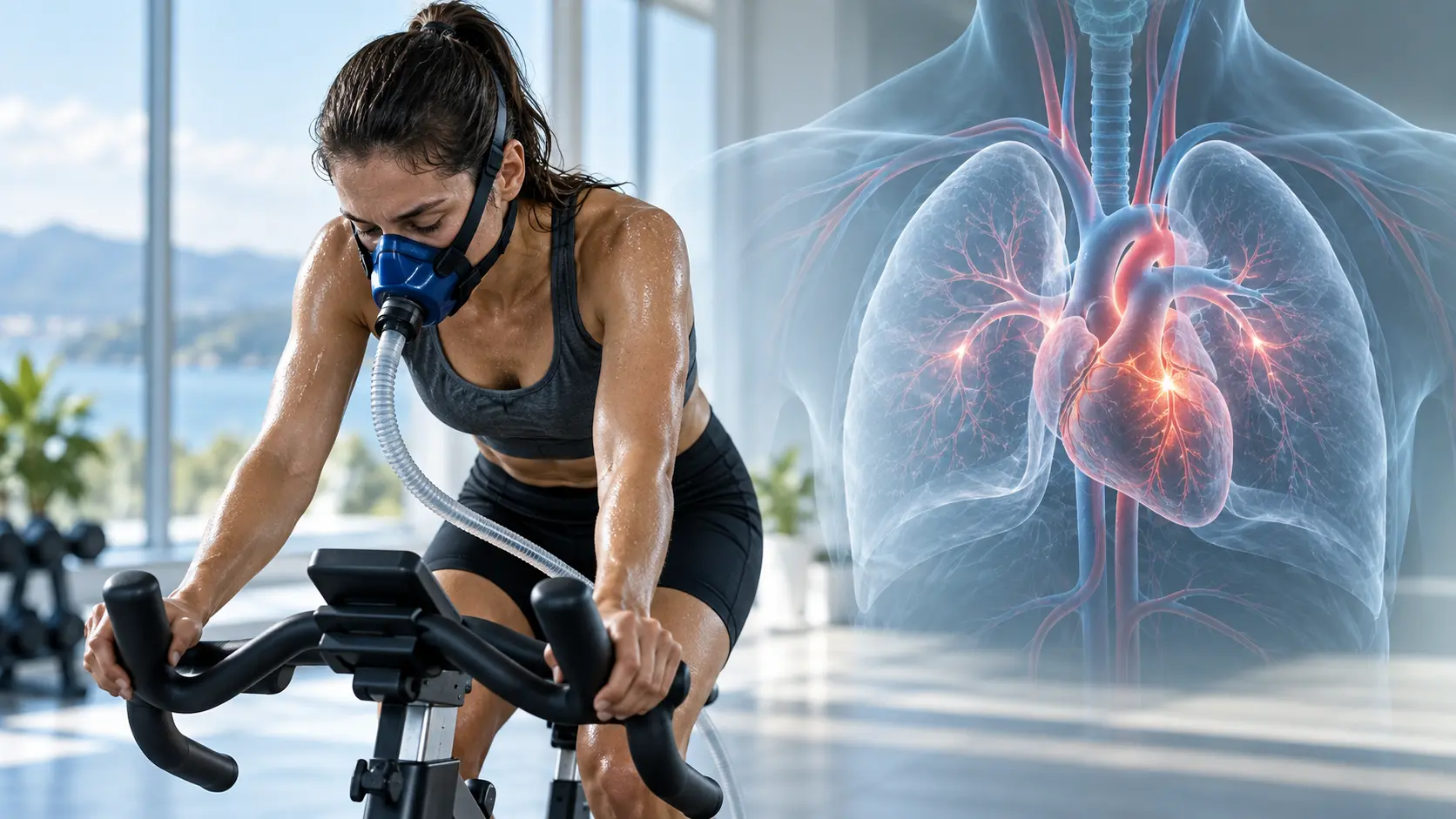
VO₂ max measures the maximum rate at which your body can consume oxygen during intense exercise. It is widely regarded as the gold standard of cardiorespiratory fitness. In practical terms, it reflects how efficiently your heart, lungs, and muscles work together under physical demand — and that efficiency has direct implications for long-term health and survival.
Unlike many biomarkers that require blood draws or specialist equipment to interpret, VO₂ max can be estimated through field tests, wearable devices, or measured precisely in a clinical or sports lab setting. This accessibility makes it a useful tool for tracking cardiovascular health over time.
Importantly, VO₂ max declines naturally with age — typically at a rate of roughly 1% per year after the mid-twenties. However, that decline is not fixed. Regular aerobic training can slow it substantially, and in some cases partially reverse it even in older adults. For this reason, it functions as both a risk marker and a modifiable target.
Does Low VO₂ Max Predict Early Death?
The evidence here is among the most consistent in longevity research: yes, low VO₂ max is strongly associated with increased risk of early death.
Multiple large longitudinal studies have found that individuals in the lowest quartile of cardiorespiratory fitness face roughly double the all-cause mortality risk compared to those in the highest quartile. Importantly, this association holds up even after adjusting for age, sex, smoking status, BMI, and other established risk factors — suggesting that fitness itself, not just its correlates, carries independent predictive weight.
Research suggests that the relationship between VO₂ max and mortality risk is not linear — the greatest gains in survival come from moving out of the lowest fitness category. In other words, going from very unfit to moderately fit appears to reduce risk more meaningfully than going from already fit to elite. This has practical implications: you do not need to become an athlete to benefit significantly.
That said, VO₂ max is one input among many. It does not capture insulin resistance, chronic inflammation, visceral fat load, sleep quality, or other metabolic risk factors that independently affect lifespan. As a result, it is best understood as a powerful signal within a broader risk picture, not a standalone verdict on longevity. Learn more in our complete guide to longevity testing and trade-offs, which covers how VO₂ max fits alongside other markers in a structured assessment approach.
What the Evidence Actually Shows
Longitudinal data from cohorts including the Cooper Center study and several Scandinavian registries consistently link low cardiorespiratory fitness to higher cardiovascular and all-cause mortality. These are not short-term observational studies — many track participants over decades, lending weight to the association.
Notably, the predictive value of VO₂ max appears to extend beyond cardiovascular disease. Evidence indicates associations with cancer mortality, metabolic disease progression, and cognitive decline risk. This broad signal is part of why some researchers and clinicians consider it one of the most informative single metrics available.
However, it is worth being clear about what this evidence is and is not. These are largely observational studies, which establish association rather than direct causation. The implication is that low VO₂ max often reflects underlying physiological vulnerability — poor mitochondrial function, endothelial dysfunction, reduced cardiac output — rather than being the cause of death itself. Improving fitness addresses those underlying mechanisms, which is why intervention studies also show meaningful mortality benefit.
How to Assess Your VO₂ Max Risk
VO₂ max is measured in millilitres of oxygen per kilogram of body weight per minute (mL/kg/min). Reference ranges vary by age and sex, so individual scores need to be interpreted in context. A value that represents average fitness in a 35-year-old may indicate good fitness in a 65-year-old.
In general terms, values below approximately 20–25 mL/kg/min are associated with substantially elevated mortality risk in adults, though this threshold shifts with age. More practically, being in the bottom 20–25% of fitness for your age and sex — regardless of the absolute number — carries the clearest risk signal in the literature.
Testing options range from formal laboratory protocols (maximal treadmill or cycle ergometer tests) to validated field tests such as the 12-minute Cooper run, or estimates from wearable fitness trackers. Lab-based testing provides the most accurate individual measurement, but field tests and wearable estimates are reasonable for tracking trends over time.
For anyone over 40, or with known cardiovascular risk factors, discussing VO₂ max assessment with a clinician is sensible — particularly before beginning a high-intensity training programme. You can also explore how often to measure VO₂ max in our dedicated guide on testing frequency.
How to Improve VO₂ Max: What Actually Works
Aerobic Training as the Primary Driver
The most effective way to improve VO₂ max is consistent aerobic exercise. Research supports several approaches:
Zone 2 training — sustained moderate-intensity exercise (running, cycling, rowing, swimming) — builds aerobic base and improves mitochondrial density over time. This type of training is sustainable and carries low injury risk, making it appropriate for most people regardless of current fitness level.
High-intensity interval training (HIIT) produces faster gains in VO₂ max in a shorter time frame. Evidence suggests it is particularly effective for improving cardiovascular adaptations quickly. However, it carries a higher injury and recovery load, and may not be appropriate for those who are very deconditioned or have cardiovascular concerns.
In practice, a combination of both — predominantly zone 2 with periodic higher-intensity sessions — appears to produce the best outcomes for most adults. Consistency matters more than intensity: regular moderate exercise over months and years drives more meaningful change than sporadic high-effort sessions.
Other Factors That Influence VO₂ Max
Exercise is the primary driver, but several other factors affect cardiorespiratory fitness in meaningful ways.
Sleep plays a significant role in cardiovascular recovery and adaptation. Chronic poor sleep impairs aerobic capacity and undermines the training response, meaning exercise gains are partly contingent on sleep quality.
Nutrition supports exercise capacity and recovery. There is no single dietary pattern proven to maximise VO₂ max, but adequate energy intake, sufficient protein for muscle maintenance, and overall dietary quality matter — particularly as people age.
Stress and recovery balance are also relevant. Overtraining — pushing training volume or intensity beyond the body’s ability to recover — can reduce VO₂ max rather than improve it, and increases injury risk. This is worth noting for those pursuing aggressive fitness goals as part of a broader longevity strategy. Learn more in our complete guide to longevity.
References and Resources
Authoritative Sources on VO₂ Max and Mortality Risk
-
CDC Physical Activity Guidelines
cdc.govExplains how physical activity, including improving cardiorespiratory fitness, reduces chronic disease risk and all-cause mortality.
-
VO₂ Max and Mortality Risk
plos.orgA key study examining the relationship between cardiorespiratory fitness levels and mortality outcomes across large populations.
-
American Heart Association: Fitness and Heart Health
heart.orgProvides guidance on cardiovascular fitness targets and how improving aerobic capacity reduces cardiovascular mortality risk.
-
PubMed: Research on VO₂ Max and Longevity
ncbi.nlm.nih.govPeer-reviewed literature on long-term health outcomes associated with cardiorespiratory fitness levels.
-
WHO Physical Activity Factsheet
who.intGlobal evidence on the role of physical activity in reducing premature mortality and improving population health.
-
Exercise and Longevity: A Review
sciencedirect.comA review of how aerobic exercise and cardiorespiratory fitness improvements relate to healthspan and lifespan outcomes.
-
NHS: Physical Activity for Heart Health
nhs.ukPractical NHS guidance on improving cardiovascular fitness and reducing heart disease risk through regular activity.

Frequently Asked Questions
Does a low VO₂ max directly cause early death?
Low VO₂ max does not directly cause early death, but it is a reliable indicator of underlying cardiovascular and metabolic vulnerability. It reflects poor cardiac output, reduced mitochondrial efficiency, and endothelial dysfunction — conditions that independently raise mortality risk if left unaddressed. Improving fitness addresses those mechanisms, which is why intervention studies also show survival benefit.
Can improving my VO₂ max reduce my risk of early death?
Evidence strongly supports this. Moving from the lowest to a moderate fitness category is associated with substantial reductions in all-cause mortality risk. Consistent aerobic training — even at moderate intensity — is one of the most evidence-backed longevity interventions available.
Is there a VO₂ max threshold that predicts early death?
There is no single universal cutoff, but values below approximately 20–25 mL/kg/min are associated with meaningfully higher mortality risk in most adult age groups. More practically, being in the bottom quartile of fitness for your age and sex carries the clearest risk signal. Assessment relative to age-matched norms is more informative than comparing against a fixed number.
How can I test my VO₂ max?
Laboratory testing — via treadmill or cycle ergometer with metabolic gas analysis — provides the most accurate individual measurement. Validated field tests such as the Cooper 12-minute run, and estimates from GPS-enabled fitness wearables, offer reasonable proxies for tracking trends over time. For those with cardiovascular risk factors or who are over 40, formal assessment through a clinician or sports medicine facility is recommended before beginning high-intensity training.
What lifestyle changes most improve VO₂ max?
Consistent aerobic exercise is the primary driver — particularly a combination of sustained moderate-intensity training (zone 2) and periodic higher-intensity intervals. Supporting factors include adequate sleep, sufficient dietary energy and protein, and managing training load to allow recovery. Overtraining can reduce VO₂ max, so progressive, balanced programming matters as much as effort.
Conclusion
Low VO₂ max is one of the most robust predictors of early mortality in the current evidence base. It reflects the health of your cardiovascular system, metabolic function, and physical reserve — all of which matter for both lifespan and healthspan. However, it is best understood as a meaningful signal within a broader risk picture, not a standalone verdict.
The practical takeaway is straightforward: improving cardiorespiratory fitness — through consistent, progressive aerobic exercise — is one of the highest-value actions available for reducing long-term mortality risk. You do not need elite fitness levels to benefit. Moving out of the lowest fitness category produces the largest gains in survival probability.
That said, balance matters. Pushing fitness gains too aggressively — through overtraining, extreme caloric restriction, or unsustainable protocols — can be counterproductive. Sustainable, consistent effort over time delivers better outcomes than short-term intensity. For a broader view of how VO₂ max fits within a complete longevity assessment strategy, see our hub on longevity testing and trade-offs.
Find out more information about VO₂ max and longevity
Search for more resources and information: