Does Pancreatic Function Decline With Age?
TL;DR: Pancreatic function does decline gradually with age, affecting both enzyme production and insulin sensitivity — but the degree varies significantly between individuals. For most people, these changes are modest and manageable through diet, exercise, and regular monitoring rather than inevitable disease.
What the Pancreas Does and Why It Matters
The pancreas performs two distinct jobs. As an exocrine organ, it produces digestive enzymes — including lipase, amylase, and proteases — that break down fats, carbohydrates, and proteins in the small intestine. As an endocrine organ, it secretes insulin and glucagon from clusters of cells called the islets of Langerhans, regulating blood glucose levels throughout the body.
Both functions are clinically relevant to aging. Exocrine decline can impair nutrient absorption, while endocrine decline contributes to insulin resistance and, in more advanced cases, type 2 diabetes. Understanding which of these is changing — and how much — matters for distinguishing normal age-related shifts from pathological decline.
Does Pancreatic Function Decline With Age?
Yes, pancreatic function does change with age — but the extent and clinical significance vary considerably between individuals. Research suggests that both exocrine enzyme output and beta-cell insulin secretion can decrease gradually over time. However, for many older adults, these changes remain subtle and do not progress to overt disease.
The key distinction is between normal age-related decline and pathological dysfunction such as chronic pancreatitis, exocrine pancreatic insufficiency, or type 2 diabetes. Age alone increases risk for some of these conditions, but it does not make them inevitable. Genetics, metabolic health, diet, alcohol intake, and body composition all interact with age to determine individual outcomes.
For context on how other organ systems decline alongside the pancreas, see our overview of organ-specific aging, which covers why different organs age at different rates and what that means for long-term health.
How Aging Affects the Exocrine and Endocrine Pancreas
Exocrine Changes: Enzyme Production
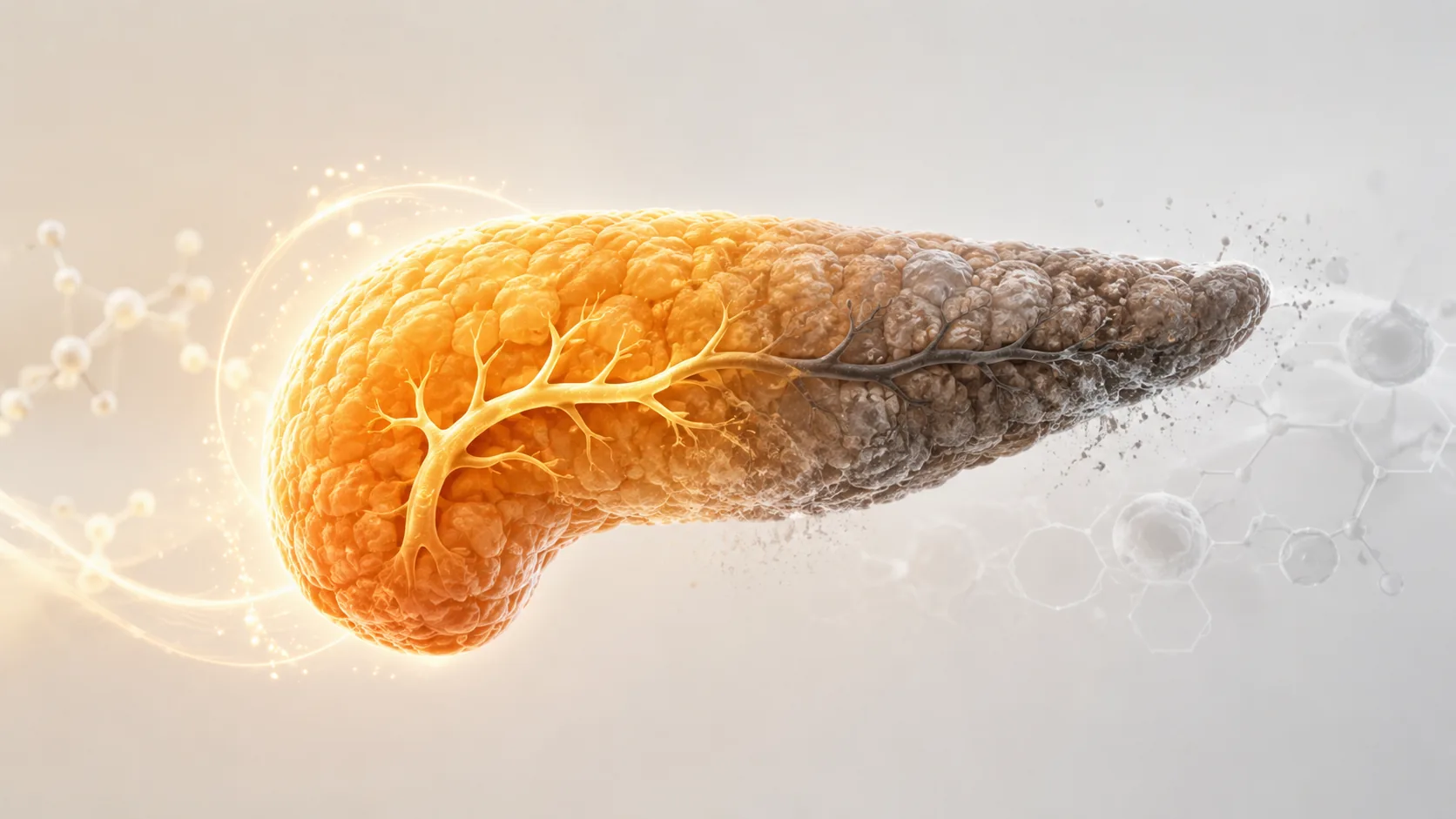
With age, the pancreatic parenchyma — the functional tissue responsible for enzyme secretion — undergoes gradual structural changes. Fatty infiltration and fibrosis increase, while acinar cell mass (the cells that produce digestive enzymes) may decline modestly. As a result, enzyme output can decrease, particularly for lipase, which affects fat digestion.
In practice, however, the exocrine pancreas has considerable reserve capacity. Clinically significant malabsorption from age-related exocrine decline alone is relatively uncommon in otherwise healthy older adults. It becomes more relevant when combined with other conditions such as chronic pancreatitis or long-term alcohol use.
Endocrine Changes: Insulin and Beta-Cell Function
Aging is associated with a gradual reduction in beta-cell function and a decline in insulin sensitivity in peripheral tissues — particularly muscle and liver. This means that older adults typically require more insulin to achieve the same blood glucose response compared to younger adults, a process closely linked to increased adiposity, reduced physical activity, and chronic low-grade inflammation.
Importantly, this decline in insulin sensitivity is substantially modifiable. Research consistently shows that regular physical activity — particularly resistance training and aerobic exercise — improves insulin sensitivity even in older adults, and can reduce the progression from impaired glucose tolerance toward type 2 diabetes.
AMPK activation, which increases with exercise and caloric restriction, plays a role here. It improves glucose uptake in muscle cells independently of insulin, helping to compensate for declining beta-cell output. This mechanism helps explain why lifestyle remains highly relevant even in later decades.
Signs of Pancreatic Decline in Older Adults
Exocrine Insufficiency: What to Watch For
Early signs of reduced enzyme output can include bloating, indigestion, loose or oily stools (steatorrhoea), and unexplained weight loss despite adequate food intake. These symptoms are not specific to pancreatic decline and may have other causes, but persistent digestive disruption in older adults warrants clinical evaluation.
Clinically, exocrine pancreatic insufficiency (EPI) can be assessed using faecal elastase testing — a straightforward, non-invasive stool test. Low faecal elastase levels indicate reduced pancreatic enzyme output and can guide decisions about enzyme replacement therapy where appropriate.
Endocrine Dysfunction: Rising Blood Glucose
Signs of declining endocrine function are often picked up through routine blood testing. Elevated fasting glucose, rising HbA1c, or impaired glucose tolerance on testing are the standard markers used in clinical practice. These provide meaningful, actionable information about pancreatic beta-cell reserve and insulin sensitivity — far more clinically grounded than generic “biological age” scores.
Advanced dysfunction, such as poorly controlled blood sugar, significant weight change, or symptoms suggesting pancreatitis (severe abdominal pain, jaundice), requires prompt medical assessment rather than lifestyle management alone.
What Can Slow or Manage Pancreatic Decline?
Lifestyle Factors With Clear Evidence
Several lifestyle factors have meaningful, well-supported effects on pancreatic aging — particularly on the endocrine side. Regular aerobic and resistance exercise improves insulin sensitivity and helps maintain beta-cell function over time. A diet rich in fibre, vegetables, lean protein, and healthy fats supports metabolic health and reduces the inflammation associated with accelerated pancreatic decline.
In contrast, excess body fat — especially visceral fat — is one of the strongest modifiable drivers of insulin resistance and accelerated beta-cell decline. Alcohol excess is a well-established risk factor for chronic pancreatitis and exocrine insufficiency. Avoiding or minimising both is clinically relevant at any age.
Learn more in our complete guide to longevity for a broader view of how lifestyle affects aging across body systems.
Medical Management Where Appropriate
Where exocrine insufficiency is confirmed, pancreatic enzyme replacement therapy (PERT) is effective at restoring digestive function and preventing malnutrition. For endocrine dysfunction, evidence-based interventions range from structured lifestyle programmes to pharmacological options such as metformin, GLP-1 receptor agonists, or insulin — depending on the degree of impairment.
Regular monitoring of fasting glucose and HbA1c from midlife onward is a straightforward and clinically established way to track endocrine pancreatic health over time. For those with digestive symptoms, faecal elastase testing provides a similarly practical measure of exocrine function.
What Cannot Be Reversed
Structural changes to the pancreas — including fibrosis, fatty infiltration, and beta-cell loss — are not reversible through lifestyle or supplementation. That said, significant functional improvement is achievable in many people, particularly in insulin sensitivity, by addressing metabolic risk factors. The goal is to slow the trajectory of decline and prevent pathological progression, rather than to restore a younger pancreatic state.
For comparison, this pattern — partial lifestyle-driven improvement within a background of irreversible structural change — is consistent across other organ systems covered in the cluster. The article on whether pancreatic decline can be slowed explores this further.
References and Resources
Authoritative Sources on Pancreatic Function and Aging
-
National Institutes of Health – Pancreatic Health
nih.govResearch findings and health guidance on pancreatic function, including age-related changes and their clinical relevance.
-
Mayo Clinic – Pancreatitis Overview
mayoclinic.orgDetailed clinical information on pancreatic disease, symptoms, risk factors, and management approaches.
-
Healthline – Pancreas Function
healthline.comAccessible explanations of pancreatic roles and how aging may affect both exocrine and endocrine function.
-
WebMD – Pancreatic Disorders
webmd.comOverview of symptoms, risk factors, and management strategies for pancreatic health concerns across age groups.
-
American Association of Clinical Endocrinologists
aace.comClinical guidelines on endocrine health management, including insulin-related conditions and diabetes prevention.
-
American Society for Gastrointestinal Endoscopy
asge.orgResearch and procedural guidance on pancreatic diagnostics, including imaging and functional assessment.
-
Medical News Today – Pancreatic Health
medicalnewstoday.comCurrent research summaries and news relating to pancreatic health, aging, and metabolic function.

-
National Institute of Diabetes and Digestive and Kidney Diseases
niddk.nih.govA leading source on research, guidelines, and clinical standards for pancreatic, endocrine, and digestive health.
Frequently Asked Questions
Does pancreatic function decline with age always lead to disease?
No. Age-related changes in pancreatic function are common but do not inevitably progress to clinical disease. Many older adults maintain adequate digestive and metabolic function throughout life. The risk of pathological outcomes — such as type 2 diabetes or exocrine insufficiency — is significantly shaped by lifestyle, body composition, and other health conditions, not age alone.
Can lifestyle changes slow pancreatic decline with age?
Yes, particularly on the endocrine side. Regular exercise — both aerobic and resistance training — improves insulin sensitivity and supports beta-cell function. A balanced diet low in processed sugars and excess saturated fat reduces metabolic stress on the pancreas. Avoiding alcohol excess is also important for exocrine health. These are among the most evidence-supported interventions available.
Is pancreatic function decline reversible?
Structural changes such as fibrosis or beta-cell loss are not reversible. However, functional improvement — particularly in insulin sensitivity — is achievable through lifestyle change in many people. The realistic goal is slowing progression and preventing pathological decline, not restoring a younger pancreatic state. Early detection and consistent management offer the best outcomes.
What role does diet play in pancreatic aging?
Diet has a meaningful impact on both exocrine and endocrine pancreatic health. A diet rich in fibre, vegetables, and lean protein supports stable blood glucose and reduces visceral fat — a key driver of insulin resistance. Excess refined carbohydrates, processed foods, and alcohol all accelerate metabolic and inflammatory stress on the pancreas. Dietary quality is one of the most practical and modifiable influences on pancreatic aging.
Conclusion
Pancreatic function does decline with age, but the degree and clinical significance vary considerably between individuals. Gradual reductions in enzyme output and insulin sensitivity are common features of normal aging, while conditions such as exocrine pancreatic insufficiency and type 2 diabetes represent pathological endpoints that lifestyle and medical management can often prevent or delay. Standard clinical measures — fasting glucose, HbA1c, and faecal elastase where relevant — provide practical, actionable insight into pancreatic health over time. Overall, the evidence supports a proactive approach: regular monitoring, sustained healthy habits, and early intervention where needed offer the most meaningful protection against clinically significant pancreatic decline.
Find out more information about “Pancreatic Function Decline With Age”
Search for more resources and information: