
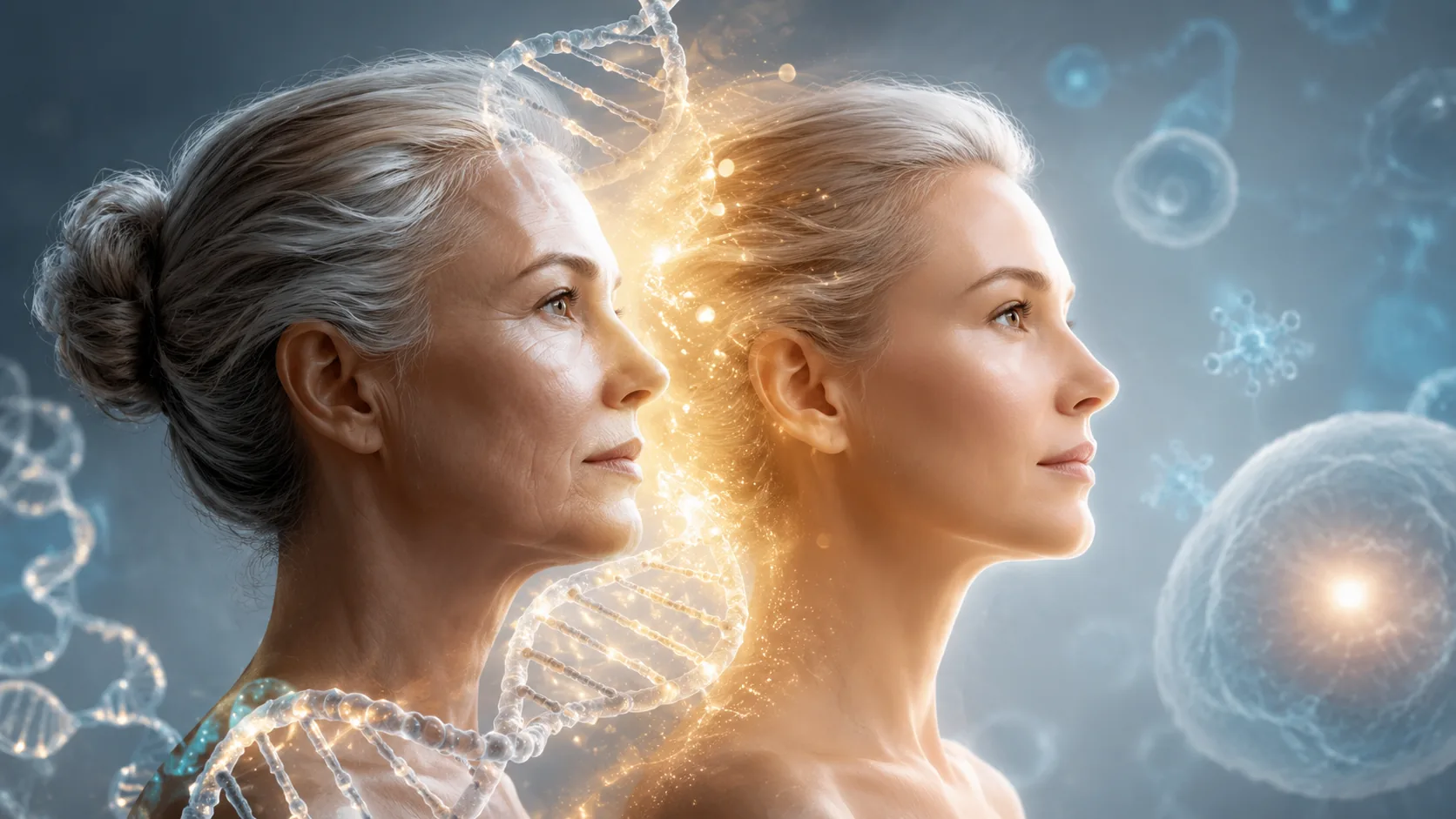
Is Epigenetic Reprogramming Possible in Humans?
TL;DR: Epigenetic reprogramming in humans is scientifically plausible and already demonstrated in laboratory settings, but applying it safely inside the living human body remains experimental. Significant technical and safety challenges mean it is not yet a viable clinical therapy.
Epigenetic reprogramming is possible in humans at a cellular level — but not yet in any way that can be reliably or safely applied as a treatment. In laboratory settings, researchers have successfully reprogrammed human adult cells by resetting epigenetic marks such as DNA methylation and histone modifications, effectively reversing aspects of cellular identity. However, doing this safely within a living person remains one of the most difficult open problems in ageing science.
What Is Epigenetic Reprogramming?
Epigenetic reprogramming refers to the deliberate resetting or modification of epigenetic marks — the chemical tags on DNA and the proteins around which DNA is wound — that control which genes are switched on or off. Importantly, this process does not alter the underlying DNA sequence itself. Instead, it changes how that sequence is read by the cell.
As cells age, these epigenetic patterns become increasingly disordered. DNA methylation drifts away from its youthful configuration, histone organisation becomes less precise, and gene expression shifts in ways that impair cellular function. This progressive disorganisation is a central feature of biological ageing and is measurable using epigenetic clocks — tools that estimate biological age from methylation patterns.
The core idea behind reprogramming is that if these epigenetic changes drive ageing, resetting them might slow, halt, or partially reverse that process. For a broader look at how these mechanisms connect to overall cellular ageing, see our article on DNA repair and epigenetic aging.
Scientific Evidence in Humans
The strongest proof of concept comes from induced pluripotent stem cells (iPSCs). In 2006, Shinya Yamanaka demonstrated that introducing four transcription factors — now known as the Yamanaka factors (Oct4, Sox2, Klf4, and c-Myc) — could reprogram adult human cells back into a pluripotent state capable of becoming virtually any cell type. This work earned the Nobel Prize in Physiology or Medicine in 2012 and confirmed that human epigenetic state is not fixed.
More recently, researchers have explored partial reprogramming — using the Yamanaka factors briefly, rather than fully, to rejuvenate cells without erasing their identity. In animal studies, this approach has shown reductions in epigenetic age markers and improvements in tissue function. However, these findings are primarily from mouse models. Human evidence remains limited and largely confined to cell culture experiments rather than clinical trials.
In vivo reprogramming — reprogramming cells directly inside a living organism — is an active area of research. Early animal studies have produced encouraging results in specific tissues, including improvements in retinal cells and muscle regeneration. That said, translating this safely to humans involves a substantially higher level of complexity and risk. Learn more in our complete guide to longevity.
Challenges and Limitations
The most significant barrier is safety. Full reprogramming — as used to create iPSCs — carries a real risk of tumour formation, particularly because the Yamanaka factors can activate oncogenes. Even partial reprogramming requires precise dosing and timing to avoid uncontrolled cell behaviour. In animal models, incorrect calibration has led to cancer and tissue dysregulation.
Beyond safety, the human body presents a level of complexity that animal models do not fully capture. Human tissues vary enormously in their cellular composition, metabolic activity, and epigenetic baseline. A reprogramming approach that works in one tissue type may have unpredictable effects in another. As a result, developing a systemic reprogramming therapy — one that works across the body rather than in a single targeted tissue — remains a distant goal.
Delivery is another major obstacle. Getting reprogramming factors into the right cells, at the right concentration, for the right duration, without triggering an immune response or off-target effects, requires gene delivery technology that is still maturing. Current viral vector systems used in gene therapy carry their own risks, and non-viral alternatives are less efficient.
It is also worth noting that reducing epigenetic age scores in a research setting does not automatically translate into clinically meaningful improvements in health or lifespan. Epigenetic clocks are useful biomarkers, but they measure correlation with ageing rather than the underlying cause. Lowering a methylation clock score is not the same as becoming biologically younger in a functional sense. For more on this distinction, see our article on whether epigenetic age can be reversed.
Potential Applications and Ethical Considerations
If the technical challenges can be resolved, epigenetic reprogramming could have significant implications for regenerative medicine. Potential applications include restoring function in ageing tissues, improving recovery from injury, and treating degenerative diseases where cellular dysfunction is a central feature. Some researchers also propose that targeted reprogramming could extend healthspan by refreshing specific cell populations that accumulate epigenetic damage over time.
In practice, the most realistic near-term applications are likely to be narrow and tissue-specific — for example, restoring function in retinal cells to treat age-related vision loss, an approach already in early-stage trials. Broad systemic anti-ageing reprogramming remains speculative for now.
Ethical questions are also an important part of this conversation. Reprogramming human cells raises issues around long-term safety monitoring, informed consent, and equitable access. There are also broader questions about what counts as treatment versus enhancement, and where the boundary lies between correcting disease and attempting to alter the natural ageing process. Responsible development requires ongoing engagement between scientists, regulatory bodies, ethicists, and the public.
It is also worth distinguishing between lifestyle-based epigenetic support — which has a meaningful evidence base and is actionable today — and clinical reprogramming, which remains experimental. Evidence suggests that interventions such as regular exercise, adequate sleep, and avoiding chronic inflammation support healthier epigenetic patterns over time. These are not reprogramming in the technical sense, but they do influence the epigenetic environment in ways that appear relevant to ageing. For a closer look at one practical example, see our article on whether exercise improves DNA repair.
References and Resources
Authoritative Sources
-
Induced Pluripotent Stem Cells: A New Era in Regenerative Medicine
nature.comAn overview of the science behind cellular reprogramming, covering the potential and technical challenges of the iPSC approach.
-
NIH: Epigenetics and Human Health
nih.govA detailed overview of epigenetic research and its implications for human health, including potential therapeutic applications.
-
In Vivo Reprogramming and Regeneration
sciencedirect.comCovers recent advances in in vivo cellular reprogramming and what they may mean for future human applications.
-
Cell Reprogramming and Regenerative Strategies
cell.comAn expert review of reprogramming techniques, including their current limitations and potential for human use.
-
Reprogramming Cells In Vivo: Opportunities and Challenges
nae.eduExplores the scientific, technical, and ethical considerations of in vivo cell reprogramming in humans.
-
Advances in Epigenetic Editing and Reprogramming
nature.comAn overview of cutting-edge techniques in epigenetic editing relevant to the future of reprogramming research.
-
Genomics & Epigenomics: A Primer
genome.govFoundational resource covering epigenetic mechanisms and their relevance to reprogramming and human health.

-
Epigenetics Journal
elsevier.comA peer-reviewed publication covering current research on epigenetic reprogramming and related fields.
Frequently Asked Questions
Is epigenetic reprogramming currently possible in humans?
At a cellular level, yes — techniques such as iPSC creation demonstrate that human cells can be epigenetically reprogrammed in the laboratory. However, applying this safely inside a living person remains experimental. Current research shows genuine promise, but safety, precision, and delivery challenges have not yet been resolved for clinical use.
What are the main challenges of epigenetic reprogramming in humans?
The primary obstacles are safety and control. Reprogramming factors can trigger tumour formation if not tightly regulated. Human tissue complexity also makes it harder to predict outcomes across different cell types. Effective and safe delivery of reprogramming factors into specific cells in vivo remains an unresolved technical problem.
Could epigenetic reprogramming lead to anti-ageing therapies?
Potentially, yes — but this remains speculative for broad anti-ageing use. More targeted applications, such as restoring function in specific ageing tissues, are closer to clinical reality. Research is progressing, but meaningful human longevity benefits from reprogramming have not yet been demonstrated in controlled trials.
Are there ethical concerns related to epigenetic reprogramming in humans?
Yes. Key concerns include long-term safety monitoring, the risk of unintended genetic or epigenetic effects, informed consent, and equitable access to future therapies. There are also broader questions about whether modifying ageing processes constitutes treatment or enhancement. Responsible development requires clear regulatory frameworks and ongoing public dialogue.
Conclusion
Epigenetic reprogramming in humans is no longer purely theoretical — laboratory evidence confirms that human cells can have their epigenetic state reset. However, translating this into a safe, effective in vivo therapy remains a significant scientific challenge. The risks of tumour formation, off-target effects, and imprecise delivery mean that clinical applications are still years away for most use cases. That said, this is one of the most actively researched areas in ageing science, and incremental progress — particularly in tissue-specific reprogramming — continues to move the field forward. For now, the most practical way to support epigenetic health remains consistent lifestyle behaviour: regular exercise, quality sleep, and reducing chronic inflammation. These interventions cannot reprogram cells in the technical sense, but evidence suggests they support healthier epigenetic patterns over time.
Find out more information about epigenetic reprogramming in humans
Search for more resources and information: