Does Berberine Activate Ampk?
Does Berberine Activate AMPK?
TL;DR: Yes, berberine activates AMPK, a key enzyme involved in cellular energy regulation and metabolic health. Research supports this mechanism in cell and animal studies, with human evidence showing meaningful benefits for blood sugar control and lipid profiles, though direct longevity evidence in humans remains limited.
Berberine does activate AMPK. Multiple peer-reviewed studies confirm that berberine increases AMPK phosphorylation in liver, muscle, and fat tissue, making it one of the better-characterised natural compounds for stimulating this pathway. This AMPK activation is the primary mechanism behind berberine’s documented effects on insulin sensitivity, glucose metabolism, and lipid regulation.
How Berberine Interacts with AMPK
The Core Mechanism
AMPK (AMP-activated protein kinase) functions as a cellular energy sensor. When the ratio of AMP to ATP rises—signalling low energy availability—AMPK activates and triggers processes that restore energy balance, including increased glucose uptake, enhanced fat oxidation, and reduced energy-consuming anabolic processes.
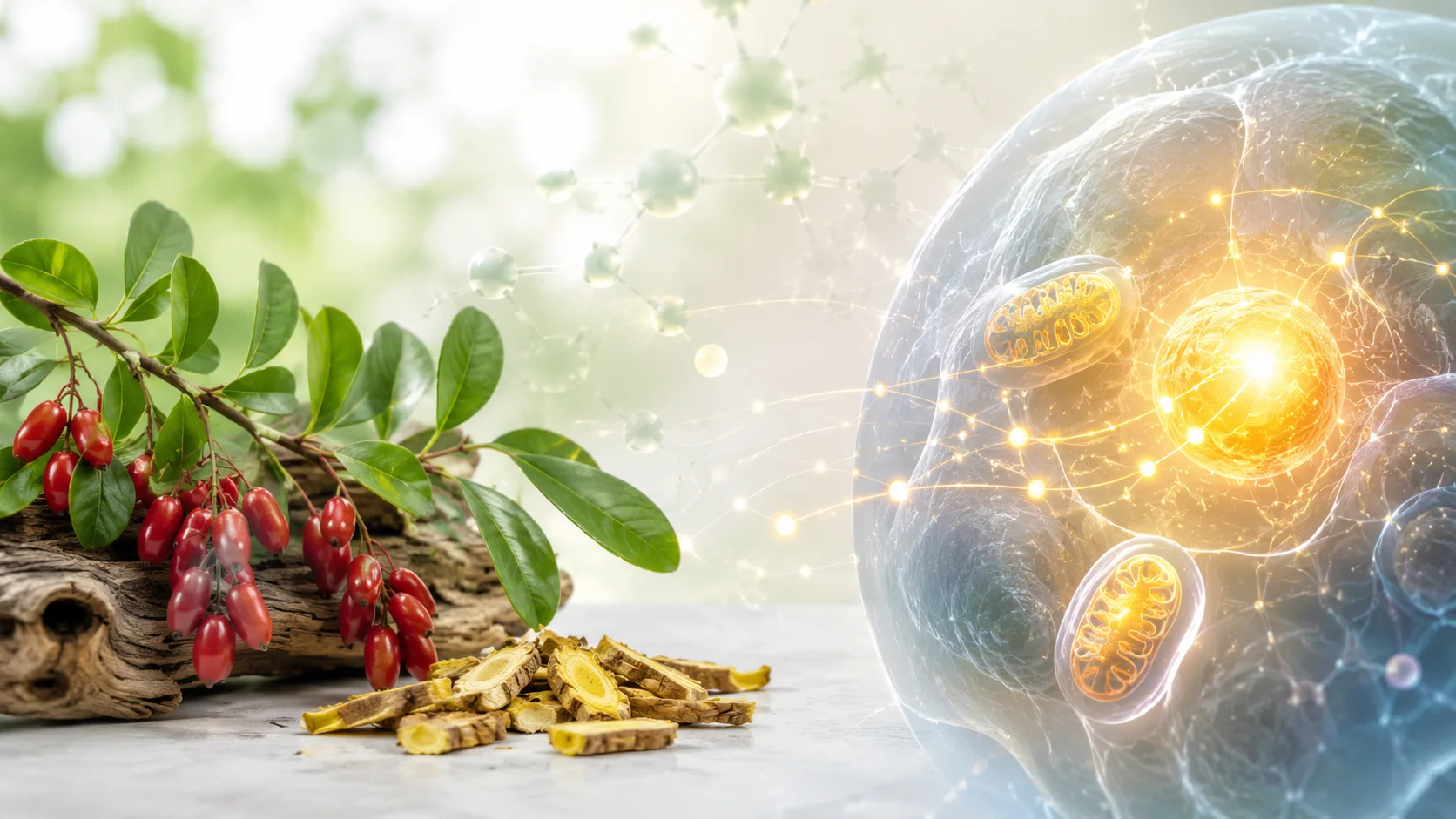
Berberine raises this AMP/ATP ratio primarily by mildly inhibiting complex I of the mitochondrial electron transport chain. This creates a transient energy stress signal, which activates AMPK in a way that loosely resembles the cellular response to exercise. The effect is dose-dependent and has been consistently reproduced across multiple tissue types in experimental models.
Upstream Pathways
Beyond the direct AMP/ATP effect, research suggests berberine may also activate upstream kinases such as LKB1, which phosphorylates and activates AMPK. This dual mechanism—raising the AMP/ATP ratio while also influencing upstream signalling—may help explain why berberine produces relatively sustained metabolic effects compared to some other compounds.
Once AMPK is activated, downstream effects include inhibition of mTORC1, reduced fatty acid synthesis, improved mitochondrial function, and enhanced insulin sensitivity. These are the same downstream pathways activated by fasting and exercise, which is why berberine is often discussed alongside those interventions. For a broader look at how AMPK and mTOR interact within the context of cellular repair and longevity, see our article on how mTOR and AMPK interact.
What the Scientific Evidence Shows
Cell and Animal Studies
The mechanistic evidence for berberine activating AMPK is robust at the cellular level. Studies in hepatocytes, skeletal muscle cells, and adipocytes consistently show increased AMPK phosphorylation following berberine treatment. Animal studies have demonstrated improvements in insulin resistance, blood glucose, triglycerides, and body weight, with AMPK activation identified as the primary driver.
Human Clinical Evidence
Human trials support berberine’s metabolic effects, though the evidence is more limited in scope. Clinical studies in people with type 2 diabetes or metabolic syndrome have found that berberine supplementation—typically at doses of 900–1500 mg daily, divided across meals—significantly reduces fasting blood glucose, HbA1c, and LDL cholesterol. Some trials have shown effects comparable to metformin for glycaemic control.
However, most human trials are short-term, relatively small, and have not directly measured AMPK activity in vivo. The assumption is that AMPK activation underlies the observed metabolic improvements, which is mechanistically plausible but not definitively confirmed in humans through direct measurement. Human evidence for longevity-specific outcomes—such as reduced all-cause mortality or extended healthspan—does not yet exist.
How Berberine Compares to Other AMPK Activators
Berberine is structurally and mechanistically similar to metformin in several ways. Both inhibit mitochondrial complex I, raise the AMP/ATP ratio, and activate AMPK. Metformin has extensive long-term human safety data and is now being studied for direct longevity effects in trials such as TAME. Berberine lacks this depth of evidence but is widely available without prescription.
Other natural compounds associated with AMPK activation include resveratrol and exercise itself. Compared to exercise, berberine’s AMPK activation is pharmacological rather than physiological, and does not deliver the cardiovascular, musculoskeletal, or neurological benefits that exercise provides. Berberine should be viewed as a metabolic support tool, not a substitute for lifestyle interventions.
This context matters when positioning berberine within a longevity strategy. Learn more in our complete guide to longevity, and see how AMPK activation fits within the broader autophagy and cellular repair picture in our hub article on autophagy for longevity.
Practical Implications and Considerations
Potential Benefits
For people with impaired glucose metabolism, insulin resistance, or elevated LDL cholesterol, berberine has meaningful clinical support. The metabolic benefits are consistent with what AMPK activation would be expected to produce: improved glucose uptake, reduced hepatic glucose output, enhanced fat oxidation, and modest reductions in body weight in some trials.
There is also interest in berberine’s potential role in longevity biology through AMPK-mediated inhibition of mTOR and possible downstream effects on autophagy. Current evidence for this specific pathway in humans is mechanistic and indirect—promising, but not yet clinically established.
Side Effects and Precautions
Berberine is generally well tolerated at standard doses, but gastrointestinal side effects—including nausea, cramping, and loose stools—are relatively common, particularly at higher doses or when taken on an empty stomach. Starting at a lower dose and taking berberine with meals can reduce these effects.
Because berberine has meaningful blood glucose-lowering effects, caution is warranted in people taking diabetes medications, as additive effects on blood sugar are possible. Berberine also interacts with cytochrome P450 enzymes and may affect the metabolism of certain drugs. Consulting a healthcare professional before use is advisable, particularly for those with existing health conditions or taking prescription medications.
Limitations and Uncertainty
Despite the plausible mechanisms and supportive metabolic data, several important gaps remain. Most human trials are short-duration and measure surrogate markers rather than hard clinical outcomes. Long-term safety data comparable to metformin does not exist. And while AMPK activation in cells and animals is associated with longevity-relevant pathways, no human evidence currently demonstrates that berberine extends lifespan or healthspan directly.
Berberine is best understood as a metabolic supplement with reasonable mechanistic support and moderate clinical evidence for glucose and lipid regulation—not as a proven longevity intervention.

References and Resources
Authoritative Sources on Berberine and AMPK
-
Berberine and AMPK Activation: A Meta-Analysis
ncbi.nlm.nih.govA comprehensive review of how berberine activates AMPK at the molecular level and its implications for metabolic health.
-
Berberine’s Role in the AMPK Pathway and Metabolism
frontiersin.orgExamines the dual pathways through which berberine activates AMPK and how this influences cellular metabolism.
-
Natural Compounds and AMPK Activation
thelancet.comCompares berberine with other natural AMPK activators and highlights its unique mechanisms.
-
Berberine Benefits and Safety
medicalnewstoday.comAn accessible overview of berberine’s health benefits, mechanisms, and safety considerations.
-
Effects of Berberine on Metabolic Pathways
pubmed.ncbi.nlm.nih.govDetailed research on berberine’s influence on metabolic pathways via AMPK activation.
-
The Role of Natural Supplements in Energy Regulation
nutrition.orgCovers natural compounds including berberine and their potential for AMPK activation and metabolic support.
-
WebMD on Berberine
webmd.comAn overview of berberine’s uses, benefits, and mechanisms including its role in activating AMPK.
Frequently Asked Questions
How does berberine activate AMPK?
Berberine mildly inhibits mitochondrial complex I, which raises the AMP/ATP ratio inside cells and signals low energy availability. AMPK detects this shift and activates in response. Research also suggests berberine may stimulate upstream kinases such as LKB1, adding a secondary activation pathway. The net effect is increased AMPK activity across multiple tissue types.
Can berberine improve energy levels through AMPK activation?
AMPK activation improves cellular energy efficiency rather than directly boosting subjective energy. In people with impaired glucose metabolism or insulin resistance, berberine’s metabolic effects may lead to more stable blood sugar and improved energy balance over time. Effects on energy in healthy individuals are less well established.
What are the main health benefits linked to berberine’s AMPK activation?
Clinical evidence most consistently supports improvements in fasting blood glucose, HbA1c, and LDL cholesterol. These effects are attributed to AMPK-driven improvements in insulin sensitivity, hepatic glucose output, and fat oxidation. Evidence for broader longevity outcomes in humans is currently limited to mechanistic inference.
Are there side effects associated with berberine?
Gastrointestinal side effects—including nausea, cramping, and loose stools—are the most commonly reported issues, particularly at higher doses. Taking berberine with meals generally reduces these effects. Because berberine lowers blood glucose, those on diabetes medications should seek medical advice before use to avoid compounding effects.
How long does it take for berberine to produce noticeable effects?
Clinical trials typically show measurable improvements in glucose and lipid markers within four to twelve weeks of consistent supplementation. Individual responses vary depending on baseline metabolic health, dosage, and lifestyle factors. Berberine is not a rapid-acting intervention and works best as part of a sustained routine.
Conclusion
Berberine activates AMPK through a well-characterised mechanism involving mitochondrial energy stress and upstream kinase signalling. This activation underpins its documented benefits for blood glucose regulation, insulin sensitivity, and lipid profiles. The mechanistic parallels with fasting and exercise make berberine an interesting compound from a longevity biology perspective, particularly through its downstream effects on mTOR and metabolic efficiency.
That said, human evidence for direct longevity outcomes remains absent, and berberine’s role is best understood as metabolic support rather than a proven anti-ageing intervention. It is a reasonable option for those with metabolic risk factors, best used alongside—not instead of—diet, exercise, and other evidence-based approaches to healthy ageing.
Find out more information about berberine and AMPK activation
Search for more resources and information: