
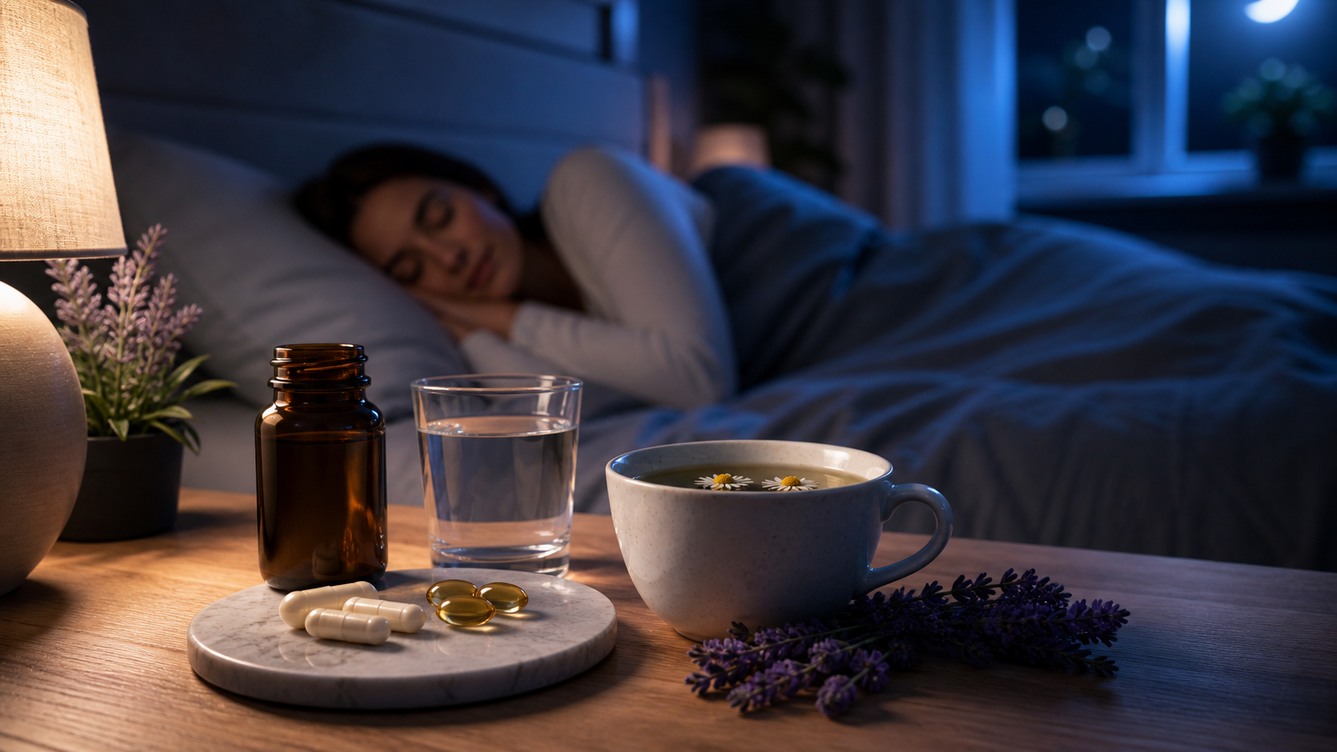
What Is the Best Sleep Supplement Stack?
What Is the Best Sleep Supplement Stack?
TL;DR: The best sleep supplement stack is usually a simple, low-dose combination that targets relaxation, sleep timing, and sleep quality without causing next-day grogginess. For many people, a cautious stack may include magnesium glycinate, glycine, L-theanine, and sometimes low-dose melatonin when circadian timing is the main issue.
The best sleep supplement stack is not the strongest possible combination of sedating ingredients. It is the smallest effective combination that helps solve the specific sleep problem: difficulty falling asleep, waking during the night, poor deep sleep, stress-related restlessness, or disrupted circadian rhythm.
For longevity and healthy aging, sleep supplements should support good sleep habits rather than replace them. Supplements may help some people relax or improve sleep consistency, but the foundation remains regular sleep timing, morning light exposure, reduced evening stimulation, a cool bedroom, exercise, and treatment of sleep disorders when needed.
For the broader strategy, see our complete sleep protocol for longevity. Learn more in our complete guide to longevity.
When a Sleep Supplement Stack Makes Sense
Supplements Should Match the Sleep Problem
A sleep supplement stack should be built around the reason sleep is poor. Someone who struggles with racing thoughts may benefit from calming compounds such as L-theanine or magnesium. Someone with poor sleep timing after travel or late-night light exposure may benefit more from carefully timed melatonin. Someone trying to support deeper sleep may consider glycine as part of a wider routine.
Using several supplements without knowing the target can make it harder to identify what helps, what does nothing, and what causes side effects. A useful sleep stack is therefore targeted, simple, and easy to adjust.
Why Sleep Supplements Matter for Longevity
Sleep quality affects many systems connected to healthspan, including glucose regulation, immune function, inflammation, recovery, appetite control, and brain health. Poor sleep may also worsen metabolic health and make it harder to maintain exercise, nutrition, and body composition habits.
Supplements can be helpful when they improve sleep consistency, but they should not be used to mask chronic sleep deprivation, alcohol-related sleep disruption, sleep apnea, anxiety, or an irregular lifestyle. In those cases, the root cause matters more than the stack.
Key Components of an Effective Sleep Supplement Stack
Magnesium for Relaxation and Nervous System Support
Magnesium is commonly used for sleep because it supports muscle relaxation and nervous system regulation. Magnesium glycinate is often preferred because it is generally well tolerated and less likely to cause digestive upset than some other forms.
Magnesium may be most useful for people who have low dietary magnesium intake, stress-related tension, muscle tightness, or difficulty winding down. It is not a guaranteed sleep aid, but it can be a sensible foundation in a simple sleep stack. For more detail, read whether magnesium improves sleep quality.
Glycine for Sleep Quality and Cooling
Glycine is an amino acid that may support sleep quality partly by helping the body lower core temperature, which is one of the signals involved in sleep onset. Some evidence suggests glycine may improve subjective sleep quality and next-day alertness in certain people.
Glycine is especially relevant for people who sleep enough hours but still wake feeling unrefreshed. It is not a heavy sedative, which makes it a useful option for those who want sleep support without feeling “knocked out.” See our related article on whether glycine improves deep sleep.
L-Theanine for Stress-Related Sleep Difficulty
L-theanine is an amino acid found in tea that may promote relaxation without strong sedation. It may help reduce mental tension and support a calmer transition into sleep, especially when stress or racing thoughts are the main barrier.
L-theanine may be useful in the evening for people who feel tired but mentally wired. It is not designed to force sleep, but it may make the pre-sleep state calmer and more sleep-friendly.
Melatonin for Sleep Timing, Not Everyday Sedation
Melatonin is best understood as a circadian rhythm signal rather than a general sleeping pill. It may be helpful when sleep timing is shifted, such as jet lag, delayed sleep phase, irregular schedules, or difficulty falling asleep at the desired time.
Low-dose melatonin is often enough for many people. Higher doses are not automatically better and may increase the chance of vivid dreams, next-day grogginess, or disrupted sleep timing. Melatonin is usually best reserved for specific timing problems rather than used as the core of every sleep stack.
Apigenin and Taurine as Optional Additions
Apigenin and taurine are often included in natural sleep stacks, but they should be treated as optional rather than essential. Apigenin may support relaxation through calming neurotransmitter pathways, while taurine may influence GABA-related signalling and nervous system balance.
Human evidence is more limited than for broader sleep hygiene strategies, so these are best considered add-ons after the basics are already in place. Read more about whether apigenin is effective for sleep and whether taurine improves sleep quality.
How to Build the Best Sleep Supplement Stack for You
Start With One Ingredient at a Time
The safest way to build a sleep supplement stack is to start with one ingredient, use it consistently for several nights, and track the response. This makes it easier to identify what actually helps.
A practical order might be: first improve sleep hygiene, then consider magnesium or glycine, then add L-theanine if stress is a major factor, and only use melatonin when sleep timing is the issue. This approach avoids unnecessary complexity.
Match the Stack to the Sleep Goal
For difficulty relaxing, magnesium and L-theanine may be a reasonable starting point. For poor sleep quality or unrefreshing sleep, glycine may be worth considering. For circadian rhythm disruption, low-dose melatonin may be more relevant.
For people who wake frequently, supplements may not be the main answer. Alcohol, late caffeine, stress, overheating, blood sugar swings, pain, sleep apnea, or an inconsistent sleep schedule may be the real driver.
Use Supplements Alongside Sleep Hygiene
Sleep supplements work best when the body is already receiving the right sleep signals. That means bright light in the morning, dimmer light in the evening, consistent bed and wake times, a cool room, reduced late caffeine, and a calming pre-sleep routine.
A supplement stack cannot fully compensate for poor sleep habits. When the basics are strong, a simple stack may help refine sleep quality without becoming the foundation of the whole routine.
Common Mistakes to Avoid With Sleep Supplement Stacks
Taking Too Many Supplements at Once
The most common mistake is combining too many products too quickly. This increases the risk of grogginess, digestive issues, vivid dreams, interactions, or confusion about what is helping.
A better approach is to start low, add slowly, and keep the stack simple. More ingredients do not automatically mean better sleep.
Using Melatonin for the Wrong Problem
Melatonin can be useful, but it is often misused. It is most appropriate for sleep timing issues, not for every form of insomnia or poor sleep quality.
If the issue is stress, alcohol, late meals, poor sleep environment, or sleep apnea, melatonin may have limited benefit. In some people, high or poorly timed doses can make sleep feel worse.
Ignoring Medical Sleep Problems
Supplements should not be used to cover up signs of a sleep disorder. Loud snoring, choking or gasping during sleep, severe daytime fatigue, restless legs, persistent insomnia, or waking with headaches should be assessed by a healthcare professional.
When an underlying issue is present, treating the cause is far more important than adding more supplements.
References and Resources
The following resources provide useful background on sleep supplements, sleep hygiene, and the evidence behind common ingredients used in sleep stacks.
Authoritative Sources on Sleep Supplements and Sleep Quality
-
National Institutes of Health (NIH) – Sleep & Supplements
nih.govProvides scientific research on sleep, nutrients, and supplement safety, including compounds such as magnesium and melatonin.
-
Sleep Foundation
sleepfoundation.orgA practical resource for sleep hygiene, sleep timing, sleep environment, and common sleep-support supplements.
-
PubMed – Sleep & Supplement Studies
pubmed.ncbi.nlm.nih.govA database of peer-reviewed studies on sleep quality, sleep stages, melatonin, magnesium, glycine, and other sleep-related interventions.
-
WebMD – Sleep Aids & Supplements
webmd.comUser-friendly information on common sleep aids, potential side effects, and supplement safety considerations.
-
Medical News Today
medicalnewstoday.comAccessible articles on sleep health, sleep supplements, and practical lifestyle strategies for better rest.
-
American Psychiatric Association
psychiatry.orgClinical information on sleep disorders, anxiety, medication considerations, and when professional support may be needed.
-
Healthline – Sleep & Supplements
healthline.comGeneral overviews of sleep supplements, including possible benefits, limitations, and safety points.
-
Research Journal Articles
ncbi.nlm.nih.govScientific reviews and studies that explore sleep mechanisms, supplement effects, and sleep-related health outcomes.

Frequently Asked Questions
What is the best sleep supplement stack?
The best sleep supplement stack is usually simple and targeted. A common starting point is magnesium glycinate, glycine, and L-theanine, with low-dose melatonin used only when sleep timing or circadian rhythm is the main issue.
Can I rely solely on supplements for good sleep?
No. Supplements may help, but they work best alongside strong sleep habits. Consistent sleep timing, morning light, reduced evening screen exposure, a cool bedroom, and caffeine control are usually more important than any supplement stack.
Are natural sleep supplements always safe?
Natural does not always mean risk-free. Sleep supplements can cause side effects, interact with medications, or lead to next-day grogginess. Start with low doses and seek medical advice if pregnant, taking medication, or managing a health condition.
Should melatonin be included in every sleep stack?
No. Melatonin is most useful for sleep timing problems, such as jet lag or delayed sleep phase. It is not always the best choice for stress-related sleep issues, frequent waking, or poor sleep quality.
How should I test a sleep supplement stack?
Test one supplement at a time for several nights before adding another. Track sleep quality, sleep onset, night waking, morning energy, and side effects. This makes it easier to identify what is genuinely helping.
Conclusion
The best sleep supplement stack is not a large collection of sedatives. It is a focused, low-dose combination chosen for a specific sleep problem, such as poor relaxation, difficulty falling asleep, disrupted timing, or unrefreshing sleep.
For many adults, magnesium, glycine, and L-theanine may be reasonable first options, while melatonin should usually be reserved for circadian timing support. The most effective approach is to combine any supplement stack with strong sleep hygiene and to address underlying sleep problems rather than masking them.
Find out more information about “what is the best sleep supplement stack”
Search for more resources and information: