Does Urolithin a Improve Mitochondrial Health?
Does Urolithin A Improve Mitochondrial Health?
TL;DR: Urolithin A is a gut-derived compound that activates mitophagy — the cellular process that clears damaged mitochondria. Early human evidence suggests it can improve mitochondrial function, muscle endurance, and markers of cellular health, though research is still maturing and it works best alongside exercise and a healthy diet.
What Is Urolithin A and What Does It Do?
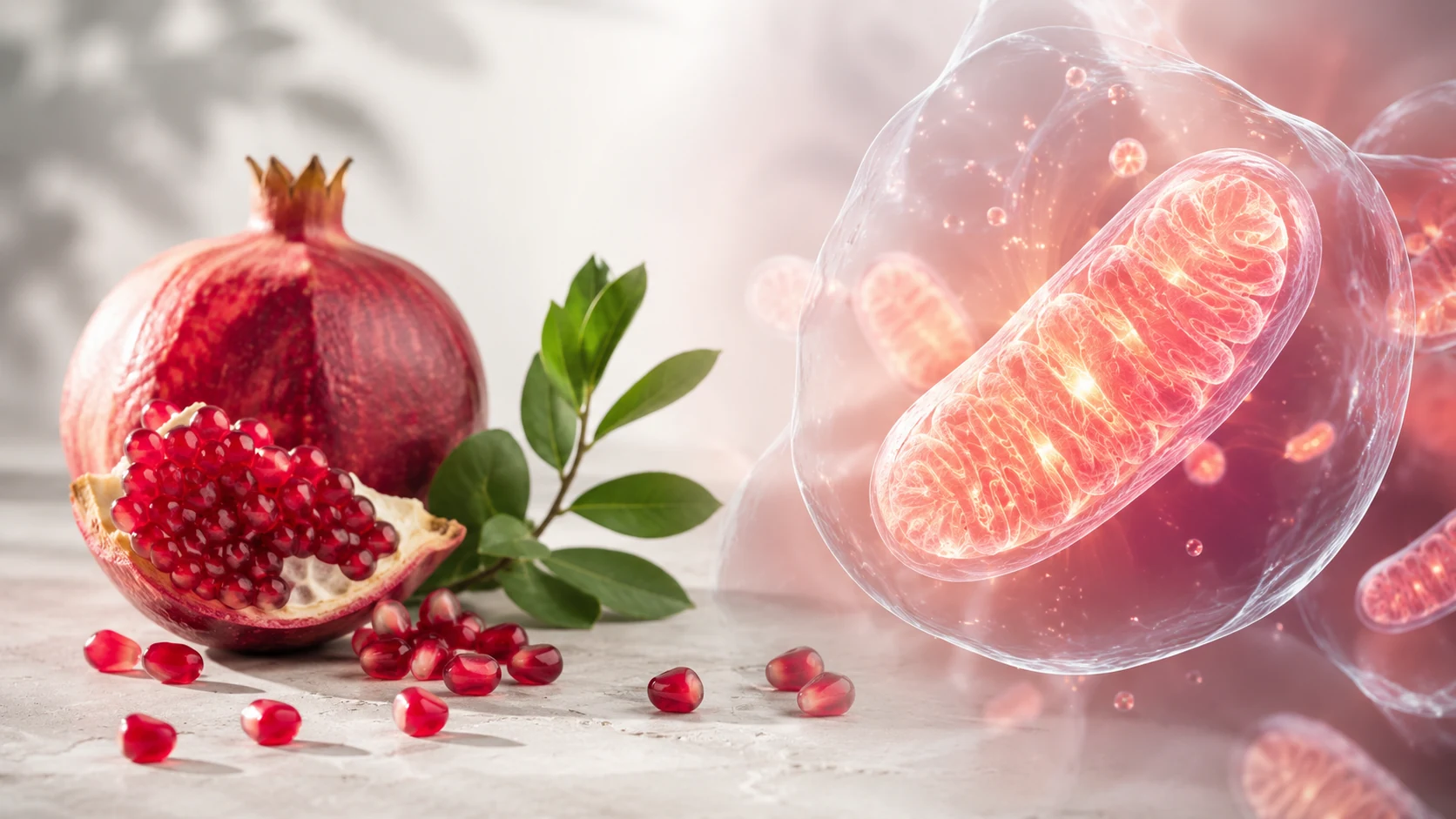
Urolithin A is a compound produced by gut bacteria when they metabolise ellagitannins — polyphenols found in pomegranates, berries, and walnuts. It does not come directly from food; instead, it is generated in the colon as a microbial byproduct, which means production varies significantly between individuals depending on their gut microbiome composition.
Its relevance to mitochondrial health centres on one key mechanism: the activation of mitophagy, the process by which cells identify and remove damaged or dysfunctional mitochondria. As we age, mitophagy becomes less efficient, allowing defective mitochondria to accumulate. This accumulation contributes to reduced cellular energy output, increased oxidative stress, and accelerated cellular ageing — all of which are linked to the broader process of mitochondrial dysfunction.
Urolithin A is not a general energy supplement. It targets a specific, upstream quality-control process. Understanding this distinction matters when evaluating what it can and cannot realistically do.
How Urolithin A Supports Mitochondrial Health
Mitophagy: Clearing Out Damaged Mitochondria
The primary mechanism behind Urolithin A’s effects is mitophagy activation. Specifically, research indicates that Urolithin A stimulates the PINK1–Parkin pathway — a key signalling system that tags damaged mitochondria for removal. When this pathway functions well, cells maintain a higher proportion of healthy, efficient mitochondria. When it declines with age, dysfunctional mitochondria accumulate and impair energy production.
By supporting this process, Urolithin A effectively improves mitochondrial quality control — not by directly generating energy, but by removing the cellular components that undermine it.
Mitochondrial Biogenesis
In addition to promoting mitophagy, evidence suggests Urolithin A may also stimulate mitochondrial biogenesis — the creation of new mitochondria — through pathways involving AMPK and PGC-1α. These are the same signalling pathways activated by exercise, particularly endurance training. As a result, Urolithin A may complement exercise-induced mitochondrial adaptations, though it is unlikely to replicate them independently.
This dual action — clearing old mitochondria while supporting the growth of new ones — is what makes Urolithin A a mechanistically credible candidate for mitochondrial support. For broader context on how mitochondrial biogenesis fits into longevity strategies, see our article on whether mitochondrial biogenesis can be increased naturally.
What the Scientific Evidence Says
Animal and Preclinical Studies
Early research in animal models showed that Urolithin A supplementation improved muscle endurance, reduced markers of mitochondrial dysfunction, and extended lifespan in model organisms. These findings established the mechanistic basis for human trials, though animal results do not always translate directly.
Human Clinical Trials
Human evidence is more limited, but it is growing. A randomised controlled trial published in Nature Metabolism found that Urolithin A supplementation in older adults improved skeletal muscle gene expression related to mitochondrial function and energy metabolism compared to placebo. A subsequent trial found improvements in muscle endurance — specifically the ability to perform repeated handgrip exercises — after 4 months of supplementation.
Importantly, a clinical trial also demonstrated that oral Urolithin A supplementation effectively raised plasma levels of the compound, addressing the bioavailability concern directly. This matters because gut microbiome variability means that many people produce little to no Urolithin A from dietary sources alone.
That said, human outcome data remains relatively early-stage. Most trials have been short in duration, conducted in older adults, and focused on muscle-related endpoints. Evidence on cardiovascular outcomes, cognitive function, or long-term lifespan extension in humans is not yet established.
What the Evidence Does and Does Not Show
Current evidence supports Urolithin A’s ability to activate mitophagy, improve mitochondrial gene expression, and enhance muscle endurance in older adults. It does not yet establish that Urolithin A meaningfully extends lifespan, prevents disease, or produces reliable subjective energy improvements across the general population. Research suggests it is a promising and mechanistically sound supplement — but it is not a confirmed longevity intervention.
Learn more in our complete guide to longevity.
Practical Considerations: Diet, Supplementation, and Timing
Dietary Sources vs. Supplementation
Consuming ellagitannin-rich foods — pomegranates, raspberries, strawberries, walnuts, and oak-aged foods — can support Urolithin A production, but only if your gut microbiome contains the bacteria capable of converting ellagitannins into Urolithin A. Research suggests that a significant proportion of adults, potentially more than half, are poor converters.
For this reason, direct supplementation with Urolithin A bypasses the microbiome conversion step entirely and ensures measurable plasma levels. The most studied form is the supplement Mitopure, which was used in the key clinical trials mentioned above.
Combining Urolithin A with Other Strategies
Urolithin A is most likely to be useful as a complement to established mitochondrial health strategies, not a replacement for them. Exercise — particularly Zone 2 aerobic training — remains the most evidence-supported way to improve mitochondrial density and function. Resistance training supports muscle preservation, which is also closely tied to mitochondrial health as we age.
Supplements like CoQ10 target different aspects of the mitochondrial energy chain, and it may be worth comparing them. For context, see our article on whether CoQ10 improves cellular energy.
In practice, taking Urolithin A with meals may aid absorption. Consistency over weeks rather than days is likely necessary before any functional changes become apparent, given that mitochondrial turnover is a gradual process.
Benefits, Limitations, and Uncertainty
Potential Benefits
Based on current evidence, Urolithin A supplementation is most likely to support:
- Mitochondrial quality control through enhanced mitophagy
- Muscle endurance and functional capacity in older adults
- Mitochondrial gene expression related to energy metabolism
- Cellular resilience in tissues with high energy demands, including muscle and potentially the brain
These benefits are meaningful in the context of ageing, where mitochondrial decline contributes to reduced physical capacity, metabolic health, and cellular repair. For a broader view of how mitochondrial dysfunction relates to the ageing process, see our article on whether mitochondrial dysfunction drives ageing.
Limitations and Honest Caveats
Several important limitations apply. Human trials are still relatively short and small. Long-term safety data beyond a few months is limited. Subjective energy improvements — while reported anecdotally — have not been consistently demonstrated as a primary endpoint in clinical trials. Individual responses will vary, partly due to differences in baseline mitochondrial health and lifestyle.
Urolithin A is also not inexpensive. Given that its benefits build on a foundation of adequate exercise, sleep, nutrition, and metabolic health, those foundations should be in place before prioritising this supplement.
Overall, Urolithin A is one of the more mechanistically credible mitochondrial supplements available, but it should be understood as an adjunct to — not a substitute for — broader lifestyle-based mitochondrial support.
Conclusion
Urolithin A improves mitochondrial health primarily by activating mitophagy — the cellular quality-control process that removes damaged mitochondria and allows healthier ones to function more efficiently. Human evidence, while still maturing, supports improvements in mitochondrial gene expression and muscle endurance, particularly in older adults.
It is a supplement worth considering for those focused on mitochondrial health and cellular ageing, especially individuals who are poor converters of dietary ellagitannins. However, it works best as part of a broader strategy that prioritises exercise, metabolic health, and sleep. For a complete picture of how to build a practical mitochondrial longevity strategy, visit our main hub on mitochondrial health for longevity.
References and Resources
The following sources informed this article on Urolithin A and mitochondrial health:
Authoritative Sources on Urolithin A and Mitochondrial Health
-
Urolithin A and Mitochondrial Health: A Review
ncbi.nlm.nih.govA comprehensive review of the mechanisms by which Urolithin A promotes mitochondrial quality control, including mitophagy pathway activation and its relevance to ageing.
-
Urolithin A as a Mitochondrial Enhancer
nature.comThis study examines the effects of Urolithin A on mitochondrial function in aged models and discusses its potential as an evidence-based anti-ageing compound.
-
Mitophagy Activation by Urolithin A
aging-us.comExamines how Urolithin A stimulates PINK1–Parkin mitophagy pathways and the downstream effects on mitochondrial quality in ageing cells.
-
Urolithin A Benefits and Research
healthline.comA well-rounded overview of current Urolithin A research, including mechanisms, clinical trial findings, and safety considerations.
-
Microbiome-Dependent Production of Urolithin A
ncbi.nlm.nih.govDiscusses how gut bacterial composition determines individual Urolithin A production capacity, which is central to understanding why supplementation may be necessary for many people.
-
Urolithin A and Aging
frontiersin.orgReviews the anti-ageing properties of Urolithin A, with emphasis on its mitochondrial benefits and potential relevance to age-related disease prevention.
-
Mitochondrial Quality Control and Urolithin A
cell.comAn in-depth examination of how Urolithin A activates mitochondrial quality control pathways, with discussion of relevance to cellular ageing and disease.

Frequently Asked Questions
Does Urolithin A genuinely improve mitochondrial health?
Current evidence indicates that Urolithin A supports mitochondrial health by activating mitophagy — the process that removes damaged mitochondria — and by stimulating mitochondrial biogenesis through AMPK and PGC-1α signalling. Human clinical trials have demonstrated improvements in mitochondrial gene expression and muscle endurance in older adults. The evidence is promising, though longer-term human outcome data is still limited.
How does Urolithin A improve mitochondrial function?
Urolithin A primarily activates the PINK1–Parkin mitophagy pathway, which tags and removes dysfunctional mitochondria from cells. It also appears to stimulate the growth of new mitochondria through AMPK and PGC-1α signalling. Together, these mechanisms improve the overall quality and efficiency of the mitochondrial pool — particularly relevant in ageing tissues where mitophagy naturally becomes less effective.
Can I naturally increase Urolithin A levels through diet?
Consuming ellagitannin-rich foods such as pomegranates, raspberries, and walnuts can support Urolithin A production, but only if the right gut bacteria are present. Research suggests that a large proportion of adults are poor converters and produce little Urolithin A from dietary sources alone. For those individuals, direct supplementation is a more reliable approach to achieving meaningful plasma levels.
Are there any side effects of Urolithin A supplements?
Urolithin A appears to be well-tolerated at the doses used in clinical trials. No significant adverse effects have been reported in the published research to date. However, long-term safety data beyond a few months remains limited. As with any supplement, consulting a healthcare professional before starting is advisable, particularly if you have underlying health conditions or take medications.
Is Urolithin A particularly relevant for ageing?
Yes. Mitophagy efficiency declines with age, allowing damaged mitochondria to accumulate and impair cellular energy production. Urolithin A targets this specific age-related deficit. Most clinical research has focused on older adults, and the results — including improved muscle endurance and mitochondrial gene expression — suggest it may be especially useful for supporting mitochondrial quality in the context of ageing.
Conclusion
Urolithin A is a gut-derived compound with a well-characterised mechanism and emerging human evidence to support its role in mitochondrial health. By activating mitophagy and supporting mitochondrial biogenesis, it addresses one of the core cellular processes that declines with age. Current evidence supports modest but meaningful improvements in mitochondrial function and muscle endurance, particularly in older adults. It is not a standalone solution, and its benefits are most relevant when built on a foundation of regular exercise, good nutrition, and metabolic health — but among the available mitochondrial supplements, it is one of the more mechanistically credible options available.
Find out more information about Urolithin A and mitochondrial health
Search for more resources and information: