Does Over-biohacking Increase Stress?
TL;DR: Yes, over-biohacking can increase stress. Pushing too many interventions — extreme fasting, aggressive supplementation, relentless tracking, strict sleep protocols — can elevate cortisol, disrupt recovery, and create a cycle of anxiety that undermines the health outcomes you are trying to achieve. Moderation and recovery are not optional extras; they are part of what makes any longevity strategy work.
Over-biohacking increases stress when the cumulative burden of self-optimization interventions — physical, cognitive, and psychological — exceeds what the body and mind can recover from. Rather than improving health, this pattern can chronically elevate cortisol, impair sleep, and generate the kind of low-grade, persistent stress that is itself a meaningful risk factor for accelerated aging. The problem is not biohacking in general. The problem is doing too much, too rigidly, without adequate recovery.
What Is Over-Biohacking?
Biohacking refers broadly to the practice of deliberately modifying lifestyle behaviors — diet, sleep, exercise, supplementation, and monitoring — with the goal of improving health, performance, or longevity. In principle, many of these practices are well-supported by evidence. In practice, however, the pursuit of optimization can escalate beyond what is physiologically or psychologically sustainable.
Over-biohacking occurs when the number, intensity, or rigidity of interventions starts to create more burden than benefit. This might look like stacking multiple aggressive fasting protocols, taking large numbers of supplements without clear rationale, tracking dozens of biomarkers simultaneously, or maintaining such strict routines that any deviation triggers anxiety. As a result, the very behaviors intended to reduce aging risk can begin to generate chronic stress — one of the most reliably documented contributors to poor healthspan outcomes.
This article is part of a broader cluster on longevity testing and trade-offs. For a wider view of which interventions are worth pursuing and where optimization can go wrong, see our guide on Longevity Testing and Trade-Offs.
How Over-Biohacking Raises Stress
The core mechanism is straightforward: many biohacking interventions are stressors by design. Cold exposure, high-intensity exercise, caloric restriction, and sleep compression all activate the body’s stress-response systems, including the hypothalamic-pituitary-adrenal (HPA) axis, which governs cortisol output. When applied appropriately, with adequate recovery between sessions, these stressors prompt beneficial adaptation. However, when stacked excessively or applied without sufficient rest, they produce cumulative physiological stress rather than cumulative benefit.
Chronically elevated cortisol has well-documented downstream effects: it impairs sleep quality, promotes visceral fat accumulation, suppresses immune function, and can blunt the anabolic signaling pathways — including mTOR and IGF-1 — that support muscle maintenance. In other words, the physiological cost of over-optimization can directly oppose longevity goals.
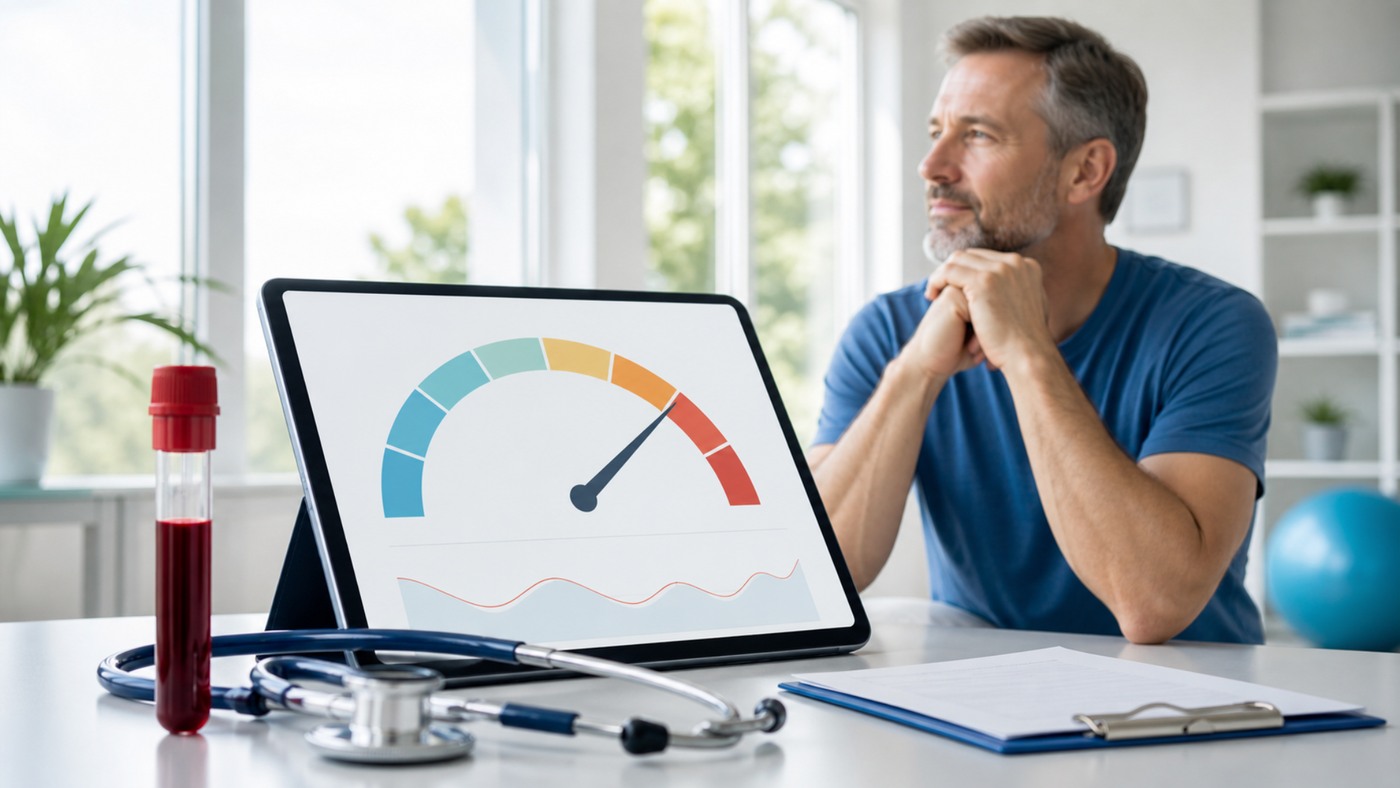
Beyond the hormonal mechanisms, there is a psychological dimension. Research suggests that rigid health routines, excessive self-monitoring, and a high internal pressure to optimize can activate threat-response systems in the brain in ways similar to other forms of chronic stress. The constant appraisal of whether one is performing optimally — combined with guilt or anxiety when protocols are missed — may itself sustain a low-grade stress state that HRV tracking, cortisol testing, or sleep scores are unlikely to fully capture.
For a related perspective on how excessive supplementation can introduce its own risks, including biological stress through off-target effects and nutrient competition, that article covers the evidence in more detail.
Physical and Mental Warning Signs
Recognizing when biohacking has tipped into over-biohacking requires attention to both physical and psychological signals. These are not abstract concerns — they are measurable, observable patterns that tend to cluster together when recovery is insufficient.
Physical Indicators
Persistent fatigue that does not resolve with sleep is one of the most common early signs. Others include elevated resting heart rate, declining HRV trends over time, recurrent illness, muscle soreness that lingers longer than expected, digestive disruption, and worsening sleep quality despite strict sleep protocols. Importantly, these are also signs of overtraining syndrome in athletes — and the underlying mechanisms overlap significantly with those of general over-biohacking.
Psychological and Behavioral Indicators
On the mental side, warning signs include irritability, mood instability, difficulty concentrating, and heightened anxiety — particularly around meals, exercise, or any deviation from routine. A preoccupation with health metrics, or a sense that health optimization has become a source of worry rather than confidence, is a meaningful signal. So is the feeling that rest or recovery is a failure rather than a necessary part of the process.
Tracking mood, energy, sleep quality, and resting heart rate over time — even informally — can help identify patterns. A consistent downward trend across several of these domains is more informative than any single data point.
Why the Optimization Mindset Can Backfire
There is a psychological dynamic in longevity optimization that is worth naming directly: the same traits that drive people to pursue health improvement — conscientiousness, high standards, attention to detail — can, under certain conditions, produce health-damaging behavior. This is not a criticism of the motivation. It is an honest acknowledgment that optimizing for longevity requires a different relationship with uncertainty than most optimization frameworks allow for.
Many longevity interventions carry genuine uncertainty at the individual level. Epigenetic clocks, for example, are still maturing as technologies and have real limitations in individual accuracy and actionability. Responding to ambiguous data with increasing anxiety and more aggressive interventions is unlikely to improve outcomes. In contrast, holding uncertainty lightly — continuing evidence-based fundamentals while monitoring without obsessing — tends to be both psychologically healthier and more practically effective.
The concept of hormesis is useful here. Many longevity-promoting stressors — exercise, brief caloric restriction, cold exposure — are beneficial specifically because they are time-limited and followed by recovery. Remove the recovery, or stack too many stressors simultaneously, and the hormetic benefit disappears. What remains is net physiological stress. This is not a theoretical concern. It is one of the better-supported mechanisms in exercise physiology and stress biology.
Learn more in our complete guide to longevity.
How to Avoid Over-Biohacking
The goal is not to do less for the sake of it, but to do what is actually effective — consistently and sustainably. Several practical principles are relevant here.
Anchor to Evidence-Based Fundamentals
The interventions with the strongest evidence for longevity impact are not exotic: regular moderate-to-vigorous exercise, adequate sleep, a diet that supports metabolic health, and management of known risk factors including visceral fat and insulin resistance. These fundamentals are difficult to outperform with additional biohacking layers. In most cases, adding complexity on top of an unstable foundation does not produce better outcomes.
Limit Simultaneous Interventions
Adding multiple new protocols at the same time makes it impossible to identify what is working, what is not, and what might be causing harm. Changing one variable at a time — and allowing enough time for a genuine signal to emerge — is more informative and less stressful than wholesale protocol overhauls.
Build Recovery Into the Plan
Recovery is not passive. It is the period during which adaptation occurs. Scheduled rest days, periodic deloads from high-intensity training, and deliberate breaks from strict dietary protocols are not signs of failure — they are structural components of an effective long-term strategy. This applies equally to psychological recovery: time away from tracking, measuring, and appraising health metrics is genuinely restorative for many people.
Use Metrics as Feedback, Not as Performance Targets
Biomarkers and wearable data are most useful when treated as directional information. When a metric becomes a source of anxiety — when a single poor night’s sleep score or a lower-than-expected HRV reading triggers distress — the tracking itself has become a stressor. In that context, reducing monitoring frequency may produce better outcomes than increasing it.
For practical guidance on how often to test specific longevity biomarkers, the article on how often to run a longevity panel covers realistic testing frequencies and what the evidence supports.
References and Resources
Authoritative Sources
-
National Institutes of Health (NIH)
nih.govResearch on stress physiology, cortisol regulation, and the neuroendocrine effects of chronic stressors provides relevant mechanistic context for understanding over-biohacking.
-
PubMed – Stress, Recovery, and Self-Optimization
ncbi.nlm.nih.govPeer-reviewed literature on hormesis, overtraining syndrome, HPA axis dysregulation, and the psychological effects of health perfectionism.
-
Frontiers in Physiology – Biohacking and Stress Responses
frontiersin.orgA review examining how self-optimization strategies influence physiological stress responses, with attention to the importance of dosing and recovery.
-
Healthline – Stress Management and Health Behaviors
healthline.comAccessible summaries of stress management evidence, including the relationship between rigid health behaviors and psychological burden.
-
Medical News Today – Biohacking and Mental Health
medicalnewstoday.comCoverage of how intensive health optimization practices can affect mental health, with practical guidance on maintaining balance.
-
ResearchGate – Stress and Self-Optimization Research
researchgate.netAccess to academic papers on the physiological and psychological impacts of intensive self-optimization behaviors.
-
Psychology Today – Health Perfectionism and Stress
psychologytoday.comPractical perspectives on how health-focused perfectionism can generate chronic stress and undermine wellbeing.

-
World Health Organization – Stress and Health
who.intGlobal evidence base on chronic stress as a health risk factor, relevant to understanding the downstream effects of sustained over-optimization.
Frequently Asked Questions
Does over-biohacking really increase stress?
Yes. Stacking too many physiological stressors — intense exercise, aggressive fasting, high-dose supplementation, strict sleep protocols — without adequate recovery can chronically elevate cortisol and impair the body’s ability to adapt. The psychological burden of rigid optimization routines can compound this further, sustaining a low-grade stress state that is counterproductive to longevity goals.
How can I tell if I am over-biohacking?
Common signals include persistent fatigue, declining HRV, worsening sleep despite effort, recurring illness, and mood instability. On the psychological side, watch for anxiety around deviating from routines, preoccupation with health metrics, or a sense that optimization has become a source of worry rather than confidence. A consistent downward trend across multiple wellbeing indicators — rather than any single data point — is the most reliable signal.
Can overdoing biohacking harm mental health?
Evidence suggests it can. Rigid health behaviors, excessive self-monitoring, and high internal pressure to optimize are associated with elevated anxiety and, in some cases, patterns resembling health anxiety or orthorexia. Sustainable longevity practice requires psychological flexibility as well as physiological recovery. If health optimization is generating more worry than wellbeing, that is a meaningful signal to reassess the approach.
What strategies help prevent over-biohacking from increasing stress?
The most effective approach is to anchor firmly to evidence-based fundamentals — exercise, sleep, metabolic health — and add complexity only where there is a clear rationale. Limit simultaneous interventions, build recovery into every protocol, and treat biomarker data as directional feedback rather than a performance scorecard. Periodic breaks from intensive tracking are genuinely useful for many people, both physiologically and psychologically.
Conclusion
Over-biohacking increases stress through two overlapping pathways: cumulative physiological load when recovery is insufficient, and chronic psychological pressure when optimization becomes a source of anxiety rather than empowerment. Both are genuine risks, and both can directly oppose the longevity outcomes they are intended to support.
The evidence supports a simpler, more sustainable approach: prioritize the fundamentals, apply interventions selectively and with adequate recovery, and hold biomarker data loosely rather than reacting to every fluctuation. That said, recognizing the warning signs early — persistent fatigue, declining wellbeing metrics, anxiety around health routines — allows for timely course correction before the pattern becomes entrenched.
Longevity optimization is most effective when it is built on a foundation of physiological and psychological stability. Without that foundation, additional layers of intervention tend to yield diminishing returns at best, and net harm at worst.
Find out more information about over-biohacking and stress
Search for more resources and information: