Does Nmn Increase Nad+ Levels?
Does NMN Increase NAD+ Levels?
TL;DR: Yes, NMN supplementation consistently raises NAD+ levels in human blood, and some studies show increases in muscle tissue too. However, higher NAD+ levels do not automatically translate to proven health or longevity benefits — the clinical evidence for meaningful outcomes in humans remains limited.
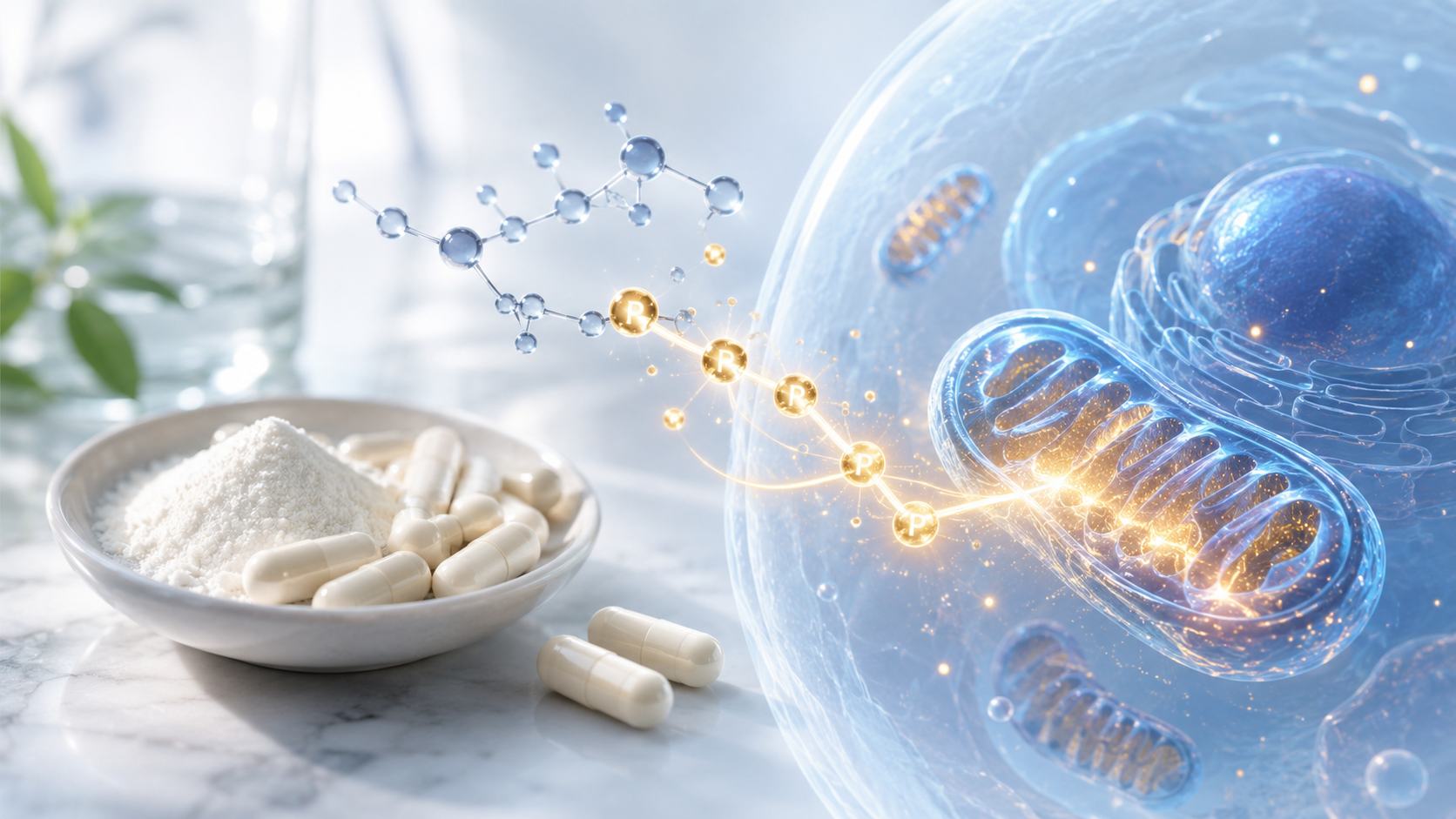
NMN (nicotinamide mononucleotide) does increase NAD+ levels. Human clinical trials have confirmed that oral NMN supplementation raises NAD+ concentrations in blood, and emerging evidence suggests increases occur in muscle tissue as well. This makes NMN one of the better-studied NAD+ precursors available. The more important question — whether raising NAD+ through NMN translates into measurable improvements in health, metabolism, or longevity — is where the evidence is less settled.
What NAD+ Does and Why Its Levels Matter
The Role of NAD+ in Cellular Function
NAD+ (nicotinamide adenine dinucleotide) is a coenzyme found in every cell. It plays a central role in energy metabolism, acting as an electron carrier in the mitochondria during ATP production. It also serves as a substrate for enzymes involved in DNA repair, including PARPs, and for sirtuins — proteins that regulate cellular stress responses, gene expression, and metabolic adaptation.
Because NAD+ sits at the intersection of energy production, DNA maintenance, and cellular signalling, it has attracted significant interest in aging research. Sirtuin activity in particular depends on adequate NAD+ availability, and sirtuins have been linked to several longevity-associated pathways, including mitochondrial biogenesis and inflammation regulation.
Does NAD+ Decline with Age?
Research suggests that NAD+ levels decline with age in multiple tissues, though the rate and extent vary between individuals and tissue types. This decline appears to result from both reduced biosynthesis and increased consumption — particularly by DNA repair enzymes that become more active under conditions of chronic cellular stress. Explore the evidence on when and why NAD+ may decline with age.
Whether this decline is a driver of aging or a consequence of it remains an open question. The association is well-documented; the causal direction is less certain.
How NMN Raises NAD+ Levels
NMN is a direct precursor to NAD+. Once absorbed, NMN enters cells and is converted to NAD+ via the Preiss-Handler or salvage biosynthesis pathways, depending on the tissue. Crucially, NMN bypasses some of the rate-limiting steps earlier in the NAD+ synthesis pathway, which may explain why it raises NAD+ levels more reliably than some other precursors.
Earlier debate existed about whether NMN could be absorbed intact or required conversion to nicotinamide riboside (NR) first. More recent research, including work identifying an NMN transporter (Slc12a8) in intestinal cells, suggests NMN can be taken up directly, at least in some tissues. The precise absorption mechanism in humans is still being clarified.
NR (nicotinamide riboside) follows a slightly different route but ultimately raises NAD+ through the same salvage pathway. Both are considered viable NAD+ precursors. See how NMN and NR compare as NAD+ precursors.
What the Evidence Shows in Humans
Human Clinical Trials on NMN and NAD+
Several randomised controlled trials in humans have now demonstrated that oral NMN supplementation reliably increases blood NAD+ levels. A notable study by Yoshino et al. (2021) found that 250 mg/day of NMN for 10 weeks increased NAD+ in skeletal muscle and improved muscle insulin sensitivity in postmenopausal women with prediabetes, though the metabolic benefits were modest and not universal.
Other human studies have reported increases in whole-blood or PBMC NAD+ following NMN doses ranging from 250 mg to 1,200 mg per day. The increases are dose-dependent and consistent across studies. Short-term safety profiles in these trials have generally been acceptable, with no serious adverse events reported at standard doses.
Limitations of Current Evidence
Most human trials are small (typically under 50 participants), short in duration (8–12 weeks), and focused on NAD+ as a biomarker rather than hard clinical outcomes. Raising NAD+ in blood is not the same as improving metabolic health, reducing disease risk, or extending healthy lifespan. Understanding what constitutes an optimal NAD+ level adds useful context here.
Long-term human outcome data — the kind needed to draw conclusions about aging, healthspan, or longevity — does not yet exist for NMN. Extrapolating from animal studies, which show impressive results in rodents, should be done cautiously given the differences in NAD+ metabolism between species.
Does Raising NAD+ Actually Improve Outcomes?
This is the central question that current evidence cannot fully answer. Raising NAD+ through NMN is well-supported. Whether that biochemical change produces meaningful improvements in energy, cognition, muscle function, metabolic health, or longevity in humans is a different question.
Some human studies have reported improvements in muscle insulin sensitivity, physical performance markers, and subjective energy. These results are preliminary and often modest. They are not sufficient to make definitive claims about anti-aging effects. The gap between raising a biomarker and improving a clinical outcome is significant, and supplement marketing in this area frequently overstates what the evidence shows.
It is also worth noting that lifestyle factors — regular exercise, adequate sleep, caloric restriction, and metabolic health — independently support NAD+ biology. AMPK activation through exercise, for example, can upregulate NAD+ biosynthesis and sirtuin activity without supplementation. NMN may offer an additional layer of support, but it is not a substitute for these fundamentals. Learn more in our complete guide to longevity.
For a broader view of NAD+’s role across longevity research, including sirtuins, NR, fasting, and exercise, see our main hub on NAD+ for longevity.
Practical Considerations for NMN Supplementation
Dosing and Timing
Human studies have used doses ranging from 250 mg to 1,200 mg per day, with the most commonly studied dose being 250–500 mg. Current evidence does not establish a clearly optimal dose for clinical outcomes — the dose-response relationship for NAD+ levels exists, but its relationship to functional benefits is not well-defined.
Morning dosing is sometimes suggested based on the role of NAD+ in circadian rhythm regulation and daytime energy metabolism, though direct evidence that timing significantly affects outcomes is limited.
Safety and Long-Term Use
Short-term NMN use appears well-tolerated in human trials. Reported side effects are mild and infrequent, including occasional digestive discomfort at higher doses. Long-term safety data in humans is limited, and this remains an honest gap in the evidence. Anyone with existing health conditions or taking medications should consult a healthcare professional before supplementing.
Supporting NAD+ Through Lifestyle
Exercise, particularly aerobic and resistance training, consistently supports NAD+ metabolism through AMPK activation and improved mitochondrial function. Intermittent fasting and caloric restriction have also been shown to increase NAD+ availability in animal models, with some supporting human data. These approaches may enhance the effect of NMN supplementation and are independently valuable for healthy aging.
References and Resources
Authoritative Sources on NMN and NAD+ Levels
-
NAD+ and Aging: The Role of NMN
ncbi.nlm.nih.govA comprehensive review examining how NMN supplementation can restore NAD+ levels and its potential relevance to age-related cellular decline.
-
Nicotinamide Mononucleotide (NMN): A Promising Molecule for Anti-Aging
frontiersin.orgReviews the mechanisms by which NMN raises NAD+ and discusses evidence for potential longevity-related effects, with appropriate caveats about the current state of human data.
-
NAD+ Precursors and Their Impact on Cellular Aging
pubmed.ncbi.nlm.nih.govCompares NAD+ precursors including NMN and NR, discussing bioavailability differences and their relevance to cellular aging research.
-
The Promise of NMN for Aging and Metabolic Health
aging-us.comReviews clinical trial evidence for NMN’s role in raising NAD+ levels and explores early findings related to metabolic health outcomes.
-
NMN Supplements: Benefits, Side Effects, and Dosage
healthline.comAn accessible overview of NMN supplementation, covering mechanisms, dosing considerations, and known safety data.
-
NAD+ Precursors and the Aging Process
ncbi.nlm.nih.govAn in-depth examination of how NAD+ precursors such as NMN interact with aging biology, including discussion of limitations in translating animal findings to humans.

Frequently Asked Questions
Does NMN actually increase NAD+ levels in humans?
Yes. Multiple human clinical trials have confirmed that oral NMN supplementation raises NAD+ concentrations in blood and, in some studies, in skeletal muscle. The effect is consistent and dose-dependent across published research.
How quickly does NMN raise NAD+ levels?
Studies suggest NAD+ levels begin to rise within hours of a single NMN dose, with sustained elevation occurring over days of consistent supplementation. Full effects on tissue-level NAD+ may take several weeks to become apparent.
Are there any side effects of taking NMN?
Short-term human trials report a generally good safety profile at doses up to 1,200 mg/day. Mild digestive discomfort has been noted at higher doses. Long-term safety data in humans is limited, so anyone with health conditions or on medication should seek medical advice before use.
Can lifestyle changes enhance the effect of NMN on NAD+?
Yes. Regular exercise and intermittent fasting both support NAD+ biology independently. Exercise activates AMPK, which upregulates NAD+ biosynthesis, while fasting reduces NAD+ consumption by lowering chronic metabolic stress. These lifestyle factors complement, rather than replace, supplementation.
Does raising NAD+ with NMN improve health outcomes?
Raising NAD+ is well-supported. Whether that translates to meaningful clinical benefits — improved energy, metabolic health, or longevity — is less certain. Some early human studies show modest improvements in insulin sensitivity and physical performance, but the evidence base is still small and short-term. Robust long-term outcome data does not yet exist.
Conclusion
The evidence is clear that NMN supplementation raises NAD+ levels in humans. Multiple clinical trials confirm this effect consistently. Where the evidence becomes less certain is in connecting higher NAD+ levels to meaningful improvements in health, metabolism, or lifespan. Early human data is promising in some areas — particularly muscle insulin sensitivity — but remains preliminary.
NMN is a plausible tool for supporting NAD+ biology, particularly in the context of age-related decline. It is not, however, a substitute for exercise, sleep, and metabolic health, which independently support many of the same cellular pathways. Used alongside solid lifestyle fundamentals, NMN may offer a reasonable additional layer of support — but expectations should be grounded in what current evidence actually demonstrates, not in what supplement marketing implies.
Find out more about NMN and NAD+ levels
Search for more resources and information: