
Does Mediterranean Diet Reduce Mortality?
Does the Mediterranean Diet Reduce Mortality?
TL;DR: Yes — consistent evidence from large observational studies and at least one major randomized trial shows that close adherence to a Mediterranean-style diet is associated with meaningfully lower all-cause and cardiovascular mortality. The effect appears strongest for heart disease and stroke, which are among the leading causes of death worldwide.
Research consistently supports the idea that a Mediterranean-style dietary pattern is associated with reduced mortality, particularly from cardiovascular causes. Large observational studies and meta-analyses show that people who adhere closely to this pattern tend to live longer and experience fewer deaths from chronic disease than those eating a typical Western diet. The evidence is not unanimous, and effect sizes vary, but the overall direction is clear and reasonably robust across different populations and study designs.
What the Mediterranean Diet Actually Involves
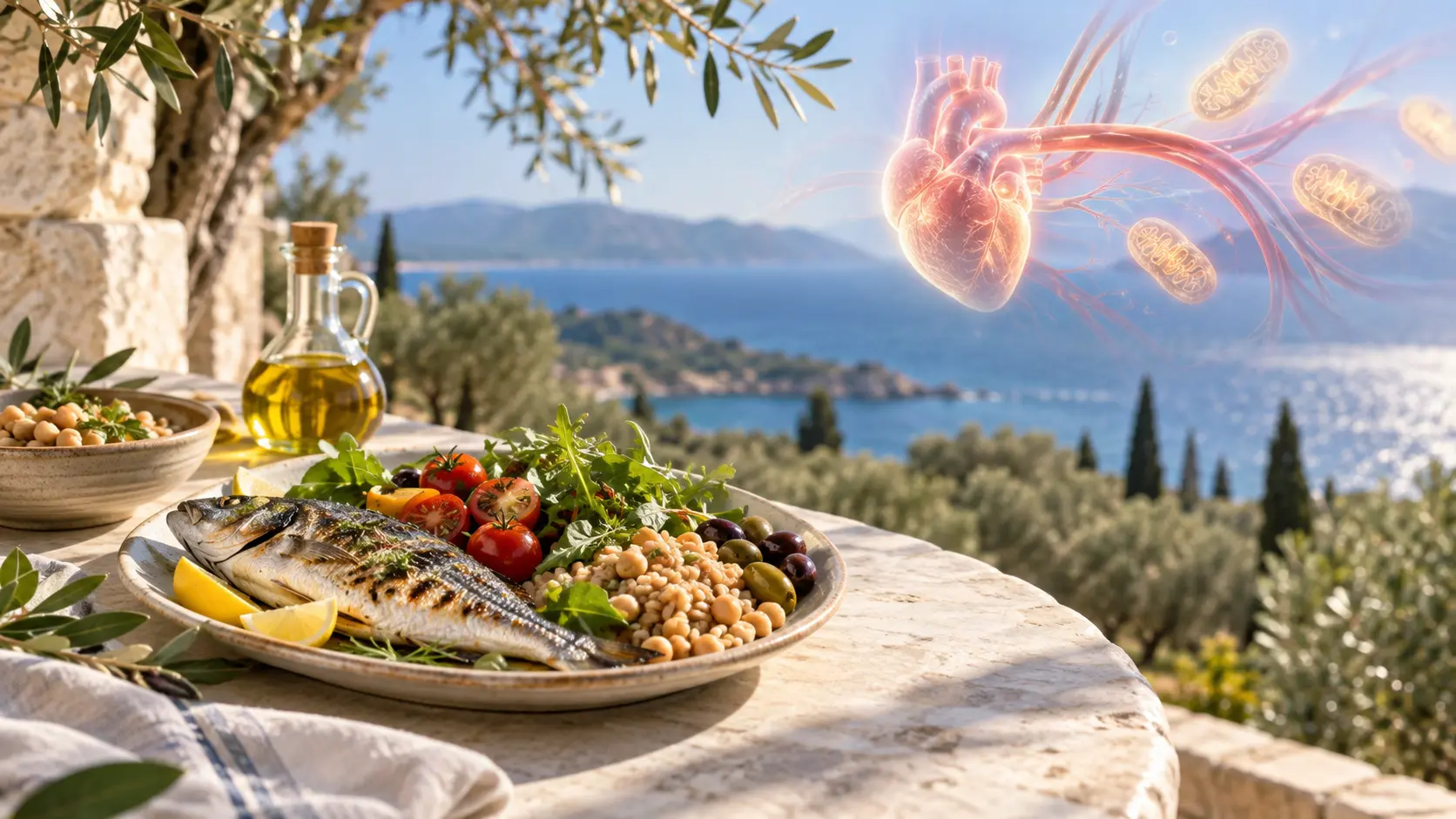
The Mediterranean diet is a dietary pattern — not a rigid prescription — characterized by high intake of vegetables, fruits, legumes, whole grains, nuts, and olive oil; moderate consumption of fish and poultry; limited red and processed meat; and low intake of added sugars and ultra-processed foods. Olive oil, particularly extra virgin olive oil, serves as the primary fat source.
Importantly, no single food defines this pattern. Its potential health benefits appear to come from the overall combination of foods rather than any one ingredient in isolation. This makes it distinct from diets built around a specific macronutrient ratio or a single “superfood.” For a broader look at how this pattern fits within the wider evidence on diet and aging, see our article on advanced diet and longevity.
How It May Reduce Mortality: Key Mechanisms
Several biological mechanisms help explain the observed association between the Mediterranean diet and lower mortality. These are not speculative — they are supported by both mechanistic research and human clinical data, though the relative importance of each mechanism is still being investigated.
Reduced Systemic Inflammation
High intake of polyphenols from olive oil, vegetables, and fruits is associated with lower levels of inflammatory markers such as CRP and IL-6. Chronic low-grade inflammation is strongly linked to atherosclerosis, metabolic disease, and accelerated aging. By reducing this inflammatory load, the Mediterranean diet may lower the long-term risk of disease-related death. Extra virgin olive oil, in particular, contains oleocanthal, a compound with demonstrated anti-inflammatory properties — a topic explored further in our article on whether extra virgin olive oil reduces inflammation.
Cardiovascular Protection
The diet’s fat profile — dominated by monounsaturated fats from olive oil and omega-3 fatty acids from fish — is associated with improved endothelial function, lower LDL oxidation, and more favorable lipid profiles. These effects directly reduce cardiovascular risk, which translates into lower cardiovascular mortality at the population level.
Improved Metabolic Health
High fiber intake from legumes, whole grains, and vegetables supports better insulin sensitivity and glycemic control. As a result, metabolic risk factors such as type 2 diabetes, visceral adiposity, and hypertension — all of which contribute to premature death — tend to be lower in consistent Mediterranean diet adherents.
Gut Microbiome and Antioxidant Load
Dietary fiber and polyphenols also support a more diverse gut microbiome, which in turn influences systemic inflammation and immune function. The high antioxidant content of the diet may help reduce oxidative stress, a key driver of cellular aging and chronic disease progression.
What the Evidence Shows
The PREDIMED Trial
The most cited randomized controlled trial in this area is the PREDIMED study, conducted in Spain. It assigned participants at high cardiovascular risk to one of three diets: a Mediterranean diet supplemented with extra virgin olive oil, a Mediterranean diet supplemented with mixed nuts, or a low-fat control diet. Both Mediterranean diet groups showed significantly lower rates of major cardiovascular events compared to the control group. While the trial had a methodological issue that led to a partial retraction and re-analysis, the corrected results still supported a meaningful cardiovascular benefit.
That said, PREDIMED measured cardiovascular events, not all-cause mortality directly. It is important not to overstate its conclusions beyond what it actually measured.
Observational Studies and Meta-Analyses
Large prospective cohort studies — including the EPIC study across European countries — consistently show that higher Mediterranean diet adherence scores are associated with lower all-cause mortality and, in particular, lower cardiovascular and cancer mortality. Meta-analyses combining data across multiple studies generally confirm this association.
However, observational data cannot fully rule out confounding. People who eat a Mediterranean diet may differ from those who do not in other health-relevant ways — income, education, physical activity, smoking status. Researchers attempt to adjust for these factors, but residual confounding remains a limitation. The evidence is strong and consistent, but causality cannot be claimed with absolute certainty from observational data alone.
Comparison with Other Dietary Patterns
When compared to Western dietary patterns — high in ultra-processed foods, refined carbohydrates, and added sugars — the Mediterranean diet consistently performs better across mortality outcomes. The contrast is particularly clear for cardiovascular and metabolic disease mortality. In contrast, comparisons with other healthy dietary patterns (such as DASH or plant-based diets) show smaller and less consistent differences, suggesting that multiple dietary approaches can support longevity as long as they share core principles: whole foods, minimal processing, and adequate fiber and healthy fats.
Learn more in our complete guide to longevity.
Practical Implications
For most people, the practical takeaway is straightforward. Shifting toward a Mediterranean-style eating pattern — more vegetables, legumes, whole grains, fish, and olive oil; less processed meat, refined sugar, and ultra-processed food — is one of the most evidence-supported dietary steps someone can take to reduce long-term mortality risk.
This does not require a complete dietary overhaul overnight. Even partial adherence — replacing butter with olive oil, eating fish twice a week, adding legumes to regular meals — appears to carry meaningful benefit based on dose-response analyses in observational research.
It is also worth noting that the Mediterranean diet is not uniquely restrictive or expensive. It is built on affordable staples: legumes, seasonal vegetables, whole grains, and olive oil. The social and cultural dimensions of traditional Mediterranean eating — shared meals, minimal snacking, less processed convenience food — may contribute additional benefit beyond the nutrients themselves, though this is harder to isolate and study.
For a deeper look at how fish consumption specifically contributes to longevity outcomes, see our article on whether fish consumption increases longevity.
Other Lifestyle Factors That Influence Mortality
Diet is one component of a larger picture. Physical activity, sleep quality, stress management, social connection, and avoidance of smoking all independently influence mortality risk. In most large cohort studies, the longevity benefit of a healthy diet is amplified when combined with regular physical activity and non-smoking status.
This does not diminish the dietary evidence — it contextualizes it. The Mediterranean diet is not a standalone cure for an otherwise unhealthy lifestyle. However, among modifiable lifestyle factors, diet consistently ranks among the most impactful, and the Mediterranean pattern is among the best-evidenced dietary approaches for reducing mortality risk.

References and Resources
Authoritative Sources
-
World Health Organization – Diet and Health
who.intWHO guidelines on diet and chronic disease prevention, including the role of healthy dietary patterns in reducing mortality.
-
American Society for Nutrition
nutrition.orgPeer-reviewed research on dietary patterns and their associations with longevity and mortality outcomes.
-
National Institutes of Health – PubMed
nih.govAccess to peer-reviewed studies on the Mediterranean diet, cardiovascular outcomes, and all-cause mortality.
-
European Journal of Clinical Nutrition
nature.com/ejcnResearch on dietary patterns and health outcomes, including Mediterranean diet adherence and mortality across European cohorts.
-
Healthline – Mediterranean Diet Overview
healthline.comAn accessible summary of the Mediterranean diet’s core components and links to supporting research on health outcomes.
-
WHO – Healthy Living
who.intGlobal perspective on the lifestyle factors — including diet — that influence mortality risk and healthy aging.
Frequently Asked Questions
Does the Mediterranean diet actually reduce mortality?
Evidence from large prospective studies and meta-analyses consistently shows that higher adherence to the Mediterranean diet is associated with lower all-cause and cardiovascular mortality. The PREDIMED trial provided additional support from a randomized controlled design. While causality cannot be claimed with absolute certainty from observational data, the breadth and consistency of the evidence makes this one of the stronger dietary associations in nutrition research.
What are the key foods that drive the Mediterranean diet’s mortality benefit?
Extra virgin olive oil, vegetables, legumes, whole grains, nuts, and fish appear to be the most consistently beneficial components. These foods contribute healthy fats, fiber, antioxidants, and anti-inflammatory compounds. The benefit likely comes from the overall dietary pattern rather than any single food — the combination matters more than any individual component in isolation.
Can I expect a meaningful reduction in mortality by following this diet?
Research suggests yes, particularly for cardiovascular mortality. Effect sizes in observational studies are meaningful — not trivial — and are consistent across different populations. That said, diet is one factor among many. The benefit is most pronounced when the Mediterranean pattern replaces a diet high in ultra-processed foods, refined carbohydrates, and processed meat, rather than when it replaces an already healthy dietary pattern.
Are there limitations to the evidence on Mediterranean diet and mortality?
Yes. Most of the evidence comes from observational studies, which cannot fully eliminate confounding factors. People who eat a Mediterranean diet may differ in other health-relevant ways from those who do not. Randomized trials in this area are limited and difficult to conduct over long timescales. The evidence is strong and consistent, but it should be interpreted as supporting a dietary pattern that reduces risk — not as a guarantee of longevity for any individual. Consulting a healthcare professional before making significant dietary changes is always advisable, particularly for those with existing health conditions.
Conclusion
The evidence supporting the Mediterranean diet’s role in reducing mortality is among the most consistent in nutritional epidemiology. Large observational studies, meta-analyses, and at least one major randomized trial all point in the same direction: closer adherence to this dietary pattern is associated with lower all-cause mortality, particularly from cardiovascular causes.
The mechanisms are plausible — reduced inflammation, improved endothelial function, better metabolic health — and align well with what is known about the biology of aging and chronic disease. In practice, the Mediterranean diet offers a realistic, evidence-based dietary framework that does not require extreme restriction or rigid rules, making it one of the most sustainable options for supporting long-term health and reducing premature mortality risk.
Find out more information about the Mediterranean diet and mortality
Search for more resources and information: