Does Immunosenescence Increase Mortality Risk?
Does Immunosenescence Increase Mortality Risk?
TL;DR: Yes — research consistently links immunosenescence, the age-related decline in immune function, to higher mortality risk, particularly from infections, cancer, and chronic inflammation. While the process cannot be stopped entirely, evidence supports several lifestyle and medical strategies that help preserve immune function and reduce risk as we age.
What Is Immunosenescence and Why Does It Matter?
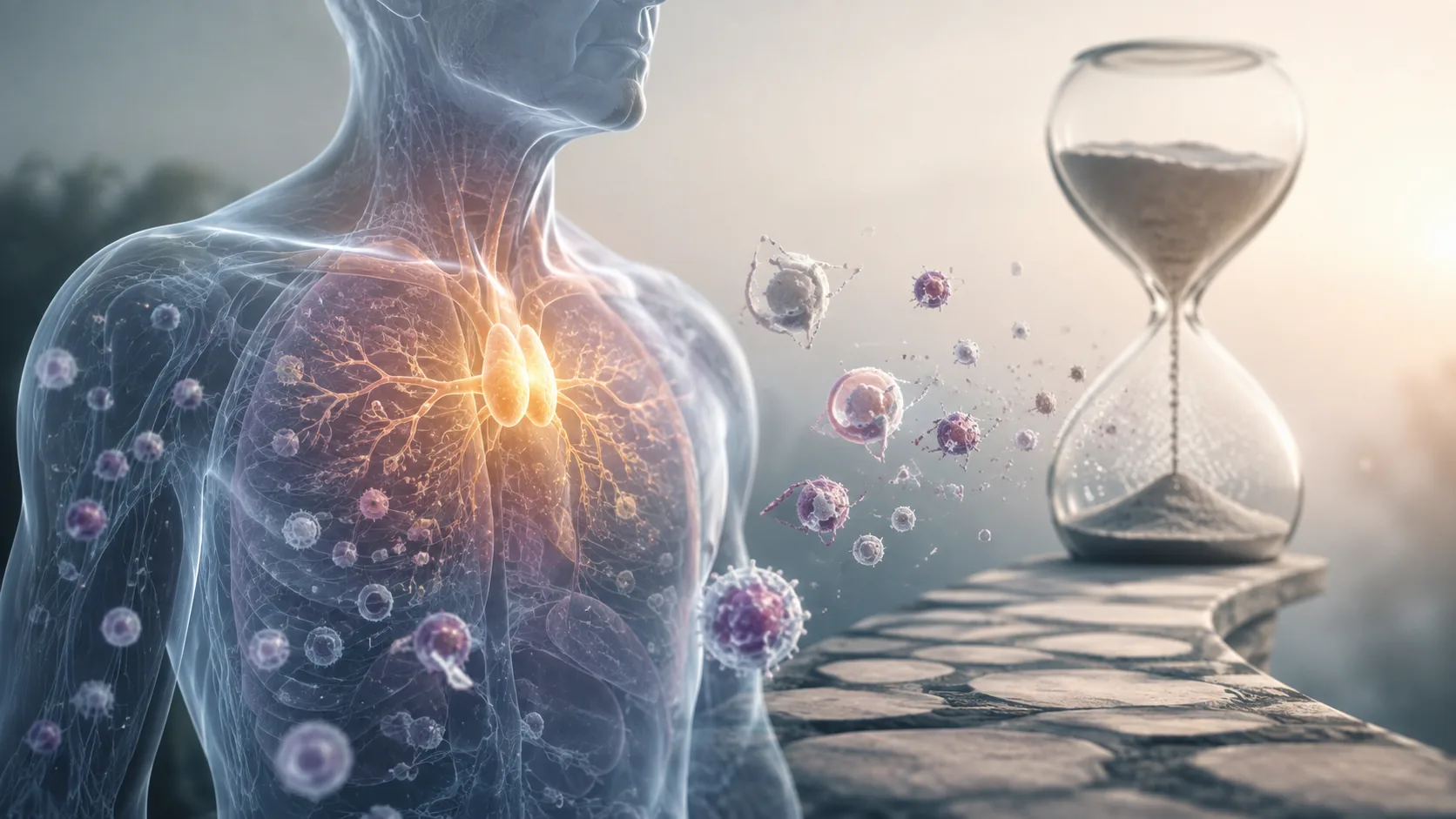
Immunosenescence refers to the gradual deterioration of immune function that occurs with aging. Research consistently shows that this decline is associated with increased susceptibility to infections, reduced vaccine efficacy, higher cancer rates, and elevated mortality risk — particularly in adults over 65. In short, an aging immune system is less capable of defending the body, and that reduced capacity has measurable consequences for survival.
The immune system does not simply slow down uniformly. Instead, it undergoes specific structural and functional changes that compromise both its ability to detect new threats and its capacity to regulate inflammatory responses. As a result, older adults face a dual challenge: reduced protection against pathogens and increased exposure to chronic low-grade inflammation — a state sometimes called inflammaging.
These two processes, immunosenescence and inflammaging, are distinct but closely linked. Immunosenescence describes the loss of immune efficiency, while inflammaging describes the persistent, low-level inflammatory tone that builds up as the immune system ages. Together, they contribute meaningfully to the biology of aging and are central to understanding why mortality risk rises with age. For broader context on how these processes interact, see our guide to immune aging and chronic inflammation.
How Immunosenescence Raises Mortality Risk
What the Evidence Shows
The link between immunosenescence and mortality is well-supported in the scientific literature. Older adults with measurably compromised immune profiles — characterised by reduced T-cell diversity, fewer naïve immune cells, and elevated inflammatory markers — consistently show higher rates of severe illness and death from infections such as influenza and pneumonia.
Importantly, this relationship holds even when controlling for other age-related conditions. Research indicates that immune status itself is an independent predictor of survival in older populations, not merely a downstream consequence of other diseases. For example, studies examining immune risk profiles in elderly cohorts have found that specific immune markers — such as low CD4:CD8 T-cell ratios and high cytomegalovirus (CMV) antibody titres — are associated with shorter survival independent of chronological age.
Vaccination efficacy also declines with immunosenescence. This matters for mortality because older adults derive less protection from standard vaccine doses, leaving them more exposed during seasonal outbreaks and pandemics. The disproportionate mortality burden seen in the elderly during influenza seasons and during COVID-19 reflects, in part, the reduced capacity of the aging immune system to mount adequate responses.
Key Immune Changes That Drive Higher Risk
Thymic Involution and T-Cell Decline
One of the most significant drivers of immunosenescence is thymic involution — the gradual shrinkage of the thymus, the organ responsible for producing naïve T-cells. By middle age, the thymus has lost much of its functional tissue, and by older age, T-cell output is substantially reduced. This means the immune system has fewer resources to respond to new or previously unencountered pathogens.
In parallel, the diversity of the T-cell receptor repertoire narrows. As a result, the immune system becomes progressively less equipped to recognise and respond to novel antigens, making infections that would be manageable in younger adults considerably more dangerous.
Senescent Immune Cells and Inflammaging
With age, immune cells themselves can become senescent — they lose their functional capacity but remain metabolically active, secreting pro-inflammatory signals. This contributes directly to inflammaging: the chronic, low-grade inflammatory state associated with age-related diseases including cardiovascular disease, type 2 diabetes, neurodegeneration, and cancer.
Elevated inflammatory markers such as C-reactive protein (CRP), interleukin-6 (IL-6), and tumour necrosis factor-alpha (TNF-α) are commonly observed in older adults and are independently associated with higher mortality risk. However, it is important to note that elevated CRP, for instance, reflects systemic inflammation across multiple contributing causes — it is a risk indicator, not a direct cause of death, and a single elevated reading should not be interpreted in isolation.
B-Cell Dysfunction and Reduced Vaccine Response
B-cell function also declines with age. Antibody production becomes less robust, antibody diversity narrows, and the quality of immune memory weakens. This partly explains why older adults respond less effectively to vaccines and why their protection wanes more quickly. Persistent viral infections — particularly CMV — are thought to accelerate these changes by occupying a disproportionate share of the immune repertoire, leaving fewer resources available for responding to new threats. Learn more in our complete guide to longevity.
What Can Be Done to Reduce the Risk?
Lifestyle Strategies with Evidence Behind Them
While immunosenescence cannot be fully reversed, several well-studied lifestyle factors appear to slow its progression and reduce associated mortality risk.
Exercise has some of the strongest evidence. Regular moderate-intensity physical activity is associated with better immune surveillance, reduced inflammatory markers, and improved vaccine responses in older adults. Research suggests that physically active older adults maintain larger naïve T-cell pools and show less thymic atrophy compared to sedentary peers. This positions exercise as one of the most reliably supported tools for preserving immune function with age. For a closer look at the mechanisms, see our article on whether exercise improves immune surveillance.
Sleep plays a critical role in immune regulation. During sleep, the immune system consolidates memory responses and clears inflammatory signals. Chronic sleep deprivation impairs T-cell function and elevates inflammatory cytokines — both of which accelerate immune aging. Evidence supports prioritising consistent, adequate sleep as a meaningful intervention for immune health.
Caloric restriction and intermittent fasting have shown promise in animal models for improving immune function and reducing inflammaging, partly through pathways involving AMPK activation and reduced mTOR signalling. Human evidence remains more limited, however, and translation from animal studies should be treated cautiously. That said, avoiding chronic caloric excess appears consistently beneficial for reducing systemic inflammation.
Stress management also matters. Chronic psychological stress elevates cortisol, which suppresses immune function and accelerates immune aging. Interventions that reduce chronic stress load — including adequate social connection and structured relaxation practices — may therefore have a secondary benefit for immune health.
Nutrition and Specific Nutrients
Several nutrients support normal immune function, particularly in older adults who are at greater risk of deficiency.
Zinc is essential for T-cell development and function. Deficiency — which is more common in older adults — is associated with impaired immune responses. Correcting zinc deficiency can restore some immune capacity, though supplementation beyond sufficiency does not appear to provide additional benefit.
Selenium supports antioxidant defence within immune cells and is needed for normal immune signalling. Deficiency is linked to impaired immune responses, and adequate intake is associated with better outcomes in some infection models. Evidence for supplementation in non-deficient individuals, however, is less clear.
Vitamin C contributes to the function of phagocytes and supports the skin and mucosal barriers. It is not a standalone immune therapy, but adequate intake supports the infrastructure of normal immune defence.
Omega-3 fatty acids help regulate the balance between pro- and anti-inflammatory signalling. Evidence suggests that adequate omega-3 intake is associated with lower levels of inflammatory markers in older adults, which may contribute to reducing inflammaging over time.
Importantly, none of these nutrients should be framed as immune “boosters” or as capable of reversing immunosenescence. Their role is to support normal immune function — particularly in the context of deficiency — rather than to maximise or amplify immune activity.
Vaccination and Medical Strategies
Staying current with age-appropriate vaccines remains one of the most evidence-supported strategies for reducing mortality risk linked to immunosenescence. High-dose and adjuvanted flu vaccines, for example, are specifically designed to compensate for reduced immune responsiveness in older adults and have demonstrated better protection in this group compared to standard formulations.
Emerging medical strategies — including senolytics to clear senescent immune cells, thymic regeneration approaches, and targeted anti-inflammatory therapies — are under active investigation. However, these remain largely experimental, and clinical evidence in humans is still developing. They represent promising directions in the science of immune aging, not current recommendations.
Frequently Asked Questions
Does immunosenescence directly cause increased mortality risk?
Research consistently associates immunosenescence with higher mortality risk, particularly from infections, cancer, and inflammation-related diseases. However, it is one contributing factor among several, not a single determinant. Chronological age, underlying health conditions, and lifestyle all interact to shape individual risk. The relationship is robust at a population level, even if outcomes vary for individuals.
Can lifestyle changes reduce the mortality risk associated with immunosenescence?
Evidence supports several lifestyle strategies for slowing immune decline, including regular exercise, adequate sleep, balanced nutrition, and avoidance of chronic stress. These measures appear to preserve immune function longer and are associated with lower inflammatory markers. They will not stop immunosenescence entirely, but they represent the most accessible and well-supported tools currently available.
Are there medical treatments that can reduce immunosenescence-related mortality?
Age-adapted vaccines — such as high-dose and adjuvanted influenza vaccines — are established tools that help compensate for reduced immune responsiveness in older adults. Beyond vaccination, emerging therapies including senolytics and thymic regeneration approaches are under investigation but remain experimental. No medical intervention has yet been proven to clinically reverse immunosenescence in humans.
Why does understanding immunosenescence matter for public health?
As populations age globally, immune aging becomes an increasingly significant driver of hospitalisation, healthcare costs, and preventable deaths. Understanding immunosenescence helps inform vaccination policy, preventive care programmes, and the development of targeted therapies. It also highlights the value of addressing modifiable lifestyle factors before immune decline becomes severe.
References and Resources
Authoritative Sources on Immunosenescence and Mortality Risk
-
Centers for Disease Control and Prevention: Aging and Immune System
cdc.govAn overview of how aging affects the immune system and its implications for infectious disease mortality in older adults.
-
National Institute on Aging: Immune System and Aging
nia.nih.govA summary of current scientific understanding of how immune function declines with age and the resulting impact on health and survival.
-
World Health Organization: Ageing and Health
who.intA global perspective on population aging, immune decline, and strategies to improve healthspan and reduce mortality.
-
Frontiers in Immunology: Immune Aging and Mortality
frontiersin.orgA detailed peer-reviewed review of immune system aging and its correlation with mortality, including discussion of potential interventions.
-
The Journal of Immunology
immunology.orgPeer-reviewed research on immune senescence and its implications for aging and mortality risk.
-
Nature Reviews Immunology: Aging and Immunity
nature.comA comprehensive review of how immune aging affects disease susceptibility and mortality, with discussion of future therapeutic directions.
-
New England Journal of Medicine: Immunosenescence and Aging
nejm.orgAn authoritative clinical review of immune aging and its impact on mortality risk and healthspan.
Conclusion
Immunosenescence meaningfully increases mortality risk — this is one of the better-supported findings in the biology of aging. As the immune system ages, its capacity to defend against infection, suppress tumour development, and regulate inflammation all decline, with measurable consequences for survival. However, this is not a fixed or entirely unavoidable trajectory.
Evidence supports a range of practical strategies — regular exercise, consistent sleep, adequate nutrition, and age-appropriate vaccination — that help preserve immune function and reduce the burden of inflammaging. These are not cures, and none of them reverse immunosenescence. But they represent meaningful, accessible levers that can make a real difference to healthspan and, in turn, to longevity.
Immunology remains an active and evolving field. Emerging therapies targeting senescent cells and thymic regeneration offer interesting directions for future research, though human evidence is still limited. For now, the most robust approach combines lifestyle medicine with evidence-based preventive care.
Find out more information about immunosenescence and mortality risk
Search for more resources and information: