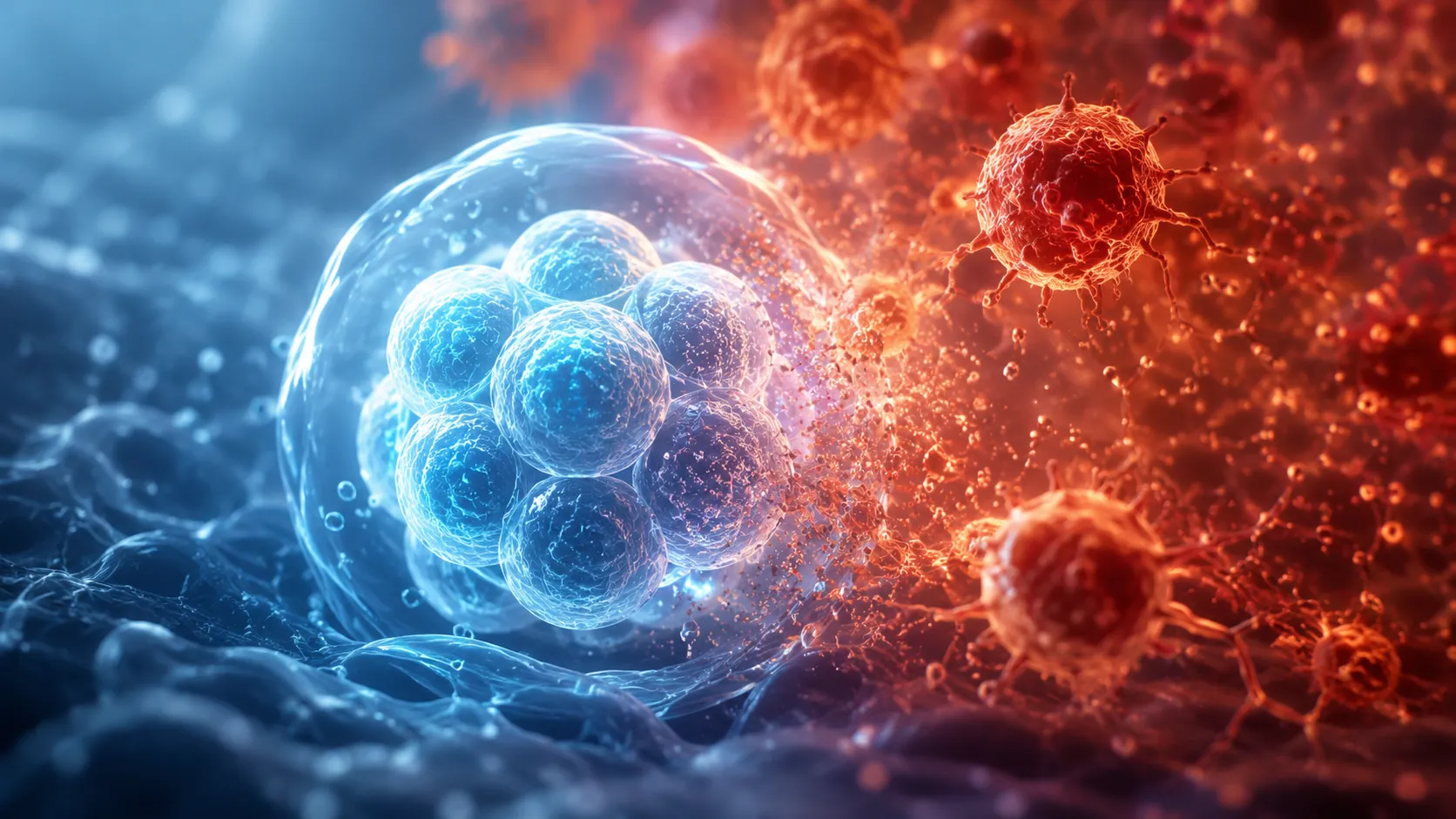

Does Fasting Improve Stem Cell Regeneration?
Does Fasting Improve Stem Cell Regeneration?
TL;DR: Research suggests that fasting — particularly longer fasts of 24 hours or more — can stimulate stem cell activity and enhance the body’s tissue repair capacity. However, most strong evidence comes from animal studies, and the practical benefits for human longevity remain uncertain.
Fasting does appear to influence stem cell function, and the evidence is more substantial than most people expect. Studies — particularly in animal models — show that caloric restriction and fasting can activate stem cells, promote cellular repair, and reduce the age-related decline in regenerative capacity. That said, translating these findings directly into human anti-ageing protocols requires caution. The mechanisms are real, but the size of the effect in humans and the optimal fasting approach are still being studied.
For context on why this matters, understanding how stem cells decline with age helps explain why researchers are interested in fasting as a potential way to slow or partially offset that decline.
How Fasting Affects Stem Cell Activity
What Happens in the Body During a Fast
When food is withheld for an extended period, the body undergoes a significant metabolic shift. Rather than prioritising growth and energy storage, it switches into a repair and maintenance state. This transition is driven by falling insulin and IGF-1 levels, rising AMPK activity, and the suppression of mTOR — a signalling pathway that, when chronically elevated, tends to favour cell growth over cell repair.
As a result, the body begins clearing out damaged cellular components through a process called autophagy. This cellular housekeeping is thought to create a more favourable environment for stem cell activation, because fewer dysfunctional cells are competing for resources and signalling space.
What Are Stem Cells and Why Does This Matter?
Stem cells are undifferentiated cells capable of developing into specialised cell types and replacing damaged tissue. They are found throughout the body — in the gut lining, bone marrow, muscle, brain, and elsewhere. Their ability to function effectively determines how well the body repairs itself after injury, recovers from illness, and maintains tissue integrity over time.
As the body ages, stem cell populations tend to shrink, and their regenerative output declines. Inflammation, oxidative stress, and metabolic dysfunction all accelerate this process. Fasting appears to counteract some of these pressures, at least in the short term, by reducing inflammatory signalling and shifting cellular resources toward repair.
What the Scientific Evidence Shows
Key Research Findings
One of the most cited studies in this area found that mice subjected to 24-hour fasting showed a marked increase in intestinal stem cell regeneration. Specifically, fasting appeared to switch stem cells from a quiescent state into an active, proliferating one — driven by a shift in energy metabolism toward fatty acid oxidation rather than glucose. This was a meaningful finding because intestinal stem cell function tends to decline with age, and fasting appeared to partially restore it.
Separately, research on hematopoietic stem cells — those responsible for producing blood and immune cells — has shown that caloric restriction and fasting can improve their function and reduce age-related exhaustion. AMPK and sirtuin pathways, both activated during fasting, appear to play a role in this process. These pathways are also linked to broader cellular maintenance and longevity mechanisms.
In addition, fasting has been shown to reduce systemic inflammation, which is itself one of the primary drivers of stem cell dysfunction in ageing tissue. By lowering inflammatory cytokines, fasting may create a cellular environment more supportive of regeneration. Learn more in our article on how inflammation impairs stem cells.
Human Evidence: More Limited
Most of the strongest findings come from animal models. Human evidence, while promising, is considerably more limited. Some clinical studies on intermittent fasting and caloric restriction have shown improvements in metabolic markers, reduced inflammation, and enhanced autophagy — all of which are consistent with a more regenerative cellular environment. However, direct measurement of stem cell activation in response to fasting in humans is technically difficult and remains an active area of research.
Current evidence supports the idea that fasting creates conditions conducive to stem cell activity, but does not yet confirm the magnitude of this effect in humans or how it translates into measurable improvements in tissue repair or longevity.
Practical Implications: What This Means for You
Fasting Protocols Worth Considering
Based on the available evidence, longer fasting periods — typically 24 hours or more — appear to have a more pronounced effect on stem cell activation than shorter overnight fasts. Intermittent fasting protocols such as 16:8 (eating within an 8-hour window) may support metabolic health and reduce inflammation over time, but are less likely to trigger the deeper regenerative shifts seen in prolonged fasting.
Periodic 24–48 hour fasts, sometimes called prolonged or extended fasting, appear most relevant to the stem cell research currently available. However, these are more demanding and are not appropriate for everyone. Anyone with a medical condition, low body weight, or history of disordered eating should consult a healthcare professional before attempting extended fasts.
Supporting Regeneration Through Nutrition
The refeeding period after a fast is also important. Evidence suggests that consuming nutrient-dense foods — particularly those rich in protein, healthy fats, and polyphenols — after a fast may support the regenerative processes initiated during it. In practice, breaking a fast with whole foods rather than processed alternatives is a reasonable approach consistent with general evidence on metabolic health and recovery.
For broader context on how lifestyle factors interact with regenerative biology, our hub page on stem cells and regenerative medicine for longevity covers the full picture. Learn more in our complete guide to longevity at longevityinsights.co.uk/what-is-longevity/.
Limitations and Important Caveats
The evidence for fasting and stem cell regeneration is genuinely interesting, but several important limitations should be acknowledged.
First, much of the direct stem cell research has been conducted in mice, and animal models do not always translate reliably to humans. Second, even where human fasting research exists, it often measures proxy markers — inflammation, autophagy, metabolic rate — rather than stem cell activity directly. Third, the optimal fasting duration, frequency, and population most likely to benefit remain unclear.
It is also worth noting that fasting is not without risk. Extended fasting can lead to muscle loss, electrolyte imbalance, and fatigue, particularly in older adults who may already have reduced muscle mass. For this group, the balance between regenerative benefit and physiological cost deserves careful consideration.
In short, fasting is a plausible and evidence-informed way to support the body’s regenerative environment — but it is not a substitute for medical treatment, nor does it compare directly with the kind of targeted stem cell activation being studied in clinical research settings.
Frequently Asked Questions
Frequently Asked Questions
Does fasting improve stem cell regeneration in humans?
Research suggests that fasting can support stem cell activity by activating cellular repair pathways, reducing inflammation, and promoting autophagy. However, most direct evidence comes from animal studies. Human evidence is consistent with these mechanisms but remains more limited and indirect. The effect appears real, but its magnitude in humans is not yet fully established.
What types of fasting are most relevant to stem cell activation?
Longer fasts — typically 24 to 72 hours — appear to have a more pronounced effect on stem cell activation based on current research, particularly for intestinal and blood-forming stem cells. Intermittent fasting protocols such as 16:8 may offer metabolic and anti-inflammatory benefits over time, but are less directly linked to the stem cell activation seen in prolonged fasting studies.
Can fasting be combined with other regenerative strategies?
Fasting can reasonably be combined with other evidence-informed practices such as regular exercise, nutrient-dense eating, and adequate sleep — all of which may independently support regenerative function. However, combining fasting with commercial regenerative therapies such as stem cell injections or exosomes is a different matter. There is no reliable evidence that fasting enhances the outcomes of such treatments, and extended fasting while undergoing medical procedures should always be discussed with a qualified healthcare professional.
Does fasting slow age-related decline in stem cells?
Animal research suggests that fasting can partially reverse age-related declines in stem cell function, particularly in the gut and blood-forming system. Whether this translates meaningfully to slower biological ageing in humans is not yet confirmed. Fasting is best understood as one factor that may support a healthier regenerative environment — not a standalone intervention for reversing ageing.
Is fasting safe for older adults who want to support regeneration?
Extended fasting carries a greater risk of muscle loss and nutritional deficiency in older adults, who may already have reduced reserves. For this group, shorter intermittent fasting windows combined with adequate protein intake may offer a more practical approach. Medical supervision is advisable before attempting fasts longer than 24 hours, particularly for anyone with existing health conditions.
References and Resources
Authoritative Sources on Fasting and Stem Cell Regeneration
-
How Fasting May Help Reverse Aging
nih.govDiscusses how caloric restriction and fasting influence cellular repair and stem cell activity, particularly in ageing populations.
-
Fasting and Stem Cell Regeneration: A Review
ncbi.nlm.nih.govA peer-reviewed overview of how fasting protocols influence stem cell biology across multiple tissue types.

-
Fasting Activates Stem Cells to Repair Tissues
sciencedaily.comCovers findings on fasting-induced stem cell activation in animal models, including intestinal stem cell regeneration.
-
Fasting and Cellular Regeneration
medicalnewstoday.comAn accessible overview of how fasting affects cellular health, autophagy, and regenerative processes.
-
Fasting and Brain Stem Cell Growth
aarp.orgExplores evidence around fasting and neural stem cells, with relevance to cognitive health and brain ageing.
-
Fasting and Cellular Rejuvenation — Nature
nature.comPeer-reviewed research on fasting-driven cellular rejuvenation via stem cell and metabolic pathways.
-
Fasting and Public Health — The Lancet
thelancet.comExamines fasting within a broader public health context, including its relevance to regenerative medicine.
Conclusion
The evidence that fasting can positively influence stem cell activity is meaningful, even if it is not yet complete. By shifting the body into a repair-oriented state, reducing inflammation, and activating pathways like AMPK and sirtuins, fasting creates conditions that appear to support stem cell function and tissue regeneration. In practice, longer periodic fasts — rather than daily intermittent fasting alone — seem most relevant to the stem cell research currently available.
That said, fasting is best understood as one component of a broader approach to supporting regenerative health, alongside exercise, sleep, and nutrition. It is not a replacement for medical care, and its effects on human stem cell activity are still being characterised. The biology is promising — but proportionate expectations matter. For those interested in longevity, fasting is a well-evidenced tool worth understanding, not a guaranteed pathway to cellular renewal.
Find out more about fasting and stem cell regeneration
Search for more resources and information: