Does Dna Repair Decline With Age?
Does DNA Repair Decline With Age?
TL;DR: Yes, DNA repair capacity does decline with age. Reduced enzyme activity, rising oxidative stress, mitochondrial dysfunction, and cellular senescence all contribute — and this accumulation of unrepaired damage is a recognised driver of biological ageing and age-related disease.
What Is DNA Repair and Why Does It Matter?
DNA repair refers to a set of cellular processes that detect and correct damage to the genome. Every day, each cell in the body sustains thousands of DNA lesions from sources including oxidative stress, UV radiation, environmental toxins, and normal metabolic activity. Without efficient repair, these lesions accumulate — driving mutations, genomic instability, and ultimately cell dysfunction or disease.
Several distinct repair pathways exist, each targeting different types of damage. Base excision repair handles small chemical modifications to individual bases. Nucleotide excision repair addresses bulkier lesions such as those caused by UV exposure. Double-strand break repair manages the most serious type of damage — breaks across both strands of the DNA helix. Together, these systems maintain genetic stability throughout life.
This repair capacity is directly relevant to longevity. Genomic instability is listed as one of the primary hallmarks of ageing, and declining DNA repair efficiency is a key mechanism behind it. As part of a broader picture of cellular decline, it also connects closely to cellular senescence — a state in which damaged cells stop dividing but remain metabolically active in ways that can harm surrounding tissue.
Does DNA Repair Decline With Age?
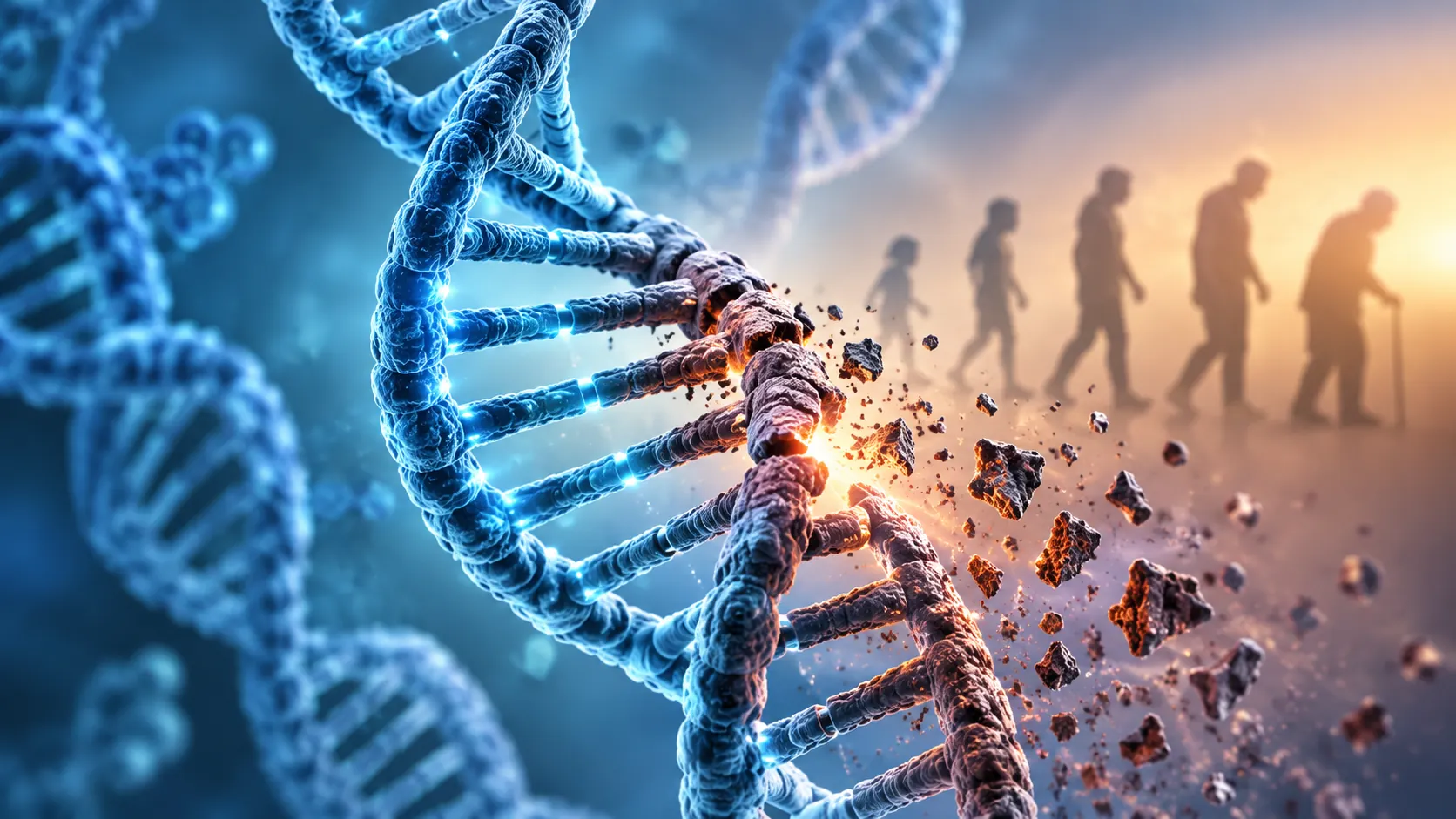
Yes — research consistently supports the conclusion that DNA repair capacity decreases with age. Studies in aged tissues show reduced expression of key repair genes, lower activity of repair enzymes, and slower resolution of DNA damage compared with younger tissue. This is not a single failure but a gradual degradation across multiple pathways.
Importantly, this decline is not uniform across all tissues. Brain tissue and skin appear particularly vulnerable, likely due to high oxidative stress exposure and relatively limited regenerative capacity. Other tissues show more moderate decline. This variation suggests that the consequences of impaired repair are tissue-specific, which helps explain why certain age-related conditions — such as neurodegeneration and skin cancer — become more prevalent with age.
As repair slows, damage that would previously have been corrected within hours can persist for longer, increasing the probability of mutations being passed on during cell division. Over decades, this contributes to the accumulation of somatic mutations, epigenetic drift, and ultimately reduced tissue function. Learn more in our complete guide to longevity.
What Drives the Decline in DNA Repair Capacity?
Several interconnected mechanisms contribute to the age-related reduction in DNA repair efficiency.
Oxidative Stress and Mitochondrial Dysfunction
As mitochondria become less efficient with age, they produce more reactive oxygen species (ROS). This rise in oxidative stress directly damages DNA and simultaneously impairs the repair machinery itself. The result is a compounding cycle: more damage occurs at the same time that the capacity to fix it is reduced. Evidence indicates that supporting mitochondrial function — through aerobic exercise, for example — may partially counteract this process, though the magnitude of benefit in humans remains under active investigation.
Telomere Shortening
Telomeres shorten with each cell division. Critically short telomeres are recognised by the cell as DNA damage and can trigger repair responses — but they also interfere with normal repair processes at other genomic sites. Research suggests that telomere dysfunction contributes to broader genomic instability, compounding the effects of declining repair enzyme activity.
Epigenetic Changes
Age-related epigenetic modifications — particularly changes in DNA methylation patterns — can suppress the expression of repair genes without altering the underlying DNA sequence. As a result, cells may produce less of the proteins required for efficient repair, even when the genes themselves remain intact. This is one reason why epigenetic clocks are considered meaningful proxies for biological age.
Cellular Senescence
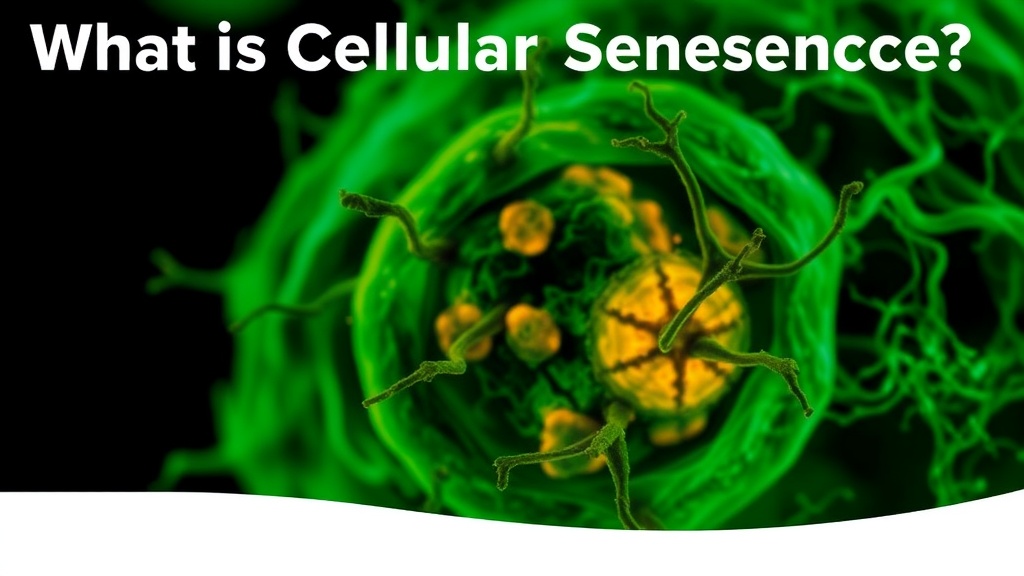
Senescent cells — cells that have permanently exited the cell cycle following damage or stress — accumulate with age and secrete a range of pro-inflammatory signals known collectively as the senescence-associated secretory phenotype (SASP). This chronic low-grade inflammation can interfere with DNA repair pathways in neighbouring cells, propagating dysfunction across tissue. Understanding what the SASP is and how it works provides useful context for why senescence and DNA repair decline are closely linked.
Genetic Variation
Inherited variation in repair genes also influences individual trajectory. Certain polymorphisms are associated with more robust or more vulnerable repair capacity, partly explaining why biological ageing rates differ between individuals even with similar lifestyles.
Can You Support DNA Repair as You Age?
While DNA repair decline cannot be fully prevented, several lifestyle factors appear to support the body’s repair systems and reduce the burden of DNA damage over time.
Exercise
Regular physical activity — particularly aerobic exercise — is consistently associated with reduced oxidative stress, lower systemic inflammation, and improved mitochondrial function. Some research suggests that exercise may upregulate the expression of certain DNA repair genes, though the clinical significance in humans is not yet fully established. That said, the broader evidence for exercise as a foundation of healthy ageing is strong and well-replicated.
Diet and Antioxidant Intake
A diet rich in antioxidant compounds — including polyphenols from berries, vegetables, and nuts, alongside adequate omega-3 fatty acids — helps reduce the oxidative load on cells. This does not directly repair DNA, but it reduces the rate at which damage occurs in the first place. In practice, a whole-food dietary pattern appears more consistently beneficial than isolated supplements at high doses, for which evidence is more mixed.
NAD+ and Metabolic Pathways
NAD+ is a cofactor required by several repair enzymes, including PARP proteins involved in single-strand break repair. NAD+ levels decline with age, and this reduction may partly impair repair capacity. Precursor supplements such as NMN and NR have attracted research interest, but human evidence remains limited and longer-term studies are still needed before strong conclusions can be drawn.
Avoiding Environmental DNA Damage
Minimising exposure to known DNA-damaging agents — including tobacco smoke, excessive UV radiation, and environmental pollutants — reduces the volume of damage the repair systems must process. This is a straightforward and evidence-supported approach to preserving repair capacity over time.
Stress Management and Sleep
Chronic psychological stress and poor sleep are associated with elevated cortisol, increased oxidative stress, and higher rates of DNA damage. Conversely, adequate restorative sleep supports cellular maintenance processes, including aspects of DNA repair that are more active during periods of low metabolic demand.
References and Resources
-
NIH: DNA Repair Genes Lose Function During Aging
nih.govExplains how repair gene expression declines in aged tissues, contributing to reduced repair capacity.
-
Nature: Age-Related Decline in DNA Repair Pathways
nature.comA review of how multiple DNA repair mechanisms weaken over time, leading to genomic instability.
-
Science Daily: Mitochondria and DNA Repair in Aging
sciencedaily.comDiscusses how mitochondrial health influences DNA repair capacity with age.
-
Aging: Cellular Senescence and DNA Repair
aging-us.comExamines how senescent cells impair DNA repair pathways and accelerate ageing processes.
-
NCBI: Oxidative Stress and DNA Damage in Aging
ncbi.nlm.nih.govProvides evidence on how oxidative stress damages DNA and challenges repair systems during ageing.
-
Trends in Cell Biology: Enhancing DNA Repair for Healthy Aging
cell.comDiscusses potential strategies to support DNA repair mechanisms as a way to promote longevity.
-
AAAS: Aging, Genome Stability, and Repair
aaas.orgExplores how genome instability caused by declining repair contributes to ageing and disease.

-
Experimental Cell Research — Journal
elsevier.comContains peer-reviewed studies on cellular ageing and DNA repair mechanisms.
FAQ
Does DNA repair actually decline with age?
Yes. Research consistently shows that DNA repair capacity decreases with age. Reduced repair enzyme activity, increased oxidative stress, epigenetic silencing of repair genes, and the accumulation of senescent cells all contribute to this decline. As a result, unrepaired DNA damage accumulates over time — a recognised driver of biological ageing and age-related disease.
What causes the decline in DNA repair mechanisms as we age?
Multiple factors are involved. Oxidative stress from declining mitochondrial efficiency damages DNA while simultaneously impairing repair enzymes. Telomere shortening interferes with normal repair signalling. Epigenetic changes suppress the expression of repair genes. Cellular senescence increases systemic inflammation, which further disrupts repair in surrounding tissue. Genetic predisposition also influences how quickly individual repair capacity declines.
Can lifestyle changes affect the rate of DNA repair decline?
Evidence suggests that lifestyle does influence the rate and severity of this decline. Regular aerobic exercise, a diet rich in antioxidants, adequate sleep, stress management, and avoiding known DNA-damaging exposures such as tobacco smoke all help reduce the burden on repair systems. These measures cannot prevent decline entirely, but they can meaningfully reduce the pace of genomic damage accumulation over time.
Are there therapies that can slow or reverse DNA repair decline?
Some areas of research are promising — including NAD+ precursor supplementation, which targets a cofactor required by certain repair enzymes, and senolytic strategies aimed at reducing the inflammatory burden caused by senescent cells. However, human evidence for most of these approaches remains limited. At present, well-established lifestyle foundations — exercise, sleep, nutrition, and metabolic health — represent the most evidence-supported way to preserve repair capacity and support healthy ageing.
Conclusion
DNA repair capacity does decline with age, and this decline is a meaningful contributor to genomic instability, cellular dysfunction, and the development of age-related disease. The process is driven by multiple interacting mechanisms — rising oxidative stress, mitochondrial dysfunction, epigenetic silencing, telomere attrition, and the inflammatory effects of cellular senescence.
Importantly, this decline is not entirely inevitable in its pace or severity. Evidence supports the value of regular exercise, a whole-food diet, consistent sleep, and reduced exposure to environmental DNA-damaging agents as practical ways to reduce the burden on repair systems over time. Emerging areas such as NAD+ biology and senescence-targeted interventions are scientifically interesting, but human evidence remains early-stage.
Understanding why DNA repair declines with age is a useful entry point into the broader biology of ageing — and a reminder that many of the same lifestyle foundations that support cardiovascular health, metabolic function, and muscle maintenance also support cellular resilience at the genomic level.
Find out more information about “DNA Repair Decline With Age”
Search for more resources and information: