Does Bean Consumption Increase Longevity?
TL;DR: Regular bean consumption is consistently associated with lower rates of chronic disease and reduced mortality risk across multiple large population studies. While beans are unlikely to be a standalone longevity solution, the evidence supports including them as a regular part of a diet focused on healthy aging.
Do Beans Increase Longevity?
The evidence suggests yes — at the population level, higher bean and legume consumption is associated with lower mortality risk and reduced rates of major chronic diseases. This association appears across diverse dietary cultures and population studies, making beans one of the more consistently supported plant foods in longevity research.
That said, beans are not a magic food. The most accurate framing is that they form a valuable part of a broader dietary pattern — such as a Mediterranean or plant-forward diet — that is associated with healthier aging. Their benefits work through several overlapping mechanisms, including effects on inflammation, blood sugar regulation, cardiovascular risk, and gut health.
Learn more in our complete guide to longevity.
Why Beans Are Associated With Healthy Aging
The Link Between Legumes and Lower Mortality
One of the most cited findings in nutritional epidemiology is the role of legumes — including beans, lentils, and chickpeas — in populations with exceptional longevity. Observational research from Blue Zones regions, Mediterranean cohorts, and large prospective studies consistently finds that frequent legume consumption tracks with lower all-cause mortality.
In particular, research suggests that habitual bean intake is associated with reduced cardiovascular disease risk, lower rates of type 2 diabetes, and improved metabolic markers — all of which directly affect lifespan and healthspan. Importantly, this pattern holds across cultures with very different dietary backgrounds, suggesting a broadly applicable effect rather than a population-specific one.
How Beans May Slow Biological Aging
Chronic inflammation is one of the primary drivers of accelerated aging, and beans appear to help moderate it. Their phytonutrient content — including flavonoids and other polyphenols — contributes antioxidant and anti-inflammatory activity. As a result, regular legume intake may help reduce the low-grade, persistent inflammation that underlies conditions such as atherosclerosis, insulin resistance, and neurodegeneration.
Beans also support gut microbiome diversity through their high fermentable fibre content. A more diverse and healthy microbiome is increasingly linked to better immune regulation, reduced systemic inflammation, and improved metabolic function — all relevant to aging. For more on how specific food groups interact with longevity pathways, see our hub on advanced diet and longevity.
Key Nutrients in Beans That Support Longevity
A Nutritionally Dense, Low-Cost Food
Beans provide a combination of nutrients that are each independently relevant to healthy aging:
- Soluble fibre — supports glycaemic control, lowers LDL cholesterol, and feeds beneficial gut bacteria
- Plant protein — contributes to lean mass preservation without the saturated fat load of some animal sources
- Magnesium and potassium — support cardiovascular and muscular function
- Folate — important for DNA repair and cellular maintenance
- Iron and zinc — contribute to immune resilience
- Flavonoids and saponins — phytonutrients with demonstrated anti-inflammatory and potentially anti-cancer properties in laboratory models
Importantly, this nutrient profile is also low in glycaemic load. Beans have a relatively low glycaemic index compared to refined carbohydrates, meaning they raise blood sugar more slowly — a characteristic that supports insulin sensitivity and metabolic health over time. This contrasts with refined carbohydrate intake, which is associated with poorer metabolic outcomes. You can read more in our article on whether refined carbohydrate intake increases mortality.
How Beans Affect Cardiovascular Risk
Cardiovascular disease remains one of the leading contributors to premature mortality globally. Evidence indicates that beans support cardiovascular health through multiple pathways: soluble fibre binds cholesterol in the gut and reduces its absorption; potassium supports healthy blood pressure; and the low saturated fat content of legume-rich diets helps maintain a more favourable lipid profile overall. In combination, these effects translate into meaningful reductions in cardiovascular risk at the population level.
What the Research Actually Shows
Population Studies and Cohort Evidence
The strongest evidence linking bean consumption to longevity comes from large epidemiological studies and dietary pattern research. A frequently referenced analysis of food intake across five populations found that legume consumption was the single most consistent dietary predictor of survival in elderly populations — outperforming other food categories in that dataset. Other large cohort studies have found that plant-based dietary patterns featuring legumes prominently are associated with lower all-cause and cardiovascular mortality.
Mediterranean diet research — which consistently shows reduced mortality risk — features legumes as a core component, alongside olive oil, fish, whole grains, and vegetables. However, it is important to note that isolating the individual effect of beans from the rest of a dietary pattern is methodologically difficult in observational research. Most evidence points to beans as part of a broader protective dietary pattern rather than as a single isolated intervention.
Where the Evidence Is More Limited
As with most nutritional research, the evidence base is primarily observational. Randomised controlled trials on bean intake and mortality are limited in scope and duration. Clinical trials do support specific effects — such as improvements in LDL cholesterol, fasting glucose, and blood pressure — but demonstrating a direct causal effect on lifespan in humans is not yet possible from current data alone.
Additionally, the magnitude of benefit appears to be dose-dependent and context-dependent. Populations already eating a largely plant-based diet may see different incremental gains compared to those transitioning from a heavily processed-food diet. Overall, the evidence is encouraging and consistent, but should be interpreted as part of a broader dietary picture rather than as proof that beans alone extend lifespan.
Practical Ways to Eat More Beans
Making Beans a Regular Part of the Diet
The practical case for beans is straightforward. They are inexpensive, shelf-stable, widely available, and highly versatile. For most people, the barrier is habit rather than access. A few simple approaches can make frequent bean consumption easier:
- Cook a large batch of dried or tinned beans at the start of the week and use them across multiple meals
- Add beans to soups, salads, stews, grain bowls, and curries without overhauling entire meals
- Use bean-based dips (such as hummus) as an alternative to processed snacks
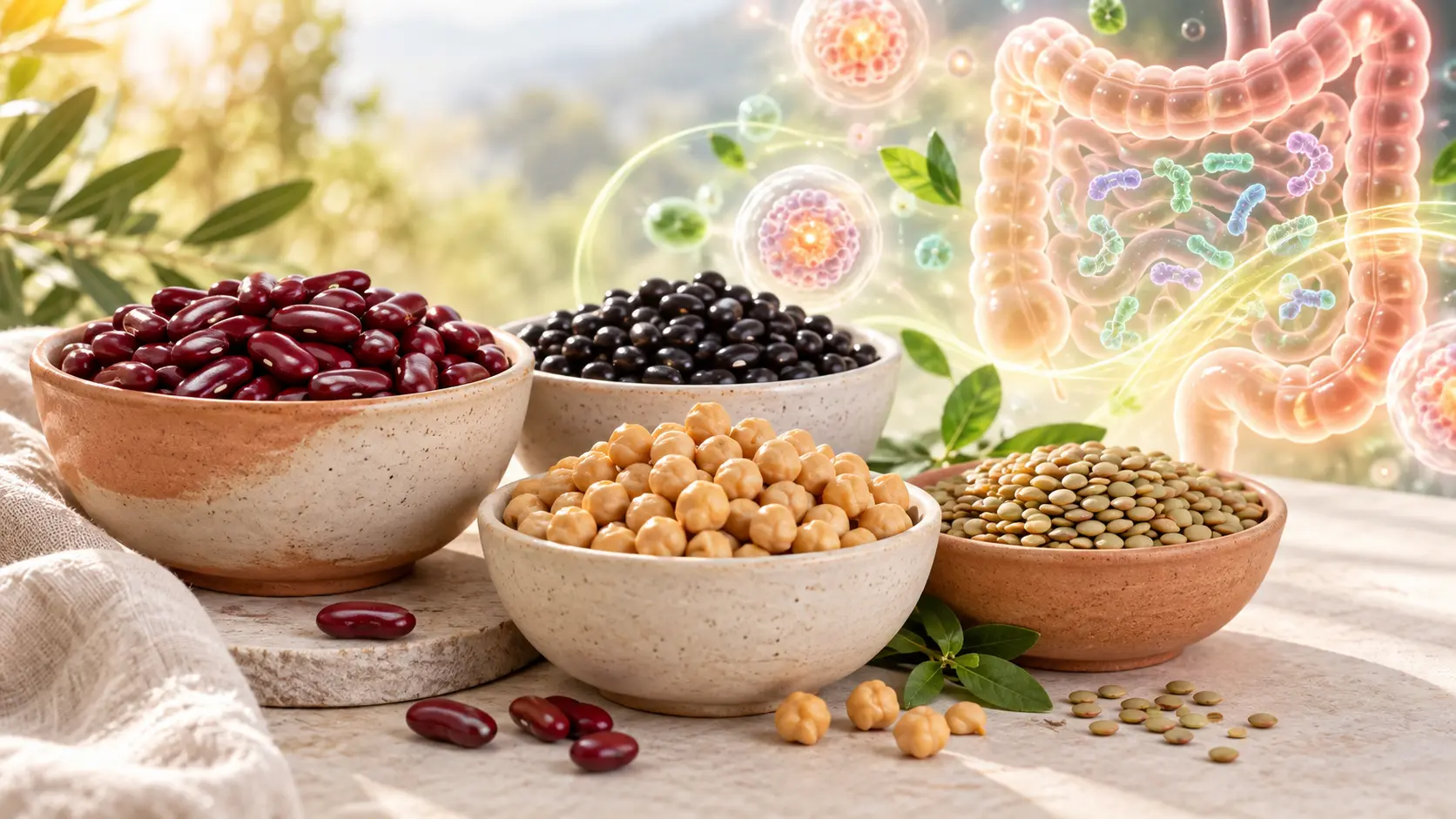
- Experiment with different varieties — black beans, lentils, chickpeas, kidney beans, cannellini — to broaden nutrient diversity
Preparation and Digestibility
Some people experience digestive discomfort when increasing bean intake. In practice, this can often be managed by soaking dried beans overnight before cooking, rinsing tinned beans thoroughly, and increasing intake gradually rather than all at once. Cooking beans fully also improves digestibility and reduces compounds that can cause bloating in sensitive individuals. Over time, the gut microbiome typically adapts to higher fibre intake, and tolerance improves.
Combining beans with whole grains, vegetables, and healthy fats — as in a Mediterranean-style meal structure — creates a nutritionally complete pattern that aligns well with the broader evidence base for longevity-oriented eating. This kind of dietary pattern, rather than any single food or nutrient, represents the most practical and evidence-supported approach to diet and healthy aging.
References and Resources
Authoritative Sources on Bean Consumption and Longevity
-
WHO Diet and Physical Activity Guidelines
who.intExplains how plant-based foods including legumes contribute to healthy aging and reduced chronic disease burden globally.
-
Nutrition Data: Legumes
nutritiondata.self.comProvides detailed nutrient profiles of common beans and legumes, supporting their role in longevity-oriented dietary patterns.
-
Dietary Patterns and Longevity — JAMA Internal Medicine
jamanetwork.comResearch examining how plant-based dietary patterns, including regular legume consumption, are associated with reduced mortality risk.
-
Anti-Inflammatory Effects of Legumes — PubMed
pubmed.ncbi.nlm.nih.govReviews how antioxidants and phytonutrients in beans contribute to reduced inflammation and potential longevity benefits.
Frequently Asked Questions
Does bean consumption increase longevity?
The evidence suggests it can contribute to longer, healthier aging. Regular bean consumption is consistently associated with lower rates of cardiovascular disease, type 2 diabetes, and all-cause mortality across large population studies. However, beans are most effective as part of a broader dietary pattern — such as a Mediterranean-style diet — rather than in isolation.

What types of beans are best for longevity?
All beans and legumes appear to be beneficial, and variety is generally more important than selecting a single type. Black beans, chickpeas, lentils, kidney beans, and cannellini beans are all well-studied and widely available. Different varieties provide slightly different phytonutrient profiles, so eating a range of legumes over the course of the week is a practical approach.
How much beans should I eat to see health benefits?
While individual needs vary, research from Blue Zones and Mediterranean diet studies suggests that eating beans several times per week — roughly three to four servings — is associated with meaningful health benefits. Consistency over time matters more than precise portion sizes. Gradually increasing intake allows the gut microbiome to adapt and reduces digestive discomfort.
Can beans help prevent age-related diseases?
Evidence supports a protective effect against several major age-related conditions. High fibre and antioxidant content are associated with reduced cardiovascular risk, improved glycaemic control, and lower rates of certain cancers in observational research. These effects collectively contribute to healthier aging, though beans should be seen as one component of a broader prevention strategy rather than a standalone remedy.
Conclusion
The evidence supporting bean consumption as part of a longevity-oriented diet is consistent and spans multiple populations, dietary cultures, and study designs. Beans provide a combination of fibre, plant protein, micronutrients, and anti-inflammatory phytonutrients that collectively support cardiovascular health, metabolic function, and reduced chronic disease risk — all of which are directly relevant to healthy aging.
That said, beans are best understood as a key component of a broader dietary pattern rather than a single solution. A Mediterranean-style diet rich in legumes, whole grains, vegetables, olive oil, and fish represents the most evidence-supported overall pattern for diet and longevity. Within that framework, beans earn their place as a particularly well-studied, consistently beneficial food group.
Find out more information about bean consumption and longevity
Search for more resources and information: