
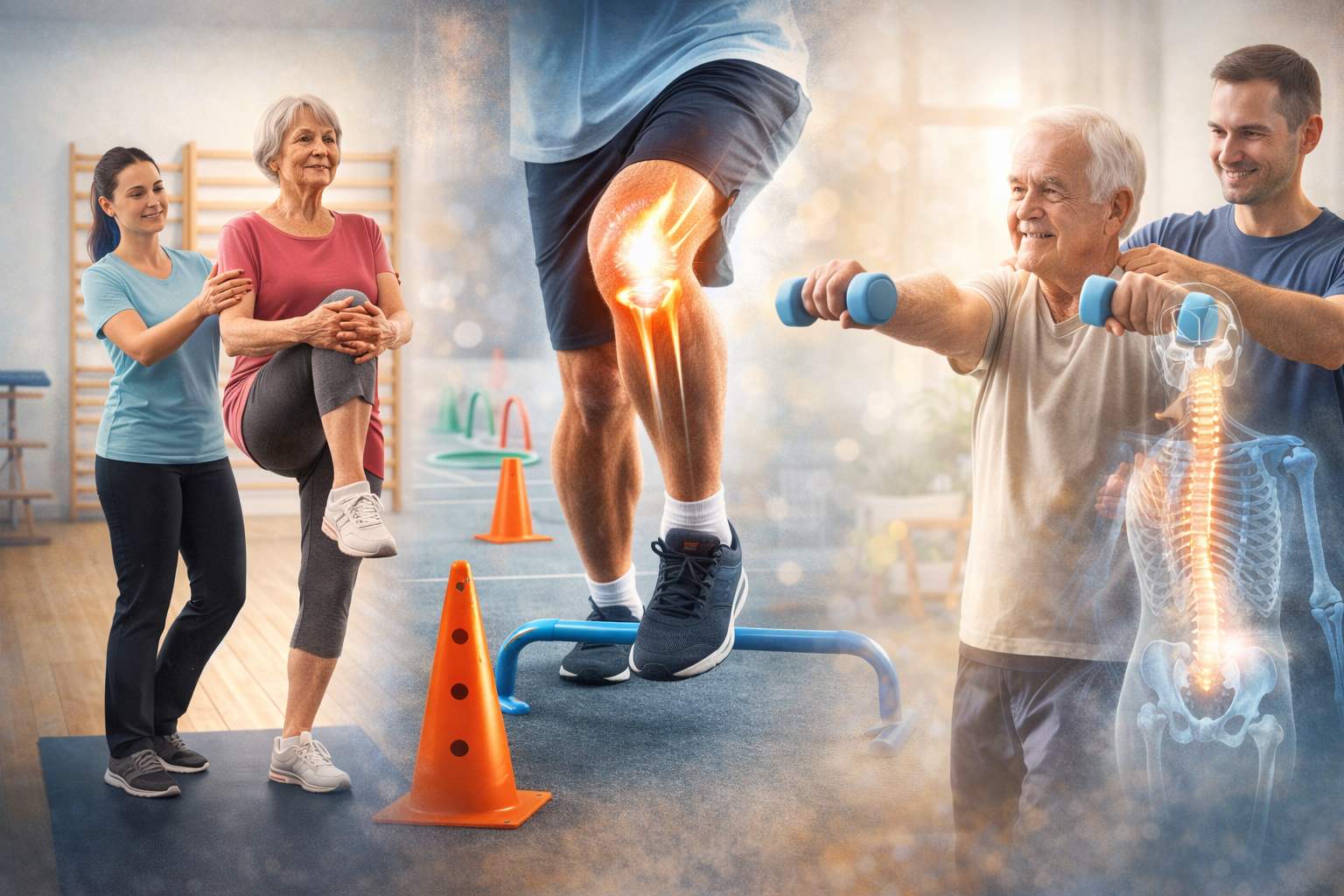
What Exercises Prevent Falls in Older Adults?
Understanding Why Falls Happen and How Exercises Prevent Falls in Older Adults
TL;DR: The best exercises to prevent falls in older adults combine balance training, leg and core strength work, flexibility, and regular walking or other endurance activity. Research suggests these exercises improve stability, reaction time, and confidence, which lowers fall risk and supports healthy aging.
Exercises prevent falls in older adults by improving balance, leg strength, coordination, mobility, and confidence in movement. Falls usually happen because several systems decline at once, including muscle strength, reaction time, balance control, joint mobility, and endurance, so the most effective exercise plan targets all of them rather than relying on one type of workout alone.
That is why fall prevention is not just about “being more careful.” It is about building physical resilience. Evidence indicates that well-designed exercise programs can reduce fall risk, improve healthspan, and help older adults stay independent for longer. Learn more in our complete guide to longevity.
In practical terms, the most useful fall-prevention exercises are balance drills, lower-body and core strengthening, flexibility work, and regular low-impact endurance training. When done consistently, these habits can make everyday movement safer, steadier, and less tiring.
Key Exercises That Prevent Falls in Older Adults
The most effective exercises for fall prevention usually fall into four categories: balance, strength, flexibility, and endurance. Each one addresses a different part of fall risk, and together they provide a more complete defense against instability and injury.
Why Balance Exercises Are Essential
Balance exercises are central because they train the body to stay upright and recover quickly after a slip, trip, or sudden shift in direction. Research suggests that balance training improves proprioception, posture control, ankle stability, and reaction time, all of which matter when navigating stairs, curbs, uneven ground, or crowded spaces.
Simple exercises can be highly effective. Standing on one leg while holding a chair, heel-to-toe walking, side stepping, shifting weight from one foot to the other, and gentle tai chi movements can all improve stability. These exercises are especially useful because they mimic the small adjustments the body makes during real-life movement.
Tai chi and yoga are also helpful for many older adults because they combine slow, controlled movement with body awareness. This improves balance while also supporting coordination, flexibility, and confidence.
Strength Training for Fall Prevention
Strength training matters because weak muscles make it harder to recover from a stumble or stabilize the body quickly. Lower-body weakness, especially in the thighs, hips, calves, and glutes, is strongly linked to poor mobility and increased fall risk.
Useful exercises include chair stands, supported squats, calf raises, step-ups, seated leg extensions, and resistance band work for the hips and legs. Core exercises are also important because trunk strength supports posture, transfers, and balance.
Resistance training does not need to be intense to be effective. Bodyweight movements, light dumbbells, resistance bands, or supervised machine exercises can all help build the muscle needed for safer movement and better endurance.
Flexibility and Endurance Exercises
Flexibility supports safer movement by improving joint range of motion and reducing stiffness. Tight calves, hips, hamstrings, and ankles can limit walking mechanics and increase the chance of a misstep. Gentle stretching, mobility work, and yoga can help maintain smoother, more stable movement patterns.
Endurance exercise also plays a role because fatigue increases fall risk. When older adults become tired more quickly, posture, coordination, and attention can decline. Walking, cycling, water exercise, and other low-impact activities help improve stamina so everyday tasks feel easier and safer.
Balance and Strength Training Exercises
Balance and strength training are often the most important parts of a fall-prevention program because they directly improve stability, recovery ability, and confidence in movement. These exercises do not need to be complicated, but they do need to be practiced regularly.
Simple Balance Exercises to Start With
Good beginner balance exercises include standing with feet close together, standing on one foot while lightly holding a chair, heel-to-toe walking, and marching in place. These drills challenge stability without requiring special equipment.
As balance improves, the difficulty can increase gradually by reducing hand support, extending the time spent on one leg, or practicing gentle directional changes. Progression matters because the nervous system adapts when balance is challenged at an appropriate level.
Safety comes first. A sturdy chair, countertop, or wall should always be nearby, especially at the beginning or if there is a history of falls.
Strengthening Core and Leg Muscles
Core and leg strength help older adults rise from chairs, climb stairs, stabilize during walking, and recover from small losses of balance. Exercises such as sit-to-stands, bridges, wall sits, supported lunges, mini-squats, and step-ups are practical ways to build this strength.
Calf strength also matters because the ankles are often the first line of defense when balance is challenged. Calf raises and ankle strengthening drills can therefore be surprisingly useful in fall prevention.
Research suggests that strength training is especially effective when it focuses on functional movements rather than isolated muscle work alone. Exercises that resemble everyday tasks tend to translate best into real-world safety.
Incorporating Flexibility and Endurance for Fall Prevention
Fall prevention works best when balance and strength training are supported by mobility and endurance work. Flexible joints and better stamina make movement more efficient, reduce fatigue, and allow the body to respond more effectively during daily activities.
Flexibility Routines That Help
Useful stretches often target the calves, hamstrings, hips, chest, and shoulders. These areas affect walking mechanics, posture, and the ability to recover from imbalance. Gentle stretching after a walk or strength session can improve comfort and mobility over time.
Mobility drills such as ankle circles, hip openers, seated spinal rotation, and gentle shoulder movements can also help maintain movement quality. This is especially valuable for older adults with stiffness or arthritis.
Endurance Activities That Support Fall Prevention
Walking is one of the most accessible endurance exercises for older adults. Done regularly, it improves cardiovascular fitness, supports metabolism, and helps maintain mobility. Brisk walking, when appropriate, can also improve walking speed and functional capacity.
Other helpful options include stationary cycling, swimming, water aerobics, or low-impact group fitness classes. The goal is not athletic performance. It is to build enough endurance so daily life causes less fatigue and less fatigue means better balance and lower fall risk.
Practical Guidance for Building a Fall-Prevention Routine
The most effective routine is one that is safe, regular, and realistic enough to continue. A fall-prevention plan does not need to be long or complex, but it should include more than one type of exercise.
A practical weekly structure might include balance drills most days, strength training two or three times per week, stretching several times per week, and regular walking or another endurance activity. This balanced approach helps cover the main physical causes of falling.
Older adults with joint pain, frailty, dizziness, recent falls, or medical conditions may benefit from working with a physiotherapist, exercise professional, or healthcare provider. A tailored program is often safer and more effective than trying random exercises without guidance.
Consistency matters more than intensity. Small sessions done regularly usually provide more benefit than occasional hard workouts. Progress can also be tracked through simple markers such as getting out of a chair more easily, walking with more confidence, or feeling steadier on stairs.
References and Resources
These resources offer useful information on Exercises Prevent Falls in Older Adults, including practical exercise guidance, balance training, strength work, and healthy aging strategies.
Authoritative Sources on Exercises Prevent Falls in Older Adults
-
CDC – Physical Activity for Older Adults
cdc.govEvidence-based guidance on physical activity, strength, balance, and movement for older adults.
-
NCOA – Physical Activity and Falls
ncoa.orgPractical advice on exercise routines designed to reduce fall risk and preserve independence.
-
WHO – Older Persons
who.intGlobal context on healthy aging, mobility, and physical activity in older adults.
-
Arthritis Foundation – Exercise Tips
arthritis.orgExercise recommendations that can help with mobility, joint comfort, and fall prevention.
-
Harvard Health – Fall Prevention Exercises
health.harvard.eduA useful overview of balance, strength, and mobility exercises linked with lower fall risk.
-
Mayo Clinic – Balance Exercises
mayoclinic.orgBeginner-friendly balance exercises and practical safety advice for fall prevention.
-
NIA – Exercise and Falls Prevention
nia.nih.govResearch-based information on how exercise reduces falls and supports healthy aging.
-
American Heart Association – Fall Prevention
heart.orgExplains how regular movement supports balance, strength, endurance, and overall health.
Frequently Asked Questions
What specific exercises are most effective in preventing falls in older adults?
The most effective exercises usually combine balance work, leg and core strengthening, flexibility, and walking or other endurance activity. Good examples include one-leg stands with support, heel-to-toe walking, chair stands, calf raises, step-ups, tai chi, and gentle stretching.
Programs work best when they train several abilities at once rather than focusing on only one area.
Are there any specific exercises I should avoid to prevent falls?
Exercises that are too complex, too unstable, or too intense for current ability can increase risk. High-impact drills, fast twisting movements, or unsupported balance work may not be appropriate for someone with poor stability, severe joint pain, or a recent fall history.
Older adults with medical issues or mobility limitations should use a tailored program and seek professional advice when needed.
How often should I do these exercises to see benefits?
Research and clinical practice suggest that balance and mobility exercises are most helpful when done regularly, often several times per week. Strength training is commonly included two or three times weekly, while walking and other low-impact activity can be done more often.
Short, consistent sessions usually work better than occasional long sessions.
Can I do these exercises if I have mobility issues or joint pain?
Yes, many fall-prevention exercises can be adapted. Seated exercises, supported standing drills, water exercise, and gentle mobility work are often suitable for older adults with arthritis, pain, or limited mobility.
The safest approach is to match the routine to current ability and progress gradually.
Conclusion
The best exercises to prevent falls in older adults are those that improve balance, build leg and core strength, maintain flexibility, and support endurance. Falls are rarely caused by one issue alone, so the most effective prevention plan uses a combination of training methods rather than relying on one exercise type.
Research suggests that regular, targeted exercise can reduce fall risk, improve confidence, and support independence with age. A simple routine that includes balance practice, functional strength work, mobility, and walking can make a meaningful difference in long-term safety and quality of life.

Find out more information about “Exercises Prevent Falls in Older Adults”
Search for more resources and information: