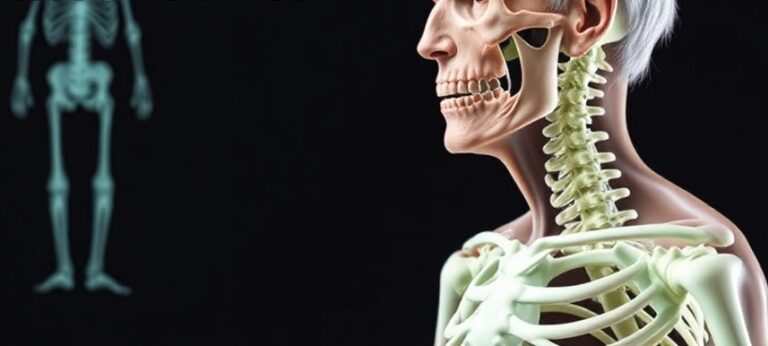
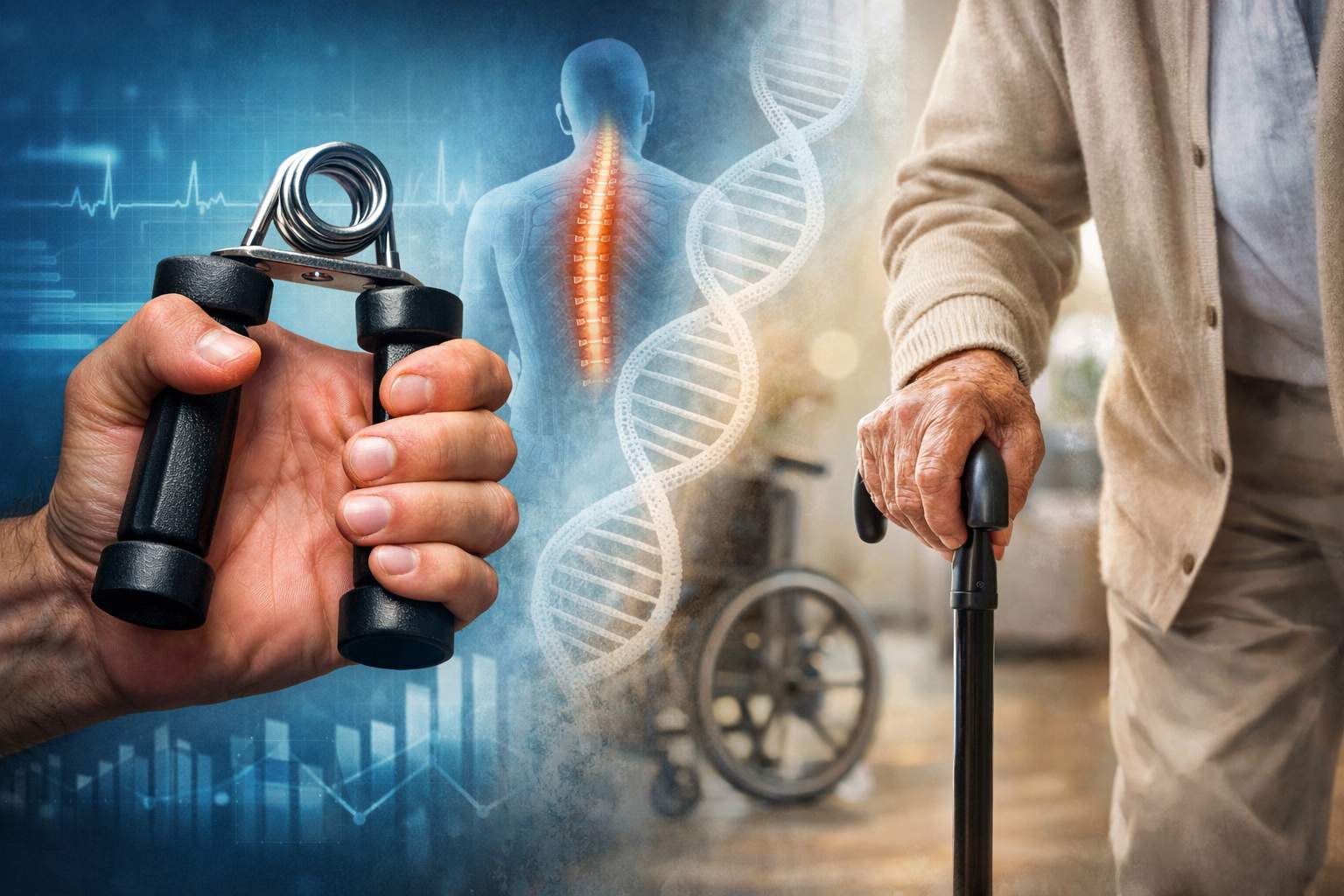
Does Grip Strength Predict Frailty?
Introduction
TL;DR: Yes, grip strength can help predict frailty because weaker grip strength is consistently linked with lower muscle function, poorer resilience, and higher risk of health decline. It is not a standalone diagnosis, but it is a simple and useful screening tool when combined with other assessments.
Yes, grip strength can predict frailty to a meaningful extent. Research suggests that lower grip strength is associated with weaker muscle function, reduced mobility, poorer recovery from stressors, and a higher likelihood of becoming frail with age.
This matters because frailty often develops gradually and may not be obvious at first. A simple grip strength test can help identify risk earlier, making it easier to intervene with exercise, nutrition, and broader health support before independence declines. Learn more in our complete guide to longevity.
Understanding the Connection Between Grip Strength and Frailty
What Is Frailty and Why Does It Matter?
Frailty is a clinical syndrome marked by reduced strength, lower physiological reserve, slower recovery, and greater vulnerability to illness, injury, and other stressors. It increases the risk of falls, hospitalization, disability, and loss of independence.
Frailty matters because it reflects more than normal aging. It suggests that multiple body systems are becoming less resilient at the same time. Identifying frailty early is useful because targeted lifestyle and medical interventions may slow progression and improve healthspan.
How Does Grip Strength Reflect Overall Health?
Grip strength is not just a measure of hand function. It is often used as a practical marker of overall muscle strength, neuromuscular health, and physical resilience. Lower grip strength is frequently associated with lower muscle mass, poor nutrition, inactivity, chronic disease, and declining functional capacity.
Because the test is quick, inexpensive, and easy to repeat, it has become a common way to screen for broader physical decline. In many cases, weak grip strength reflects the same underlying processes that contribute to frailty, including sarcopenia, reduced mobility, and impaired recovery capacity.
Why Grip Strength Helps Predict Frailty
Grip strength helps predict frailty because frailty is strongly tied to declining physical capacity. When grip strength is low, it often signals a wider loss of strength and resilience across the body. Evidence indicates that weaker grip strength is linked with higher frailty scores, poorer daily functioning, and worse long-term outcomes.
That does not mean every person with low grip strength is frail. However, it does mean grip strength is a useful early warning sign. In clinical settings and aging research, it is valued because it captures a meaningful part of physical decline in a simple measurement.
How Grip Strength Predicts Frailty: What the Research Shows
Scientific Evidence Supporting Grip Strength as a Predictor
A large body of research supports the use of grip strength as a frailty indicator. Longitudinal studies suggest that people with lower grip strength are more likely to become frail over time and more likely to experience disability, hospitalization, and mortality.
Grip strength is also widely used in aging research because it correlates with other measures of biological aging and physical decline. Evidence indicates that weaker grip strength can identify people at higher risk even before severe symptoms of frailty are obvious in daily life.
What Experts Say About Grip Strength and Frailty
Many frailty frameworks include grip strength as a core measure. The Fried Frailty Phenotype, one of the best-known models, uses weakness measured by grip strength as one of its main criteria. This reflects the view that reduced strength is central to frailty rather than incidental to it.
Clinicians and geriatric specialists often use grip strength because it offers a fast and practical assessment of physical reserve. It is especially useful in older adults, but it may also provide helpful insight earlier in life when changes in muscle function begin to appear.
How Reliable Is Grip Strength as a Predictor?
Grip strength is a strong predictor, but it is not perfect on its own. Hand arthritis, pain, neurological conditions, injury, or poor testing technique can all affect results. For that reason, grip strength works best when interpreted alongside other factors such as gait speed, weight loss, exhaustion, physical activity, and nutritional status.
Used in context, it becomes far more informative. A low reading combined with slow walking speed, reduced activity, and unintentional weight loss is much more concerning than a low reading in isolation.
Practical Implications: Using Grip Strength as a Frailty Indicator
How Can Grip Strength Be Measured Effectively?
The most common way to measure grip strength is with a handheld dynamometer. The test is quick and simple, but technique matters. The person is usually seated, with the elbow bent at about 90 degrees, and asked to squeeze as hard as possible for a few seconds. Multiple attempts may be taken and the best score recorded.
Consistent testing conditions are important for tracking changes over time. A reliable baseline makes it easier to notice whether strength is stable, improving, or declining. This is especially useful in midlife and older age, when early changes may inform prevention strategies.
Can Improving Grip Strength Help Reduce Frailty Risk?
Improving grip strength may not automatically reverse frailty, but it often reflects broader improvements in muscle function and physical resilience. Resistance training, adequate protein intake, and regular physical activity can improve strength, and research suggests these same measures can help reduce frailty risk.
Grip-specific exercises can help, but the larger goal is whole-body strength and function. Frailty prevention is more likely when grip strength improves as part of a broader program that includes lower-body strength, balance, endurance, nutrition, and recovery.
Who Should Monitor Grip Strength?
Grip strength can be useful for clinicians, physiotherapists, caregivers, and adults who want a practical way to track physical function over time. It is particularly relevant for older adults, people recovering from illness, and those at risk of sarcopenia, inactivity, or chronic disease.
Monitoring is most helpful when it leads to action. A declining score may be a prompt to review exercise habits, nutrition, mobility, medical conditions, or other factors affecting resilience and healthy aging.
How Grip Strength Can Be Used in Daily Practice
In practice, grip strength is best viewed as a screening tool rather than a final diagnosis. It can flag people who may benefit from a fuller frailty assessment or early intervention. This makes it useful in primary care, geriatric medicine, rehabilitation, and preventive health settings.
Because the test is simple and repeatable, it is also useful for monitoring progress. Strength gains after training, rehabilitation, or improved nutrition can be encouraging signs that resilience is improving.
Limitations and Considerations in Predicting Frailty
Are There Populations Where Grip Strength Is Less Predictive?
Yes. Grip strength may be less informative in people with hand pain, arthritis, upper-limb injury, stroke, or neurological disorders that affect hand function directly. In these cases, a low score may not reflect whole-body frailty as accurately.
That is why broader assessment matters. If grip strength seems inconsistent with the person’s general function, it should be interpreted carefully rather than taken at face value.
What About Lifestyle and Social Factors?
Grip strength is shaped by more than aging alone. Physical activity, occupation, nutrition, chronic disease burden, body size, and socioeconomic factors can all influence results. These factors also affect frailty risk independently, so context is essential.
A holistic view improves interpretation. A low grip score in someone with inactivity, poor diet, weight loss, and chronic illness is more meaningful than the same score in someone with temporary hand pain and otherwise good function.
Is Grip Strength a Standalone Indicator?
No. Grip strength is valuable, but frailty is a multidimensional condition. The most accurate assessments combine grip strength with measures such as gait speed, physical activity, body weight changes, fatigue, cognition, and medical history.
In other words, grip strength is a strong piece of the puzzle, but not the whole picture. Its value comes from being simple, practical, and informative when used in the right context.
References and Resources
Throughout research on Grip Strength Predict Frailty, these resources are useful for answering questions like ‘Does Grip Strength Predict Frailty?’.
Authoritative Sources on Grip Strength Predict Frailty
- NIH News on Hand Grip Strength and Mortality
nih.gov
Discusses why grip strength is an important marker of physical decline and adverse outcomes in aging populations.
- The Role of Grip Strength in Frailty Assessment
ncbi.nlm.nih.gov
A review of how grip strength can be integrated into frailty screening and broader geriatric assessment.
- American Geriatrics Society
aging.us
Provides information and guidance related to aging, frailty, and functional assessment.
- WHO Aging and Health
who.int
Offers broader context on aging, healthy function, and the importance of physical capacity measures.
- Journal of Gerontology
elsevier.com
Contains peer-reviewed research on aging, frailty, muscle strength, and functional decline.
- Geriatric Research Society
geriatricresearch.org
Offers resources on frailty assessment and aging-related health research.
- Nature Scientific Reports
nature.com
Includes research on muscle strength, physical function, and their role in predicting frailty-related outcomes.

Frequently Asked Questions
Frequently Asked Questions
Does Grip Strength Predict Frailty in older adults?
Yes. Lower grip strength is consistently associated with higher frailty risk in older adults, which is why it is often used in clinical and research assessments of aging and physical decline.
Can improving grip strength help prevent frailty?
Improving grip strength can support frailty prevention, especially when it reflects broader gains in muscle strength, physical activity, and function. It is most useful as part of a wider strength and healthy aging strategy.
Is Grip Strength Predict Frailty reliable as a standalone test?
Not entirely. Grip strength is useful, but it works best alongside other measures such as gait speed, weight change, exhaustion, and physical activity levels.
What factors can influence grip strength besides frailty?
Grip strength can be affected by arthritis, hand injury, neurological conditions, pain, inactivity, and poor nutrition. These factors should be considered before interpreting a low result as evidence of frailty.
How early can grip strength indicate future frailty?
Grip strength may decline before obvious frailty develops, which makes it a useful early warning sign. Regular monitoring can help identify changes in physical resilience before more serious impairment appears.
Conclusion
Grip strength is a practical and meaningful predictor of frailty. It does not diagnose frailty on its own, but it offers a simple way to identify lower physical resilience and possible early decline.
Its greatest value lies in early detection. When weak grip strength is identified in context and followed by action, it can help guide exercise, nutrition, and broader prevention strategies that support independence, function, and healthy aging.
Find out more information about “Grip Strength Predict Frailty”
Search for more resources and information: