How Do Stem Cells Decline With Age?
TL;DR: Yes, stem cells decline in both number and function as we age, driven by DNA damage, cellular senescence, and a deteriorating stem cell environment. This decline slows tissue repair and increases disease risk, but certain lifestyle factors — including exercise and nutrition — may help preserve stem cell function over time.
Do Stem Cells Decline With Age?
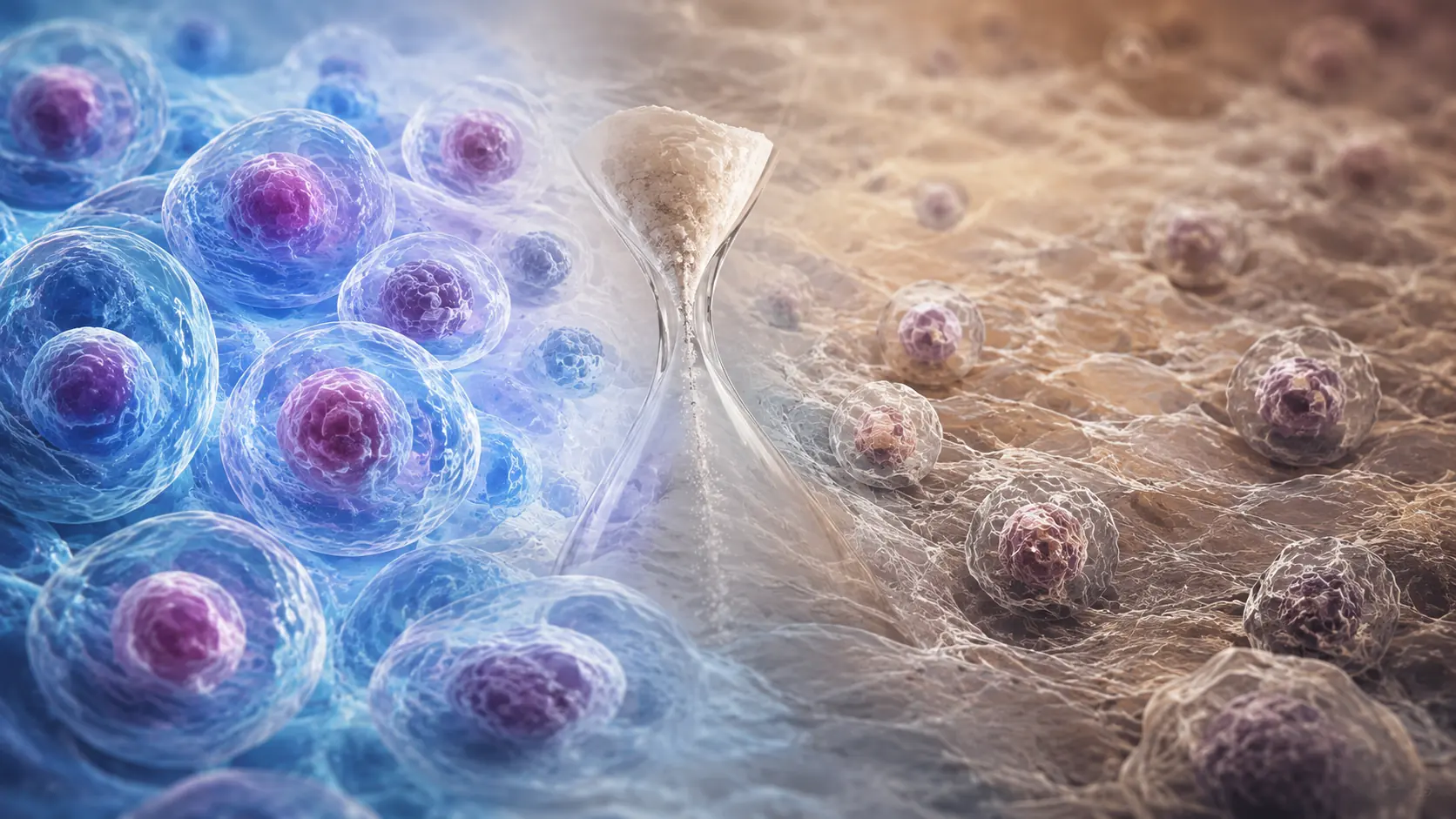
Yes — stem cell function declines with age across most tissues in the body. Research consistently shows that as we get older, stem cells become fewer in number, less capable of dividing, and less responsive to repair signals. As a result, the body’s ability to regenerate damaged tissue slows, immune defence weakens, and recovery from injury takes longer.
This decline is not a single event but a gradual process shaped by molecular damage, environmental stress, and changes in the tissue environment surrounding stem cells. Understanding why it happens is essential for making sense of how ageing affects the body — and what, if anything, can be done about it.
For a broader overview of stem cells in the context of healthy ageing, see our guide to stem cells and regenerative medicine for longevity.
The Biological Mechanisms Behind Stem Cell Decline
Several well-documented processes drive the age-related decline of stem cells.
DNA damage accumulation is one of the primary drivers. Stem cells divide repeatedly throughout life to replace damaged or dying cells. Each division carries a small risk of copying errors, and over decades, this damage accumulates. Importantly, stem cells with too much DNA damage either stop dividing or undergo apoptosis — both outcomes reduce the functional stem cell pool.
Telomere shortening compounds this problem. Telomeres are protective caps at the end of chromosomes that shorten with each cell division. When they become critically short, cells enter a state called senescence — they stop dividing but remain in the tissue, secreting inflammatory signals that further impair neighbouring cells and the surrounding environment.
Epigenetic drift is another key mechanism. Over time, the gene expression patterns within stem cells shift in ways that reduce their ability to self-renew and respond to repair signals. This is not a mutation but a change in how genes are read — and evidence suggests it plays a significant role in functional decline.
Oxidative stress adds to the burden. Mitochondria produce reactive oxygen species as a byproduct of energy metabolism, and while the body has antioxidant defences, these become less effective with age. Accumulated oxidative damage impairs stem cell function and can accelerate senescence.
Finally, changes in the stem cell niche — the local tissue environment where stem cells reside — reduce the quality of signals that instruct stem cells when and how to activate. Even if a stem cell retains some functional capacity, a degraded niche may prevent it from responding appropriately to injury.
How Decline Varies Across Tissue Types
Stem cell decline is not uniform — it varies significantly depending on the tissue type involved.
Haematopoietic stem cells (bone marrow) show a well-documented shift with age. Their total number may remain relatively stable, but their functional output changes — producing more inflammatory immune cells and fewer adaptive immune cells. This contributes to immune ageing, or immunosenescence, which increases infection risk and reduces vaccine responsiveness in older adults.
Muscle satellite cells — the stem cells responsible for repairing skeletal muscle — become less responsive to damage signals with age. In practice, this means slower and less complete muscle repair after injury or exercise. Evidence suggests this is partly driven by changes in systemic and local signalling rather than a simple reduction in cell number.
Neural stem cells in the brain decline in activity with age, particularly in the hippocampus. This reduction in neurogenesis is associated with cognitive changes, though the relationship is not fully understood in humans.
Gut stem cells are among the more resilient populations, maintaining relatively high turnover throughout life. However, research suggests that even here, ageing alters their regenerative behaviour in ways that may contribute to intestinal dysfunction.
In each tissue, the pattern reflects the same underlying story: stem cells that once maintained repair efficiently become slower, less accurate, and more prone to dysfunction.
Factors That Accelerate the Decline
Ageing alone drives stem cell decline, but several modifiable factors can accelerate the process considerably.
Chronic inflammation is particularly damaging. Low-grade systemic inflammation — sometimes called inflammaging — creates a hostile environment for stem cells, impairing their ability to self-renew and promoting premature senescence. Conditions such as obesity, type 2 diabetes, and cardiovascular disease are all associated with elevated inflammatory markers and worse stem cell function.
Metabolic dysfunction matters too. Insulin resistance and poor metabolic health impair the signalling pathways that regulate stem cell activity, including AMPK and mTOR — two key regulators of cellular energy status and growth. Disruption to these pathways affects how stem cells respond to repair signals.
Physical inactivity is associated with accelerated decline in muscle satellite cell function. Conversely, regular exercise appears to help maintain the responsiveness of these cells, even in older adults. The evidence for exercise supporting stem cell health more broadly is promising, though much of it comes from animal studies. For more detail, see our article on whether exercise improves stem cell function.
Poor sleep disrupts circadian rhythm and impairs tissue repair processes that occur predominantly during rest. Evidence suggests that sleep deprivation increases oxidative stress and inflammatory signalling — both of which accelerate stem cell ageing.
Chronic psychological stress elevates cortisol and promotes systemic inflammation, both of which have been linked to impaired stem cell function and accelerated biological ageing.
Nutritional deficiencies and poor diet quality can deprive stem cells of the metabolic substrates needed for healthy division and DNA repair. Conversely, caloric restriction and intermittent fasting have been shown in animal models to activate stem cell regeneration, likely through AMPK activation and reduced mTOR signalling. Human evidence remains limited, but the mechanistic rationale is credible.
Learn more in our complete guide to longevity.
Can the Decline Be Slowed or Reversed?
Completely halting stem cell decline is not currently possible. However, current evidence supports the idea that the rate of decline is meaningfully influenced by lifestyle and, in some contexts, medical interventions.
Exercise is the most consistently supported behavioural factor. Resistance and aerobic training both appear to preserve muscle satellite cell responsiveness and may support broader regenerative capacity. The evidence is strongest in muscle tissue.
Nutrition and fasting show promise, particularly in animal models. Caloric restriction and intermittent fasting appear to reduce mTOR activity and promote stem cell maintenance in multiple tissues. However, directly translating this to human longevity requires caution — the evidence is not yet sufficient to make strong clinical recommendations.
Senolytic strategies — interventions that selectively remove senescent cells — represent an active area of research. In animal studies, clearing senescent cells has improved tissue function and extended healthspan. Early human trials are underway, but these are not yet established treatments.
Stem cell therapy is sometimes marketed as a direct solution to age-related stem cell decline. In reality, the evidence base for broad anti-ageing stem cell treatments is weak, regulatory oversight varies considerably between countries, and risks including infection, immune rejection, and tumour formation are real. Stem cell therapies show more credible results for specific medical conditions than for general longevity purposes. For a fuller assessment, see our article on whether stem cell therapy is effective for longevity.
In summary, the most evidence-supported approach to preserving stem cell function with age involves reducing the factors that accelerate decline — chronic inflammation, metabolic dysfunction, inactivity, and poor sleep — rather than pursuing unproven commercial therapies.
References and Resources
Authoritative Sources on Stem Cell Decline and Ageing
-
NHS — Stem Cell Therapy
NHS.ukAn accessible overview of how stem cell therapies are used clinically, including information on safety and current applications.
-
American Heart Association — Stem Cells and Ageing
AHA JournalsExamines cardiac stem cell ageing and the potential role of regenerative strategies in age-related cardiovascular decline.
-
Nature Cell Biology — Stem Cell Ageing
Nature.comIn-depth coverage of the molecular mechanisms underlying stem cell ageing, including epigenetic drift and niche deterioration.
-
Trends in Cell Biology — The Stem Cell Niche
Cell.comExplores how the microenvironment surrounding stem cells changes with age and what this means for regenerative capacity.
-
Aging (Albany NY) — Stem Cells and Ageing
Aging-US.comReviews how ageing affects stem cell populations across different tissues and discusses potential rejuvenation approaches.
-
NIH — Ageing and Stem Cells
NIH.govAn official NIH resource summarising current research on how ageing affects stem cell function and what interventions are being investigated.
-
Science Daily — Stem Cell Research News
ScienceDaily.comRegularly updated coverage of scientific discoveries related to stem cells and ageing.
-
Frontiers in Cell and Developmental Biology — Mechanisms of Stem Cell Ageing
Frontiersin.orgA detailed scientific review of the cellular and molecular mechanisms driving stem cell ageing and potential strategies to counteract them.
Frequently Asked Questions
Why do stem cells decline with age?
Stem cell decline is driven by accumulated DNA damage, telomere shortening, epigenetic changes, and deterioration of the tissue environment in which stem cells reside. Over time, these factors reduce both the number of functional stem cells and their ability to respond to repair signals. The result is slower tissue regeneration and increased vulnerability to age-related conditions.

Can stem cell decline be reversed?
Complete reversal is not currently achievable. However, evidence suggests the rate of decline can be influenced by lifestyle choices such as regular exercise, good nutrition, and managing chronic inflammation. Emerging therapies including senolytics and, in specific medical contexts, stem cell transplantation show early promise — but these are not yet proven general anti-ageing treatments.
What factors accelerate stem cell decline?
Chronic inflammation, insulin resistance, physical inactivity, poor sleep, smoking, and exposure to environmental toxins all accelerate stem cell ageing. These factors increase oxidative stress, promote cellular senescence, and degrade the tissue environment that supports stem cell function. Managing these risks is one of the most practical approaches to preserving regenerative capacity with age.
Are there therapies that can prevent or delay stem cell decline?
Several approaches are under investigation. Lifestyle interventions — particularly exercise and dietary strategies such as intermittent fasting — have the strongest current evidence, especially for muscle stem cells. Senolytic compounds that clear aged, dysfunctional cells are in early-stage human trials. Commercial stem cell therapies marketed for general anti-ageing purposes lack robust evidence and carry real risks. Consulting a healthcare professional is advisable before pursuing any clinical intervention.
What is the impact of stem cell decline on overall health and ageing?
Stem cell decline contributes to slower wound healing, reduced muscle repair, weakened immune function, and decreased resilience across multiple organ systems. Over time, this impairs the body’s ability to maintain tissue integrity, which is a central feature of biological ageing. While stem cell decline is not the only driver of ageing, it plays a significant role in the loss of regenerative capacity that characterises getting older.
Conclusion
Stem cells do decline with age — in function, responsiveness, and in some tissues, number. This decline is driven by well-characterised biological processes including DNA damage, telomere shortening, epigenetic drift, and deterioration of the stem cell niche. As a result, tissue repair slows, immune function weakens, and recovery becomes less efficient across multiple organ systems.
That said, the rate of decline is not fixed. Evidence indicates that chronic inflammation, metabolic dysfunction, inactivity, and poor sleep all accelerate the process — and that addressing these factors through lifestyle choices can help preserve regenerative capacity over time. Exercise, in particular, has meaningful support in the literature, especially for muscle stem cell function.
Commercial stem cell therapies promise to reverse this decline, but the evidence for their use as broad anti-ageing treatments remains weak, and the risks are real. The more credible near-term approach is to maintain the conditions that allow the body’s own stem cells to function as well as possible for as long as possible.
Find out more information about stem cell decline and ageing
Search for more resources and information: