
How Should You Prioritize Longevity Interventions?
How Should You Prioritise Longevity Interventions?
TL;DR: Prioritise longevity interventions by ranking them on evidence quality, likely impact, personal health baseline, cost, and long-term sustainability. In practice, lifestyle fundamentals — sleep, exercise, diet, and metabolic health — almost always come before supplements, stacks, or experimental therapies.
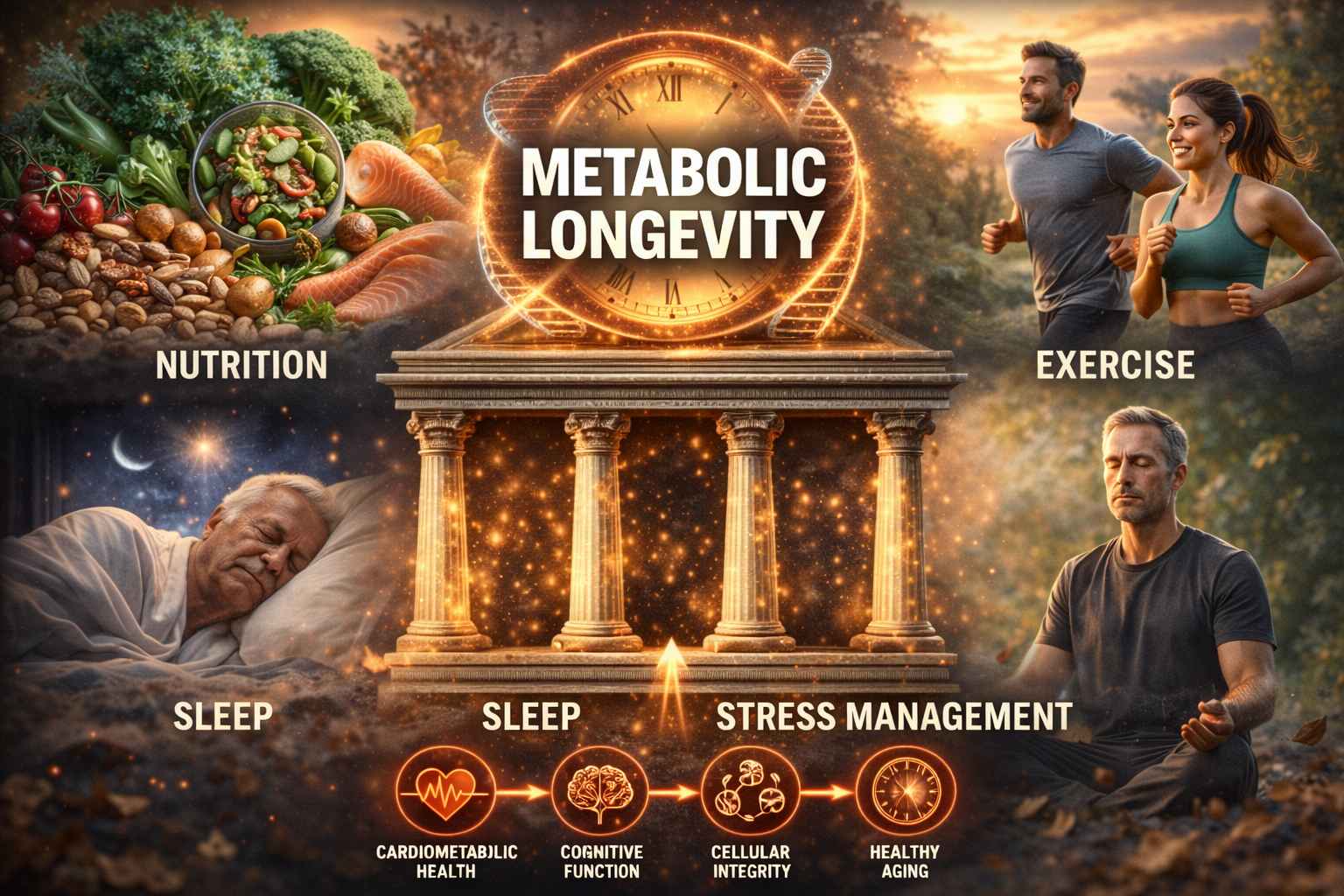
Prioritising longevity interventions means deciding where to put your time, energy, and money first — and the evidence points clearly toward one answer: start with foundations, not optimisations. The most impactful longevity actions for most people are not cutting-edge supplements or emerging therapies. They are consistent sleep, regular physical activity, a nutrient-dense diet, maintained muscle mass, and controlled cardiovascular risk. These fundamentals carry the strongest evidence and the highest likely return for the broadest range of people.
That does not mean advanced interventions have no place. It means sequencing matters. Getting foundations right before layering in supplements or experimental protocols is both more effective and more efficient.
Why Prioritisation Matters in Longevity
The longevity space is expanding rapidly, and the number of interventions available — from time-restricted eating and zone 2 training to NMN, rapamycin, and senolytics — can be genuinely overwhelming. Without a clear framework, it is easy to spend significant resources on lower-confidence strategies while neglecting the basics that drive the largest share of healthy aging outcomes.
Research on aging consistently shows that modifiable lifestyle factors — particularly physical inactivity, poor sleep, smoking, excess body fat, and poor metabolic health — are among the strongest predictors of premature disease and shortened lifespan. Addressing these carries more weight than almost any supplement or biohacking protocol currently available. As a result, prioritisation is not just a practical convenience; it is strategically important.
Importantly, prioritisation also protects against a common failure mode: doing too many things at once, sustaining none of them, and seeing minimal long-term benefit. A focused, sequenced approach tends to produce better outcomes than a scattered, maximalist one.
The Key Factors for Ranking Interventions
Not all longevity interventions are equal. Several factors should shape how you rank them for your own situation.
Evidence Quality
The strongest interventions have robust human evidence — large observational studies, randomised controlled trials, or both. Exercise and sleep, for example, have an enormous body of human research linking them directly to reduced all-cause mortality and improved healthspan. In contrast, many supplements and most experimental drugs have limited or preliminary human data, even when animal or mechanistic evidence looks promising. Prioritising by evidence quality means not treating a mouse study as equivalent to a decade of human research.
Likely Impact
Some interventions move the needle significantly; others produce marginal improvements on the margin. Quitting smoking, improving VO₂ max, maintaining healthy body composition, and getting consistent sleep are associated with large effect sizes in human data. In contrast, adding a single supplement to an already strong lifestyle is likely to produce a much smaller benefit. Prioritising by impact means focusing on actions that genuinely shift your risk profile, not ones that feel productive but deliver little.
Risk and Safety
Lower-risk interventions deserve earlier placement in a prioritisation framework. Lifestyle fundamentals carry minimal downside risk and no meaningful safety concerns for most people. More advanced interventions — particularly pharmaceutical approaches like mTOR inhibitors or senolytics — carry real uncertainty around long-term safety in healthy humans. These belong later in any rational prioritisation, once fundamentals are solid.
Cost
Effective longevity does not require large financial investment at the foundational level. Sleep, exercise, dietary quality, and stress management are either free or low-cost. Many expensive supplements and protocols, by contrast, have limited supporting evidence. Cost should be weighed against confidence in likely benefit — and currently, the highest-confidence actions are also among the most affordable.
Sustainability
An intervention only works if maintained over years and decades. This makes real-world sustainability a critical prioritisation factor. A modest but consistent habit delivers far more long-term benefit than an intensive protocol abandoned after three months. Prioritising sustainable actions over demanding ones is not settling — it is strategically sound.
Aligning Interventions With Your Health Baseline
Effective prioritisation requires an honest assessment of your current health status. The highest-leverage intervention for one person may be irrelevant for another. Someone who smokes, sleeps five hours a night, and is sedentary has a very different starting point than someone who exercises regularly and has strong metabolic health.
In general, the principle is: address the largest active risks first. For many people, this means asking what to stop doing before asking what to add. Chronic sleep restriction, physical inactivity, excess alcohol, smoking, and a diet high in ultra-processed foods are each independently associated with accelerated biological aging and increased disease risk. Removing or reducing these typically produces larger gains than any supplement currently available.
Useful baseline assessments include fasting glucose, HbA1c, lipid panels (including ApoB where available), blood pressure, body composition, and a functional measure of cardiorespiratory fitness. These provide a clear picture of where risk is concentrated and where intervention will have the most impact. For a broader view of how these elements fit together, see our article on what you should stop doing first to improve longevity.
Age is also relevant. Younger adults generally benefit most from building strong foundations — habits that compound over decades. Older adults may have additional priorities around muscle preservation, fall prevention, and cognitive health. That said, the core fundamentals remain high-priority across all age groups.
A Practical Framework for Prioritisation
Layer One: Eliminate Major Risks
Before adding anything, address the most damaging behaviours. Smoking is the single most modifiable longevity risk for those who smoke. Chronic sleep deprivation (consistently under six to seven hours) impairs metabolic health, immune function, cardiovascular health, and cognitive aging. Severe physical inactivity and heavy alcohol use are each independently associated with significantly shortened healthspan. These are not background considerations — they are primary targets.
Layer Two: Build Core Lifestyle Foundations
Once major risks are addressed, the focus shifts to building and maintaining the core habits with the strongest evidence base:
- Exercise: Both cardiorespiratory fitness (VO₂ max) and muscular strength are among the strongest predictors of all-cause mortality in human data. A combination of aerobic training and resistance training is well-supported.
- Sleep: Consistent, quality sleep of seven to nine hours supports metabolic health, inflammation regulation, cardiovascular function, and neurological repair. It is not optional in a longevity framework.
- Diet: A diet characterised by whole foods, adequate protein, fibre-rich plants, and minimal ultra-processed food has strong observational support for healthy aging. No single dietary pattern has a monopoly on evidence, but overall diet quality matters substantially.
- Body composition and metabolic health: Excess visceral fat, insulin resistance, and elevated fasting glucose accelerate biological aging across multiple pathways — including inflammation, endothelial function, and mitochondrial efficiency. Maintaining healthy body composition and metabolic markers is a high-priority target.
- Cardiovascular risk management: Elevated blood pressure, dyslipidaemia (particularly high ApoB), and atherosclerosis are leading drivers of premature mortality. These deserve active monitoring and management.
Layer Three: Add Evidence-Supported Enhancements
Once foundations are solid, there is reasonable space to consider additional tools with a supporting evidence base. This includes interventions such as time-restricted eating, specific supplementation (for example, creatine for muscle preservation, omega-3s for inflammation and cardiovascular health, or vitamin D where deficient), stress management practices, and targeted approaches to cognitive longevity.
However, these enhancements should be understood as additions to a strong base — not substitutes for it. A supplement added to a poor lifestyle delivers far less than the same lifestyle with no supplement. For deeper detail on where supplements fit in, our article on the minimal viable longevity stack covers the evidence clearly.
Layer Four: Consider Advanced or Experimental Interventions
The final layer includes lower-confidence or higher-risk interventions — pharmaceutical approaches, senolytics, NAD+ precursors at high doses, and other emerging strategies. Current human evidence for most of these is limited, and their risk profiles in healthy individuals over long periods are not yet well understood. These are reasonable areas of interest, but they belong at the end of a prioritisation sequence, not the beginning.
Learn more in our complete guide to longevity at longevityinsights.co.uk/what-is-longevity.
Common Prioritisation Mistakes to Avoid
Chasing Advanced Interventions Before Fixing Foundations
One of the most common errors in longevity optimisation is pursuing sophisticated interventions — NMN, rapamycin, peptide protocols — while neglecting sleep, exercise, or diet quality. The evidence does not support this ordering. Lifestyle foundations have stronger and more consistent human evidence than almost any supplement or drug currently available. Getting these right first is not a compromise — it is the highest-value move for most people.
Overloading on Interventions at Once
Attempting to implement too many changes simultaneously tends to reduce adherence to all of them. A focused approach — starting with two or three high-impact changes and building from there — is more likely to produce durable results. Consistency over years matters more than completeness in any given month.
Treating Generic Protocols as Universally Applicable
Context matters. What is high-priority for one person depends on their health baseline, risk factors, age, and lifestyle. A framework that works well for a sedentary person with metabolic risk looks different from one suited to an already-active individual looking to optimise further. Personalisation improves both relevance and outcome. That said, the core logic — foundations first, enhancements second, experimental interventions last — applies broadly.
Ignoring Sustainability
An intervention that cannot be maintained for years delivers limited long-term benefit. Longevity is a decades-long project, and the habits that compound most effectively are those that fit into real life. Prioritising interventions that are genuinely sustainable — even if marginally less optimised — tends to outperform more intensive approaches that are abandoned. For a beginner-oriented perspective on this, see our article on how beginners should start with longevity.
References and Resources
Authoritative Sources on Longevity Prioritisation
-
National Institute on Aging – Research on Aging
nia.nih.govA comprehensive resource on aging research, covering evidence-based interventions and health strategies with strong scientific grounding.
-
Fight Aging! Journal
fightaging.orgCovers current longevity research and reviews of promising interventions, with useful context on the state of evidence.
-
Nature – Longevity Studies
nature.comPeer-reviewed articles on longevity and aging mechanisms, providing scientific grounding for understanding which interventions carry meaningful evidence.
-
Cell Reports – Aging Research
cell.comAcademic research on cellular mechanisms of aging, helpful for understanding the biological basis of prioritised interventions.
-
FDA – Supplements & Interventions
fda.govOfficial safety and regulatory guidance on supplements and emerging therapies relevant to longevity planning.
-
AARP – Healthy Aging
aarp.orgPractical guidance on healthy aging that complements evidence-based longevity planning.
-
Reuters Health
reuters.comReliable reporting on health and longevity research developments, useful for staying current with the emerging evidence base.

-
ScienceDaily – Longevity News
sciencedaily.comAccessible summaries of recent scientific studies on aging and longevity, covering current trends and findings.
Frequently Asked Questions
How Should You Prioritise Longevity Interventions on a Limited Budget?
Focus on high-impact, low-cost fundamentals first. Sleep quality, regular exercise, a whole-food diet, and smoking cessation (where applicable) carry the strongest evidence and require minimal financial investment. When resources are limited, these deliver more per pound spent than almost any supplement or advanced therapy currently available.
Does Age Affect How You Should Prioritise Longevity Interventions?
Yes, age is a relevant factor. Younger adults benefit most from building consistent long-term habits — particularly exercise, diet, and metabolic health — that compound over decades. Older adults may have additional priorities around muscle preservation, cardiovascular risk management, and cognitive health. However, the core framework — foundations before enhancements — applies across all age groups.
Is It Better to Focus on Proven Interventions or Emerging Technologies?
A sequenced approach makes most sense. Proven lifestyle interventions should come first, given their strong human evidence and low risk. Emerging technologies — senolytics, NAD+ precursors, mTOR modulators — are worth monitoring, but human evidence remains limited for most of them. Adopting them selectively once foundations are strong, and only when evidence supports safety and likely benefit, is a more rational approach than pursuing them prematurely.
How Do I Know Which Interventions Are Right for Me?
Start with an honest assessment of your current health baseline — key markers include metabolic health indicators, cardiovascular risk factors, body composition, sleep quality, and fitness level. This clarifies where your largest risks lie and where intervention will have the most impact. Consulting a clinician familiar with preventive medicine or longevity science can help translate that assessment into a practical, personalised plan.
Conclusion
Prioritising longevity interventions effectively comes down to a clear principle: address what matters most first, based on evidence strength, likely impact, safety, and your personal health baseline. For the majority of people, that means getting sleep, exercise, diet, body composition, and cardiovascular risk management right before adding supplements, stacks, or experimental protocols.
This is not a limitation — it is where the strongest evidence sits. The interventions with the highest confidence and largest likely effect on healthspan and lifespan are, in most cases, the fundamentals. Advanced tools have a role, but that role is as a complement to strong foundations, not a replacement for them.
A focused, sequenced approach — removing major risks first, building core habits second, adding enhancements third — is both more evidence-aligned and more practically sustainable than trying to optimise everything at once. That sequential logic is what separates a rational longevity strategy from an expensive scatter of interventions with uncertain returns.
Find out more information about how to prioritise longevity interventions
Search for more resources and information: