
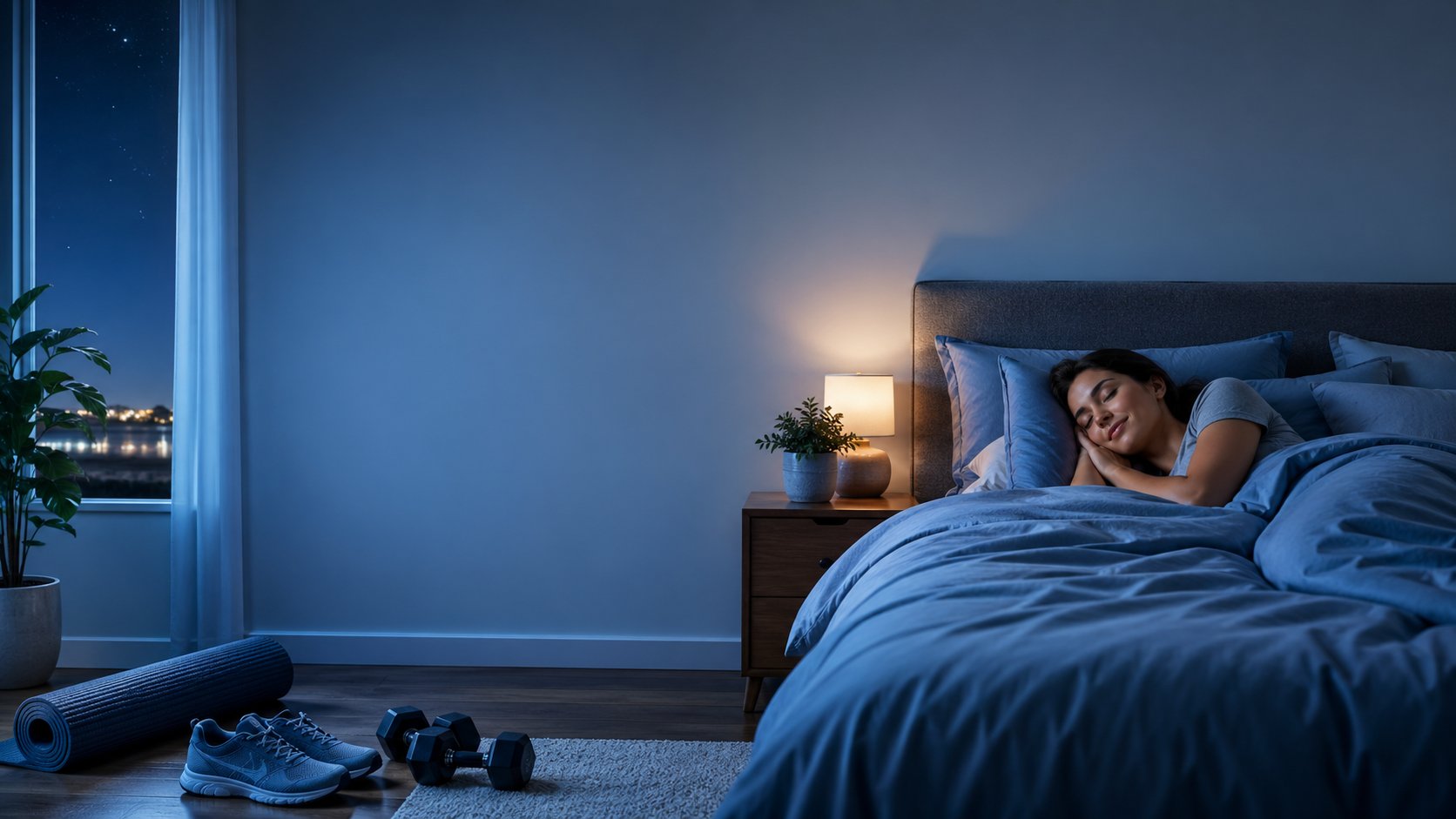
Does Exercise Improve Sleep Quality?
Does Exercise Improve Sleep Quality?
TL;DR: Yes, regular exercise can improve sleep quality by reducing stress, supporting circadian rhythm, increasing sleep pressure, and helping the body spend more time in restorative sleep. The best results usually come from consistent moderate activity, timed so it does not overstimulate you close to bedtime.
Exercise can improve sleep quality for many people, especially when it is done consistently and not too close to bedtime. Regular physical activity is associated with faster sleep onset, fewer night-time awakenings, better sleep efficiency, and more restorative sleep.
The effect is not instant for everyone. Exercise works best as a regular habit that supports the body’s sleep-wake rhythm, lowers stress, improves metabolic health, and increases the natural drive to sleep at night.
For the wider sleep framework, see our guide to the best sleep protocol for longevity. Learn more in our complete guide to longevity.
How Exercise Affects Sleep Quality
Exercise Helps Build Sleep Pressure
Physical activity increases energy use and contributes to the natural build-up of sleep pressure across the day. This can make it easier to fall asleep at night, especially for people who are sedentary or mentally tired but physically underactive.
Exercise Supports Circadian Rhythm
Regular movement, especially earlier in the day and in natural light, can help reinforce the body’s circadian rhythm. A stronger circadian rhythm makes it easier to feel alert during the day and sleepy at night.
Exercise May Reduce Stress and Anxiety
Exercise can reduce stress, improve mood, and lower mental tension, all of which may make sleep easier. This is especially relevant for people whose sleep is disrupted by worry, restlessness, or racing thoughts.
The Science Behind Exercise and Better Sleep
How Physical Activity Influences Sleep Cycles
Research suggests that regular exercise can improve sleep architecture by supporting deeper, more stable sleep. Some people may experience more slow-wave sleep, which is the stage most associated with physical restoration.
Body Temperature and Sleep Timing
Exercise temporarily raises body temperature. As the body cools down afterwards, this temperature shift may support sleep onset. However, intense exercise too close to bedtime can keep some people too alert or warm to fall asleep easily.
Bedroom temperature also matters. For related sleep-environment guidance, see whether a cold bedroom temperature improves sleep.
Exercise, Metabolism, and Longevity
Exercise supports sleep partly because it improves broader health systems that affect recovery, including insulin sensitivity, inflammation, cardiovascular fitness, and stress regulation. Better sleep and better metabolic health reinforce each other over time.
This makes exercise especially relevant for healthy aging and longevity, because both physical activity and sleep quality are linked with better healthspan.
Best Practices for Using Exercise to Improve Sleep
Choose Consistency Over Intensity
Moderate exercise done consistently is usually more helpful for sleep than occasional extreme workouts. Brisk walking, cycling, swimming, resistance training, and yoga can all support sleep when matched to the individual’s fitness level.
Be Careful With Late High-Intensity Workouts
High-intensity exercise late in the evening may disrupt sleep for some people by increasing adrenaline, body temperature, and alertness. If sleep worsens after late training, move intense workouts earlier in the day.
Use Gentle Evening Movement When Needed
Light stretching, mobility work, a relaxed walk, or gentle yoga can help some people wind down without overstimulation. These are usually better evening options than hard intervals or heavy training sessions.
Balance Exercise With Recovery
Overtraining, inadequate food intake, and poor recovery can worsen sleep. Exercise improves sleep best when the training load is sustainable and supported by enough nutrition, hydration, and rest.
Some people also explore sleep-support supplements, but these should not replace exercise, sleep hygiene, and recovery basics. For related options, see whether glycine improves deep sleep and whether taurine improves sleep quality.
Common Myths and Misconceptions
Does Exercise Always Improve Sleep?
No. Exercise usually helps sleep, but timing, intensity, fitness level, stress, and recovery all matter. Late intense exercise, overtraining, or exercising while under-recovered can make sleep worse for some people.
Can Intense Workouts Harm Sleep?
Intense workouts can be helpful when timed well, but they may disrupt sleep if performed too close to bedtime. The best timing depends on individual response.
Is Exercise Better Than Medication for Sleep?
Exercise can be a useful first-line lifestyle tool for improving sleep quality, but it is not a replacement for medical care when insomnia, sleep apnea, restless legs, chronic pain, or mental health issues are present.
Frequently Asked Questions
Does exercise improve sleep quality for everyone?
Exercise improves sleep quality for many people, but responses vary. Timing, intensity, fitness level, stress, and underlying sleep disorders can all influence the result.

Can exercise help with insomnia?
Regular moderate exercise may help some people with insomnia by reducing stress, improving sleep pressure, and supporting circadian rhythm. Persistent insomnia should still be assessed by a healthcare professional.
How much exercise is needed to see sleep benefits?
Even regular moderate activity, such as 30 minutes of brisk walking most days, may improve sleep. Consistency is usually more important than doing very intense workouts.
What types of exercise are best for sleep improvement?
Aerobic exercise, resistance training, walking, cycling, swimming, yoga, and gentle mobility work can all support sleep. The best choice is the one that is sustainable and does not leave you overstimulated at bedtime.
References and Resources
The following resources provide useful background on exercise, sleep quality, sleep architecture, physical activity guidelines, and practical sleep improvement.
Authoritative Sources on Exercise and Sleep Quality
-
Sleep Foundation: How Exercise Aids Sleep
sleepfoundation.orgExplains how exercise may support sleep through circadian rhythm, stress reduction, and sleep pressure.
-
CDC: Physical Activity and Health
cdc.govProvides guidance on the health benefits of regular physical activity.
-
JAMA Internal Medicine: Exercise and Sleep
jamanetwork.comReviews research on the relationship between exercise and sleep outcomes.
-
NIH: Physical Activity and Sleep
nih.govDiscusses how physical activity may influence sleep duration, quality, and sleep architecture.
-
PubMed: Exercise and Sleep Quality
pubmed.ncbi.nlm.nih.govProvides peer-reviewed research on exercise interventions and sleep quality.
-
ACE Fitness: How Exercise Influences Sleep
acefitness.orgOffers practical guidance on structuring exercise to support sleep.
-
Medical News Today: Exercise and Sleep
medicalnewstoday.comSummarises practical ways exercise can support better sleep.
Conclusion
Exercise can improve sleep quality by increasing sleep pressure, reducing stress, supporting circadian rhythm, and improving overall metabolic and physical health. The strongest benefits usually come from regular, sustainable activity rather than occasional intense workouts.
For most people, moderate exercise earlier in the day is a good starting point. If late intense training disrupts sleep, move it earlier or choose gentler evening movement instead.
Exercise is not a cure for every sleep problem, but it is one of the most reliable lifestyle tools for supporting better sleep, recovery, healthy aging, and long-term healthspan.
Find out more information about “does exercise improve sleep quality”
Search for more resources and information: