What Is the Best Longevity Meal Structure?
What Is the Best Longevity Meal Structure?
TL;DR: The best longevity meal structure is not a single rigid plan, but a consistent pattern built around whole, minimally processed foods, adequate protein and fiber, healthy fats, and eating windows that align with your body’s natural rhythms. No single meal timing approach has been proven to extend human lifespan, but food quality and dietary patterns show the strongest and most consistent evidence for healthy aging.
What Makes a Meal Structure Good for Longevity?
The evidence points to one clear conclusion: how you structure your meals matters, but what you eat matters more. A longevity-supportive meal structure combines high food quality with sensible eating patterns — not extreme restriction, and not a single prescribed schedule.
Research on long-lived populations and large dietary cohort studies consistently identifies a shared pattern: diets rich in vegetables, legumes, whole grains, and healthy fats, with limited ultra-processed food, refined sugar, and processed meat. This pattern, broadly reflected in the Mediterranean and similar traditional diets, is associated with lower all-cause mortality and reduced rates of cardiovascular disease, type 2 diabetes, and certain cancers.
That said, meal structure involves more than just food choices. Timing, frequency, and the overall rhythm of eating also influence metabolic health — though the evidence here is less settled. Understanding both dimensions is essential to building an approach that genuinely supports healthspan and lifespan.
For a broader overview, learn more in our complete guide to longevity.
Food Quality: The Foundation of a Longevity Meal Structure
Prioritise Whole, Minimally Processed Foods
Food quality is the single most consistent variable across longevity-related dietary research. Diets built around whole, minimally processed foods — vegetables, fruits, legumes, whole grains, nuts, seeds, fish, and olive oil — are associated with reduced inflammation, improved metabolic markers, and lower long-term mortality risk.
In contrast, high intake of ultra-processed foods, refined carbohydrates, added sugar, and processed meat is associated with accelerated biological aging and increased all-cause mortality. The evidence against processed meat and refined sugar is among the strongest in nutritional epidemiology. For red meat, dairy, and fermented dairy, findings are more mixed and often context-dependent — neither blanket condemnation nor uncritical endorsement is supported by the current evidence.
Healthy Fats and Protein
Olive oil — particularly extra virgin olive oil — stands out consistently in Mediterranean diet research for its anti-inflammatory properties and association with reduced cardiovascular risk. Fatty fish provides omega-3 fatty acids that support endothelial function and reduce systemic inflammation.
Protein intake is worth specific attention in the context of aging. Adequate protein supports muscle mass preservation, which declines with age and is strongly linked to functional independence and longevity. However, very high animal protein intake — particularly from red and processed meat — may promote mTOR overactivation, which some researchers associate with accelerated aging in certain contexts. Plant-based protein sources and fish appear to carry fewer of these concerns.
Fiber and Gut Health
High-fiber intake, primarily from whole grains, legumes, vegetables, and fruit, is consistently associated with lower mortality risk across large prospective studies. Fiber supports gut microbiome diversity, reduces inflammation, improves insulin sensitivity, and lowers cardiovascular risk — all pathways relevant to healthy aging. Bean consumption in particular appears in multiple Blue Zone and longevity population studies as a shared dietary feature.
For a deeper look at how individual foods compare, see our hub on Advanced Diet and Longevity: What the Evidence Really Shows About Food, Timing, and Eating Patterns.
Meal Timing and Eating Patterns
Intermittent Fasting and Time-Restricted Eating
Intermittent fasting (IF) and time-restricted eating (TRE) have attracted significant research interest for their potential role in longevity. In animal models, calorie restriction and fasting-related protocols reliably extend lifespan and improve metabolic markers. In humans, the picture is more nuanced.
Current evidence supports that IF and TRE can improve insulin sensitivity, reduce inflammatory markers, support weight management, and benefit metabolic health in some populations. However, it is important to be clear: long-term lifespan extension in humans from fasting protocols has not been demonstrated to the same degree as in animal studies. The human evidence for metabolic benefits is real — the evidence for direct lifespan extension is still limited.
That said, eating within a defined daily window — particularly earlier in the day — does appear to align better with circadian biology, with some studies suggesting metabolic advantages over late-shifted eating patterns.
Circadian Biology and Meal Timing
The body’s internal clock influences how it processes food. Eating in alignment with circadian rhythms — generally meaning most food consumed earlier in the day, with a meaningful overnight fast — is associated with better glucose regulation, lower inflammation, and improved cardiometabolic markers compared to late-shifted eating.
Late-night eating specifically is linked to poorer glycaemic control and metabolic disruption, independent of total calorie intake. This is best understood through the lens of metabolic health rather than weight management alone. Importantly, breakfast skipping carries variable evidence: the metabolic effect depends substantially on whether it results in earlier or later daily eating, not just meal frequency.
Calorie Restriction Without Malnutrition
Calorie restriction without malnutrition is one of the most studied interventions in longevity science. In model organisms, it reliably extends lifespan. In humans, CALERIE trial data demonstrate meaningful improvements in metabolic biomarkers — including reduced inflammation, improved insulin sensitivity, and lower cardiovascular risk markers — from modest, sustained calorie reduction.
However, this is distinct from casual undereating or restrictive dieting. The longevity-relevant finding is that avoiding chronic overconsumption while maintaining nutrient adequacy appears to support healthy aging. Severe restriction without nutritional completeness carries its own health risks and is not what the evidence supports.
Putting It Together: Practical Meal Structure Principles
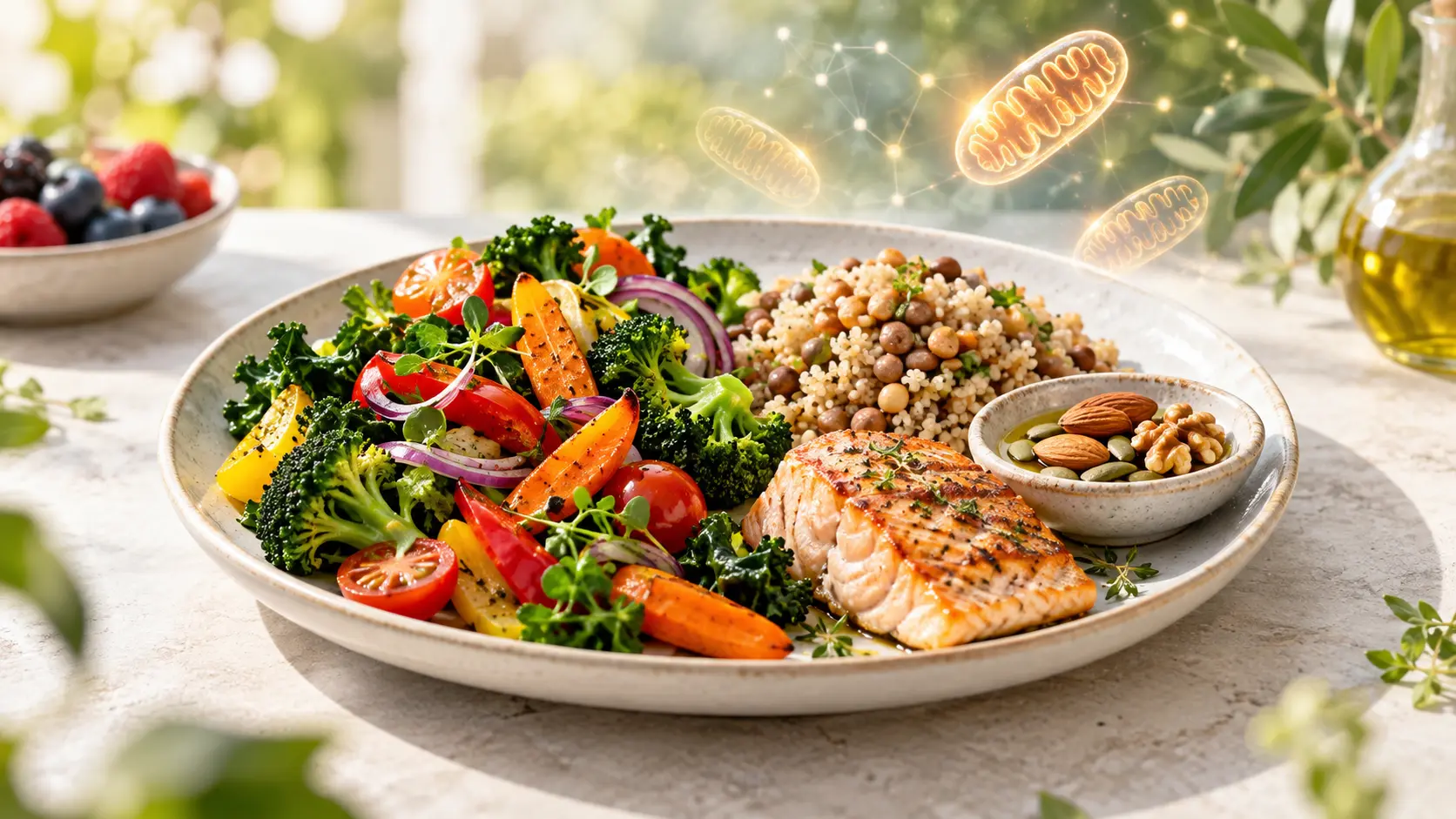
Based on the available evidence, a longevity-supportive meal structure would generally include:
- A predominantly plant-forward diet — with vegetables, legumes, whole grains, nuts, and fruit as the base
- Olive oil as the primary fat source — extra virgin where possible
- Regular fish consumption — particularly oily fish for omega-3 content
- Adequate protein — with emphasis on plant-based sources and fish; red and processed meat limited rather than eliminated categorically
- High fiber intake — from whole food sources rather than supplements where possible
- Minimal ultra-processed food, refined sugar, and processed meat — the evidence against these is the most consistent in the cluster
- A defined eating window — ideally earlier in the day, with a meaningful overnight fast, to support circadian alignment
- Avoidance of chronic overconsumption — without the need for precise calorie counting or severe restriction
This is not a rigid protocol. It is a pattern — and adherence to the overall pattern matters more than perfect compliance with any individual rule. Meal preparation, routine, and genuine enjoyment of food all support long-term adherence, which in turn determines real-world outcomes.
For more on how individual eating patterns compare, see our article on whether the Mediterranean diet reduces mortality.
Common Misconceptions
You Need to Overhaul Everything at Once
Drastic dietary overhauls are rarely sustainable. The evidence on longevity diets consistently points to long-term dietary patterns — not short-term interventions. Gradual shifts toward higher food quality, more whole foods, and reduced ultra-processed food intake are both practical and evidence-supported. Consistency over time matters far more than short-term perfection.
Supplements Can Replace Food Quality
Whole foods provide a complex matrix of nutrients, phytochemicals, and fiber that supplements cannot replicate. Supplements may address specific deficiencies, but the longevity-relevant benefits identified in dietary research are predominantly associated with whole food patterns, not isolated nutrients. Food quality remains the foundation.
Intermittent Fasting Is Proven to Extend Human Lifespan
Intermittent fasting and time-restricted eating show genuine promise for metabolic health. However, no eating pattern has been conclusively demonstrated to extend human lifespan in the way calorie restriction has in animal models. The practical value of fasting-related approaches lies in their metabolic effects — and those effects are real, but they should be understood accurately rather than overstated.
What the Evidence Actually Supports
Across large cohort studies, clinical trials, and mechanistic research, the most consistent dietary signals for longevity are:
- High intake of vegetables, legumes, whole grains, nuts, and olive oil is associated with lower all-cause mortality
- High intake of ultra-processed food, refined sugar, and processed meat is associated with higher mortality and accelerated biological aging
- Mediterranean-style dietary patterns reduce cardiovascular mortality and show consistent associations with healthy aging
- Eating in alignment with circadian rhythms — earlier meals, overnight fasting — supports metabolic health
- Avoiding chronic overconsumption while maintaining nutritional adequacy is supported by both observational and intervention data
Where evidence is more limited or mixed: the optimal eating window duration, whether protein cycling meaningfully extends lifespan in humans, the differential effects of specific dairy types, and the precise mechanisms linking meal frequency to longevity outcomes. These remain active areas of research rather than settled science.
Overall, the best longevity meal structure is not a single diet. It is a consistent, flexible pattern built on food quality — supported by eating habits that respect metabolic timing and avoid overconsumption.
References and Resources
The following sources provide the evidence base for the principles discussed in this article. For more on what the evidence shows about diet and healthy aging, see What Is the Best Evidence-Based Longevity Diet?
Authoritative Sources on NCBI
-
The Role of Nutrition in Longevity
ncbi.nlm.nih.govA comprehensive review of how dietary patterns influence aging and lifespan, with particular attention to food quality and nutrient density.
-
WHO Nutrition Guidelines
who.intEvidence-based recommendations on nutrient intake and diet quality, providing a global public health perspective on healthy eating.
-
Valter Longo’s Research
valterlongo.comResearch on fasting-mimicking diets and longevity, with a focus on how dietary patterns influence cellular repair mechanisms and lifespan in model organisms and humans.
-
Autophagy and Diet
ncbi.nlm.nih.govExamines the cellular process of autophagy and how fasting or calorie restriction may support its activation and downstream effects on aging.
-
American Society for Nutrition
nutrition.orgPeer-reviewed articles on diet and aging, covering food quality, dietary patterns, and metabolic health across the lifespan.
-
WebMD Nutrition
webmd.comAccessible summaries of evidence-based nutrition guidance relevant to healthy aging and long-term dietary habits.

-
Healthline Nutrition
healthline.comPractical summaries of current nutritional research, including coverage of dietary patterns associated with healthy aging and reduced disease risk.
Frequently Asked Questions
What is the best longevity meal structure?
The best longevity meal structure is a consistent dietary pattern — not a rigid protocol — built around whole, minimally processed foods, adequate fiber and protein, healthy fats such as olive oil, and limited ultra-processed food and refined sugar. Eating within a defined daily window, ideally earlier in the day, supports circadian alignment and metabolic health. No single diet has been proven to extend human lifespan, but Mediterranean-style patterns consistently show the strongest associations with lower mortality and healthier aging.
Can I include my favourite foods in a longevity-focused meal structure?
Yes — and adherence to a long-term dietary pattern depends on it being realistic and enjoyable. The evidence supports an overall pattern, not absolute food rules. Occasionally including foods outside the core pattern does not undermine the benefits of consistent, high-quality eating over time. Focus on what dominates the diet rather than on occasional exceptions.
Is intermittent fasting part of the best longevity meal structure?
Intermittent fasting and time-restricted eating can support metabolic health — improving insulin sensitivity, reducing inflammation, and supporting circadian alignment. These are meaningful benefits. However, no fasting protocol has been proven to extend human lifespan directly. It can be a useful structural tool within a broader longevity-focused dietary pattern, but it is not essential, and the evidence for food quality remains stronger overall.
What is the most important dietary factor for longevity?
Food quality is the single most consistent variable across longevity-related dietary research. Specifically, high intake of ultra-processed food, refined sugar, and processed meat is associated with the greatest harm, while diets rich in vegetables, legumes, whole grains, olive oil, and fish show the most consistent associations with lower mortality. Meal timing and eating patterns matter, but they are secondary to what is actually being eaten.
Conclusion
The best longevity meal structure is not a single prescribed diet. It is a consistent, evidence-based pattern: high food quality, predominantly plant-forward, with adequate protein and fiber, healthy fats from olive oil and fish, minimal ultra-processed food and refined sugar, and eating habits that support — rather than disrupt — metabolic and circadian rhythms.
The strongest evidence points to food quality as the primary lever. Eating pattern strategies such as time-restricted eating and avoiding late-night eating offer genuine metabolic benefits, but should be understood as supporting tools rather than the foundation. Importantly, no single meal structure has been proven to extend human lifespan — but consistent, high-quality dietary patterns across decades are among the most robust predictors of healthy aging in the evidence base.
For those looking to apply these principles, the practical takeaway is straightforward: prioritise whole foods, limit ultra-processed products, eat in alignment with daylight hours where feasible, and maintain a pattern you can sustain long term. That combination — more than any specific protocol — reflects what the current evidence actually supports.
Find out more information about “What Is the Best Longevity Meal Structure”
Search for more resources and information: