
Is High Crp a Longevity Red Flag?
Understanding CRP and Its Role in Health
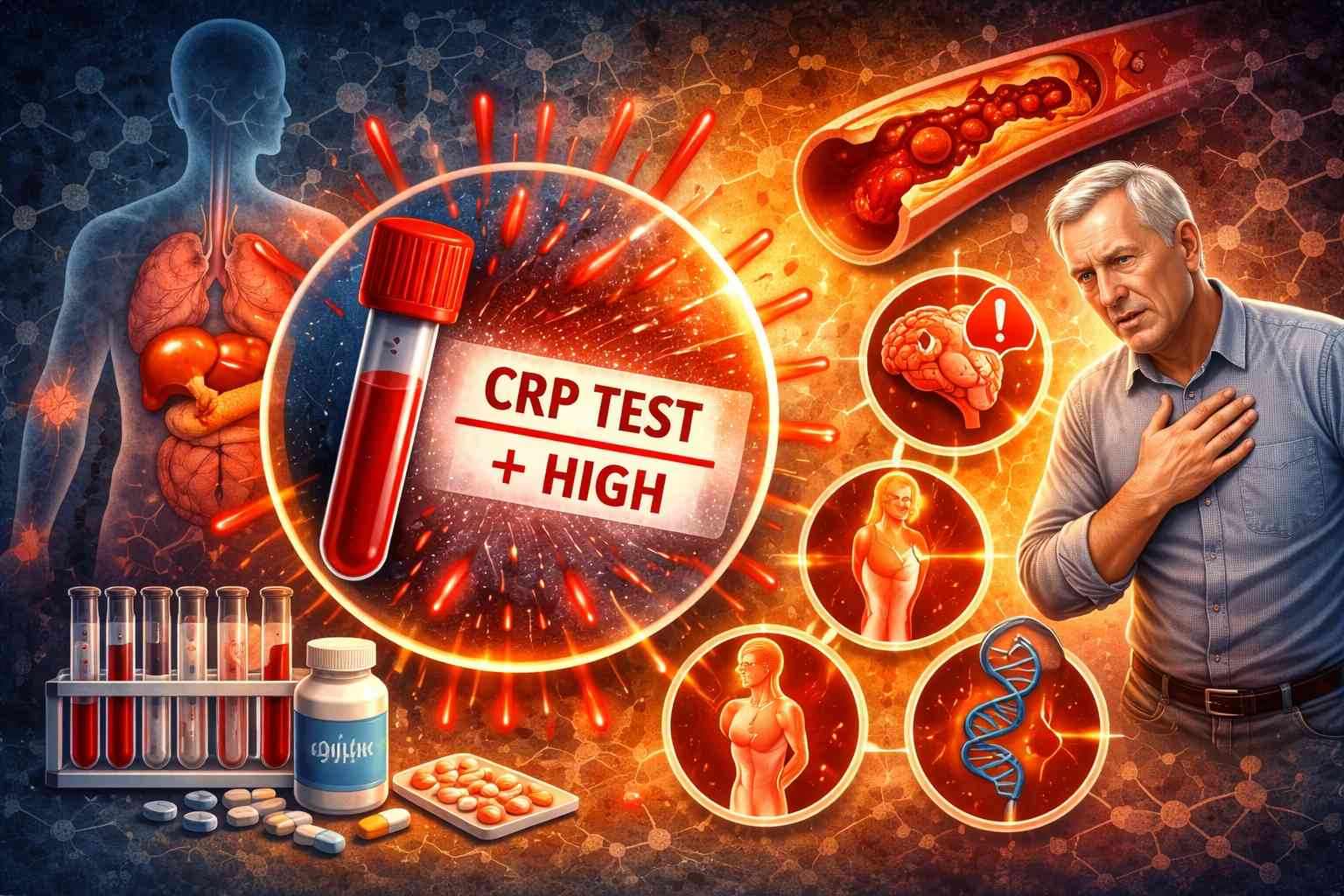
A high CRP can be a longevity red flag, but only in the right context. A single elevated result may reflect a short-term infection, injury, or stress response, while persistently high CRP may point to chronic inflammation, which is associated with higher risk of cardiovascular disease, metabolic dysfunction, and unhealthy aging.
TL;DR: High CRP is not always dangerous on its own, but persistently elevated CRP can be a warning sign of chronic inflammation and higher long-term health risk. The most useful approach is to interpret CRP alongside other biomarkers, symptoms, and lifestyle factors, then address the cause.
C-reactive protein, or CRP, is a protein made by the liver in response to inflammation. It is commonly used as a general marker to show that something inflammatory is happening in the body, but it does not identify the exact cause.
That is why CRP is helpful but incomplete. It can rise because of infection, strenuous exercise, injury, autoimmune disease, obesity, poor sleep, smoking, or chronic cardiometabolic stress. Learn more in our complete guide to longevity.
The key question is not simply whether CRP is high, but whether it stays high over time and whether other signs of poor health are present. In that setting, CRP becomes much more relevant for longevity and healthspan.
What Does a High CRP Really Mean?
Why Context Matters
A high CRP does not always mean serious disease. Temporary elevations are common and may happen during a viral infection, after an injury, or during periods of physical or psychological stress. In those situations, CRP may return to normal once the trigger is gone.
Persistent elevation is different. Research suggests that chronically raised CRP often reflects ongoing low-grade inflammation, which is more concerning because it is linked with cardiometabolic disease, obesity, insulin resistance, vascular dysfunction, and accelerated aging.
Common Causes of Elevated CRP
CRP can rise for many reasons, including acute infection, chronic inflammatory disease, excess visceral fat, poor sleep, smoking, periodontal disease, and sedentary lifestyle. This is why a CRP result should never be interpreted in isolation.
When CRP is elevated, it makes sense to look at the broader pattern. Blood sugar, triglycerides, blood pressure, ApoB, body composition, and symptoms may reveal whether the issue is a temporary immune response or part of a larger metabolic problem.
Is High CRP a Longevity Red Flag?
When High CRP Is More Concerning
High CRP becomes more of a longevity red flag when it is sustained rather than temporary. Chronic inflammation can damage tissues, impair blood vessels, worsen insulin resistance, and increase the risk of atherosclerosis and other age-related diseases.
This does not mean CRP is a direct measure of lifespan. It is better understood as a signal that inflammatory stress may be present. If that inflammatory burden remains high for years, it may contribute to poorer health outcomes and reduced healthspan.
What a High CRP Does and Does Not Tell You
CRP does not diagnose the cause of inflammation, and it does not predict longevity on its own. It is a broad marker, not a disease-specific one. However, when it remains elevated and is combined with other risk markers, it can become a meaningful warning sign.
In practical terms, a high CRP should prompt questions such as: Is there an infection? Is there excess visceral fat? Is blood sugar poorly controlled? Is sleep poor? Are diet, exercise, or stress levels contributing? The answer often lies in the wider health picture, not the CRP value alone.
Can Managing Inflammation Improve Longevity?
Evidence indicates that reducing chronic inflammation is one of the more practical ways to support healthy aging. Lowering inflammatory burden may improve vascular health, insulin sensitivity, metabolic function, and overall resilience.
This is why a high CRP can be useful. It may act as an early signal that lifestyle, recovery, or medical issues need attention before more obvious disease develops.
How to Interpret and Manage Elevated CRP Levels
How to Interpret CRP Sensibly
CRP is most useful when interpreted alongside other biomarkers and real-world context. A one-off result is often less informative than a repeated pattern. If CRP is high once, repeating the test later may help determine whether the rise was temporary or persistent.
It also helps to consider whether the measurement is standard CRP or high-sensitivity CRP, often called hs-CRP. High-sensitivity CRP is more useful for evaluating lower-grade inflammation related to cardiovascular and metabolic risk.
Practical Steps to Lower Inflammation
For many people, the most effective way to lower CRP is to improve the drivers of chronic inflammation. Weight loss when needed, especially reduction of visceral fat, often helps. Regular exercise, better sleep, stress management, and smoking cessation can also make a meaningful difference.
Diet quality matters as well. A diet built around minimally processed foods, vegetables, fruit, legumes, nuts, olive oil, oily fish, and adequate protein may help reduce inflammatory load. Cutting back on ultra-processed foods, excess alcohol, and sugary diets can also help.
Exercise is especially useful because it supports metabolism, cardiovascular health, and body composition. It may also improve mitochondrial function, endurance, and insulin sensitivity, all of which are relevant to long-term inflammation and aging.
When to Seek Medical Advice
If CRP stays elevated, it is reasonable to discuss it with a healthcare professional. Ongoing elevation may warrant a closer look at infections, autoimmune conditions, cardiometabolic disease, liver health, oral health, or other inflammatory sources.
The goal is not to chase a single number. The goal is to identify and address the cause of inflammation so long-term risk can be reduced.
The Broader Context: Inflammation, Aging, and Longevity
The Link Between Inflammation and Aging
Chronic low-grade inflammation is often described as a feature of aging, sometimes referred to as inflammaging. This does not mean inflammation is always harmful, since acute inflammation is essential for immune defense and healing. The problem is persistent inflammation that never fully resolves.
Over time, this kind of inflammatory burden may contribute to vascular damage, metabolic dysfunction, immune dysregulation, and tissue decline. That is why CRP can be relevant to longevity even though it is not a direct aging clock.
Why CRP Should Be Viewed as Part of a Bigger Picture
CRP is best treated as one useful signal within a broader health framework. It becomes more meaningful when combined with body composition, blood pressure, glucose control, lipid markers, fitness, sleep quality, and medical history.
That bigger-picture approach is more useful than focusing on CRP alone. A person with mildly elevated CRP but otherwise good metabolic health may have a different risk profile from someone with high CRP, obesity, insulin resistance, poor fitness, and hypertension.
For longevity, the most practical takeaway is simple: persistent inflammation deserves attention, but it is also often modifiable. That makes CRP less a doom marker and more a prompt to improve the environment inside the body.
References and Resources
These resources provide useful background on CRP, inflammation, cardiovascular risk, and healthy aging.
Authoritative Sources on High CRP a Longevity Red Flag
-
American Heart Association – Inflammation and Heart Disease
heart.orgProvides context on inflammation, cardiovascular risk, and why inflammatory markers matter for long-term heart health.
-
NIH – Chronic Inflammation and Aging
ncbi.nlm.nih.govA scientific review linking chronic inflammation with aging processes and age-related disease risk.
-
Healthline – Inflammation and Its Impact on Your Body
healthline.comA practical overview of inflammation, its causes, and lifestyle strategies that may help reduce it.
-
Mayo Clinic – Inflammation: Causes and How to Reduce It
mayoclinic.orgOffers practical guidance on lowering inflammation through lifestyle and medical care when needed.
-
WebMD – Inflammation and Aging
webmd.comA user-friendly summary of how chronic inflammation may influence aging and long-term disease risk.
-
Harvard Health Publishing – Aging and Inflammation
health.harvard.eduExplains why inflammation matters for aging and what practical steps may help lower inflammatory burden.

-
National Library of Medicine – Anti-inflammatory Diet and Longevity
ncbi.nlm.nih.govExplores dietary strategies that may help reduce inflammation and support healthy aging.
FAQ: Your Questions About High CRP and Longevity
Frequently Asked Questions
Is high CRP always a sign of poor health and reduced longevity?
No. A temporary rise can happen after infection, injury, or acute stress. Persistent elevation is more concerning because it may reflect chronic inflammation and higher long-term disease risk.
Can lifestyle changes really lower high CRP levels?
Yes. Weight loss when needed, regular exercise, better sleep, smoking cessation, and a less processed diet can often reduce chronic inflammation and lower CRP over time.
Should I ignore a single high CRP reading?
Usually not, but it should not be overinterpreted either. A repeat test and a review of symptoms, infection, stress, and other biomarkers often give a more accurate picture than one isolated result.
How does inflammation affect aging and lifespan?
Chronic inflammation can contribute to vascular damage, metabolic dysfunction, and tissue stress over time. This may reduce healthspan and increase the risk of age-related disease.
Conclusion
High CRP can be a longevity red flag when it reflects persistent chronic inflammation, but it is not a verdict on its own. Its real value is as an early signal that something in the body, or in daily habits, may need attention.
The most useful response is to look beyond the number itself. Interpreting CRP alongside body composition, metabolic markers, cardiovascular risk, sleep, diet, and exercise provides a much more meaningful picture. For many people, lowering inflammation is realistic, and doing so may improve both healthspan and long-term resilience.
Find out more information about “High CRP a Longevity Red Flag”
Search for more resources and information: