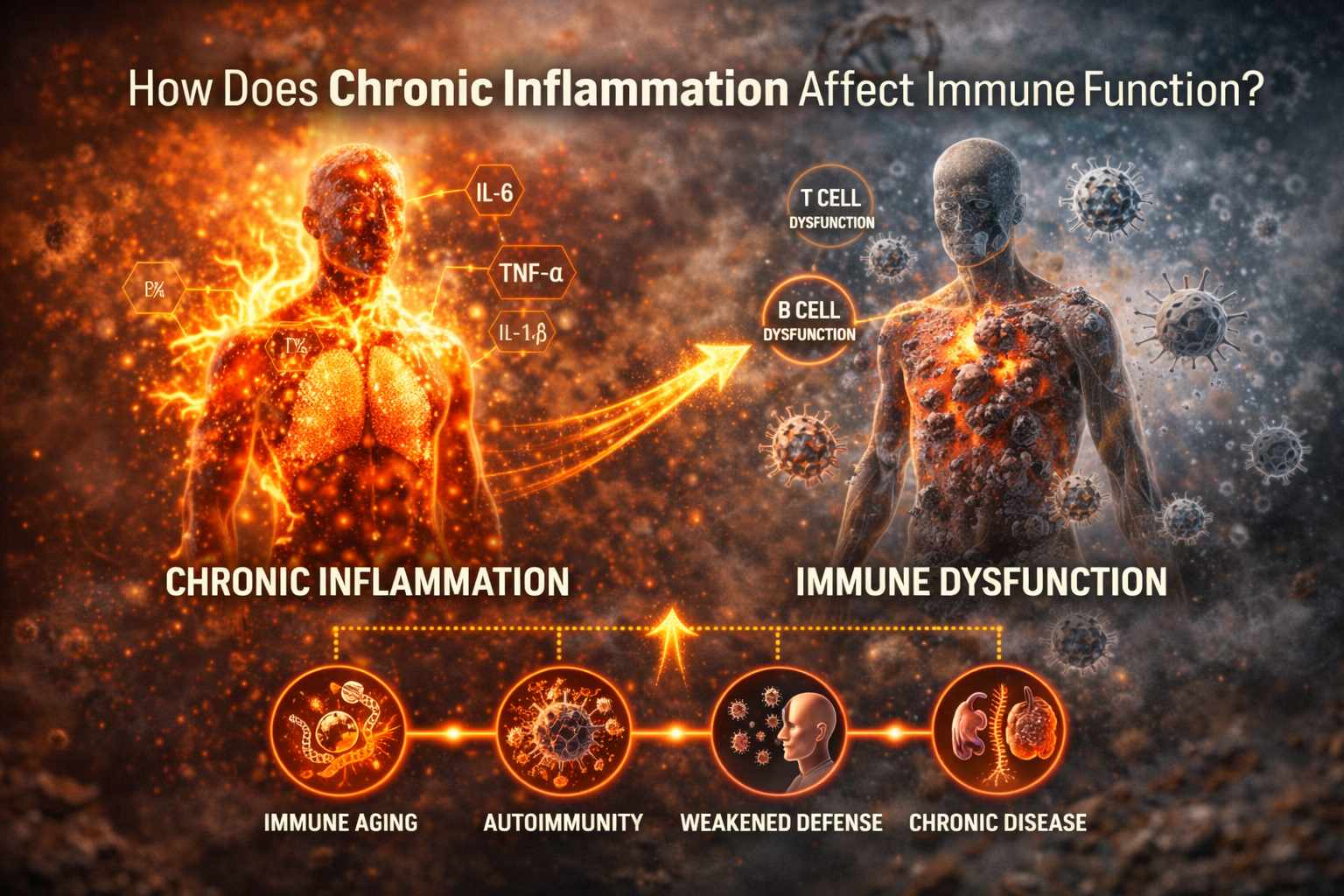
How Does Chronic Inflammation Affect Immune Function?
Understanding Chronic Inflammation and Immune Function
Yes, chronic inflammation affects immune function. While short-term inflammation is a normal part of healing and defense, long-term inflammation can disrupt immune balance, weaken the body’s response to infection, and increase the risk of tissue damage and chronic disease.
TL;DR: Chronic inflammation can impair immune function by keeping the immune system in a constant state of activation. Over time, this may reduce immune resilience, contribute to autoimmune problems, and worsen healthspan.
Inflammation is essential when it is brief and targeted. It helps the body fight infection, repair damage, and recover from injury. The problem begins when inflammation becomes persistent and low grade, often due to poor metabolic health, obesity, chronic stress, lack of sleep, smoking, or long-term illness.
In that setting, the immune system may stop responding in a balanced way. Instead of protecting the body efficiently, it can become dysregulated, contributing to immune exhaustion, unnecessary tissue damage, and a higher risk of disease. Learn more in our complete guide to longevity.
Why Chronic Inflammation Disrupts Normal Immune Function
Chronic inflammation keeps immune pathways switched on for too long. This can alter how immune cells communicate, how they respond to pathogens, and how effectively they resolve inflammation once a threat has passed.
Research suggests this prolonged activation can make the immune system less efficient. In some cases, it becomes under-responsive to new infections. In others, it becomes overly reactive and contributes to tissue damage or autoimmunity. This is one reason chronic inflammation is linked with both infection risk and inflammatory disease.
Does Chronic Inflammation Contribute to Autoimmune Conditions?
Yes, chronic inflammation is closely linked with autoimmune disease. In autoimmune conditions, the immune system attacks healthy tissues instead of only targeting infections or damaged cells. Persistent inflammatory signaling can worsen this process and make immune regulation less precise.
Conditions such as rheumatoid arthritis, lupus, inflammatory bowel disease, and multiple sclerosis involve abnormal immune activity alongside chronic inflammation. That does not mean inflammation alone causes every autoimmune disease, but evidence indicates it is a major part of the disease process.
How Does Chronic Inflammation Affect Immune Response?
Chronic inflammation changes the way the immune system responds to threats. Instead of mounting a short, effective response and then returning to baseline, the immune system may remain partly activated all the time. This can reduce its ability to respond appropriately when a real challenge appears.
Does Chronic Inflammation Weaken or Overactivate Immunity?
It can do both. Chronic inflammation may weaken immune defense by exhausting immune cells and reducing their responsiveness. At the same time, it can also increase harmful immune activation, which may damage healthy tissues.
This is why chronic inflammation is often described as immune dysregulation rather than simply a weak immune system. The issue is not just reduced immunity. It is poorly controlled immunity.
How Chronic Inflammation Relates to Aging and Healthspan
Chronic inflammation is also relevant to aging. Low-grade persistent inflammation is often discussed in longevity science because it is linked with cardiovascular disease, metabolic dysfunction, neurodegeneration, and reduced healthspan. This age-related inflammatory burden is sometimes called inflammaging.
Because immune function, metabolism, and inflammation are closely connected, long-term inflammation can influence how well the body maintains resilience over time.
The Impact of Chronic Inflammation on Immune Cells
Chronic inflammation directly affects immune cells such as macrophages, T cells, and B cells. When inflammatory signals remain elevated, these cells may stay activated for too long, shift toward less balanced behavior, or become less effective at responding to new threats.
For example, macrophages may remain in a pro-inflammatory state and continue releasing cytokines that sustain the cycle. T cells may show signs of dysfunction or exhaustion. B-cell responses may also become less balanced, depending on the underlying condition.
Does Chronic Inflammation Reduce Immune Cell Diversity?
Evidence indicates that persistent inflammation can reduce immune flexibility and diversity over time. A healthy immune system needs a broad range of cells and responses to deal with different pathogens. When inflammation becomes chronic, the system may become biased toward a narrower, more inflammatory state.
This may make the body less adaptable when facing new infections, recovering from illness, or responding to vaccines. In practical terms, chronic inflammation can make immune function less efficient and less resilient.
Why This Matters for Recovery and Disease Risk
When immune cells are stuck in a cycle of ongoing activation, the body may recover more slowly and become more vulnerable to chronic disease. This matters not only for infection risk, but also for long-term cardiovascular, metabolic, and autoimmune health.
That is why reducing chronic inflammation is not only about comfort or symptom control. It is also about protecting immune function and long-term health.
Lifestyle Factors and Managing Chronic Inflammation
Can Diet Help Reduce Chronic Inflammation?
Diet can strongly influence inflammatory load. Eating patterns built around minimally processed foods, vegetables, fruit, legumes, fish, healthy fats, and adequate protein are generally associated with better metabolic and immune health. By contrast, diets high in ultra-processed foods, refined sugars, and excess calories may worsen chronic inflammation.
Nutrients and food compounds such as omega-3 fats, polyphenols, and fibre may help support a healthier inflammatory balance, although the overall diet pattern matters more than any single ingredient.
How Exercise and Stress Affect Chronic Inflammation
Regular exercise can help lower chronic inflammation and improve immune regulation. Aerobic exercise supports endurance and cardiovascular health, while resistance training helps maintain muscle mass and metabolic function. Together, they can improve several biomarkers linked with healthier aging.
Chronic stress tends to have the opposite effect. Persistent stress can raise inflammatory signaling, impair recovery, worsen sleep, and increase immune dysregulation. For that reason, stress management is a practical part of reducing chronic inflammation.
Sleep, Body Composition, and Metabolic Health
Poor sleep, excess visceral fat, and insulin resistance are all linked with chronic inflammation. This is one reason inflammation is often tied to metabolism rather than only to infection or injury. Improving sleep quality, body composition, and glucose control may reduce inflammatory burden and support better immune function.
These changes are also relevant to aging, resilience, and long-term healthspan.
Practical Takeaways for Supporting Immune Health
The most practical way to improve immune health in the context of chronic inflammation is to reduce the drivers of persistent inflammatory stress. That usually means addressing diet quality, physical inactivity, poor sleep, chronic stress, smoking, excess body fat, and unmanaged health conditions.
It also helps to focus on useful biomarkers where appropriate, such as waist circumference, blood pressure, blood glucose, blood lipids, and inflammatory markers discussed with a clinician. These can provide a clearer picture of overall metabolic and immune health.
No single food, supplement, or habit can solve chronic inflammation on its own. A consistent, whole-system approach usually works better than isolated quick fixes.
References and Resources
These resources provide useful background on inflammation, immune regulation, and the role of chronic inflammation in disease and healthy aging.
Authoritative Sources on Chronic Inflammation and Immune Function
-
Centers for Disease Control and Prevention (CDC) – Inflammation and Autoimmune Disease
cdc.govExplains how inflammation is involved in autoimmune disease and why controlling chronic inflammation matters for long-term health.
-
National Center for Complementary and Integrative Health – Inflammation
nccih.nih.govProvides an overview of inflammation and its relationship to overall health and disease risk.
-
World Health Organization – Inflammation
who.intOffers a broad public health perspective on inflammation and its consequences for health worldwide.
-
National Institutes of Health – Chronic Inflammation and Disease
nih.govA scientific review describing how persistent inflammation contributes to chronic disease and biological stress.
-
American Heart Association – Inflammation and Heart Disease
ahajournals.orgExplains the role of inflammation in cardiovascular disease and the wider relevance of inflammatory burden.
-
Frontiers in Immunology – Inflammation and Immune Regulation
frontiersin.orgDiscusses how inflammation affects immune regulation and why persistent activation can disrupt immune balance.
-
Medical News Today – Inflammation Explained
medicalnewstoday.comA plain-language overview of inflammation, including common causes and practical ways to reduce it.

Frequently Asked Questions
Does chronic inflammation weaken the immune system?
Yes, it can. Chronic inflammation may exhaust immune cells, impair normal immune responses, and reduce the body’s ability to handle infections efficiently. It can also create harmful overactivation rather than balanced protection.
Can reducing inflammation improve immune function?
In many cases, yes. Improving diet quality, exercise, sleep, stress management, and metabolic health may help lower chronic inflammation and support more balanced immune function.
How does chronic inflammation affect immune function in autoimmune diseases?
In autoimmune diseases, chronic inflammation can sustain abnormal immune activity and increase tissue damage. It is often part of the cycle that keeps the immune system attacking the body’s own tissues.
What lifestyle changes can help manage chronic inflammation?
Useful changes include eating a minimally processed diet, staying physically active, improving sleep, reducing chronic stress, avoiding smoking, and maintaining a healthier body composition.
Is chronic inflammation reversible, and how?
It often can be improved, especially when the underlying drivers are identified and addressed. The best approach depends on the cause, but lifestyle changes and appropriate medical care can often reduce inflammatory burden.
Conclusion
Chronic inflammation does affect immune function, and usually in a harmful way. It can weaken immune defenses, drive immune overactivation, and increase the risk of infection, autoimmune disease, and long-term health problems.
The most effective response is to reduce the causes of persistent inflammation through better nutrition, exercise, sleep, stress management, and treatment of underlying health issues when necessary. Supporting immune health is not just about fighting infection. It is also about maintaining a balanced inflammatory response that protects health over the long term.
Find out more information about “Does chronic inflammation affect immune function?”
Search for more resources and information: