How Does Thymus Shrinkage Affect Immunity?
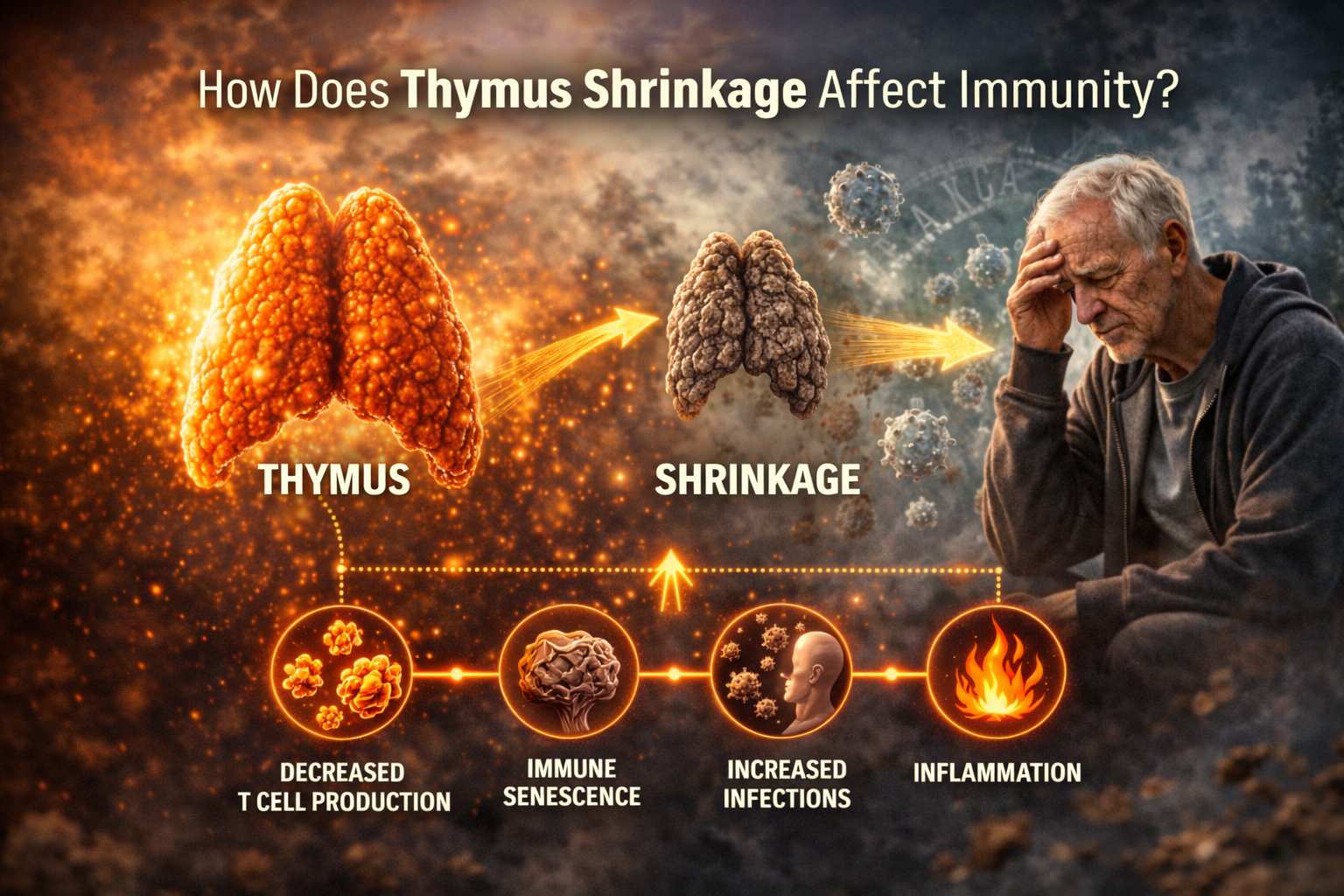
Yes, thymus shrinkage affects immunity. As the thymus gradually becomes smaller with age, it produces fewer new naive T cells, which can reduce the immune system’s ability to respond to unfamiliar infections and may also weaken vaccine responses over time.
TL;DR: Thymus shrinkage can weaken immunity because the body makes fewer new T cells as the thymus ages. This is a normal part of aging, but healthy lifestyle habits may help support immune resilience and healthspan.
The thymus is a small immune organ, but it plays a major role in training T cells that help defend the body. When thymic function declines, the immune system becomes less adaptable, which is one reason immune aging becomes more noticeable later in life. Learn more in our complete guide to longevity.
This does not mean immunity suddenly fails when the thymus shrinks. The immune system still works, but it becomes less efficient at responding to new threats. That change is an important part of aging, immunosenescence, and long-term immune health.
Understanding the Thymus and Its Role in Immunity
What Is the Thymus and Why Is It Important?
The thymus is a small organ located behind the breastbone. Its main job is to help immature T cells develop into functional immune cells that can recognize threats while avoiding attacks on the body’s own tissues.
How Does the Thymus Support Immune Function?
The thymus acts as a training site for T cells. This process is essential because T cells play a major role in identifying infected or abnormal cells and coordinating immune responses. A healthy thymus supports a broad and adaptable immune system, especially early in life when the body is building a strong pool of immune defenses.
Because the thymus is central to T-cell development, changes in thymic function can influence how well the body responds to infection, vaccination, and immune stress over time.
What Is Thymus Shrinkage and Why Does It Happen?
Understanding Thymus Atrophy
Thymus shrinkage is also called thymic involution. It is a normal age-related process in which active thymic tissue is gradually replaced by fatty tissue. This begins relatively early in adulthood and continues over the lifespan.
As the thymus becomes less active, it produces fewer new naive T cells. These are the cells that help the immune system respond to pathogens it has not encountered before. Research suggests this decline is one of the key reasons immune function changes with age.
Why Does the Thymus Shrink?
Thymic involution appears to be driven by a mix of aging, hormonal changes, and long-term biological stress. It is considered a normal part of human development, although the rate and impact may vary between individuals.
Factors such as chronic stress, poor metabolic health, inflammation, and disease burden may also influence how well the immune system performs as thymic output declines. The thymus does not act alone, but its shrinkage is an important part of the wider immune aging process.
Does Thymus Shrinkage Affect Immunity?
How Thymus Shrinkage Impacts Immune Response
Thymus shrinkage affects immunity mainly by reducing the supply of new naive T cells. When fewer of these cells are available, the immune system may be less prepared to respond to unfamiliar infections or new vaccine targets.
This helps explain why immune responses often become less flexible with age. Older adults may still have strong immune memory against past exposures, but their response to new threats can be slower or weaker.
The Role of Thymic Shrinkage in Immune Aging
Thymus shrinkage is one contributor to immunosenescence, the broad decline in immune function associated with aging. It does not act in isolation, but it plays a meaningful role in why infection risk, slower recovery, and reduced vaccine responsiveness become more common over time.
There is also interest in how thymic decline may affect immune balance more broadly. Research suggests changes in T-cell regulation may contribute to greater immune dysfunction with age, although immune aging is complex and influenced by many factors.
How Thymus Shrinkage Impacts T-Cell Production
Why T-Cell Decline Matters
The clearest consequence of thymus shrinkage is lower production of naive T cells. These cells are important because they expand the immune system’s ability to recognize pathogens the body has not seen before.
When thymic output falls, the immune system relies more heavily on older existing cells. That may be enough for many everyday challenges, but it can reduce adaptability and resilience, especially during infection or physiological stress.
Implications for Vaccine Effectiveness
Thymic shrinkage may also affect vaccine responses. Vaccines depend on the immune system’s ability to recognize an antigen and build a coordinated response. With age, that response may be less robust, partly because the pool of fresh T cells is smaller.
This is one reason vaccine strategies for older adults may differ from those used in younger populations. Boosters, adjuvants, or age-specific vaccine formulations are designed to improve protection in the context of immune aging.
Can Thymus Shrinkage Be Reversed or Mitigated?
Is There Hope for Reversing Thymic Involution?
Completely reversing thymus shrinkage is not currently a routine clinical reality. However, research is exploring ways to improve thymic function or support immune regeneration. Some experimental areas include growth factors, hormonal pathways, and regenerative strategies, but these are still being studied.
At present, the more realistic goal is to support immune health and reduce factors that worsen immune aging rather than expecting a full reversal of thymic involution.
Lifestyle Factors to Support Thymic and Immune Health
Healthy lifestyle habits appear to support the immune system even if they do not directly regrow the thymus. Regular exercise, adequate sleep, good nutrition, and stress control may help reduce chronic inflammation and support better immune regulation.
These habits also support metabolism, recovery, and broader biomarkers linked with healthy aging. That matters because immune resilience depends on overall physiological health, not only on the thymus itself.
Practical Tips to Support Your Immune System During Thymus Shrinkage
Diet and Nutrition Strategies
A balanced diet supports immune function by providing enough protein, vitamins, minerals, and energy for immune cells to work properly. Nutrient-dense foods such as vegetables, fruit, legumes, lean proteins, and healthy fats can help maintain resilience as the immune system ages.
Deficiencies in nutrients such as vitamin D, zinc, or protein intake may impair immune function, so basic nutritional adequacy matters more than chasing immune-boosting claims.
Stress Reduction and Lifestyle Adjustments
Chronic stress can impair immune function and may worsen the wider processes involved in immune aging. Sleep quality, recovery, and stress management are therefore practical parts of supporting immunity during thymic decline.
Useful approaches include regular physical activity, good sleep routines, and simple strategies that lower persistent stress rather than relying on quick fixes.
Supplementation and Medical Support
Some supplements may be helpful in specific cases, particularly where a deficiency exists, but they should not replace the fundamentals of diet, exercise, sleep, and preventive care. Medical advice is especially important if there are concerns about frequent infections, poor recovery, or vaccine response.
A comprehensive approach is usually the most effective: maintain general health, address risk factors, and use medical guidance when appropriate.

References and Resources
These resources provide useful background on the thymus, T-cell development, immune aging, and thymic involution.
Authoritative Sources on Thymus Shrinkage and Immunity
- The Role of the Thymus in Immune Function
ncbi.nlm.nih.gov
Provides an overview of thymic involution and explains why the thymus matters for immune development and immune aging.
- Thymus Gland and Autoimmune Diseases
mayoclinic.org
Explains the thymus in plain language and outlines its role in immune regulation.
- Thymic Aging and Immune Decline
frontiersin.org
Reviews how thymic aging contributes to declining immune adaptability and reduced T-cell output.
- Thymic Regeneration Strategies
ncbi.nlm.nih.gov
Explores potential strategies to support or regenerate thymic function, although most remain experimental.
- WHO: Immunization and Aging
who.int
Gives useful public health context on vaccination, prevention, and protecting health as immunity changes with age.
- Impact of Aging on Immune Function
ahajournals.org
Broadens the discussion beyond the thymus and explains how immune aging affects overall resilience.
- Aging and Your Immune System
healthline.com
Provides a practical overview of how immune function changes with age and what habits may support immune health.
Frequently Asked Questions
Does thymus shrinkage affect your ability to fight infections?
Yes. Thymus shrinkage reduces the production of new naive T cells, which can make it harder for the immune system to respond to unfamiliar infections. This is one reason infection risk and recovery time may worsen with age.
Can I reverse thymus shrinkage or improve its function?
Complete reversal is not currently routine or well established. However, research is exploring regenerative approaches, and healthy lifestyle habits may help support overall immune function as thymic activity declines.
What are signs that my immune system is declining due to thymus shrinkage?
Possible signs include more frequent infections, slower recovery, and weaker vaccine responses. These changes can also result from broader immune aging, so they should be considered in context rather than blamed on the thymus alone.
How critical is thymus health for overall immune function?
Thymus health is important because the thymus helps generate new T cells early in life and supports immune adaptability. As thymic function declines, the immune system becomes less flexible, which is a meaningful part of immune aging.
Conclusion
Thymus shrinkage does affect immunity, mainly by reducing the production of new T cells that help the body respond to unfamiliar threats. This is a normal part of aging, but it has real consequences for infection risk, vaccine response, and immune resilience.
Although thymic involution cannot currently be fully reversed in routine practice, immune health can still be supported through good nutrition, exercise, sleep, stress management, and appropriate medical care. Understanding how the thymus changes with age helps explain one of the core processes behind immune aging and healthier long-term aging.
Find out more information about “Does thymus shrinkage affect immunity?”
Search for more resources and information: