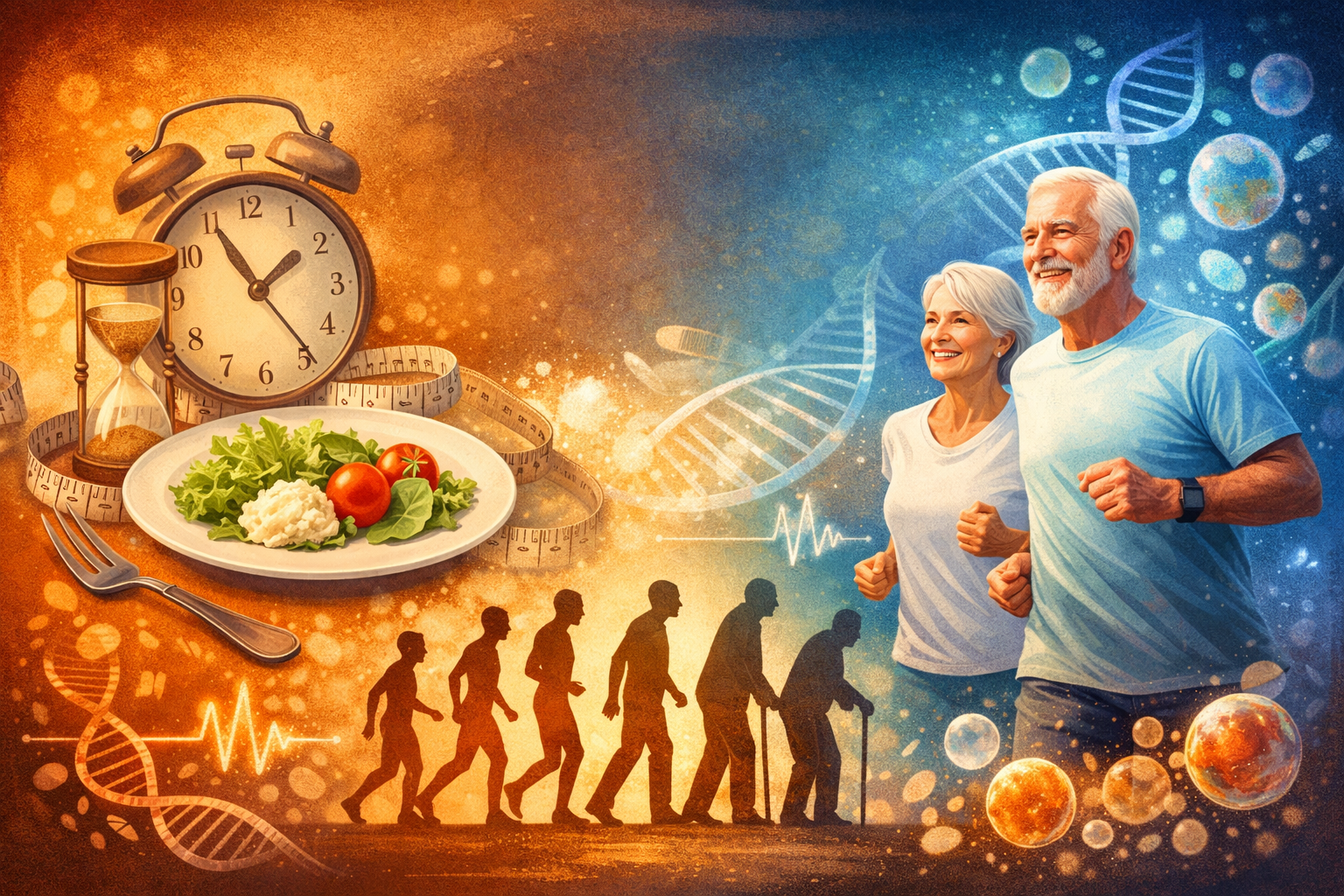
How Does Calorie Restriction Extend Lifespan?
Introduction
Does calorie restriction extend lifespan? This question has been central to longevity science for decades. Calorie restriction generally refers to reducing energy intake without causing malnutrition, and research across multiple species suggests it can influence aging biology in meaningful ways. The idea is not simply that eating less leads to a longer life, but that reduced calorie intake may activate cellular pathways linked to repair, metabolic efficiency, and stress resistance.
In animal models, calorie restriction has consistently been associated with improved healthspan and, in many cases, longer lifespan. In humans, the evidence is more cautious. The strongest support is for better metabolic health, reduced inflammation, improved biomarkers, and lower risk factors for age-related disease rather than a proven extension of lifespan itself. That distinction matters. Learn more in our complete guide to longevity.
Understanding Calorie Restriction and Its Impact
What is calorie restriction and why does it matter?
Calorie restriction usually involves reducing daily calorie intake by roughly 10% to 40% while still meeting essential nutrient needs. That last point is critical. A lower-calorie diet that lacks protein, vitamins, minerals, or healthy fats is not a longevity strategy. Properly implemented calorie restriction focuses on nutrient density, metabolic health, and long-term sustainability rather than simple deprivation.
The reason calorie restriction matters in aging research is that it appears to shift the body away from constant growth signaling and toward repair and maintenance. This may help reduce inflammation, oxidative damage, metabolic dysfunction, and other processes associated with biological aging. In the context of healthy aging, the goal is not just to live longer, but to preserve healthspan, energy, and resilience for more years.
Does Calorie Restriction Extend Lifespan in humans?
Human data remain less definitive than animal data. Studies such as CALERIE suggest that calorie restriction can improve important biomarkers related to aging, including insulin sensitivity, inflammation, blood pressure, and metabolic efficiency. These changes support the idea that calorie restriction may improve healthspan and reduce chronic disease risk, even if a direct effect on human lifespan has not yet been proven.
This makes calorie restriction an interesting but nuanced topic. The strongest current case is that it may improve the conditions associated with healthy aging rather than guarantee longer life. For many people, a moderate and sustainable approach may be more realistic than aggressive calorie restriction. In practice, the quality of the diet, the person’s activity level, and overall nutritional adequacy matter as much as the calorie reduction itself.
Biological Mechanisms Behind Longevity Extension
How does calorie restriction influence cellular processes?
One reason calorie restriction remains a major focus in longevity science is that it affects several pathways linked to aging. Research suggests it can influence sirtuins, AMPK, mTOR, and other nutrient-sensing systems that help regulate growth, repair, autophagy, and metabolic adaptation. These pathways matter because they shape how cells respond to stress, damage, and limited energy availability over time.
Autophagy is one of the most discussed mechanisms. This is the process by which cells break down and recycle damaged components. When autophagy functions efficiently, cells may maintain better internal quality control, which is especially relevant to aging tissues. Calorie restriction also appears to support mitochondrial function, which may help preserve energy production and reduce the accumulation of cellular damage.
Does calorie restriction reduce oxidative damage?
Oxidative stress has long been associated with aging, though the story is more complex than once thought. Calorie restriction may reduce some forms of oxidative damage by improving metabolic efficiency and lowering the burden of excess nutrient signaling. This could help protect DNA, proteins, and lipids from cumulative wear over time.
It may also reduce chronic low-grade inflammation, another important driver of biological aging. Lower inflammation can support better cardiovascular health, improved insulin sensitivity, and healthier tissue maintenance. These benefits are part of why calorie restriction continues to be studied as a strategy that may slow aspects of aging, improve biomarkers, and enhance long-term health outcomes.
Practical Ways to Implement Calorie Restriction
How can calorie restriction be practiced safely?
Any calorie restriction approach should begin conservatively. A modest reduction in calorie intake, combined with careful attention to protein, micronutrients, and overall diet quality, is generally more sustainable than a severe cut. Nutrient-dense foods such as vegetables, legumes, lean protein sources, fruit, nuts, seeds, and minimally processed whole foods make it easier to reduce calories without compromising essential nutrition.
Protein deserves special attention, especially for healthy aging. Inadequate protein intake during calorie restriction can contribute to muscle loss, which undermines metabolic health, strength, and healthspan. Resistance training, sufficient sleep, and adequate recovery also become more important when calories are lower. A responsible approach prioritizes preserving muscle, energy, and function rather than simply lowering body weight.
What practical strategies improve long-term adherence?
Meal planning, consistent eating patterns, and a focus on satiety can make calorie restriction more manageable. Many people find that reducing ultra-processed foods, sugary drinks, and low-satiety snacks naturally lowers calorie intake without requiring extreme restriction. Others use structured approaches such as time-restricted eating or intermittent fasting, though these are not identical to calorie restriction and may or may not reduce total energy intake.
Long-term success usually depends on sustainability. A strategy that improves biomarkers but creates chronic hunger, fatigue, or social stress is unlikely to work well over time. For healthy aging, the most useful approach is often moderate, nutrient-focused, and flexible enough to support lifestyle, exercise, and consistent recovery.
Potential Risks and Considerations
Are there risks associated with calorie restriction?
Yes. Calorie restriction is not automatically beneficial in every context. Excessive restriction can lead to nutrient deficiencies, reduced muscle mass, fatigue, low mood, hormonal disruption, impaired recovery, and lower bone density. In older adults, aggressive calorie reduction may be especially problematic if it contributes to sarcopenia or frailty.
It may also be inappropriate for people with a history of eating disorders, underweight individuals, those recovering from illness, or anyone with elevated nutritional needs. Even when calorie restriction improves some biomarkers, it should not come at the cost of strength, resilience, or overall function. The healthiest version of calorie restriction is one that supports rather than compromises long-term health.
How can you tell if it is being done correctly?
Signs of a better-designed approach include stable energy, preserved muscle mass, adequate recovery, good mood, and no evidence of nutrient deficiency. Helpful markers may include body composition, strength, sleep quality, inflammation markers, blood glucose control, lipids, and other relevant biomarkers. If calorie restriction causes persistent fatigue, irritability, poor training recovery, or declining physical performance, the approach may be too aggressive.
For that reason, careful monitoring matters. Moderate calorie restriction can be explored safely, but it works best when paired with enough protein, regular exercise, and professional guidance where appropriate. The aim is to support healthy aging, not simply reduce food intake.
References and Resources
These resources provide useful background on calorie restriction, healthspan, and longevity mechanisms:
Authoritative Sources on Does Calorie Restriction Extend Lifespan
- Calorie Restriction and Aging: A Review of the Evidence
ncbi.nlm.nih.gov
A broad review of the evidence on calorie restriction and aging across species, including proposed mechanisms and limitations.
- Does Calorie Restriction Extend Life? National Institute on Aging
nia.nih.gov
A useful overview of the current human evidence, including why calorie restriction remains promising but not fully settled.
- The Molecular Basis of Calorie Restriction and Longevity
cell.com
Explains the molecular pathways involved in calorie restriction, including nutrient sensing, repair, and cellular maintenance.
- Nutrition Society: Calorie Restriction
nutrition.org.uk
Offers practical context on calorie restriction and the importance of maintaining nutritional adequacy.
- Intermittent Fasting and Calorie Restriction: Impact on Aging
ncbi.nlm.nih.gov
Explores how calorie restriction and related dietary strategies may affect aging biology and healthspan outcomes.
- Medical News Today: Calorie Restriction
medicalnewstoday.com
A general overview of calorie restriction, potential benefits, and important practical considerations.

- Long Life Strategies by Josh Kaufman
joshkaufman.com
Provides practical discussion of longevity strategies, including calorie restriction and related health behaviors.
Frequently Asked Questions
Frequently Asked Questions
Does Calorie Restriction Extend Lifespan in humans?
The evidence in humans is strongest for improved healthspan rather than proven lifespan extension. Calorie restriction appears to improve metabolic health, inflammation, and several biomarkers linked to aging, but direct proof that it extends human lifespan is still limited.
What are the main biological pathways affected by calorie restriction?
Calorie restriction appears to influence pathways such as AMPK, mTOR, and sirtuins. These pathways are involved in nutrient sensing, stress resistance, autophagy, mitochondrial function, and cellular repair, all of which are relevant to healthy aging.
Are there risks involved with calorie restriction for longevity?
Yes. If calorie restriction is too aggressive or poorly designed, it can lead to nutrient deficiencies, muscle loss, low energy, hormonal disruption, and reduced recovery. It should be approached carefully, especially in older adults or anyone with higher nutritional needs.
How can I tell if I am practicing calorie restriction correctly?
A better approach usually preserves energy, strength, mood, and recovery while improving health markers. If calorie restriction leads to chronic fatigue, poor exercise performance, or signs of undernourishment, the strategy may need to be adjusted.
Conclusion
Calorie restriction remains one of the most studied interventions in longevity science. In animals, it has repeatedly been linked to longer lifespan. In humans, the evidence is more measured but still compelling, particularly for better metabolic health, reduced inflammation, improved biomarkers, and support for healthy aging.
The most important takeaway is that calorie restriction is not simply about eating less. It is about reducing energy intake while preserving nutrition, muscle, metabolic health, and long-term function. When approached responsibly, it may be a useful strategy for improving healthspan and influencing some of the biological pathways associated with aging.
Find out more information about “Does Calorie Restriction Extend Lifespan”
Search for more resources and information: