How Does Protein Intake Affect Mtor?
Understanding mTOR and Its Role in the Body
What Is mTOR and Why Does It Matter?
mTOR, short for mechanistic target of rapamycin, is a major cellular signaling pathway involved in growth, metabolism, protein synthesis, and tissue repair. It acts as a nutrient and energy sensor, responding to amino acids, insulin, exercise, and overall energy availability. When activated appropriately, mTOR supports muscle protein synthesis, recovery, immune function, and cellular adaptation.
Its importance comes from balance. Too little mTOR activity can impair growth, healing, and muscle maintenance. Too much chronic activation, however, may be linked to metabolic dysfunction, reduced cellular cleanup, and potentially higher risk of age-related disease in certain contexts. That is why the question Does Protein Intake Affect mTOR matters not only for muscle building, but also for metabolism, healthy aging, and longevity science. Learn more in our complete guide to longevity.
Why mTOR Matters for Muscle, Metabolism, and Longevity
mTOR is especially relevant for people interested in strength, recovery, and long-term health. It helps translate nutrient intake into muscle repair and growth, particularly after resistance training. At the same time, longevity science often focuses on the downside of excessive, constant growth signaling. This creates an important trade-off: enough mTOR activation to support performance and preserve lean mass, but not so much that the pathway remains overactivated all the time.
This is why dietary protein deserves attention. Protein is one of the strongest nutritional signals for mTOR activation, which makes it highly useful for muscle maintenance but also worth managing thoughtfully in the broader context of healthspan and aging.
How Protein Intake Influences mTOR Activation
Does Protein Intake Affect mTOR: The Basics
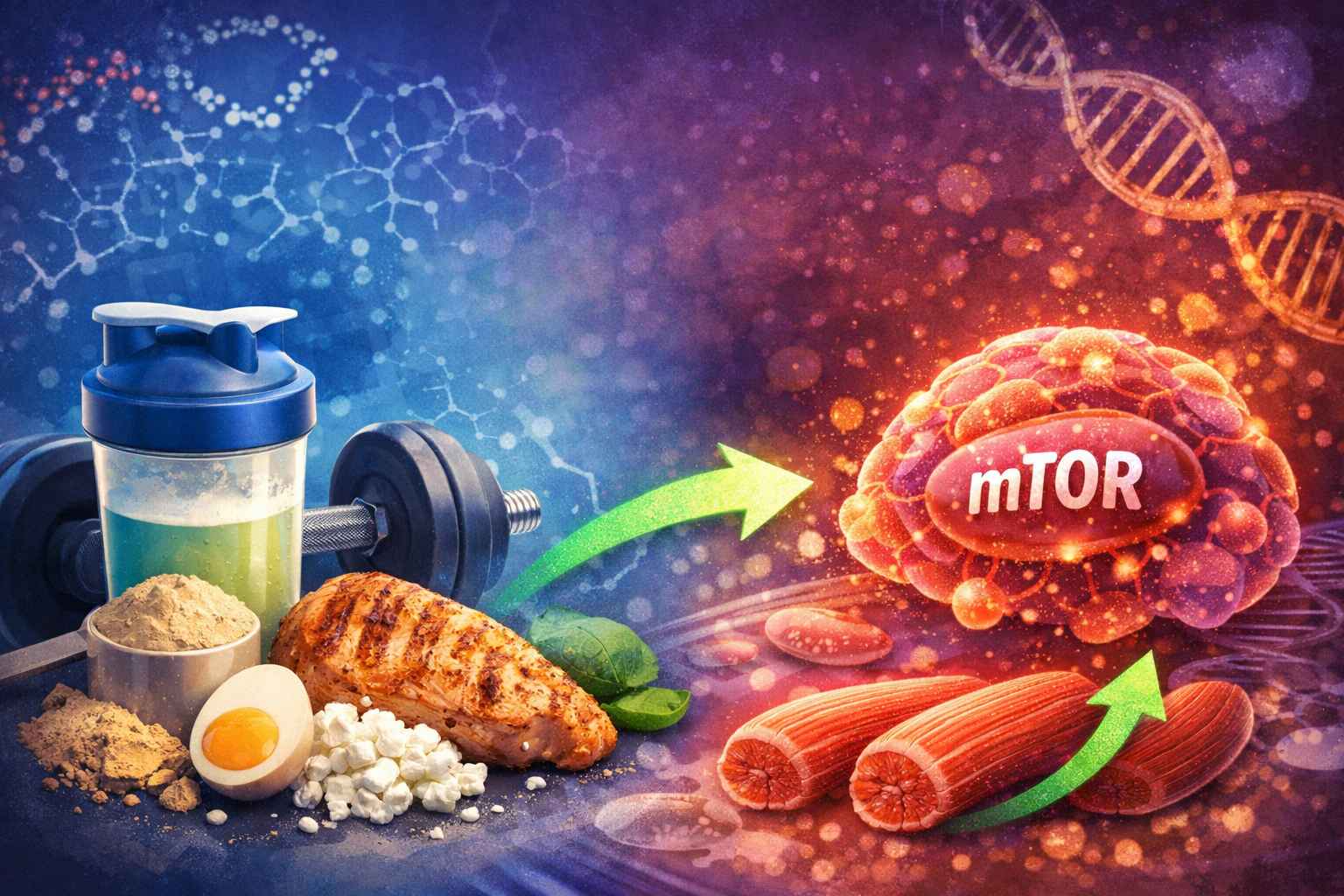
Yes, protein intake directly affects mTOR activity. Protein provides amino acids, and certain amino acids, especially leucine, are strong activators of the mTOR pathway. When a protein-rich meal is consumed, mTOR activity rises, signaling the body to increase muscle protein synthesis and support growth and repair processes.
This is why high-quality protein sources often have a more noticeable effect on recovery and muscle adaptation. Proteins rich in essential amino acids, particularly whey, dairy, eggs, fish, and meat, tend to stimulate mTOR efficiently. Plant proteins can also activate mTOR, though their amino acid profile and leucine content may differ. In practical terms, Does Protein Intake Affect mTOR mainly through amino acid availability, meal composition, and protein quality.
Which Types of Protein Stimulate mTOR Most Strongly?
Not all proteins affect mTOR equally. Whey protein is well known for rapidly increasing amino acid levels and strongly stimulating mTOR because it is rich in leucine and quickly digested. Other complete proteins, such as eggs, dairy, poultry, fish, and lean meats, also provide robust stimulation. Some plant-based proteins can support mTOR effectively as well, especially when protein intake is adequate and amino acid quality is considered.
This matters for both performance and diet planning. Faster-digesting proteins may be particularly effective after exercise, while mixed whole-food meals may produce a steadier response. The choice depends on the goal: maximizing immediate muscle protein synthesis, supporting recovery, or balancing protein intake across the day.
How Much Protein Is Enough to Stimulate mTOR?
For most adults, around 20 to 40 grams of high-quality protein per meal is generally enough to stimulate mTOR and support muscle protein synthesis. The exact amount depends on body size, age, activity level, training status, and the type of protein consumed. Older adults may require slightly more protein per meal because of reduced anabolic sensitivity.
More is not always better. Once a meal provides enough essential amino acids to trigger a strong response, extra protein may not produce proportionally more mTOR activation or muscle-building benefit. This is why protein distribution across the day often matters more than simply loading a very large amount into one meal.
Managing Protein Intake for Balanced mTOR Activity
Meal Timing and Protein Distribution
Protein timing influences how mTOR is activated throughout the day. A protein-rich meal after resistance training is especially effective because muscles are more sensitive to amino acids and mechanical signals from exercise. This combination creates a strong but purposeful activation of mTOR that supports recovery and adaptation.
Spacing protein across several meals can also be helpful. Rather than consuming most daily protein in a single sitting, spreading intake across breakfast, lunch, dinner, and possibly a post-training meal can support repeated opportunities for muscle repair without relying on constant overfeeding. This pattern is particularly useful for preserving muscle mass during aging, when maintaining strength and lean tissue becomes a major health priority.
Balancing Protein with Energy Intake and Training
Protein does not act alone. mTOR activity is also influenced by energy balance, resistance training, insulin, and overall nutrient availability. Carbohydrates can indirectly support the process by improving workout performance and recovery, while healthy fats help support broader metabolic health and hormone balance.
This means protein should be viewed as part of a complete dietary pattern. An effective approach considers exercise, total calorie intake, meal timing, and food quality, rather than focusing only on single amino acids or supplements. For healthy aging, this broader perspective matters because both undernourishment and chronic overnutrition can create problems.
Why Chronic Overactivation Can Be a Concern
mTOR activation is not inherently harmful. In fact, it is necessary for growth, repair, and physical function. The concern is chronic overactivation without balance, especially in the context of excess calorie intake, low activity, poor metabolic health, or constant grazing on highly stimulating foods. Over time, this pattern may be associated with reduced autophagy, higher insulin signaling, and less metabolic flexibility.
That is why protein intake should be strategic rather than excessive. In longevity science, the aim is often to support enough mTOR activity for muscle maintenance and recovery while still allowing periods of lower nutrient signaling that support cellular cleanup and metabolic resilience.
Practical Tips for Protein, mTOR, and Healthy Aging
How to Optimize Protein Intake
A practical approach is to consume high-quality protein at regular intervals, usually across three to four meals per day, with particular attention to the meal after exercise. Lean meats, fish, eggs, dairy, and high-quality plant proteins can all contribute. For many people, this pattern provides enough amino acids to support muscle protein synthesis without unnecessary excess.
Tracking total daily intake can also be useful. Active individuals, older adults, and those trying to preserve or build muscle may benefit from a higher protein intake than sedentary adults. The goal is to match intake to needs rather than assuming that more protein is always better.
Protein, Fasting, and Longevity
Some people use intermittent fasting, lower-protein meals, or occasional lower-protein days as a way to reduce nutrient signaling and give the body periods of relative metabolic rest. This approach may help reduce constant mTOR activation while still allowing robust activation when protein is consumed around exercise or during main meals.
The most useful long-term strategy is often cyclical rather than extreme. Resistance training and adequate protein support muscle mass, while occasional periods of lower feeding intensity may support autophagy, metabolic health, and healthy aging. This can help reconcile the needs of performance with the principles of longevity science.
Protein Needs Change with Age
Age is an important part of the mTOR discussion. Younger adults often tolerate stronger growth signaling well, particularly if they are active and metabolically healthy. Older adults face a different challenge: preserving muscle mass, strength, bone integrity, and functional independence. In that context, sufficient protein and effective mTOR activation become especially important.
This is why aggressive protein restriction is not automatically a longevity strategy for everyone. Healthy aging requires a balance between limiting chronic overactivation and maintaining enough anabolic support to preserve lean mass, mobility, and resilience.
Practical Takeaway
Does Protein Intake Affect mTOR? Absolutely. Protein is one of the main dietary regulators of mTOR, particularly through essential amino acids such as leucine. The key is not avoiding mTOR activation altogether, but using it purposefully. Protein intake should support recovery, muscle maintenance, metabolism, and healthy aging without turning constant stimulation into the default state.
References and Resources
Throughout research on Does Protein Intake Affect mTOR, the following resources are useful for understanding how amino acids, meal patterns, and nutrient signaling influence growth, metabolism, and aging:
Authoritative Sources on Does Protein Intake Affect mTOR
-
mTOR Signaling in Growth, Metabolism, and Disease
nih.govA comprehensive review explaining how nutrients, amino acids, and energy status regulate mTOR and how this pathway relates to health and disease.
-
Amino Acids and mTOR: Nutritional Regulation of Cell Growth
nih.govDescribes how specific amino acids, particularly leucine, regulate mTOR signaling and muscle protein synthesis.
-
Protein and Aging: The Role of mTOR
thelancet.comExplores the dual role of mTOR in promoting growth while also being relevant to aging and long-term disease risk.
Frequently Asked Questions
Does protein intake affect mTOR activity?
Yes. Protein intake directly affects mTOR activity because amino acids, especially leucine, stimulate the pathway. This supports muscle protein synthesis, recovery, and tissue repair.
How much protein should I eat to influence mTOR effectively?
For most adults, around 20 to 40 grams of high-quality protein per meal is enough to stimulate mTOR significantly. The ideal amount depends on age, body size, training status, and protein source.

Can fasting or lower-protein days reduce mTOR activity?
Yes. Fasting and lower-protein intake can reduce mTOR activity temporarily, which may support autophagy and metabolic flexibility. This is why some people use cyclical approaches rather than keeping protein and nutrient signaling high all the time.
What are the risks of excessive protein intake on mTOR?
Excessive protein intake may contribute to chronically elevated mTOR signaling, particularly when combined with overfeeding and low activity. Over time, that may be less favorable for metabolic health and healthy aging.
Should I try to suppress mTOR for longevity?
Not completely. mTOR is essential for muscle maintenance, recovery, and immune function. The goal is balanced regulation rather than total suppression, especially for active adults and older people trying to preserve strength and function.
Does Protein Intake Affect mTOR in a meaningful way? Yes. Protein is one of the strongest nutritional signals for mTOR activation. The most effective approach is to use protein strategically to support performance, recovery, metabolism, and healthy aging without treating constant overactivation as the goal.
Conclusion
Protein intake plays a direct and important role in regulating mTOR. By providing amino acids, especially leucine, protein stimulates the pathway that supports muscle protein synthesis, tissue repair, metabolism, and recovery. This makes protein essential for strength, performance, and healthy aging.
At the same time, mTOR balance matters. Chronic overactivation may be less favorable for long-term metabolic health, while inadequate activation can impair muscle maintenance and recovery. The most effective strategy is a balanced one: enough high-quality protein to support function and resilience, combined with lifestyle patterns that also respect the broader goals of healthspan and longevity.
Find out more information about “Does Protein Intake Affect mTOR”
Search for more resources and information: