Does Kidney Function Decline With Age?
TL;DR: Kidney function does decline gradually with age — typically around 1% per year after age 40 — but this is not the same as kidney disease, and the rate of decline varies significantly between individuals. Managing blood pressure, staying hydrated, exercising regularly, and avoiding kidney-damaging substances are the most evidence-backed ways to protect kidney function over time.
Does Kidney Function Decline With Age?
Yes — kidney function does decline with age, but for most people the process is gradual and manageable rather than dramatic. Research consistently shows that the glomerular filtration rate (GFR), the primary measure of how efficiently the kidneys filter waste from the blood, falls by roughly 1% per year after the age of 40. However, this decline varies considerably between individuals, and mild age-related reduction in GFR is not the same as chronic kidney disease (CKD).
That distinction matters. Many older adults experience a degree of functional decline without developing kidney disease, while others with additional risk factors — particularly uncontrolled hypertension or diabetes — experience a steeper trajectory. Understanding what drives that difference is key to protecting kidney health over the long term.
This article is part of our broader coverage on how the liver and kidneys age. For a wider view of how these organs change over time and what genuinely supports them, see our hub on liver, kidney, and detox longevity.
How Aging Affects the Kidneys
Structural Changes Over Time
As the kidneys age, several structural changes occur that progressively reduce their efficiency. The kidneys typically shrink slightly in size. The number of functional filtering units — called nephrons — decreases, and those remaining may become scarred or less responsive. Blood flow to the kidneys also tends to decline, partly because of age-related changes in blood vessel elasticity.
As a result, the kidneys become less effective at concentrating urine, responding to fluid shifts, and clearing certain drugs and waste products. These changes are largely normal. However, they do mean that older adults are more vulnerable to acute kidney injury from dehydration, illness, or nephrotoxic medications such as NSAIDs.
Normal Decline vs. Kidney Disease
It is important to distinguish age-related decline from pathological disease. CKD is defined by a GFR below 60 mL/min/1.73m² sustained for more than three months, or by the presence of kidney damage markers such as protein in the urine (albuminuria). Many older adults will have a GFR that places them technically in early CKD staging without any underlying disease process — simply as a reflection of normal aging. In contrast, rapid or progressive decline in GFR warrants clinical investigation.
What Accelerates Kidney Decline?
High Blood Pressure
Hypertension is one of the most significant modifiable risk factors for kidney aging. Elevated blood pressure damages the small blood vessels within the kidneys, impairing their ability to filter effectively over time. This creates a harmful cycle: kidney dysfunction can itself raise blood pressure, accelerating further damage. Evidence strongly supports blood pressure control — particularly keeping systolic pressure below 130 mmHg — as one of the most impactful interventions for slowing kidney decline. For a deeper look, see our article on how blood pressure affects kidney aging.
Diabetes and Blood Sugar
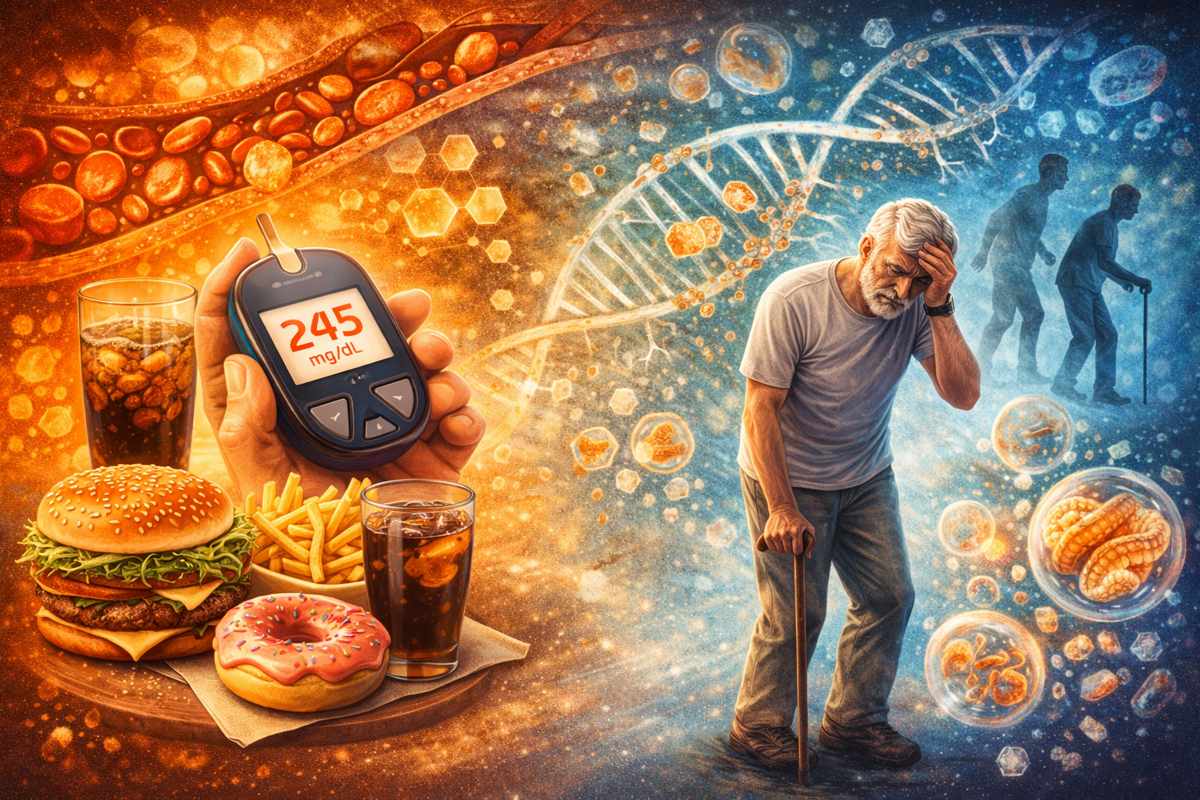
Chronically elevated blood glucose damages kidney filtration units through a process called diabetic nephropathy. This is one of the leading causes of CKD globally. Importantly, good glycaemic control substantially reduces this risk — making diabetes management central to kidney longevity for those with the condition.
Genetics
Family history of kidney disease is a recognised risk factor. Some individuals carry genetic variants that make them more susceptible to earlier or more severe decline. Awareness of family history allows for earlier screening and more targeted preventive action, even if the underlying genetics cannot be changed.
Nephrotoxic Substances
Chronic overuse of NSAIDs (such as ibuprofen), certain antibiotics, and contrast dyes used in imaging can damage the kidneys directly. Limiting unnecessary use of these agents — particularly in older adults — is a practical step in preserving kidney function. Excessive alcohol intake also places additional metabolic and inflammatory burden on the kidneys over time.
What Can Slow the Decline?
Blood Pressure and Blood Sugar Management
As noted above, controlling hypertension and blood glucose offers the clearest and most evidence-supported benefit for kidney longevity. These two factors alone account for the majority of preventable kidney function loss. Regular monitoring and, where needed, medical management are the most reliable tools available.
Hydration
Adequate hydration supports kidney function by maintaining sufficient blood flow and urine output to flush waste products. However, hydration is not a cure for kidney decline, and there is no strong evidence that drinking more water than is needed provides additional benefit in people with normal kidney function. The practical goal is to avoid chronic dehydration — particularly in hot weather, during illness, or with increased physical activity. Learn more in our article on whether hydration improves kidney longevity.
Diet and Protein Intake
A diet rich in vegetables, whole grains, and lean protein — and low in processed foods, excess sodium, and added sugar — is broadly associated with better kidney health outcomes. For people with healthy kidneys, moderate to even higher protein intake does not appear to cause kidney damage. More caution is appropriate for those with existing CKD, where dietary protein may need to be managed. Learn more in our complete guide to longevity at longevityinsights.co.uk/what-is-longevity/.
Exercise and Weight Management
Regular moderate exercise reduces the risk of hypertension, type 2 diabetes, and obesity — all of which accelerate kidney decline. Maintaining a healthy body weight reduces metabolic strain on the kidneys and supports cardiovascular health, which is closely linked to kidney function. Evidence does not suggest that vigorous exercise harms kidney function in otherwise healthy adults.
Avoiding Harmful Substances
Limiting alcohol, quitting smoking, and using over-the-counter pain medications only when necessary all contribute meaningfully to kidney protection over time. These are low-cost, practical steps with good supporting evidence.
Monitoring Kidney Health as You Age
Routine kidney function tests — including serum creatinine, estimated GFR, and urine albumin-to-creatinine ratio — are the primary tools for tracking kidney health. Because early kidney decline is often asymptomatic, regular screening is more reliable than waiting for symptoms to appear.
Symptoms such as unexplained fatigue, swelling in the legs or ankles, changes in urine output or colour, or persistent high blood pressure warrant prompt clinical assessment. However, these signs often appear only when function has already declined substantially, which is why proactive monitoring matters — especially for individuals with known risk factors.
Healthcare providers typically recommend kidney function testing as part of routine health checks from middle age onwards, with more frequent monitoring for those with hypertension, diabetes, or a family history of kidney disease.
References and Resources
Authoritative Sources on Kidney Function and Aging
-
National Kidney Foundation
kidney.orgComprehensive information on kidney health, aging, GFR, and disease prevention strategies.
-
CDC — Kidney Disease
cdc.govEpidemiological data, risk factor guidance, and public health recommendations on chronic kidney disease.
-
National Institute of Diabetes and Digestive and Kidney Diseases
niddk.nih.govIn-depth research and clinical guidance on kidney aging, CKD staging, and related conditions.
-
American Society of Nephrology
asn-online.orgProfessional guidelines and current research on kidney health, disease progression, and clinical management.
-
WebMD — Kidney Health
webmd.comAccessible overviews of kidney health topics, symptoms, and lifestyle management strategies.
-
Medical News Today — Kidney Aging
medicalnewstoday.comResearch summaries and evidence-based health information related to kidney aging and disease prevention.
-
Verywell Health — Kidney Health Tips
verywellhealth.comPractical, readable guidance on lifestyle strategies for long-term kidney health.

Frequently Asked Questions
Does kidney function always decline with age?
Some degree of functional decline is common — GFR typically falls gradually after age 40. However, the rate and impact vary considerably between individuals. Many people maintain adequate kidney function well into older age, particularly with healthy blood pressure, controlled blood sugar, and good lifestyle habits. Decline is not inevitable at a clinically significant level for everyone.
Can kidney decline be reversed or halted?
Significant kidney damage is generally not reversible. However, the rate of decline can often be slowed substantially through lifestyle changes and medical management — particularly blood pressure control. Early identification of risk factors gives the best opportunity to preserve function over the long term.
What are the early signs of kidney decline?
Early kidney decline is often asymptomatic, which is why routine blood and urine testing matters. When symptoms do appear, they may include fatigue, mild swelling, changes in urination frequency or appearance, or elevated blood pressure. These signs warrant clinical assessment, but their absence does not rule out early decline.
Is some kidney function decline normal with aging?
Yes. A gradual reduction in GFR is a recognised part of normal aging and does not automatically indicate kidney disease. The distinction between age-related decline and CKD is important: CKD involves GFR below 60 mL/min/1.73m² for more than three months, or markers of kidney damage such as albuminuria. Mild decline without these features is common and often manageable.
Conclusion
Kidney function does decline with age — that much is well established. However, the degree of decline is not fixed, and it is not the same as kidney disease. For most people, age-related changes are gradual and compatible with good health. The factors that most reliably accelerate decline — high blood pressure, poorly controlled diabetes, chronic dehydration, and nephrotoxic substances — are largely modifiable. In contrast, the factors that best protect kidney function over time — blood pressure management, regular exercise, adequate hydration, and a balanced diet — are straightforward and accessible. Proactive monitoring through routine kidney function testing remains the most reliable way to catch meaningful changes early and act before function is significantly compromised.
Find out more information about kidney function decline with age
Search for more resources and information: