Does Berberine Improve Fatty Liver?
TL;DR: Berberine shows preliminary promise for reducing liver fat in people with non-alcoholic fatty liver disease (NAFLD), likely through its effects on AMPK activation, insulin sensitivity, and lipid metabolism. However, evidence is still limited and mixed — berberine should be considered a supportive supplement, not a standalone treatment, and always used alongside diet and lifestyle changes.
What Is Berberine and How Does It Relate to Fatty Liver?
Berberine is a plant alkaloid found in herbs such as Berberis vulgaris and goldenseal. Research suggests it has meaningful effects on blood sugar regulation, lipid metabolism, and insulin sensitivity — all of which are directly relevant to non-alcoholic fatty liver disease (NAFLD). Because NAFLD is largely driven by metabolic dysfunction, berberine’s mechanisms make it a biologically plausible candidate for supporting liver health.
What Is Fatty Liver Disease?
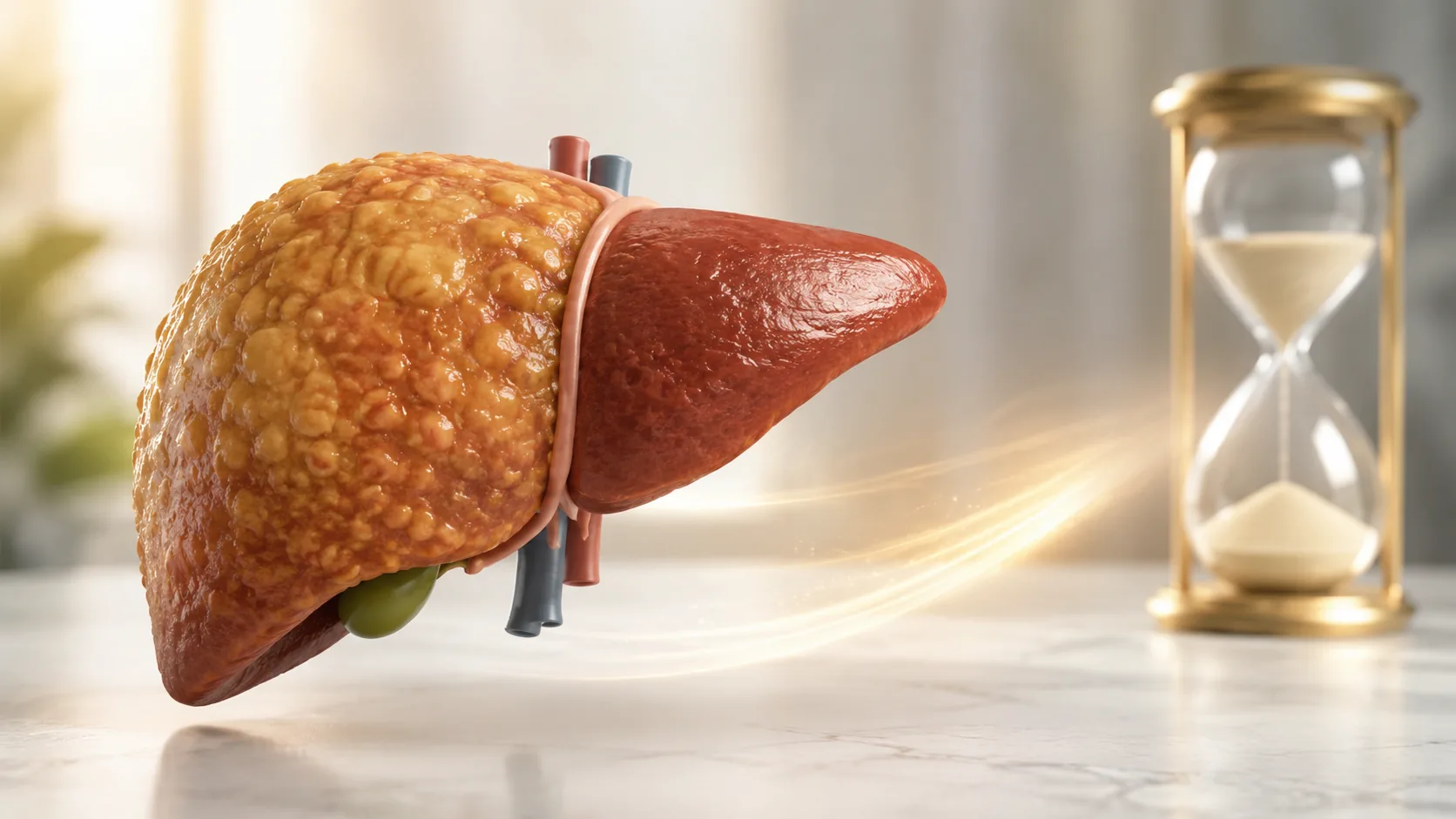
Fatty liver disease (hepatic steatosis) occurs when excess fat accumulates in liver cells. In its early stages, it is often silent. However, if left unaddressed, it can progress to non-alcoholic steatohepatitis (NASH), fibrosis, and in some cases, cirrhosis. It is closely associated with obesity, insulin resistance, type 2 diabetes, and high intake of added sugars and refined carbohydrates. For more on how diet contributes to liver strain, see our article on whether fructose accelerates liver aging.
Importantly, early-stage fatty liver is largely reversible with lifestyle change. That context matters when evaluating any supplement, including berberine.
How Berberine May Affect Liver Fat
The Core Mechanism: AMPK Activation
Berberine activates AMP-activated protein kinase (AMPK) — an enzyme often described as a cellular energy sensor. AMPK activation has several downstream effects relevant to fatty liver:
- It reduces lipogenesis (the production of new fat) in the liver
- It enhances fatty acid oxidation, encouraging the liver to burn rather than store fat
- It improves insulin sensitivity, which reduces the metabolic signalling that drives fat accumulation
In addition, berberine appears to reduce inflammation in liver tissue and may modestly influence the gut microbiome in ways that affect liver fat metabolism. These combined mechanisms make its effect on NAFLD biologically plausible — though plausibility is not the same as proven clinical benefit.
Effect on Liver Enzymes and Metabolic Markers
Several small clinical studies have reported reductions in liver enzymes (ALT and AST) following berberine supplementation in people with NAFLD. Elevated liver enzymes are a marker of liver stress, so reductions in these values are generally considered a positive sign. Some trials have also reported improvements in fasting glucose, insulin resistance (measured by HOMA-IR), and blood lipid levels alongside liver fat changes.
What the Evidence Actually Shows
Clinical Trials: Promising but Limited
Several randomised controlled trials have examined berberine in people with NAFLD. A number of these have shown reductions in liver fat on imaging (typically ultrasound or MRI), alongside improvements in liver enzymes and metabolic markers. A 2019 clinical trial published on PubMed found that berberine supplementation over 16 weeks reduced hepatic fat content and improved insulin resistance in NAFLD patients compared to placebo.
However, most trials are small, conducted over relatively short periods, and often use berberine alongside dietary advice — making it difficult to isolate the supplement’s independent effect. Meta-analyses have generally concluded that berberine shows modest but statistically significant benefits for liver fat and enzymes in NAFLD, while noting that overall study quality remains a limitation.
In short: the evidence is encouraging, but not yet robust enough to classify berberine as a proven treatment. It fits better into the category of a supplement with preliminary supporting evidence.
How It Compares to Lifestyle Intervention
Lifestyle changes — particularly caloric restriction, reduced sugar intake, and regular aerobic exercise — remain the most evidence-backed interventions for reversing fatty liver. Research consistently shows that even modest weight loss (5–10% of body weight) can significantly reduce liver fat. Berberine may complement these efforts, particularly for individuals with metabolic syndrome or insulin resistance, but it is unlikely to produce meaningful results without them. For context on fasting as another lifestyle-based approach, see our article on whether fasting improves liver health.
Practical Considerations
Dosage and Timing
Doses used in clinical trials typically range from 900 to 1,500 mg per day, divided into two or three doses taken before meals. Splitting the dose appears to improve tolerability. Standard capsule forms are the most common and practical delivery method.
What to Combine It With
Berberine is most likely to be useful when combined with a reduced-calorie, low-sugar diet and regular physical activity. These are the foundations of any meaningful approach to fatty liver. Berberine should be viewed as a supportive addition to these habits, not a substitute for them.
Learn more in our complete guide to longevity at longevityinsights.co.uk/what-is-longevity/, and see how liver health fits into the broader picture on our Liver, Kidney, and Detox Longevity hub page.
Drug Interactions and Precautions
Berberine can interact with medications that affect blood sugar or blood pressure, including metformin and certain antihypertensives. It may also affect cytochrome P450 enzymes involved in drug metabolism. Anyone taking prescription medications should consult a healthcare professional before using berberine. It is not recommended during pregnancy or breastfeeding.
Limitations and Uncertainty
Several important caveats apply before drawing firm conclusions about berberine for fatty liver:
- Trial quality: Most studies are small and short-term. Longer, larger trials are needed to confirm sustained benefit and safety.
- Variable response: Not everyone responds to berberine equally. Factors including baseline metabolic health, gut microbiome composition, and dietary context all influence outcomes.
- Not a cure: Berberine does not reverse fatty liver on its own. The condition is primarily lifestyle-driven, and addressing root causes — diet quality, physical activity, body weight — remains essential.
- No established clinical guidelines: Berberine is not currently recommended in standard clinical guidelines for NAFLD treatment. It sits in the realm of adjunctive support, not first-line therapy.
Overall, berberine is a reasonable supplement to consider for someone with NAFLD who is already making lifestyle changes and wants additional metabolic support. That said, it should not replace medical management, and anyone with diagnosed liver disease should discuss its use with a doctor.
References and Resources
Authoritative Sources on Berberine and Fatty Liver
-
Berberine and Liver Health: A Systematic Review
Ncbi.nlm.nih.govA systematic review examining multiple studies on berberine’s effects on liver fat and metabolic markers in NAFLD patients.
-
Berberine Benefits: Uses, Side Effects & More
Medicalnewstoday.comAn accessible overview of berberine’s properties, including its role in metabolic and liver health.
-
WebMD: Berberine
Webmd.comCovers berberine’s uses, evidence base, dosing, and safety considerations including drug interactions.
-
Clinical Trial: Berberine and Non-Alcoholic Fatty Liver Disease
PubMed.ncbi.nlm.nih.govA clinical trial demonstrating reductions in hepatic fat content and improved insulin resistance following berberine supplementation in NAFLD patients.
-
Healthline: Berberine
Healthline.comSummarises current research on berberine, including its effects on liver fat, blood sugar, and lipid metabolism.
-
Meta-Analysis on Berberine and Lipid Metabolism
Ncbi.nlm.nih.govA meta-analysis reviewing berberine’s effects on lipid levels and liver fat across multiple studies.
-
Research on Berberine’s Molecular Actions
ScienceDirect.comExamines the molecular mechanisms by which berberine influences liver cell metabolism, including AMPK activation and lipogenesis suppression.
Frequently Asked Questions
Does berberine actually work for fatty liver?
Current evidence suggests berberine can modestly reduce liver fat and improve liver enzymes in people with NAFLD, particularly when combined with dietary changes. However, most supporting studies are small and short-term. It is best considered a supplementary tool alongside lifestyle intervention, not a standalone treatment.
How quickly can results be expected from berberine for fatty liver?
Some metabolic improvements — such as better blood sugar control and reduced insulin resistance — may appear within several weeks. Meaningful reductions in liver fat typically take several months of consistent use, and are more likely when combined with dietary and exercise changes. Results will vary depending on baseline health and lifestyle factors.
Are there side effects associated with berberine?
Berberine is generally well-tolerated at standard doses, but gastrointestinal side effects — including nausea, bloating, and loose stools — are the most commonly reported. Starting at a lower dose and taking it with meals can help reduce these effects. Anyone on medications for diabetes, blood pressure, or other conditions should consult a healthcare professional before starting berberine, as interactions are possible.
Can berberine be combined with other approaches for fatty liver?
Yes. Berberine is most likely to be effective when used alongside a reduced-calorie diet, lower sugar intake, and regular physical activity — the foundations of fatty liver management. It may also be considered alongside other supplements, though any combination should be discussed with a healthcare provider to avoid interactions or duplication of effects.
Conclusion
Berberine is one of the more biologically plausible supplements for supporting liver health in the context of NAFLD. Its effects on AMPK activation, insulin sensitivity, and lipid metabolism give it a credible mechanism, and preliminary clinical evidence suggests modest benefits for liver fat and enzymes. That said, the evidence base remains limited in scale and duration, and berberine is not a substitute for the lifestyle changes that most directly address fatty liver.
For most people, the practical takeaway is straightforward: berberine may offer meaningful support as part of a broader approach that prioritises diet quality, physical activity, and where relevant, weight management. It is unlikely to produce significant results in isolation. As always, anyone with diagnosed liver disease should discuss supplementation with a qualified healthcare professional before starting.
Find out more information about berberine and fatty liver
Search for more resources and information: