Does Selenium Improve Longevity?
Does Selenium Improve Longevity?
TL;DR: Adequate selenium intake supports antioxidant defences and immune function, both of which are relevant to healthy aging. However, selenium is not a longevity supplement — the evidence does not support it as a way to extend lifespan, and excess intake is harmful.
Selenium is a trace mineral that plays a defined role in immune regulation, antioxidant defence, and thyroid function. Adequate intake appears to support normal immune activity and may help reduce certain disease risks associated with aging. That said, current evidence does not support selenium supplementation as a reliable method of extending lifespan, and the margin between adequate and toxic intake is narrow.
What Selenium Does in the Body
An Essential Trace Mineral
Selenium is incorporated into a family of proteins called selenoproteins, several of which have critical biological functions. The most studied of these are the glutathione peroxidases — enzymes that neutralise reactive oxygen species and help protect cells from oxidative damage. Oxidative stress is a well-established contributor to cellular aging, making selenium’s antioxidant role relevant to the biology of healthspan.
Beyond antioxidant defence, selenium also supports thyroid hormone metabolism and plays a role in regulating immune responses. Importantly, selenium does not simply maximise immune activity — it helps maintain immune balance, which matters more for long-term health than raw immune output.
Dietary Sources and Deficiency
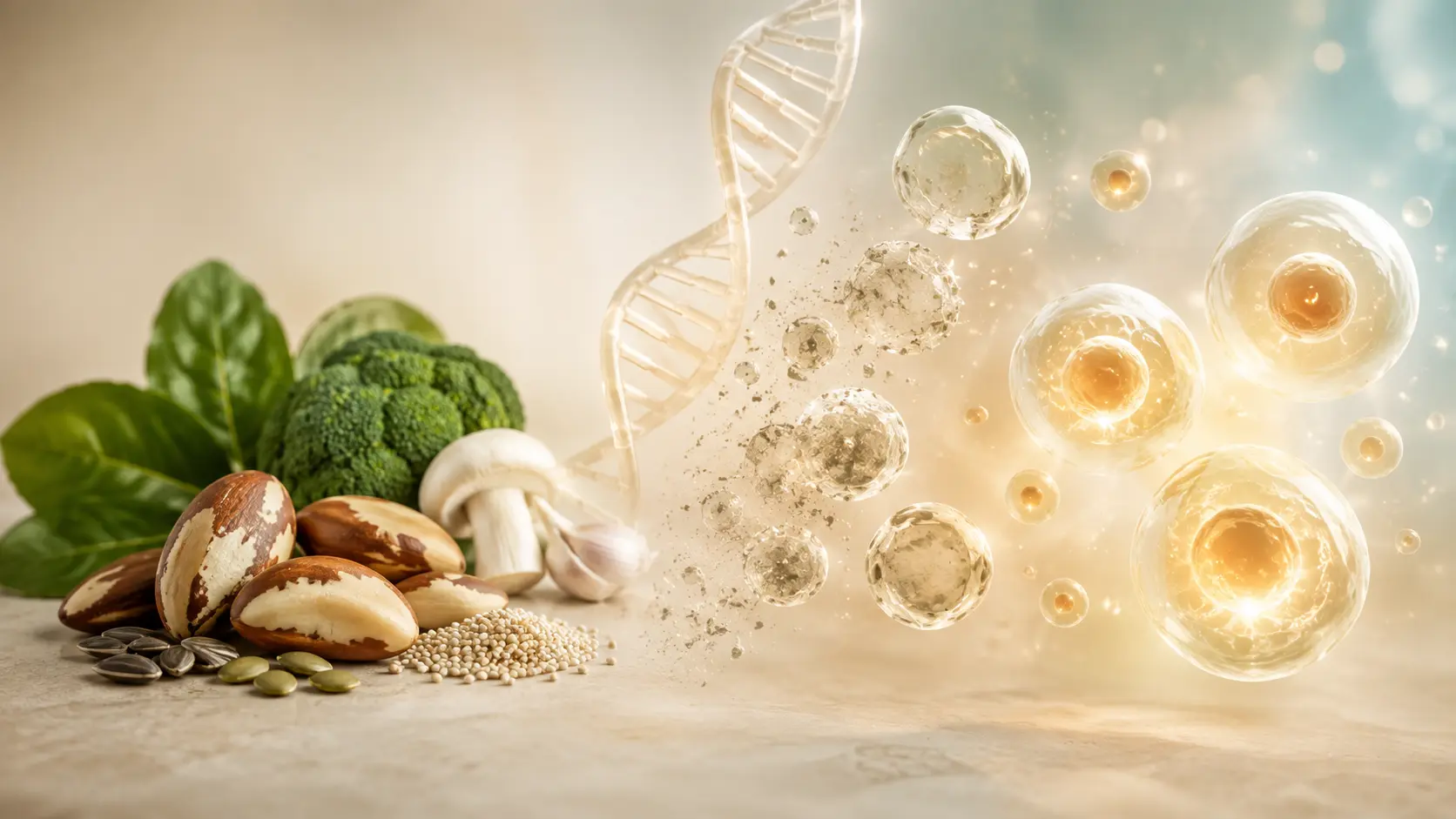
Selenium is obtained primarily through food. Brazil nuts, seafood, eggs, and meat are among the richest sources. Soil selenium content varies significantly by region, which means dietary intake can differ considerably depending on where food is grown. In parts of Europe and some other regions, selenium intake tends to be lower than in North America, where soil selenium levels are generally higher.
Outright deficiency is uncommon in most developed countries, but marginal insufficiency — where levels are adequate but not optimal — may be more widespread, particularly in older adults whose absorption and dietary variety may decline with age.
How Selenium May Influence Aging
Oxidative Stress and Cellular Damage
One of the central theories of biological aging involves the accumulation of oxidative damage to DNA, proteins, and cell membranes over time. Selenium-dependent enzymes, particularly glutathione peroxidase, help limit this damage by clearing hydrogen peroxide and lipid peroxides from cells. As a result, maintaining adequate selenium may support the body’s ability to manage oxidative stress — though this is not the same as preventing aging itself.
It is worth noting that antioxidant supplementation has had mixed results in clinical trials. In some contexts, high-dose antioxidants have shown no benefit or even harm. This is why the argument for selenium is strongest when framed around correcting insufficiency rather than maximising intake above normal levels.
Immune Function and Immune Aging
Selenium has a well-documented role in supporting immune function, including both innate and adaptive immune responses. This is particularly relevant in the context of immune aging — a gradual decline in immune competence that increases susceptibility to infection, reduces vaccine responsiveness, and contributes to chronic low-grade inflammation.
Research suggests that selenium deficiency impairs T-cell function, reduces natural killer cell activity, and may exacerbate inflammatory responses. In older adults, where immune aging is already progressing, maintaining adequate selenium may help preserve some aspects of immune competence. For a broader look at how immune function changes with age and what can be done about it, see our article on immune aging and chronic inflammation.
Thyroid Function
Selenium is essential for converting the inactive thyroid hormone T4 into its active form T3. Thyroid function affects metabolism, energy regulation, and body composition — all of which influence healthspan. Selenium deficiency can impair this conversion process, and in populations with combined iodine and selenium deficiency, the effects on thyroid health can be significant.
What the Evidence Actually Shows
Observational Studies
Several large observational studies have found associations between selenium status and reduced risk of certain age-related conditions, including cardiovascular disease and some cancers. However, observational data cannot confirm that selenium is the cause of these differences. People with adequate selenium intake often have better overall diets and health behaviours, which complicates interpretation.
Intervention Trials: A Mixed Picture
The results from randomised controlled trials on selenium supplementation are inconsistent. The Nutritional Prevention of Cancer (NPC) trial, conducted in a selenium-deficient US population, suggested a reduction in certain cancer outcomes with supplementation. In contrast, the SELECT trial — which tested selenium and vitamin E supplementation in men with adequate baseline selenium — found no benefit and some potential harm at high doses.
This contrast is important. It suggests that selenium supplementation may be most relevant when correcting actual deficiency or insufficiency, rather than providing benefit across the board. For individuals already meeting selenium requirements through diet, additional supplementation is unlikely to improve outcomes and carries a real risk of toxicity.
Selenium and Inflammation
Some evidence indicates that adequate selenium status is associated with lower markers of systemic inflammation, including C-reactive protein (CRP). Chronic low-grade inflammation — sometimes called inflammaging — is considered a contributing factor to accelerated biological aging and increased disease risk. Whether selenium directly modulates inflammaging, or whether adequate selenium is simply a marker of better overall nutritional status, remains unclear. For more on how inflammation relates to aging, the article on whether vitamin C improves immune aging covers related ground.
Learn more in our complete guide to longevity.
Selenium and Longevity Directly
There is currently no strong clinical trial evidence demonstrating that selenium supplementation extends human lifespan. Some population studies show that higher selenium status within the normal range is associated with lower all-cause mortality, but these are associations, not proof of causation. The evidence supports selenium as relevant to health maintenance — not as a proven longevity intervention.
Risks and Safe Intake
Toxicity Is a Real Risk
Unlike many nutrients where excess is simply excreted, selenium has a relatively narrow therapeutic window. The recommended dietary allowance for adults is 55 micrograms per day, and the tolerable upper intake level is 400 micrograms per day. Chronic intake above this threshold — which can occur with high-dose supplements or excessive Brazil nut consumption — can cause selenosis, characterised by hair loss, nail brittleness, fatigue, peripheral neuropathy, and gastrointestinal symptoms.
In practice, this means that more is not better. Supplementing without knowing baseline status risks pushing intake into harmful territory, particularly for individuals already meeting requirements through diet.
Who May Benefit from Supplementation
Those most likely to benefit from selenium supplementation are individuals with confirmed deficiency or borderline insufficiency — for example, older adults with restricted diets, those living in low-selenium regions, or people with conditions that impair nutrient absorption. For most adults in countries with adequate dietary selenium, increasing intake through food rather than supplements is a safer and generally sufficient approach.
Anyone considering selenium supplementation should discuss it with a healthcare provider, ideally with a serum selenium measurement to guide decision-making.
Practical Dietary Approach
For most people, dietary sources are the most reliable way to maintain adequate selenium. A single Brazil nut provides roughly 70–90 micrograms of selenium — close to the daily requirement — though selenium content varies depending on where the nut was grown. Diversifying selenium intake across seafood, eggs, and whole grains provides a more consistent supply without the variability of Brazil nuts.
References and Resources
Authoritative Sources on Selenium and Longevity
-
NIH Office of Dietary Supplements — Selenium Fact Sheet
ods.od.nih.govComprehensive overview of selenium’s biological role, recommended intake levels, dietary sources, and safety considerations.
-
Selenium and Human Health: A Review of Evidence
ncbi.nlm.nih.govA scientific review examining selenium’s biological mechanisms and the current evidence base linking selenium status to disease risk and aging.
-
WHO — Selenium Factsheet
who.intThe World Health Organization’s summary of global selenium requirements, deficiency risks, and public health considerations.
-
Healthline — Selenium: Benefits, Sources, and Risks
healthline.comA practical overview of selenium’s health effects, dietary sources, and potential risks of excess intake.
-
WebMD — Selenium Overview
webmd.comUser-friendly summary of selenium’s health effects, including benefits, deficiency signs, and overdose symptoms.
-
PubMed — Scientific Studies on Selenium
ncbi.nlm.nih.govAccess to peer-reviewed research on selenium’s biological effects, clinical trials, and relevance to aging and immune function.
Conclusion
Selenium is a genuinely important micronutrient for immune function, antioxidant defence, and thyroid health — all of which are relevant to healthy aging. Maintaining adequate selenium through a varied diet is a reasonable and evidence-supported goal, particularly for older adults or those at risk of deficiency.
However, selenium supplementation is not a longevity strategy in the conventional sense. The evidence does not support it as a way to extend lifespan in people who are already selenium-sufficient. In contrast, excess selenium intake carries real risks. The practical takeaway is straightforward: meet your selenium requirements through food where possible, consider supplementation only if deficiency is confirmed or likely, and avoid treating higher doses as more beneficial.
For those interested in immune aging more broadly, selenium sits alongside other nutritional factors — including zinc and omega-3 fatty acids — as a supportive element of overall immune health, rather than a standalone intervention. What matters most is the broader pattern of diet, lifestyle, and disease prevention.
Find out more information about selenium and longevity
Search for more resources and information: