How Does Lung Capacity Decline With Age?
How Does Lung Capacity Decline With Age?
TL;DR: Lung capacity peaks in the mid-20s and then gradually declines throughout adulthood, primarily due to reduced elasticity in lung tissue and weakening of the respiratory muscles. This decline is normal and gradual, but smoking, chronic disease, and physical inactivity can accelerate it significantly.
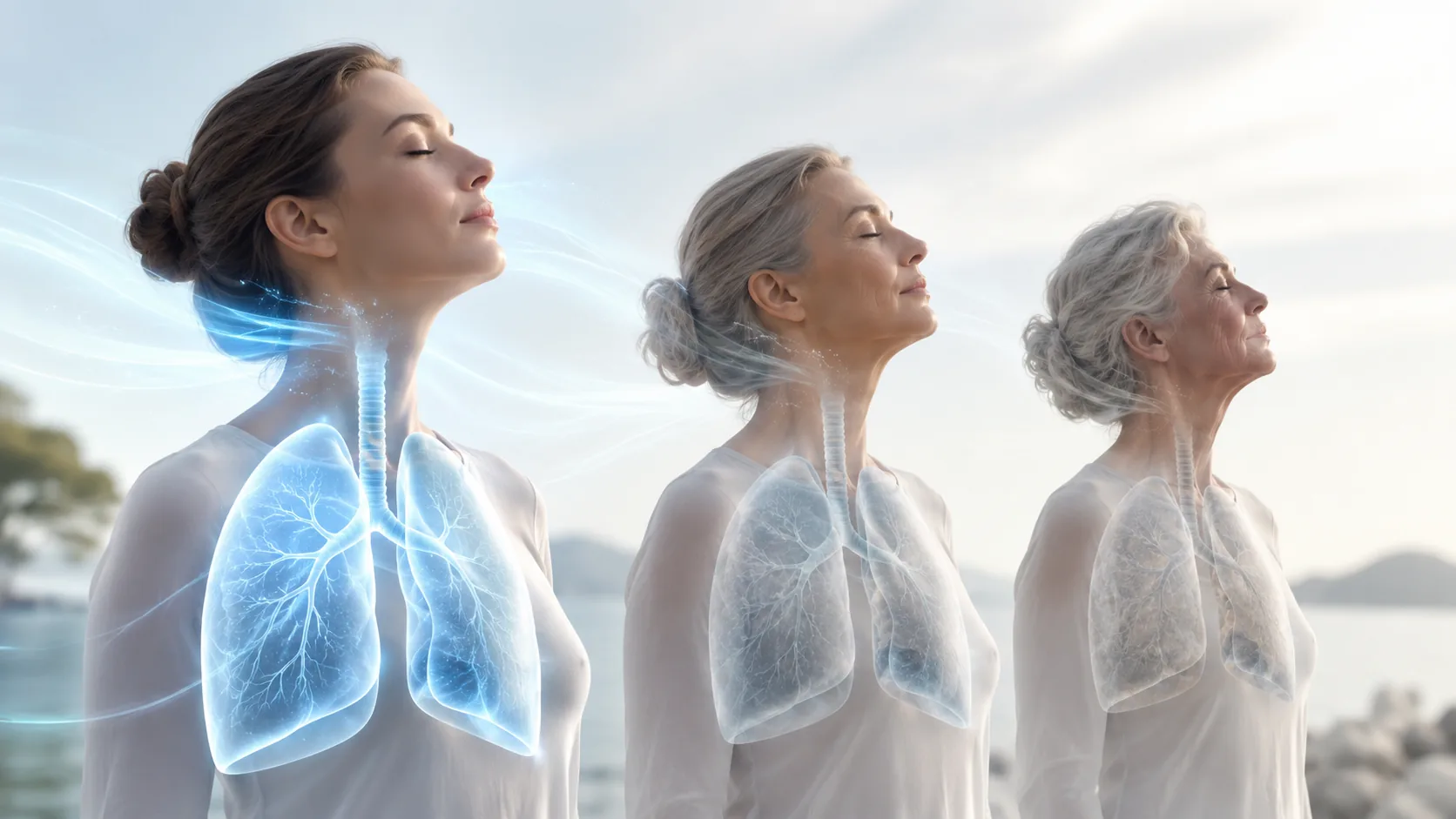
Yes, lung capacity does decline with age — and this is a well-established, measurable physiological change. Lung function typically peaks between the ages of 20 and 25, then decreases slowly and progressively for the rest of life. In healthy non-smokers, forced expiratory volume (FEV1) — a standard clinical measure of how much air can be exhaled in one second — falls by roughly 25–30 ml per year after the age of 25. This is a normal part of aging, not a disease process, though it can become clinically significant under certain conditions.
For context on how lung aging fits into the broader picture of organ-specific decline, see our guide to organ-specific aging.
What Lung Capacity Actually Measures
Key Measures of Lung Function
Lung capacity is not a single number — it encompasses several distinct measurements used in clinical spirometry:
- Total Lung Capacity (TLC): The total volume of air the lungs can hold at maximum inhalation.
- Forced Vital Capacity (FVC): The total volume exhaled forcefully after maximum inhalation.
- FEV1: The volume exhaled in the first second of a forced breath — a key marker of airway obstruction.
- FEV1/FVC ratio: A standard diagnostic ratio; values below 0.70 indicate obstructive lung disease.
These are established clinical measurements used in standard medical practice. They are not proprietary “biological age” scores — they are the same tools used to diagnose COPD, asthma, and other respiratory conditions. As a result, they provide a meaningful, reproducible way to track lung aging over time.
How the Aging Lung Changes Structurally
Several structural changes drive the functional decline measured by these tests. Lung tissue loses elasticity with age, much like aging skin loses firmness. This reduced recoil means the lungs cannot expel air as efficiently. At the same time, the chest wall becomes stiffer due to changes in the ribcage and cartilage, and the respiratory muscles — particularly the diaphragm — gradually weaken. Together, these changes reduce the lungs’ ability to fully expand and contract.
In addition, the small air sacs (alveoli) responsible for gas exchange can enlarge and merge over time, reducing the total surface area available for oxygen transfer. This is distinct from emphysema, which involves active destruction of alveolar walls, but the structural overlap explains why the distinction between normal aging and early disease is clinically important.
The Timeline of Decline
Peak Function: Early Adulthood
Lung function develops rapidly during childhood and adolescence, reaching its peak in the early-to-mid 20s. At this point, TLC, FVC, and FEV1 are at their highest. After this peak, a slow and largely linear decline begins — even in completely healthy individuals.
Middle Age: Gradual but Measurable Changes
Between the ages of 30 and 60, the decline is typically gradual enough that most healthy adults do not notice it in daily life. However, it often becomes apparent during sustained aerobic activity, where reduced respiratory efficiency translates into lower endurance and a slightly elevated perceived effort. This is the stage at which lifestyle factors — particularly physical activity — have the greatest influence on the rate of decline.
Later Life: More Pronounced Reduction
After age 60, the rate of lung function decline tends to accelerate slightly. Elasticity loss becomes more pronounced, respiratory muscle strength decreases further, and the cumulative effect of decades of environmental exposure becomes evident. In practical terms, this can contribute to reduced exercise tolerance and increased breathlessness with moderate exertion — though in the absence of disease, these changes are rarely severe enough to be disabling in otherwise healthy older adults.
Factors That Influence the Rate of Decline
Smoking: The Most Significant Modifiable Factor
Smoking is, by a considerable margin, the strongest lifestyle accelerant of lung function decline. Research indicates that smokers lose FEV1 at roughly two to three times the rate of non-smokers — a difference large enough to compress decades of normal decline into a much shorter timeframe. Importantly, smoking cessation slows the rate of decline back toward normal, even if some lost function is not recovered. The earlier cessation occurs, the greater the benefit.
Physical Activity and Aerobic Fitness
Regular aerobic exercise does not meaningfully increase total lung capacity in healthy adults, but it does improve respiratory muscle efficiency, breathing mechanics, and overall cardiovascular-respiratory integration. Higher aerobic fitness — reflected in a higher VO₂ max — is consistently associated with better functional lung performance and slower age-related decline. For a closer look at how VO₂ max relates to respiratory aging, see our article on whether VO₂ max reflects lung aging.
Environmental Exposures
Long-term exposure to air pollution, occupational dust, chemical fumes, and indoor pollutants (such as from biomass burning or poorly ventilated cooking) contributes to accelerated lung function decline. These exposures cause chronic low-grade airway inflammation, which over time can damage lung tissue and impair gas exchange. Reducing ongoing exposure remains one of the more practical protective measures available.
Genetics and Early Life Factors
Genetic factors influence the peak lung function an individual achieves — and this matters, because people who reach a higher peak in early adulthood have more reserve before they cross clinically significant thresholds. Early life factors including respiratory infections in childhood, low birth weight, and nutritional deficiencies during development also affect lung trajectory. These are not modifiable in adulthood, but they help explain why lung aging varies considerably between individuals with similar adult lifestyles.
Chronic Disease
Conditions such as COPD, asthma, pulmonary fibrosis, and recurrent respiratory infections accelerate decline beyond what normal aging produces. These represent pathological decline — distinct from the gradual, non-disease-related changes described above — and require clinical management. It is important not to conflate normal age-related lung changes with these conditions, as the mechanisms, severity, and treatment implications are meaningfully different.
What Can Be Done: Practical Implications
Exercise
Sustained aerobic exercise — walking, cycling, swimming, running — remains the most evidence-supported tool for preserving functional respiratory capacity with age. It does not reverse structural lung aging, but it improves the efficiency of the respiratory and cardiovascular systems, which translates into better real-world breathing performance and reduced breathlessness during activity. Even moderate regular exercise appears to confer meaningful benefit compared to a sedentary lifestyle.
Breathing Exercises
Diaphragmatic breathing and pursed-lip breathing are used clinically in pulmonary rehabilitation for patients with COPD, and evidence supports their role in improving breathing efficiency and reducing breathlessness. In healthy adults, evidence for meaningful structural change is more limited — however, these techniques can improve breathing mechanics and respiratory muscle coordination, which has practical value, particularly in older adults experiencing reduced respiratory reserve.
Avoiding Lung Stressors
Not smoking, avoiding secondhand smoke, reducing exposure to air pollution, and ensuring adequate ventilation indoors are all evidence-supported protective behaviours. These are not complicated interventions — but they are among the most impactful steps available for slowing lung function decline over the long term.
Monitoring Lung Function
Spirometry is an established, low-cost clinical test that can track lung function over time. For adults with risk factors — smoking history, occupational exposures, or persistent respiratory symptoms — periodic spirometry provides early detection of pathological decline before it becomes significantly symptomatic. For healthy adults without risk factors, routine spirometry is not universally recommended, but it remains a useful diagnostic tool when symptoms suggest concern.

Limitations and Nuance
It is worth being clear about what is and is not achievable. Exercise and lifestyle changes can slow the rate of lung function decline and improve functional performance — but they do not reverse the structural changes that accumulate with age. Lost elasticity and alveolar surface area are not meaningfully restored through lifestyle interventions in otherwise healthy adults. The goal, in practice, is preservation and slowing of decline rather than reversal.
Normal lung aging — in the absence of disease — is gradual and, for most people, compatible with a good quality of life well into older age. The risk comes when normal decline is compounded by smoking, chronic disease, or environmental exposure, at which point decline becomes pathological rather than physiological. Distinguishing between these two trajectories is clinically important and is something a healthcare provider can assess through spirometry and history.
Learn more in our complete guide to longevity.
References and Resources
Authoritative Sources on Lung Capacity and Aging
-
CDC: Physical Activity and Lung Health
cdc.govExplains how physical activity influences lung capacity and overall respiratory health, with emphasis on the importance of staying active to support respiratory function with age.
-
WHO: Air Pollution and Lung Health
who.intProvides evidence on how environmental factors — particularly air pollution — affect lung function over the long term and across the lifespan.
-
Mayo Clinic: COPD and Lung Function
mayoclinic.orgDetails how chronic respiratory conditions such as COPD affect lung capacity and why early diagnosis matters for preserving function.
-
AHRQ: Aging and Lung Health
ahrq.govProvides data on how aging affects lung function and outlines strategies for mitigating decline through lifestyle and clinical monitoring.
-
National Heart, Lung, and Blood Institute
nhlbi.nih.govA detailed clinical resource on lung diseases, spirometry, and health guidance for preserving lung function across the lifespan.
-
American Lung Association
lung.orgOffers practical guidance and research updates on lung health, aging, and respiratory disease prevention.
-
Healthline: Lung Health and Aging
healthline.comSummarises lifestyle strategies for maintaining lung health with age, written for a general audience.
FAQ
Does lung capacity decline with age even if I stay healthy?
Yes. Some decline in lung function is a normal part of aging and occurs even in healthy non-smokers. However, the rate of decline is significantly slower in people who remain physically active, avoid smoking, and limit exposure to air pollutants. Healthy aging preserves functional reserve — it does not eliminate decline entirely.
Can I slow down the decline in lung capacity?
Yes, to a meaningful degree. Regular aerobic exercise, not smoking, and avoiding chronic exposure to pollutants are the most evidence-supported strategies. Breathing exercises may also improve respiratory efficiency. These interventions slow the rate of decline rather than reversing structural aging in the lungs.
How does declining lung capacity affect daily life?
In healthy adults, the gradual decline associated with normal aging is typically noticeable only during sustained aerobic exertion — for example, reduced endurance or slightly increased breathlessness during exercise. It rarely causes significant disruption to daily activities in the absence of underlying disease. When decline is accelerated by smoking or chronic illness, the functional impact can be considerably greater.
What are signs that my lung capacity may be declining faster than normal?
Symptoms such as breathlessness during routine activities (not just vigorous exercise), a persistent cough, frequent respiratory infections, or noticeably reduced stamina compared to previous years may indicate decline beyond what is expected for age. These warrant clinical assessment, including spirometry, to distinguish normal aging from an underlying condition such as COPD or asthma.
Does lung capacity decline continuously throughout life?
After peak function in the mid-20s, lung capacity declines gradually and continuously throughout adulthood. The rate is not constant — it tends to be relatively slow through middle age and may accelerate slightly after 60 — but the trajectory is one of progressive, lifelong decline. The rate and extent of that decline are substantially influenced by lifestyle and health factors.
Conclusion
Lung capacity declines with age as a result of well-understood structural changes — reduced tissue elasticity, chest wall stiffening, and gradual weakening of the respiratory muscles. This process begins after the mid-20s and continues throughout life. In the absence of disease, it is gradual and, for most people, compatible with good functional health into older age.
That said, the rate of decline is meaningfully modifiable. Smoking accelerates it substantially; regular aerobic exercise and avoidance of environmental lung stressors help slow it. These are not minor differences — over decades, lifestyle choices can significantly influence how much functional reserve an individual retains. The goal in healthy aging is not to reverse lung structural changes, which current evidence does not support, but to preserve function, maintain aerobic capacity, and prevent the transition from normal decline into pathological disease.
For those with risk factors — smoking history, occupational exposures, or persistent symptoms — periodic spirometry offers a straightforward way to monitor lung function and catch problems early. For everyone else, the most practical steps remain consistent: stay active, avoid smoking, and reduce chronic exposure to pollutants.
Find out more information about lung capacity and aging
Search for more resources and information: