Does Pqq Improve Mitochondrial Function?
Does PQQ Improve Mitochondrial Function?
TL;DR: PQQ (pyrroloquinoline quinone) has shown the ability to stimulate mitochondrial biogenesis and reduce oxidative stress in cell and animal studies, but robust human evidence remains limited. It shows promise as a mitochondrial support supplement, though it should not be viewed as a substitute for exercise and metabolic health as the primary drivers of mitochondrial function.
What Is PQQ?
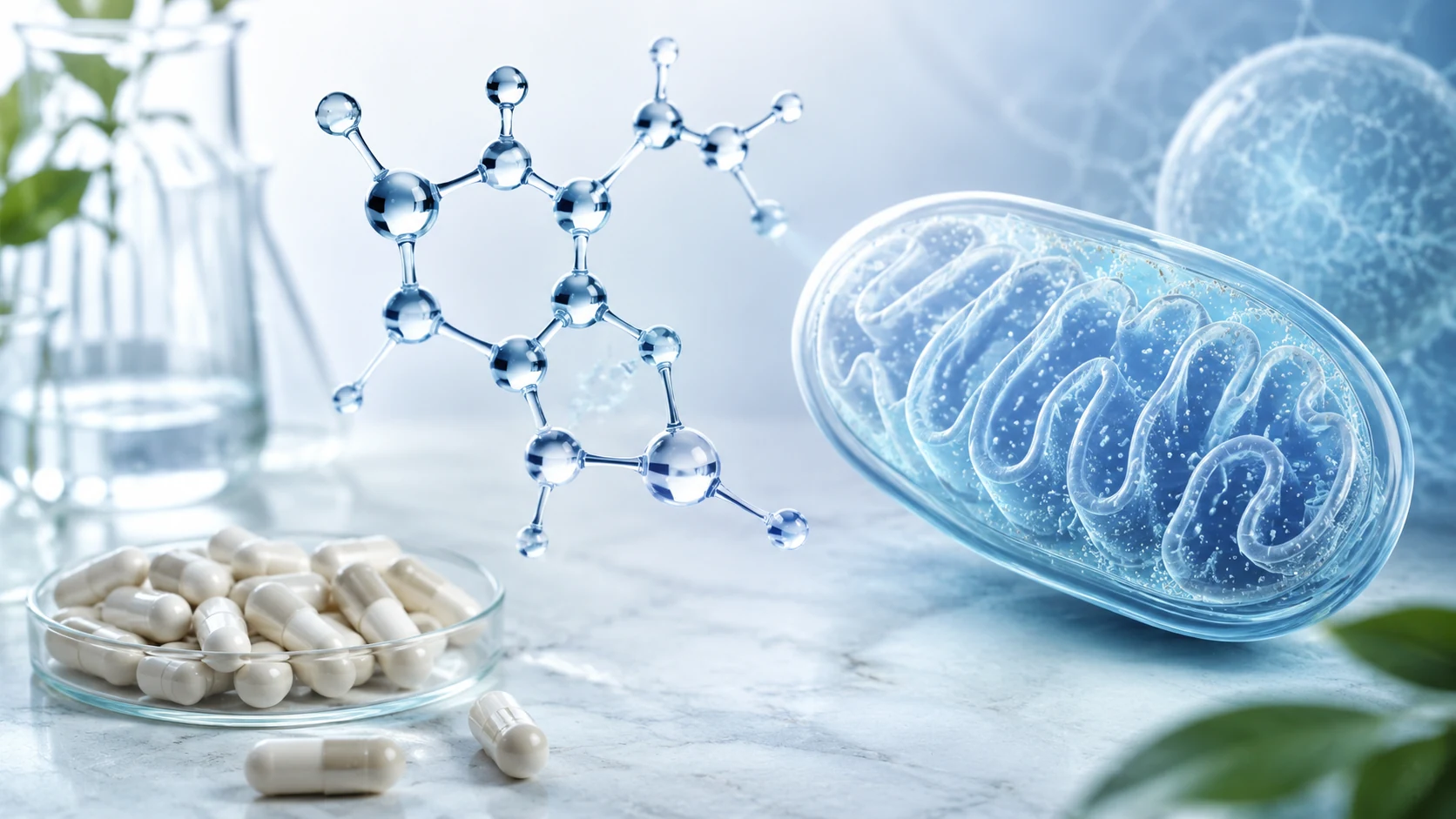
PQQ, or pyrroloquinoline quinone, is a small redox-active molecule found naturally in soil, certain foods (including fermented soy, kiwi, and green tea), and in trace amounts in human tissue. It functions as an antioxidant and appears to interact with signalling pathways involved in mitochondrial maintenance and growth.
Unlike many antioxidants, PQQ has attracted scientific interest specifically because of its potential role in mitochondrial biogenesis — the process by which cells generate new mitochondria. This distinguishes it from compounds that simply scavenge free radicals. That said, most of the mechanistic evidence to date comes from cell cultures and animal models rather than large-scale human trials.
For broader context on how mitochondria influence energy, muscle health, and ageing, see our guide to mitochondrial health for longevity.
How PQQ May Support Mitochondrial Function
Stimulating Mitochondrial Biogenesis
The most studied mechanism behind PQQ’s potential benefit is its ability to activate PGC-1α, a key regulator of mitochondrial biogenesis. PGC-1α acts as a master switch that promotes the production of new mitochondria, improves mitochondrial density, and supports cellular energy metabolism. In animal studies, PQQ supplementation has been associated with increased mitochondrial number and improved mitochondrial efficiency.
This pathway is also activated by Zone 2 aerobic training, caloric restriction, and cold exposure — which helps explain why exercise remains the most evidence-supported way to improve mitochondrial capacity. PQQ may support a similar mechanism, though its effect size in humans is less well-established. For more on exercise-driven mitochondrial adaptation, see does Zone 2 training improve mitochondrial density?
Reducing Mitochondrial Oxidative Damage
Mitochondria are a primary site of reactive oxygen species (ROS) production. Over time, accumulated oxidative damage to mitochondrial membranes, proteins, and DNA contributes to declining mitochondrial efficiency — a process closely linked to cellular ageing. PQQ’s antioxidant properties appear to protect mitochondria from this type of damage, helping preserve their structural integrity and function.
Importantly, PQQ is thought to be redox-cycling — meaning it can carry out antioxidant reactions repeatedly without being consumed. This may allow it to exert a more sustained protective effect than single-use antioxidants, though the practical significance of this in human biology is still being investigated.
Supporting Cellular Energy Production
By promoting mitochondrial biogenesis and reducing oxidative stress, PQQ may indirectly support ATP production — the primary energy currency used by cells. Healthier, more numerous mitochondria are better equipped to meet the energy demands of high-activity tissues such as muscle, heart, and brain. However, it is important to distinguish between measurable improvements in mitochondrial markers and subjective feelings of energy, which are influenced by many additional factors including sleep quality, nutrition, and hormonal health.
What the Scientific Evidence Actually Shows
Cell and Animal Studies
The mechanistic case for PQQ is reasonably well-supported at the preclinical level. Studies in cell cultures and rodents have demonstrated that PQQ can upregulate PGC-1α expression, increase mitochondrial DNA content, improve electron transport chain activity, and reduce markers of oxidative damage. These findings provide a plausible biological rationale for its use.
Research has also explored PQQ’s potential neuroprotective effects, particularly in brain cells where mitochondrial function is critical for cognitive health and neuronal resilience. In animal models, PQQ has shown protective effects against mitochondrial dysfunction in cardiac and neural tissue.
Human Evidence
Human trials on PQQ remain limited in number and scale. A small number of clinical studies have examined its effects on cognitive function, fatigue, and inflammatory markers in adults. Some findings suggest modest improvements in self-reported mental clarity and fatigue scores, as well as reductions in certain inflammatory markers, at doses typically ranging from 10 to 20 mg per day.
However, most human studies are short in duration, involve small sample sizes, and lack the statistical power to draw firm conclusions. As a result, current evidence supports PQQ as a compound with plausible mechanisms and early-stage human signals — but not yet as a supplement with demonstrated, replicated clinical outcomes comparable to well-studied interventions like exercise.
In contrast to supplements like urolithin A, which has more recent human trial data supporting mitophagy and mitochondrial function in older adults, PQQ’s human evidence base is at an earlier stage. Learn more in our complete guide to longevity at longevityinsights.co.uk/what-is-longevity/.
Safety Profile
Available data suggests PQQ is well tolerated at doses used in research (typically 10–20 mg/day). No significant adverse effects have been reported in published human trials. That said, long-term safety data in humans is limited, and as with any supplement, individual responses can vary.
Practical Implications and Limitations
Where PQQ Fits in a Mitochondrial Health Strategy
The foundation of mitochondrial health — and by extension, metabolic resilience and healthy ageing — is built on consistent aerobic exercise, resistance training, adequate sleep, and a nutrient-dense diet. These interventions have strong, replicated human evidence behind them and directly stimulate mitochondrial biogenesis, improve insulin sensitivity, and support VO₂ max.
PQQ, in this context, is best understood as a potentially useful add-on rather than a primary strategy. For individuals who already have a solid exercise and nutrition foundation, PQQ may offer incremental mitochondrial support — particularly through its antioxidant and biogenesis-signalling properties. For those who do not yet exercise regularly or whose metabolic health is suboptimal, supplements alone are unlikely to meaningfully compensate.
It is also worth noting that PQQ is found in small amounts in whole foods, and dietary sources may contribute modestly to baseline intake. Foods such as green peppers, parsley, kiwi, and fermented soy contain detectable PQQ levels, though supplemental doses are considerably higher than typical dietary intake.
Considerations Before Supplementing
Anyone considering PQQ supplementation should be aware that the evidence base, while promising, is still developing. The mechanistic rationale is credible, early human data is cautiously encouraging, but large-scale randomised controlled trials are lacking. This places PQQ in a similar category to many longevity-related supplements: biologically plausible, with limited but not absent human support.
As with any supplement, consulting a healthcare provider before starting is advisable — particularly for those with existing health conditions or who are taking medications. Standard doses used in research range from 10 to 20 mg per day. For more detail on how mitochondrial biogenesis can be supported through both lifestyle and supplementation, see can mitochondrial biogenesis be increased naturally?
FAQs About PQQ and Mitochondrial Function
Frequently Asked Questions
Does PQQ actually improve mitochondrial function?
Cell and animal studies consistently show that PQQ can stimulate mitochondrial biogenesis and reduce oxidative damage to mitochondria. Human evidence is more limited, but early trials suggest modest benefits for energy and inflammatory markers. Overall, the mechanistic case is credible, though stronger human trial data is still needed.
Can PQQ boost cellular energy?
PQQ may support the conditions needed for efficient cellular energy production by promoting mitochondrial biogenesis and reducing oxidative stress. However, subjective energy levels are influenced by many factors, and PQQ should not be expected to reliably resolve fatigue on its own — particularly when underlying issues such as poor sleep, low fitness, or metabolic dysfunction are present.
What are the best ways to support mitochondrial health?
Consistent aerobic exercise — particularly Zone 2 training — is the most evidence-supported method for improving mitochondrial density and function. Resistance training, quality sleep, a nutrient-dense diet, and maintaining healthy metabolic markers are equally important. Supplements such as PQQ, CoQ10, and urolithin A may offer additional support, but they work best alongside a strong lifestyle foundation.
Is PQQ safe for long-term use?
Published trials using doses of 10–20 mg per day have not reported significant adverse effects. However, long-term safety data in humans remains limited. Consulting a healthcare provider before sustained use is a sensible precaution, particularly for those with underlying health conditions.
Is PQQ particularly useful for ageing individuals?
There is a reasonable biological rationale for PQQ being relevant to ageing, since mitochondrial function and biogenesis capacity tend to decline with age. Some research suggests PQQ may help support mitochondrial integrity in older adults, though this has not been conclusively demonstrated in large human trials. It remains a promising area of investigation.
Conclusion
PQQ has a credible biological case as a mitochondrial support supplement. Its ability to activate PGC-1α signalling, promote mitochondrial biogenesis, and protect against oxidative damage is well-documented at the preclinical level. Early human data is cautiously encouraging, though the evidence base is not yet strong enough to place PQQ alongside lifestyle interventions in terms of demonstrated impact.
In practice, PQQ is a reasonable consideration for those seeking to support mitochondrial health at the supplement level — provided the fundamentals of exercise, sleep, nutrition, and metabolic health are already in place. It is one of several compounds worth understanding in the context of mitochondrial ageing, alongside CoQ10, urolithin A, and others, each with varying levels of human evidence behind them.

References and Resources
Authoritative Sources on PQQ and Mitochondrial Function
-
PQQ and Mitochondrial Biogenesis: Scientific Insights
ncbi.nlm.nih.govThis research explores how PQQ stimulates mitochondrial growth and supports the biological rationale for its use in mitochondrial health.
-
PQQ as a Mitochondrial Protectant
frontiersin.orgDiscusses PQQ’s antioxidative properties and their effect on mitochondrial integrity and function.
-
Health Benefits of PQQ
healthline.comAn accessible overview of PQQ, including its potential to support mitochondrial function and general health.
-
PQQ and Aging
pubmed.ncbi.nlm.nih.govResearch examining PQQ’s potential to support mitochondrial health in ageing populations.
-
PQQ and Cardiovascular Health
ahajournals.orgDetails on how PQQ may support mitochondrial function in cardiovascular tissues.
-
PQQ and Neuroprotection
nature.comExplores the neuroprotective effects of PQQ through mitochondrial support in brain cells.
-
PQQ Overview on WebMD
webmd.comA user-friendly summary of PQQ, including potential benefits and safety considerations.
Find out more information about PQQ and mitochondrial function
Search for more resources and information: